


 Deutsch
 English
 Español
 Français
 Nederlands
 Português


 Share
Share




Introduction: A Coordinated Western Response to China's Rare Earth Dominance
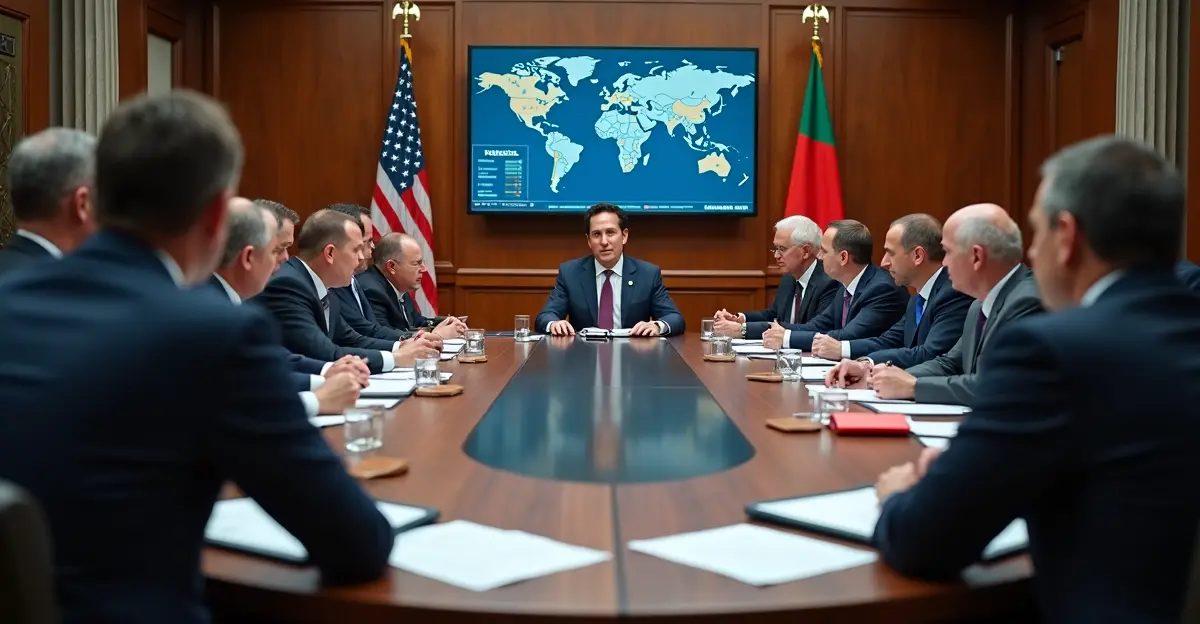
On February 4, 2026, the United States convened representatives from 54 nations and the European Commission for the inaugural Critical Minerals Ministerial in Washington, D.C. The summit unveiled two landmark initiatives—FORGE (Forum on Resource Geostrategic Engagement) and Project Vault—marking the most ambitious Western counter-coordination effort against China's stranglehold on rare earths and critical minerals in decades. With China controlling roughly 90% of global rare earth processing and having tightened export controls through 2025 and into 2026, these mechanisms introduce price floors, sovereign purchasing frameworks, and bilateral supply agreements designed to break Beijing's grip on minerals essential to AI hardware, EV batteries, and defense systems. The strategic question is whether a 20-to-30-year Western buildout timeline can outpace China's narrowing window of leverage.
Background: The Critical Minerals Crisis
Rare earth elements (REEs)—a set of 17 metals including neodymium, praseodymium, and dysprosium—are indispensable for permanent magnets in electric vehicles, wind turbines, advanced electronics, and military hardware such as missile guidance systems and night-vision goggles. Despite their name, REEs are not geologically scarce; rather, the difficulty and cost of separating and purifying them from ore has concentrated global processing capacity overwhelmingly in China. According to the European Parliamentary Research Service, China controls approximately 60% of global rare earth mining and nearly 90% of processing and refining capacity. This dominance has been weaponized: in October 2025, China's Ministry of Commerce (MOFCOM) issued sweeping new export controls via Announcements Nos. 55–62, covering extraction, processing, magnet production, and technology transfers through a non-automatic licensing system. The China rare earth export controls have caused prices outside China to spike up to sixfold, while licensing approval rates for European firms fell below 25% in some sectors. Over 80% of European companies remain dependent on Chinese supply chains, with independent alternatives requiring 20 to 30 years to rebuild.
The February 4, 2026 Critical Minerals Ministerial
Led by Secretary of State Marco Rubio and Vice President JD Vance, the ministerial produced concrete outcomes. The U.S. signed 11 new bilateral critical minerals frameworks or memorandums of understanding with countries including Argentina, Morocco, the Philippines, Peru, the United Arab Emirates, and the United Kingdom, bringing the total to 21 such deals in five months. Secretary Rubio announced the creation of FORGE (Forum on Resource Geostrategic Engagement), a plurilateral coalition that replaces the Biden-era Minerals Security Partnership. FORGE is chaired by the Republic of Korea through June and aims to create a preferential trade-and-investment zone for critical minerals with coordinated price floors to counter adversarial market manipulation. Vice President Vance proposed a preferential trade zone with enforceable price floors and adjustable tariffs, designed to align trade policy, price signals, and market access across partner economies. The administration has mobilized over $30 billion in total support for critical mineral projects, including EXIM's Project Vault.
Project Vault: A $10 Billion Domestic Strategic Reserve
Announced by President Trump on February 2, 2026, Project Vault is a public-private partnership funded by a $10 billion loan from the U.S. Export-Import Bank (EXIM) and nearly $2 billion in private-sector capital. It establishes the U.S. Strategic Critical Minerals Reserve—an independently governed stockpile of essential raw materials stored in secure facilities across the United States. Unlike the Cold War-era National Defense Stockpile, Project Vault is designed primarily for civilian use, ensuring that American manufacturers of EVs, AI hardware, and renewable energy components have guaranteed access to critical inputs. The U.S. strategic minerals reserve aims to buffer against supply disruptions and price volatility, while also providing a price floor mechanism to incentivize domestic and allied mining and processing investments.
FORGE: A New Architecture for Mineral Geostrategy
FORGE represents a significant institutional upgrade from the Minerals Security Partnership (MSP), which was criticized for lacking enforcement mechanisms and concrete financial commitments. FORGE is structured as a plurilateral coalition that includes both producer and consumer nations, with the goal of covering two-thirds of the global economy. Its key features include:
- Coordinated price floors to prevent China from undercutting Western producers during market downturns.
- Sovereign purchasing frameworks that allow member states to jointly negotiate long-term supply agreements.
- Bilateral supply agreements that link investment in mining and processing to guaranteed offtake.
- Technology-sharing provisions for recycling and alternative materials research.
The forum is chaired by South Korea, a major consumer of rare earths for its electronics and EV industries. Operational details remain to be clarified, but the ambition is to create a parallel market structure that reduces dependence on Chinese processing. The FORGE critical minerals coalition has drawn bipartisan congressional support, though some experts caution that execution and durability remain significant challenges.
Impact and Implications: Can the West Outpace China's Window of Leverage?
The strategic calculus is daunting. China's 2025–2026 export controls are designed not to create permanent scarcity but to maintain pricing power and extract concessions while preventing Western alternative investment. A multi-institutional analysis published by Rare Earth Exchanges argues that Beijing is weaponizing control rather than scarcity—using temporary, reversible restrictions to keep Western investors uncertain and delay alternative supply chains. Western nations face a narrowing 12-to-18-month window to act decisively or accept prolonged vulnerability. The 20-to-30-year timeline for building independent processing capacity means that China's leverage will remain formidable for at least a decade. However, the sheer scale of the Western response—over $30 billion mobilized in just six months, 21 bilateral deals, and a new institutional architecture—suggests a level of political will not seen since the Cold War. The critical minerals supply chain diversification effort will require sustained investment, regulatory streamlining, and allied coordination to succeed.
Expert Perspectives
"This is the most serious attempt by the West to break China's stranglehold on rare earths since the 2010 export crisis," said Dr. Sarah Ladislaw, a senior fellow at the Center for Strategic and International Studies. "But the proof will be in execution. Building a mine takes 10 years; building a processing plant takes 15. China isn't standing still." Morgan Bazilian, director of the Payne Institute at the Colorado School of Mines, noted: "Project Vault's price floor mechanism is clever—it de-risks investment by guaranteeing a minimum return. But if the floor is set too high, it could distort markets; too low, and it won't attract capital." A European Commission official, speaking on condition of anonymity, said: "FORGE is a welcome upgrade from the MSP, but Europe needs its own parallel efforts under the Critical Raw Materials Act. We cannot rely solely on U.S.-led initiatives."
Frequently Asked Questions
What is FORGE?
FORGE (Forum on Resource Geostrategic Engagement) is a plurilateral coalition launched in February 2026 to replace the Minerals Security Partnership. It aims to create a preferential trade-and-investment zone for critical minerals with coordinated price floors, sovereign purchasing frameworks, and bilateral supply agreements to reduce dependence on Chinese processing.
What is Project Vault?
Project Vault is a $10 billion U.S. Export-Import Bank-backed public-private partnership that establishes the U.S. Strategic Critical Minerals Reserve—a physical stockpile of rare earths and other critical minerals stored in secure domestic facilities, designed to ensure civilian supply chain resilience.
How much does China control rare earth processing?
China controls approximately 90% of global rare earth processing and refining capacity, along with 60% of mining. Its 2025–2026 export controls have tightened this grip, causing prices outside China to spike up to sixfold.
How long will it take to build alternative supply chains?
Industry estimates suggest 20 to 30 years to build independent processing capacity at scale. However, the window for decisive action is narrowing to 12–18 months before China's leverage becomes entrenched.
What countries are involved in FORGE?
FORGE includes the 54 nations that attended the Critical Minerals Ministerial, plus the European Commission. South Korea serves as the inaugural chair. Specific membership details are still being finalized.
Conclusion: A High-Stakes Geopolitical Inflection Point
The February 4, 2026 Critical Minerals Ministerial and the simultaneous unveiling of FORGE and Project Vault represent a watershed moment in the global struggle for critical mineral supply chains. With over $30 billion mobilized in just six months and 21 bilateral deals signed, the Western response is unprecedented in scale and coordination. Yet the fundamental challenge remains: China's near-total control of processing, combined with its ability to tighten or loosen export restrictions at will, gives Beijing a powerful lever that will not easily be pried away. The next 12 to 18 months will determine whether this ambitious counterstroke can gain enough momentum to shift the balance of power in critical minerals—or whether it will be too late.


Follow Discussion