


 Deutsch
 English
 Español
 Français
 Nederlands
 Português


 Share
Share




On February 4, 2026, the U.S. State Department convened representatives from 54 nations and the European Commission for the inaugural Critical Minerals Ministerial in Washington, D.C., marking a historic escalation in the global contest for strategic resources. The centerpiece of the event was the launch of the Forum on Resource Geostrategic Engagement (FORGE), a permanent multilateral framework that succeeds the ad-hoc Minerals Security Partnership (MSP). Backed by over $30 billion in U.S. government financing, FORGE represents the most significant institutional shift in strategic mineral policy since the Cold War, as the West races to counter China's near-total dominance over rare earth processing — estimated at 90% of global capacity.
Context: China's Stranglehold on Critical Minerals
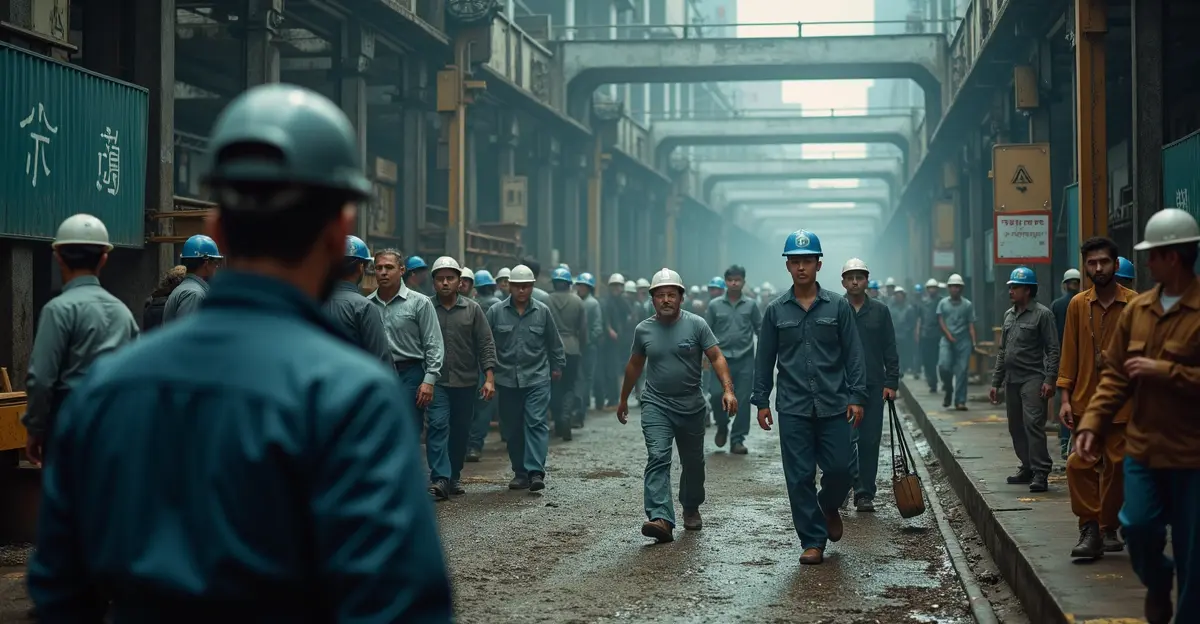
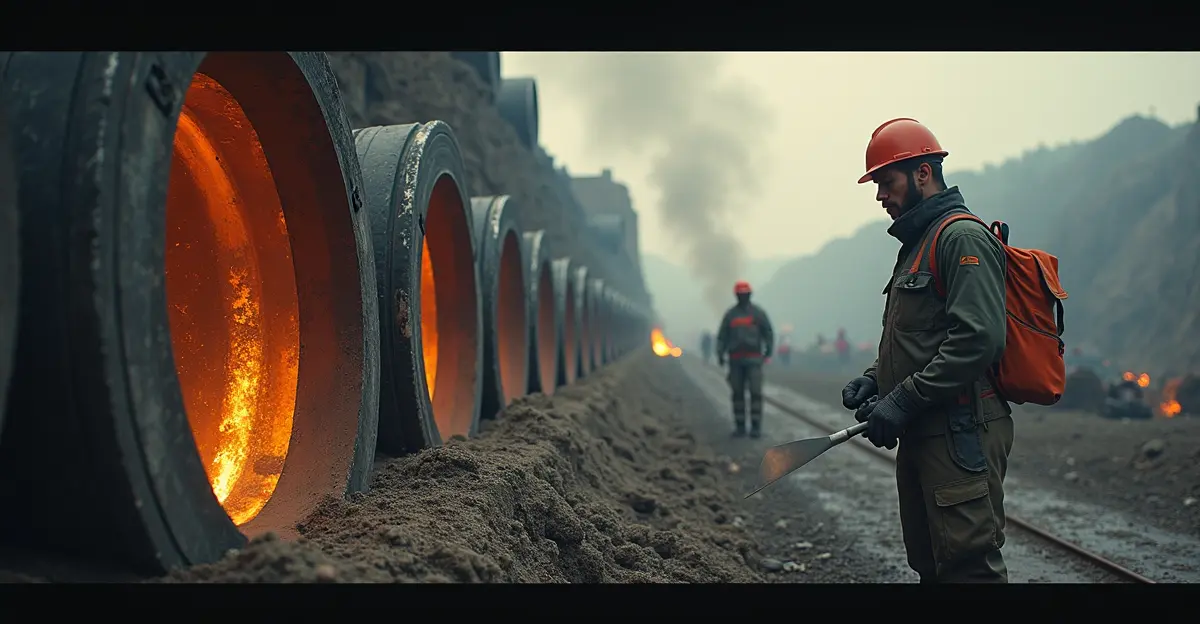
China's control over the critical minerals supply chain is unprecedented. According to the International Energy Agency (IEA), Beijing accounts for roughly 60% of global mined production of magnet rare earths and over 90% of refining capacity, with nearly 95% of permanent magnet production. This dominance extends to heavy rare earth elements (HREEs) like dysprosium and terbium, where China's separation capacity approaches 99%. In 2025 and early 2026, Beijing tightened export controls on rare earths, tungsten, and antimony — materials essential for F-35 fighter jets, precision-guided munitions, EV motors, and wind turbines. The China export controls 2026 triggered price spikes of up to sixfold outside China, with licensing approval rates for European firms falling below 25%. The IEA warns that up to $6.5 trillion in annual global economic activity is at risk from critical mineral disruptions.
FORGE: A New Multilateral Architecture
FORGE was announced by Secretary of State Marco Rubio as the permanent successor to the MSP, which had operated since 2022 as a loose partnership of 14 countries. The new forum, chaired by the Republic of Korea through June 2026, operates on a 'membership by trade' model: participation depends on adhering to shared trade rules rather than joint capital deployment. Vice President JD Vance described the mechanism as creating 'reference prices for critical minerals at each stage of production' maintained through adjustable tariffs — effectively a coordinated price floor system to counter adversarial market manipulation.
Bilateral Frameworks and the 'Trade Not Aid' Approach
The ministerial produced 11 new bilateral critical minerals frameworks or memorandums of understanding (MOUs), bringing the total to 21 deals signed in just five months. Signatories included Argentina, Morocco, Peru, the Philippines, the United Arab Emirates, the United Kingdom, Ecuador, Guinea, Paraguay, the Cook Islands, and Uzbekistan. These agreements form the building blocks of a preferential trade-and-investment zone for critical minerals that, according to the Atlantic Council, could eventually cover two-thirds of the global economy. The US bilateral mineral deals 2026 reflect a strategic pivot from multilateralism to bilateralism, with each pact tailored to the resource endowments and geopolitical alignment of the partner country.
Project Vault: America's Strategic Reserve
A cornerstone of the U.S. strategy is Project Vault, a $12 billion public-private partnership led by the Export-Import Bank of the United States (EXIM). The initiative allocates $10 billion in EXIM loans and $2 billion in private capital to establish a U.S. Strategic Critical Minerals Reserve. Companies can submit mineral requests, pay upfront costs, and commit to repurchasing at agreed rates when withdrawing — effectively locking in fixed purchase prices to reduce exposure to supply disruptions and price volatility. The U.S. also established a floor-price arrangement with MP Materials at $110 per kilogram for neodymium-praseodymium oxide, ensuring domestic producers have guaranteed returns.
Pax Silica and Private-Sector Engagement
Complementing FORGE is Pax Silica, a State Department initiative launched in March 2026 with a $250 million fund (subject to Congressional approval) to support critical minerals extraction, processing, infrastructure, and manufacturing for secure semiconductor supply chains. The initiative aims to catalyze trusted capital from sovereign wealth funds and private sources controlling over $1 trillion in assets. Under Secretary Jacob Helberg has expanded the initiative to include Norway, Finland, and the Philippines, with Economic Security Zones being established in locations such as New Clark City in the Philippines. The Pax Silica critical minerals fund represents the administration's 'America First' assistance agenda, leveraging private sector partners to invest in critical emerging technologies.
Impact on Energy Transition and Defense Supply Chains
The implications of FORGE extend across multiple strategic domains. For the energy transition, rare earth elements are essential for permanent magnets used in EV motors and wind turbine generators. Demand for magnet rare earths (neodymium, praseodymium, dysprosium, terbium) has doubled since 2015 and is projected to grow over 30% by 2030. For defense, NATO stockpiles currently cover only 6–9 months of high-intensity conflict, a vulnerability that FORGE aims to address through coordinated stockpiling and diversified sourcing. The NATO critical minerals stockpile 2026 gap has become a central concern for alliance planners.
Expert Perspectives
Analysts at the Atlantic Council describe FORGE as 'a plurilateral coalition creating a preferential trade-and-investment zone for critical minerals with coordinated price floors to counter adversarial market manipulation.' However, the IEA's Global Critical Minerals Outlook 2025 cautions that current projects outside China cover only half of mining needs, a quarter of refining capacity, and less than a fifth of magnet demand by 2035. The agency estimates that $60 billion in investment is needed over the next decade to develop diversified supply chains. Analysts warn that full supply chain independence remains 5–7 years away, with Western competitors facing 2–4 times cost disadvantages compared to Chinese producers.
FAQ
What is FORGE?
FORGE (Forum on Resource Geostrategic Engagement) is a permanent multilateral framework launched by the U.S. in February 2026 to coordinate critical minerals policy among allied nations. It succeeds the Minerals Security Partnership and aims to create a preferential trade zone with coordinated price floors.
How much funding is behind FORGE?
The U.S. government has mobilized over $30 billion in letters of interest, investments, and loans over six months, including $10 billion from the Export-Import Bank for Project Vault, a strategic critical minerals reserve.
Which countries signed bilateral deals at the ministerial?
Eleven countries signed new bilateral frameworks: Argentina, Morocco, Peru, the Philippines, the UAE, the UK, Ecuador, Guinea, Paraguay, the Cook Islands, and Uzbekistan.
How does China dominate rare earth processing?
China controls approximately 90% of global rare earth refining capacity, including nearly 99% of heavy rare earth separation. It also dominates magnet production, with over 300,000 tonnes of NdFeB magnets produced annually.
When will Western supply chains be independent?
Analysts estimate full supply chain independence is 5–7 years away, with a critical 12–18 month window before China's suspended expanded export controls expire on November 10, 2026.
Conclusion
The launch of FORGE and Project Vault represents a watershed moment in the global critical minerals contest. By combining bilateral frameworks, plurilateral coordination, massive public investment, and private-sector partnerships, the U.S. and its allies are building an end-to-end supply chain spanning mining, processing, and recycling. However, the window for action is narrowing. With China's export controls suspension set to expire in November 2026, the next 12–18 months will determine whether the West can break the stranglehold on resources essential for the energy transition, defense, and the AI hardware race. The critical minerals supply chain 2026 outlook remains uncertain, but FORGE provides the institutional architecture for a coordinated response.



Follow Discussion