


 Deutsch
 English
 Español
 Français
 Nederlands
 Português


 Share
Share




The global critical minerals landscape is undergoing its most dramatic transformation in decades. In response to China's stranglehold on rare earth processing and its 2025-2026 export controls, the United States has launched FORGE (Forum on Resource Geostrategic Engagement) — a successor to the Minerals Security Partnership — and mobilized over $30 billion in financing for strategic mineral projects including Project Vault, a $10 billion domestic critical minerals reserve. With 54 nations joining the February 2026 Critical Minerals Ministerial, 11 new bilateral frameworks signed, and Chinese export controls already causing sixfold price spikes in European markets, the critical minerals race has become the defining geopolitical and economic contest of 2026.
The Context: China's Stranglehold on Critical Minerals
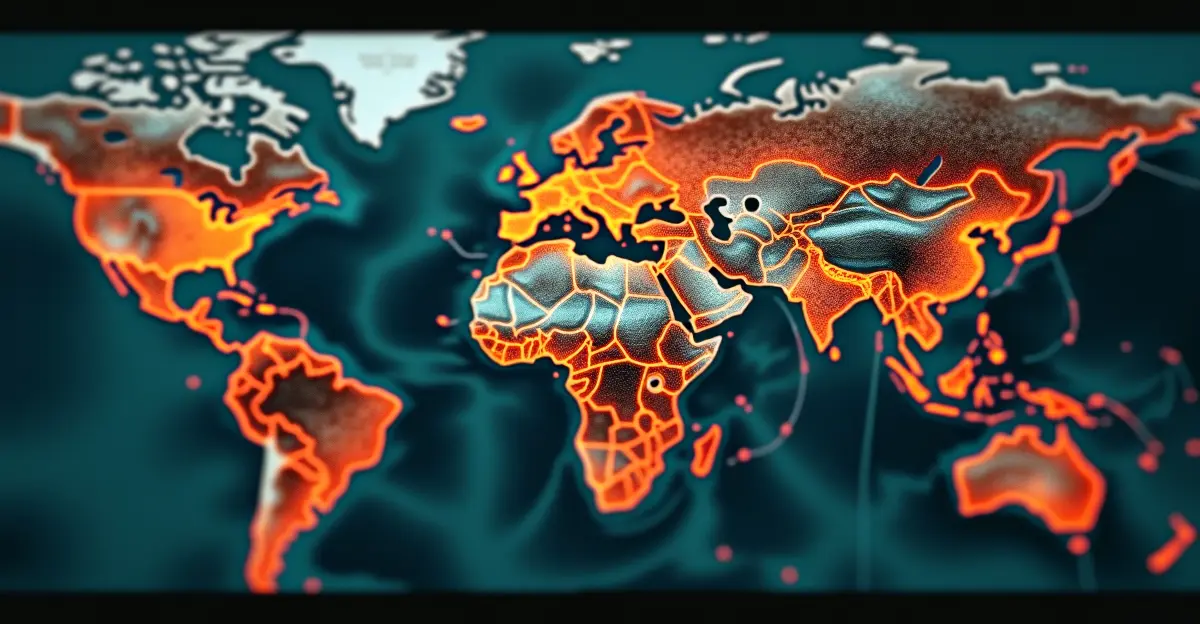
China controls approximately 90% of global rare earth processing, 80% of tungsten, and 60% of antimony. In April 2025, Beijing introduced sweeping export controls requiring case-by-case licenses for seven medium and heavy rare earth elements. A second wave in October 2025 expanded controlled elements and introduced extraterritorial provisions, though this second wave was suspended until November 10, 2026. The China export controls on rare earths have triggered severe price spikes: dysprosium reached $931/kg (up 105%), terbium hit $4,029/kg (up 103%), and Western markets paid premiums of 62-366% over Chinese domestic prices. Over 80% of European companies depend on Chinese supply chains for minerals essential to defense, EVs, and renewable energy.
FORGE: A New Multilateral Framework
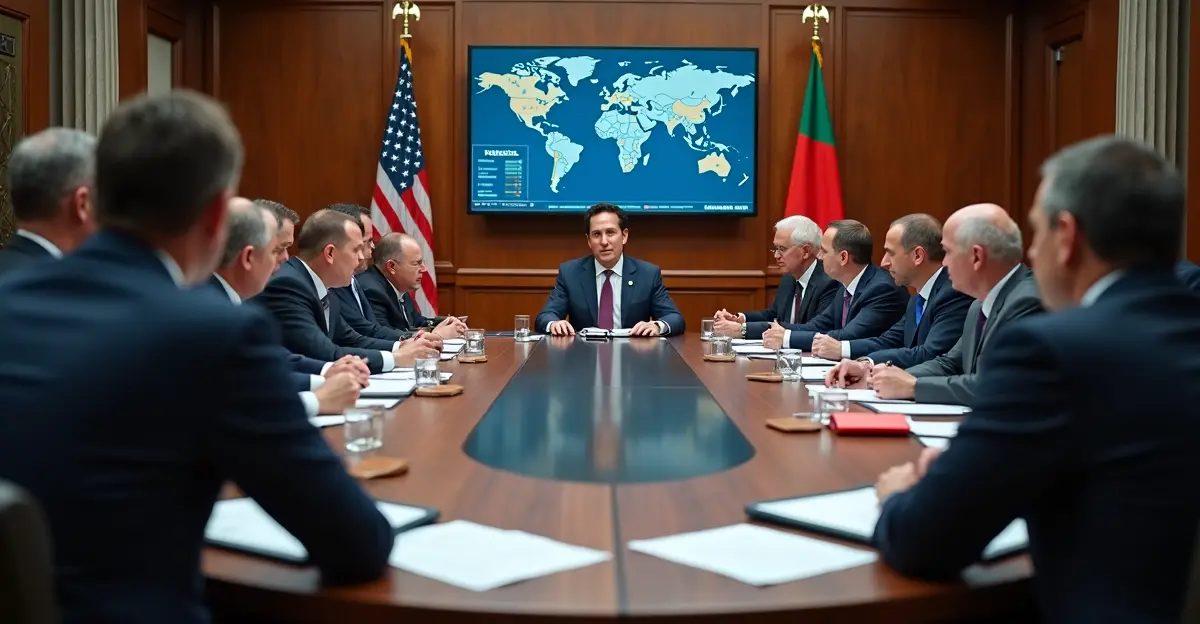
On February 4, 2026, the United States hosted the 2026 Critical Minerals Ministerial, convening representatives from 54 countries and the European Commission. Secretary of State Marco Rubio, joined by Vice President JD Vance, announced FORGE as the successor to the Minerals Security Partnership, chaired by South Korea through June 2026. The forum aims to create a "preferred critical minerals trade zone" with enforceable price floors to stabilize supply chains. Eleven new bilateral frameworks or MOUs were signed with countries including Argentina, Morocco, the Philippines, the UK, and the UAE. The FORGE critical minerals alliance represents a significant escalation in Western coordination to counter Chinese dominance.
Project Vault: America's Strategic Reserve
The Export-Import Bank (EXIM) approved Project Vault, a $10 billion Direct Loan initiative (with nearly $2 billion in private investment, totaling $12 billion) to launch America's Strategic Critical Minerals Reserve. Announced on February 2, 2026, this public-private partnership will store essential raw materials in secure facilities across the U.S. Participating OEMs include Clarios, GE Vernova, Western Digital, and Boeing, with suppliers like Hartree Partners, Mercuria Americas, and Traxys. EXIM Chairman John Jovanovic stated the reserve will help U.S. manufacturers compete globally while delivering a net positive return for American taxpayers. The Project Vault strategic minerals reserve is designed to protect domestic manufacturers from supply shocks and reduce dependence on foreign-controlled supply chains.
The $6.5 Trillion Question: Can Independence Be Achieved?
The International Energy Agency (IEA) estimates that up to $6.5 trillion of annual global economic activity is at risk from critical mineral supply disruptions. Demand for rare earth elements has doubled since 2015 and is projected to grow by over 30% by 2030, driven by electric vehicles, AI data centers, robotics, and defense systems. Current and planned projects outside China cover only about half of mining needs, a quarter of refining, and less than a fifth of magnet demand by 2035. The IEA estimates ~$60 billion in investment is needed over the next decade to diversify supply chains. Analysts warn that full supply chain independence remains 5-7 years away at best, with a narrowing 12-18 month window to act decisively before dependence becomes entrenched.
The November 2026 Deadline
China's 12-month suspension of expanded export controls expires on November 10, 2026. Possible outcomes include extending the suspension, selective reinstatement, or full reimposition including extraterritorial provisions affecting automotive, defense, and energy sectors. The November 2026 rare earth deadline creates immense pressure on Western nations to demonstrate tangible progress in building alternative supply chains. Bloomberg Intelligence projects a 36% global shortfall by 2030 despite non-Chinese neodymium-praseodymium production growing 4.4-fold.
Expert Perspectives
"The Trump administration's FORGE initiative is a step forward in its critical minerals agenda," noted analysts at the Atlantic Council. "However, rebuilding independent alternatives would take 20-30 years. Western nations face a narrowing 12-18 month window to act decisively or accept prolonged vulnerability."
Ellen Kim of the Korea Economic Institute observed: "South Korea has pursued import diversification, stockpiles, and recycling, but these domestic measures remain insufficient. As FORGE chair through June, South Korea needs a more refined multilateral strategy to enhance global supply chain stability."
FAQ
What is FORGE?
FORGE (Forum on Resource Geostrategic Engagement) is a multilateral initiative launched by the United States in February 2026 as the successor to the Minerals Security Partnership. It brings together 54 nations to coordinate critical mineral supply chains and reduce dependence on China.
What is Project Vault?
Project Vault is a $12 billion public-private partnership led by the U.S. Export-Import Bank to create America's Strategic Critical Minerals Reserve, storing essential raw materials in secure domestic facilities.
How much does China control rare earth processing?
China controls approximately 90% of global rare earth processing, 80% of tungsten, and 60% of antimony, giving it enormous leverage over global supply chains.
When do China's export controls expire?
The expanded controls introduced in October 2025 are suspended until November 10, 2026. The earlier April 2025 controls requiring case-by-case licenses remain in force.
What is at stake economically?
The IEA estimates up to $6.5 trillion of annual global economic activity is at risk from critical mineral supply disruptions, affecting energy transition, defense, and advanced manufacturing.
Conclusion
The launch of FORGE and Project Vault marks a significant escalation in Western efforts to break China's grip on critical mineral supply chains. However, the gap between ambition and reality remains vast. With the November 2026 deadline approaching and full independence years away, the coming 12-18 months will determine whether the Western alliance can achieve meaningful supply chain resilience or remain vulnerable to Beijing's strategic leverage. The critical minerals geopolitical contest is far from over, and the stakes have never been higher.



Follow Discussion