


 Deutsch
 English
 Español
 Français
 Nederlands
 Português


 Share
Share




What Are FORGE and Project Vault?
In February 2026, the United States launched two landmark initiatives to counter China's stranglehold on critical mineral supply chains. The Forum on Resource Geostrategic Engagement (FORGE) is a 54-country multilateral framework replacing the Minerals Security Partnership, while Project Vault is a $10 billion Export-Import Bank-backed strategic critical minerals reserve. Together, these initiatives represent the most significant institutional shift in Western critical mineral strategy since China began tightening export controls in 2025, which triggered sixfold price spikes and exposed acute vulnerabilities in defense, EV, and renewable energy sectors globally.
Background: China's Dominance and the 2025-2026 Export Control Crisis
China controls approximately 90% of global rare earth processing, 80% of tungsten refining, and 60% of antimony production. Beginning in late 2025, Beijing escalated calibrated export controls on these materials, causing licensing approval rates for European firms to plummet below 25% by early 2026. Prices for key elements like neodymium, praseodymium, and dysprosium surged up to sixfold outside China. Over 80% of European companies depend on Chinese supply chains for critical minerals essential to defense, EVs, and renewable energy. The EU relies on China for 98-99% of its rare earths. The 2025 critical minerals crisis exposed the fragility of Western supply chains and prompted urgent policy responses.
FORGE: A New Multilateral Framework
Structure and Membership
Announced at the inaugural Critical Minerals Ministerial hosted by the U.S. Department of State, FORGE is chaired initially by the Republic of Korea. It operates on a 'membership by trade' model, where participation is conditioned on shared trade rules rather than joint capital deployment. The framework aims to cover two-thirds of the global economy through coordinated plurilateral action. The Ministerial produced eleven new bilateral framework agreements with countries including Argentina, Morocco, Peru, the Philippines, UAE, and the UK, bringing the total to 21 deals in five months.
Key Mechanisms
FORGE creates a preferential trade-and-investment zone with coordinated price floors for critical minerals, designed to counter adversarial market manipulation. Vice President JD Vance described reference prices maintained through adjustable tariffs. The administration has mobilized over $30 billion in investments and loans, including the $10 billion EXIM allocation for Project Vault. The Minerals Security Partnership evolution into FORGE reflects a shift from 'America First' domestic focus toward international collaboration.
Project Vault: The U.S. Strategic Critical Minerals Reserve
Approved by EXIM on February 2, 2026, Project Vault establishes the U.S. Strategic Critical Minerals Reserve as an independently governed public-private partnership. The initiative is backed by a $10 billion EXIM Direct Loan and nearly $2 billion in private-sector investment. It will store essential raw materials across secure U.S. facilities, supporting domestic manufacturers against supply shocks. Participating OEMs include Clarios, GE Vernova, Western Digital, and Boeing, with suppliers like Hartree Partners, Mercuria Americas, and Traxys. The innovative structure is designed to deliver a net positive return for U.S. taxpayers while strengthening national security and creating domestic manufacturing jobs. EXIM Chairman John Jovanovic promoted the project at CSIS and the Critical Minerals Ministerial alongside Secretary of State Marco Rubio.
Can FORGE and Project Vault Reduce Vulnerability?
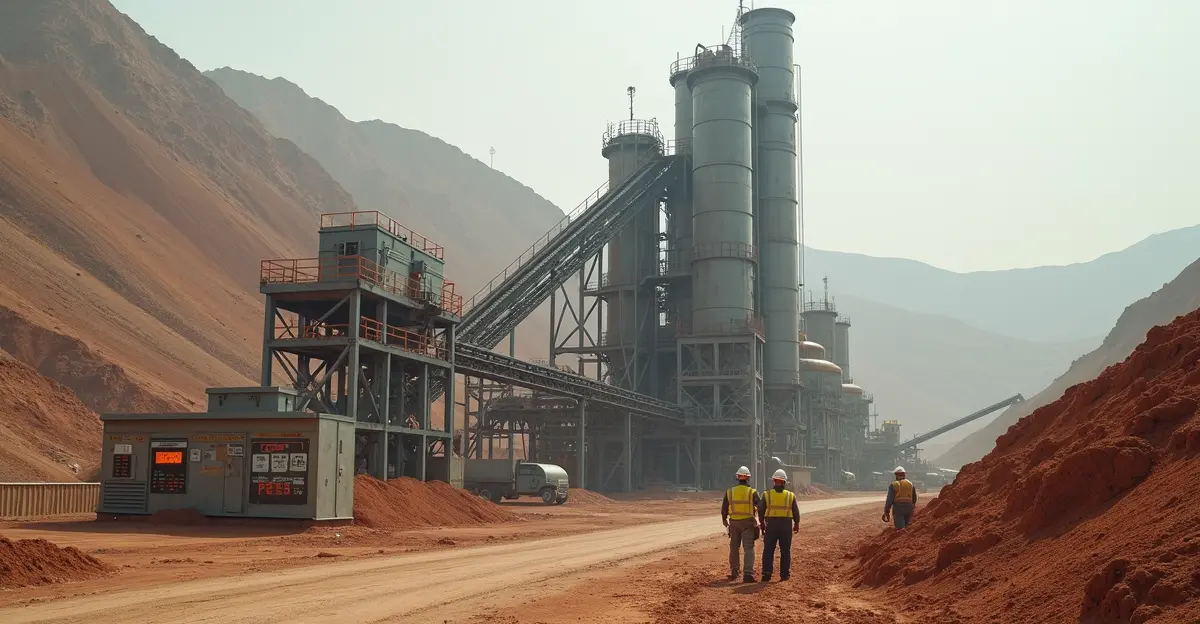
Analysts warn that rebuilding independent Western processing capacity would take 20-30 years, while the geopolitical window to act is narrowing to 12-18 months. China's structural processing advantage—built over decades with state subsidies, cheap energy, and lax environmental standards—cannot be quickly replicated. The rare earth processing bottleneck remains the critical chokepoint. While FORGE's 54-nation coalition and Project Vault's $12 billion reserve are significant steps, they face formidable challenges: coordinating diverse economies, securing financing for processing plants, and competing with China's established infrastructure. Some experts argue that managed dependence on China may be the only realistic medium-term outcome, with Western efforts focused on stockpiling and demand reduction rather than full supply chain independence.
Expert Perspectives
"FORGE represents a recognition that no single country can solve the critical minerals challenge alone," said a senior State Department official. "The breadth of participation—from Argentina to the UAE—signals a global consensus on the need to diversify." However, analysts at the Center for Strategic and International Studies caution that "the governance of 54 diverse economies spanning the full supply chain will be extraordinarily complex." The critical minerals geopolitics 2026 landscape remains highly uncertain.
FAQ
What is FORGE?
FORGE (Forum on Resource Geostrategic Engagement) is a 54-country multilateral framework launched in February 2026 to replace the Minerals Security Partnership. It creates a preferential trade zone with price floors for critical minerals to counter China's market manipulation.
What is Project Vault?
Project Vault is a $10 billion EXIM-backed public-private partnership that establishes the U.S. Strategic Critical Minerals Reserve. It stores essential raw materials to protect domestic manufacturers from supply shocks.
Why are critical minerals important?
Critical minerals like rare earths, tungsten, and antimony are essential for defense systems (F-35 jets, missiles), EVs, wind turbines, and electronics. China controls 90% of global rare earth processing, creating acute supply chain vulnerabilities.
Can the West reduce dependence on China?
Rebuilding independent processing capacity would take 20-30 years. While FORGE and Project Vault are significant, many analysts believe managed dependence on China is the most realistic medium-term outcome.
What caused the 2025-2026 price spikes?
China escalated export controls on rare earths, tungsten, and antimony from late 2025, cutting licensing approval rates for European firms below 25% and causing sixfold price increases for key elements.
Conclusion
The launch of FORGE and Project Vault marks a pivotal moment in Western critical mineral strategy. While the initiatives demonstrate unprecedented political will and financial commitment, the structural challenge of competing with China's decades-old processing dominance remains daunting. The next 12-18 months will determine whether this new alliance infrastructure can meaningfully reduce supply chain vulnerability or whether the West must accept a future of managed dependence.




Follow Discussion