


 Deutsch
 English
 Español
 Français
 Nederlands
 Português


 Share
Share




The global scramble for critical minerals—lithium, copper, rare earths, and cobalt—has entered a decisive new phase in 2026, as energy security, military capability, and technological leadership converge into a single geopolitical contest. In February, the United States hosted its landmark Critical Minerals Ministerial with 54 nations, mobilizing over $30 billion in supply chain projects and launching FORGE, the successor to the Minerals Security Partnership. Simultaneously, China's 15th Five-Year Plan doubles down on strategic mineral dominance, while the European Union races to secure domestic processing capacity. This article examines how the critical minerals arms race is redrawing geopolitical alliances, driving a wave of M&A consolidation, and forcing nations to choose between economic security and open markets.
What Is the Critical Minerals Arms Race?
The critical minerals arms race refers to the intensifying competition among major powers—primarily the United States, China, and the European Union—to secure supplies of minerals essential for advanced technologies, including electric vehicle batteries, renewable energy systems, defense equipment, and artificial intelligence hardware. Unlike traditional resource conflicts, this race is defined by supply chain concentration, with China dominating processing for rare earths (over 80% globally), lithium refining, and graphite production. The stakes are high: without reliable access to these minerals, nations risk losing their competitive edge in clean energy, defense, and digital transformation.
FORGE and the U.S. Strategy: A New Multilateral Framework
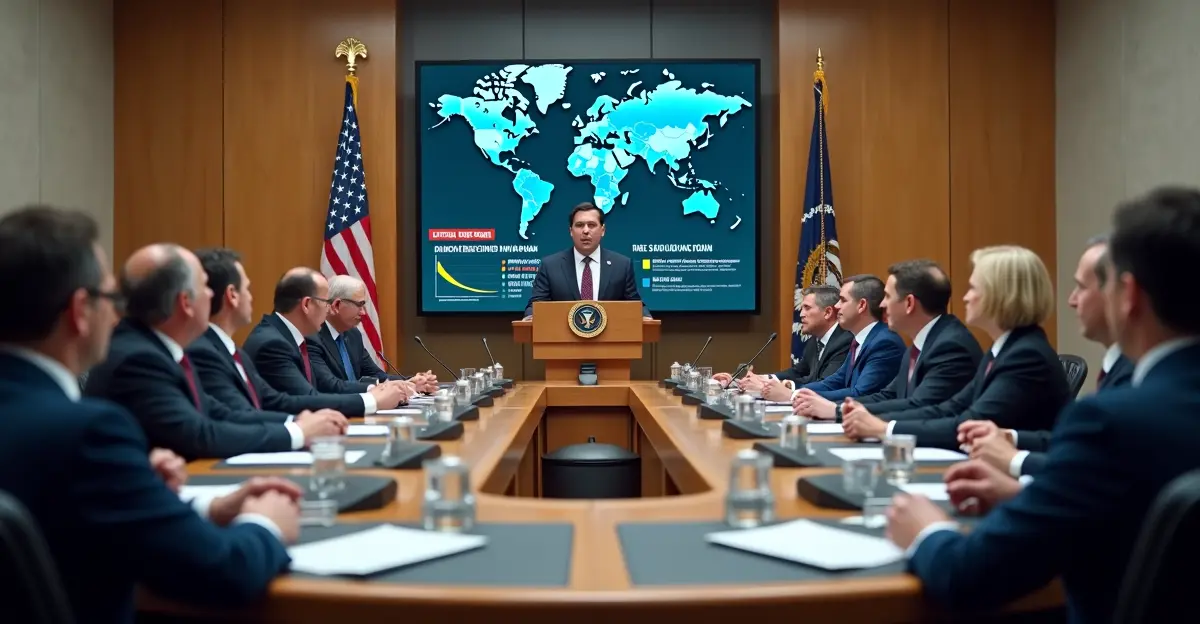
On February 4, 2026, U.S. Secretary of State Marco Rubio, alongside Vice President JD Vance, hosted the 2026 Critical Minerals Ministerial in Washington, D.C., with representatives from 54 countries and the European Commission. The centerpiece of the event was the announcement of FORGE (Forum on Resource Geostrategic Engagement), a plurilateral coalition designed to create a preferential trade-and-investment zone for critical minerals. FORGE succeeds the Minerals Security Partnership (MSP) and is chaired by the Republic of Korea. The U.S. signed 11 new bilateral critical minerals frameworks or MOUs with countries including Argentina, Morocco, the Philippines, the United Arab Emirates, and the United Kingdom, bringing the total to 21 deals in five months.
The administration mobilized over $30 billion in financing support for strategic minerals projects, including EXIM Bank's $10 billion Project Vault, which aims to establish a U.S. Strategic Critical Minerals Reserve. The U.S. critical minerals policy also includes $2 billion for the National Defense Stockpile and $5 billion for supply chain investments. These initiatives aim to reduce dependence on Chinese-dominated supply chains and create a resilient ecosystem for minerals essential for AI, robotics, and defense.
Project Vault and Domestic Processing
Project Vault represents a significant shift toward building a domestic strategic reserve for critical minerals, modeled on the Strategic Petroleum Reserve. The initiative will stockpile lithium, rare earth oxides, cobalt, and other minerals to buffer against supply disruptions. Additionally, the U.S. Department of Energy has accelerated funding for domestic processing facilities, including rare earth separation plants in Texas and lithium refining in Nevada. However, experts caution that building processing capacity takes years and requires sustained investment.
China's 15th Five-Year Plan: Doubling Down on Dominance
In March 2026, China unveiled its 15th Five-Year Plan (2026–2030), which places strategic mineral security at the core of its economic and industrial policy. The plan sets a 17% emission intensity reduction target (down from 18% in the 14th FYP) and aims for non-fossil energy to reach 25% of primary energy consumption by 2030. Crucially, Beijing emphasizes self-sufficiency in critical minerals, boosting domestic exploration, processing, and recycling capacity. China already supplies over 60% of refined lithium and cobalt and roughly 80% of battery-grade graphite and rare earths—a dominance the new plan seeks to entrench.
The plan also promotes yuan-denominated trading of critical minerals, a move that could challenge the dollar's role in commodity markets. China's rare earths export controls have already demonstrated the leverage Beijing holds; in 2025, China tightened export restrictions on rare earth processing technologies, sending shockwaves through global supply chains. The 15th FYP further encourages Chinese companies to acquire overseas mining assets, particularly in Africa and Latin America, intensifying competition with Western firms.
The EU's Race for Processing Capacity
The European Union, facing a financing gap despite ambitious targets, is accelerating efforts to secure domestic processing capacity. Under the Critical Raw Materials Act, the EU has designated 60 Strategic Projects aimed at boosting extraction, processing, and recycling within the bloc. However, current investment volumes fall short of diversification needs. The EU has signed partnerships with resource-rich countries such as Chile, Namibia, and Kazakhstan, but processing bottlenecks remain a critical vulnerability.
The EU Critical Raw Materials Act targets 10% of annual extraction, 40% of processing, and 25% of recycling within Europe by 2030. Yet industry analysts warn that without massive capital deployment, these goals will remain aspirational. The EU's response includes a €2 billion Critical Raw Materials Fund and streamlined permitting for strategic projects, but the bloc still relies heavily on China for rare earth magnets and lithium chemicals.
M&A Consolidation and Market Dynamics
The critical minerals sector has seen a surge in mergers and acquisitions, with 2025 recording the highest M&A activity in six years. Major deals include Rio Tinto's acquisition of Arcadium Lithium for $6.7 billion and BHP's bid for Anglo American, which was ultimately rejected. In 2026, rare earths are expected to turbocharge further deal-making, as companies seek to secure integrated supply chains from mine to magnet.
Lithium prices have recovered from the 2023–2024 slump, stabilizing around $15,000–$20,000 per tonne, driven by robust EV demand and supply discipline. Copper prices remain elevated above $10,000 per tonne, supported by electrification trends and constrained mine supply. Cobalt, however, faces headwinds from substitution and ethical concerns over artisanal mining in the Democratic Republic of Congo.
Geopolitical Implications and New Alliances
The critical minerals arms race is reshaping global alliances. BRICS+ nations, including Brazil, Russia, India, China, and South Africa, are promoting local-currency trade in resources, seeking to reduce dollar dependence. The UAE and Saudi Arabia have emerged as new players, investing in mining assets across Africa and Latin America, increasing competitive pressure on Western allies.
Australia has positioned itself as a key Western supplier, launching a $4 billion Critical Minerals Facility and a $1.2 billion Critical Minerals Strategic Reserve. Japan's JOGMEC and the Orion Critical Mineral Consortium ($1.8 billion) are also providing funding. The Australia-US critical minerals partnership signed in 2025 committed $1 billion to rare earths projects, reflecting the deepening ties between resource-rich allies.
Expert Perspectives
"The 2026 Critical Minerals Ministerial marks a turning point," said Olena Borodyna, Senior Advisor at ODI. "FORGE represents an ambitious attempt to create a preferential trading system for critical minerals, but the real test will be whether it can translate bilateral leverage into genuine plurilateral coordination." Meanwhile, analysts at the Atlantic Council warn that designing effective reference price mechanisms without creating perverse incentives remains a key challenge.
"China's 15th Five-Year Plan is a clear signal that Beijing will not cede its dominance in critical minerals processing," noted a report from the Green Finance & Development Center. "The West must invest not just in mining, but in the entire value chain—especially refining and magnet manufacturing."
FAQ: Critical Minerals Arms Race
What are critical minerals?
Critical minerals are metals and non-metallic elements essential for modern technologies, including lithium, cobalt, rare earths, copper, nickel, and graphite. They are used in batteries, electronics, defense systems, and renewable energy infrastructure.
Why is there an arms race for critical minerals?
The race is driven by the concentration of supply in a few countries—especially China—and the growing demand for minerals needed for clean energy, AI, and military applications. Nations fear that dependence on adversarial states could lead to supply disruptions or geopolitical coercion.
What is FORGE?
FORGE (Forum on Resource Geostrategic Engagement) is a plurilateral coalition launched by the U.S. in February 2026 to create a preferential trade-and-investment zone for critical minerals. It succeeds the Minerals Security Partnership and includes 54 partner nations.
How does China dominate critical minerals?
China controls over 80% of rare earths processing, 60% of lithium refining, and a large share of graphite and cobalt processing. Its 15th Five-Year Plan aims to reinforce this dominance through domestic investment, overseas acquisitions, and export controls.
What can the West do to reduce dependence?
Strategies include diversifying supply sources through bilateral agreements, investing in domestic processing and recycling, building strategic reserves (like Project Vault), and fostering innovation in mineral substitution and battery chemistry.
Conclusion: A New Geopolitical Reality
The critical minerals arms race is not a temporary trend but a structural shift in global power dynamics. As 2026 unfolds, the decisions made by governments and corporations will determine which nations lead the clean energy transition and which fall behind. The convergence of energy security, military capability, and technological leadership means that critical minerals are now at the heart of geopolitics. The race is on—and the stakes have never been higher.




Follow Discussion