


 Deutsch
 English
 Español
 Français
 Nederlands
 Português


 Share
Share




In February 2026, the United States hosted a landmark Critical Minerals Ministerial with 54 countries, launching Project Vault — a $12 billion strategic reserve — while China's 15th Five-Year Plan reinforced its near-total dominance over rare-earth processing. These events mark an inflection point in the global competition for critical minerals, as resource nationalism reshapes supply chains for the energy transition, defense, and advanced manufacturing.
Governments worldwide are racing to secure lithium, rare earths, cobalt, and other critical minerals through strategic stockpiles, export controls, and bilateral supply pacts. Unlike past cycles driven by supply-demand imbalances, today's stockpiling is geopolitically driven, with nations treating supply chains as national security infrastructure rather than purely commercial flows.
Project Vault: America's $12 Billion Strategic Reserve
On February 2, 2026, the Export-Import Bank of the United States (EXIM) launched Project Vault, a $12 billion public-private initiative to establish the U.S. Strategic Critical Minerals Reserve. Backed by $10 billion in EXIM loans and nearly $2 billion in private-sector investment, the project will store essential raw materials — including lithium, rare earths, and cobalt — in secure facilities across the United States.
EXIM Chairman Jovanovic promoted the initiative at the Critical Minerals Ministerial, alongside industry partners including GE Vernova, Boeing, Mercuria Energy, Traxys, Hartree, and Clarios. The reserve aims to protect domestic manufacturers from supply shocks and reduce dependence on foreign sources, particularly China. The U.S. critical minerals strategy now includes over $30 billion in government support mobilized for strategic mineral projects in the past six months.
China's Processing Dominance and Export Controls
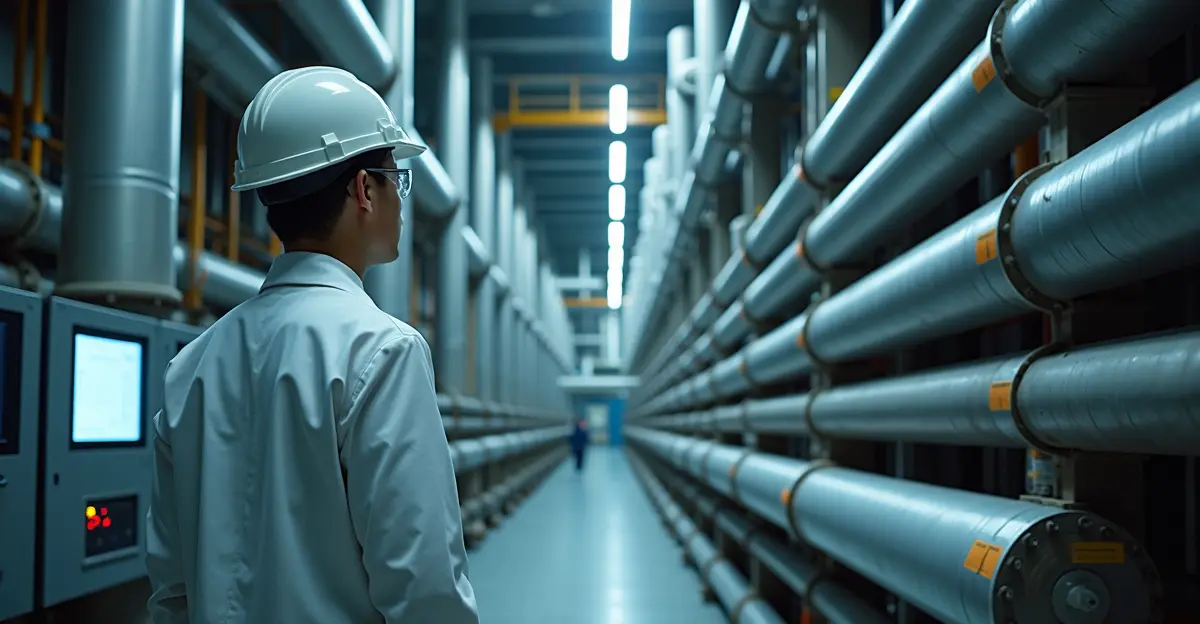
China controls approximately 90% of rare-earth processing, 80% of tungsten, and 60% of antimony globally. Its 15th Five-Year Plan (2026-2030) reinforces this dominance, with the Ministry of Natural Resources announcing that China holds the world's largest reserves of 14 essential minerals and pledging accelerated mineral exploration through 2030.
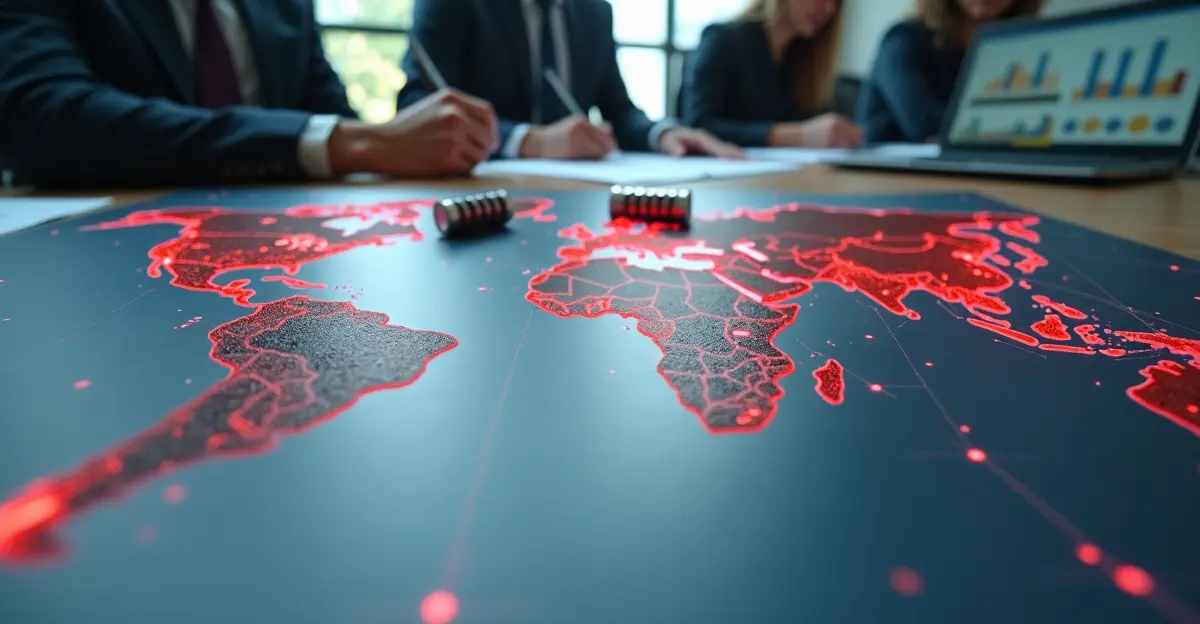
In 2025, Beijing introduced two waves of export controls on rare-earth elements, citing national security interests. These controls triggered sixfold price spikes outside China, while licensing approval rates for European firms fell below 25% in some sectors. Over 80% of European companies depend on Chinese supply chains for materials essential to defense, EVs, and renewable energy. Analysts argue China is weaponizing control — not scarcity — by using temporary, reversible restrictions to maintain pricing power and extract strategic concessions while discouraging Western investment in alternatives. The China rare earth export controls have created a narrowing 12-to-18-month window for Western nations to act decisively.
Europe's RESourceEU and Joint Reserves
The European Union unveiled RESourceEU in December 2025, a comprehensive initiative to secure critical raw materials and reduce dependence on foreign sources. Led by Italy, France, and Germany, the plan includes joint stockpiling, export restrictions on reusable metal scrap, and support for 60 Strategic Projects under the Critical Raw Materials Act.
However, the EU faces challenges scaling financing for its diversification goals. Current funding falls short of what is needed to build independent processing capacity, and rebuilding alternatives to Chinese supply chains would require 20-30 years under current trajectories. The EU Critical Raw Materials Act aims to boost domestic extraction, processing, and recycling capacities while diversifying external sources.
Global Stockpiling and Bilateral Pacts
The race extends well beyond the U.S., EU, and China. Australia announced a A$1.2 billion (US$800 million) Critical Minerals Strategic Reserve in January 2026, targeting antimony, gallium, and rare earths. South Korea rolled out a $172 million strategy to expand stockpiles. India and Brazil signed a critical minerals agreement during President Lula's February 2026 visit to New Delhi, aiming to reduce India's dependence on China. Brazil holds the world's second-largest reserves of critical minerals but currently produces negligible amounts globally.
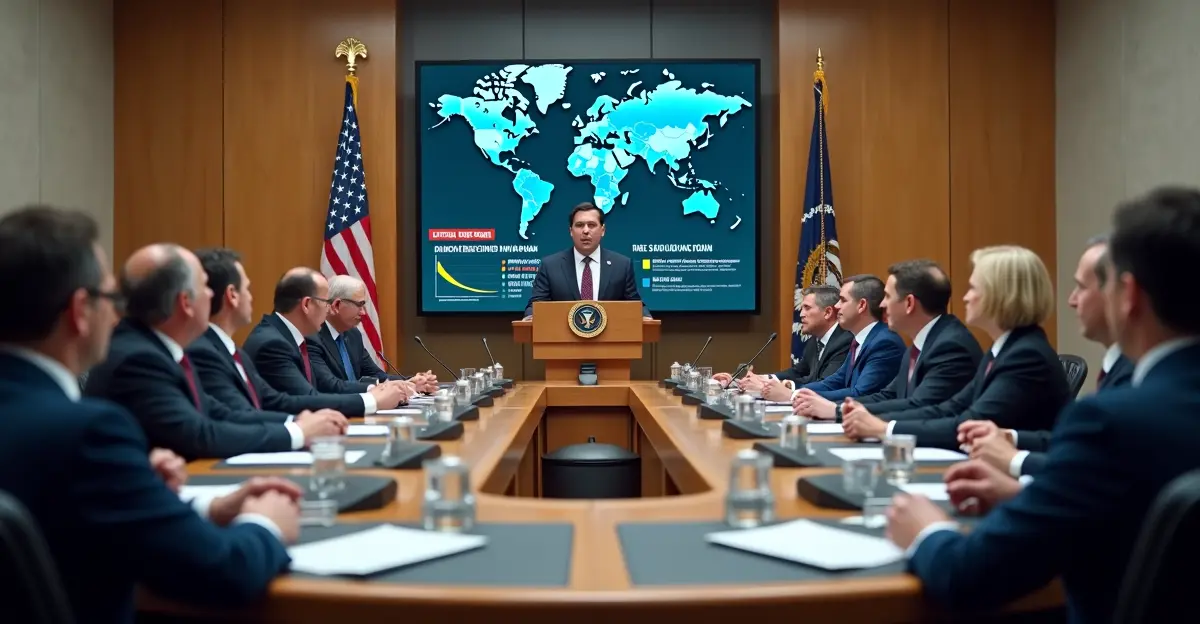
The U.S. Critical Minerals Ministerial on February 4, 2026, resulted in 11 new bilateral critical minerals frameworks with countries including Argentina, Morocco, the Philippines, and the UAE. Secretary of State Marco Rubio announced the Forum on Resource Geostrategic Engagement (FORGE) as the successor to the Minerals Security Partnership, chaired by South Korea. The Minerals Security Partnership Forum seeks to strengthen diversified, resilient, and secure critical minerals supply chains among allied nations.
Geopolitical Fault Lines and the Energy Transition
The critical minerals arms race is creating new geopolitical fault lines between producer and consumer nations. Resource nationalism is driving governments to impose export controls, nationalize mining assets, and demand domestic processing. This shift threatens the energy transition, which requires massive quantities of lithium, cobalt, nickel, and rare earths for batteries, wind turbines, and electric vehicles.
According to the ODI, China is projected to control over 60% of refined lithium and cobalt by 2035. The Council on Foreign Relations argues the United States cannot out-mine or out-process China and should instead pursue an innovation-centered strategy to "leapfrog" China's dominance through substitute materials engineering, waste-based recovery, advanced recycling, and AI-enabled materials discovery. The critical minerals and energy transition nexus will define global trade and security for the rest of the decade.
Expert Perspectives
"This is a structural shift in global supply chains," said a senior analyst at the International Institute for Strategic Studies. "Governments now treat critical minerals as strategic assets akin to oil reserves. The difference is that supply chains are far more concentrated and vulnerable to disruption."
"China's export controls are not about scarcity but about strategic leverage," noted a report from the Rare Earth Exchanges. "By keeping restrictions temporary and reversible, Beijing maintains pricing power while discouraging Western investment in alternatives."
Frequently Asked Questions
What are critical minerals?
Critical minerals are raw materials designated by governments as essential for national economies and security, with vulnerable supply chains. They include rare-earth elements, lithium, cobalt, graphite, and others needed for energy transition, defense, and high-tech manufacturing.
Why is there a critical minerals arms race in 2026?
Governments are racing to secure supplies due to China's near-total dominance over processing, geopolitical tensions, and surging demand from the energy transition and defense sectors. The U.S., EU, Australia, and others are launching strategic stockpiles and bilateral pacts to reduce dependence on Chinese supply chains.
What is Project Vault?
Project Vault is a $12 billion U.S. public-private initiative launched in February 2026 to establish a domestic Strategic Critical Minerals Reserve. Backed by EXIM loans and private investment, it will stockpile lithium, rare earths, cobalt, and other essential minerals in secure facilities across the United States.
How does China dominate critical minerals processing?
China controls approximately 90% of rare-earth processing, 80% of tungsten, and 60% of antimony globally. Its 15th Five-Year Plan reinforces this dominance, and export controls introduced in 2025-2026 have triggered price spikes and supply disruptions for Western nations.
What is RESourceEU?
RESourceEU is the European Union's initiative to secure critical raw materials through joint stockpiling, domestic extraction, processing, and recycling. Led by Italy, France, and Germany, it aims to reduce dependence on China and support 60 Strategic Projects under the Critical Raw Materials Act.
Conclusion: A Defining Challenge for the Decade
The critical minerals arms race represents a defining geopolitical and economic challenge for the remainder of the 2020s. With China's processing dominance entrenched, Western nations face a narrowing window to build alternative supply chains through strategic stockpiles, innovation, and international partnerships. The outcome will shape not only the energy transition and technological competitiveness but also global security dynamics for decades to come.


Follow Discussion