


 Deutsch
 English
 Español
 Français
 Nederlands
 Português


 Share
Share




The New Geopolitics of Critical Minerals
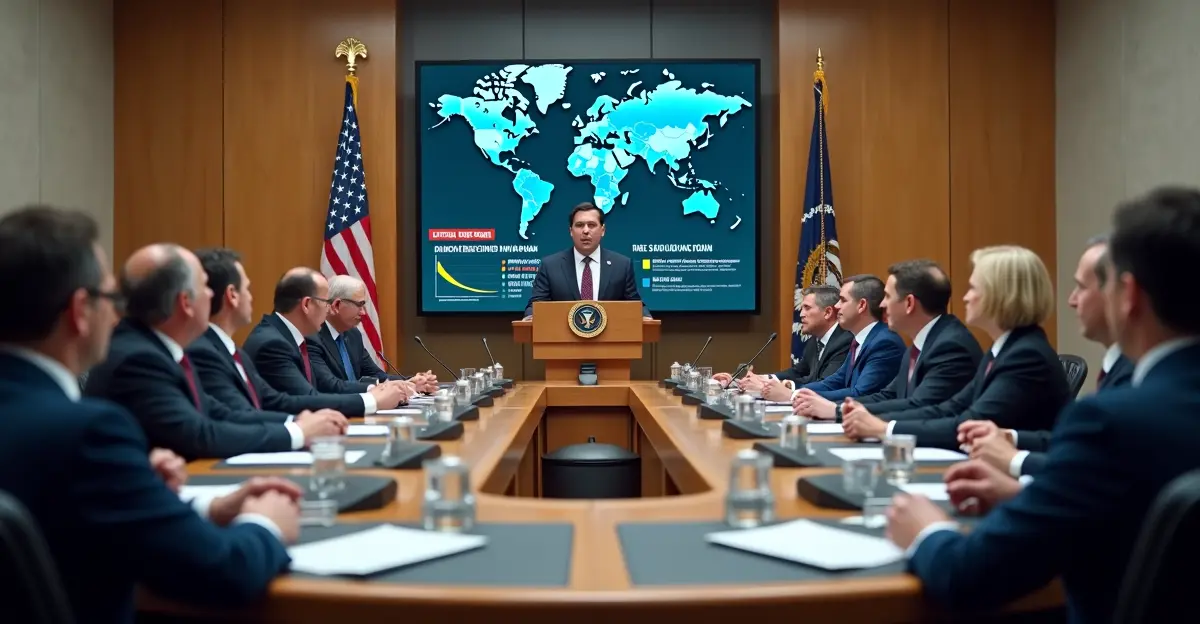
As the energy transition accelerates, competition over lithium, cobalt, rare earths, and copper has escalated into a defining geopolitical struggle of 2026. The February 2026 Critical Minerals Ministerial, hosted by the U.S. Department of State, marked a watershed moment: 54 countries and the European Commission signed 11 new bilateral critical minerals frameworks, while the U.S. mobilized over $30 billion in financing for mineral projects. Yet China continues to control roughly 70% of global rare earth output and over 60% of refined lithium and cobalt, according to the International Energy Agency. The global energy transition supply chains are now at the center of a strategic confrontation that the World Economic Forum's Global Risks Report 2026 ranks as the top global risk: geoeconomic confrontation.
China's Dominance and Export Control Escalation
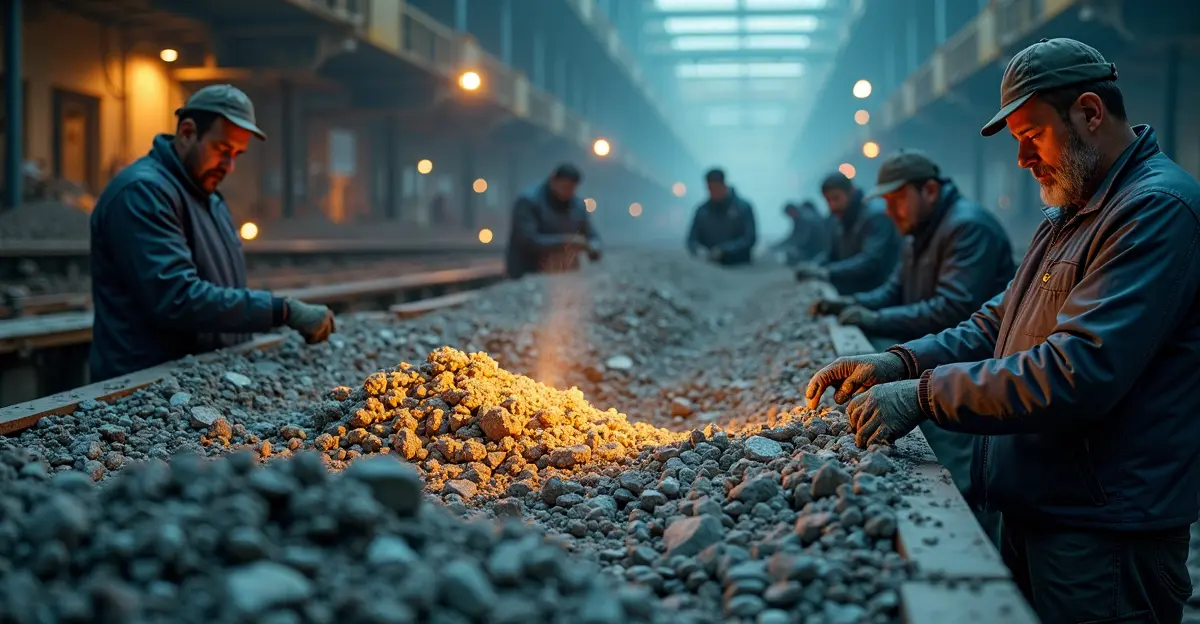
Beijing's grip on critical mineral supply chains remains unparalleled. China accounts for 91% of global rare earth separation and refining and 94% of permanent magnet production. In April 2025, China imposed export controls on seven heavy rare earth elements, causing sharp volume drops and forcing automakers to cut production. On October 9, 2025, the Ministry of Commerce expanded controls to include parts, components, and assemblies containing Chinese-sourced rare earths — even those made internationally using Chinese technology. By early 2026, licensing approval rates for European firms had fallen below 25%, while prices for restricted elements spiked sixfold.
China's 2026 export controls now cover tungsten (80% of global supply), antimony (60%), and additional rare earth elements. The US-China technology war has thus moved decisively into mineral territory, with Beijing weaponizing its processing dominance. As the IEA noted in a January 2026 commentary, supply concentration risks are no longer theoretical — they are a lived reality for manufacturers of EVs, wind turbines, defense systems, and AI data centers.
The Western Response: FORGE, Project Vault, and the EU's ReSourceEU
United States: FORGE and Project Vault
On February 4, 2026, Secretary of State Marco Rubio and Vice President JD Vance launched the Forum on Resource Geostrategic Engagement (FORGE) as the successor to the Minerals Security Partnership (MSP), chaired by the Republic of Korea. FORGE aims to coordinate allied investment in diversified supply chains. The U.S. Export-Import Bank announced Project Vault, a $10 billion domestic strategic reserve for critical minerals. Combined with other instruments, the U.S. has mobilized over $30 billion in letters of interest, loans, and investments for critical mineral projects in the past six months alone.
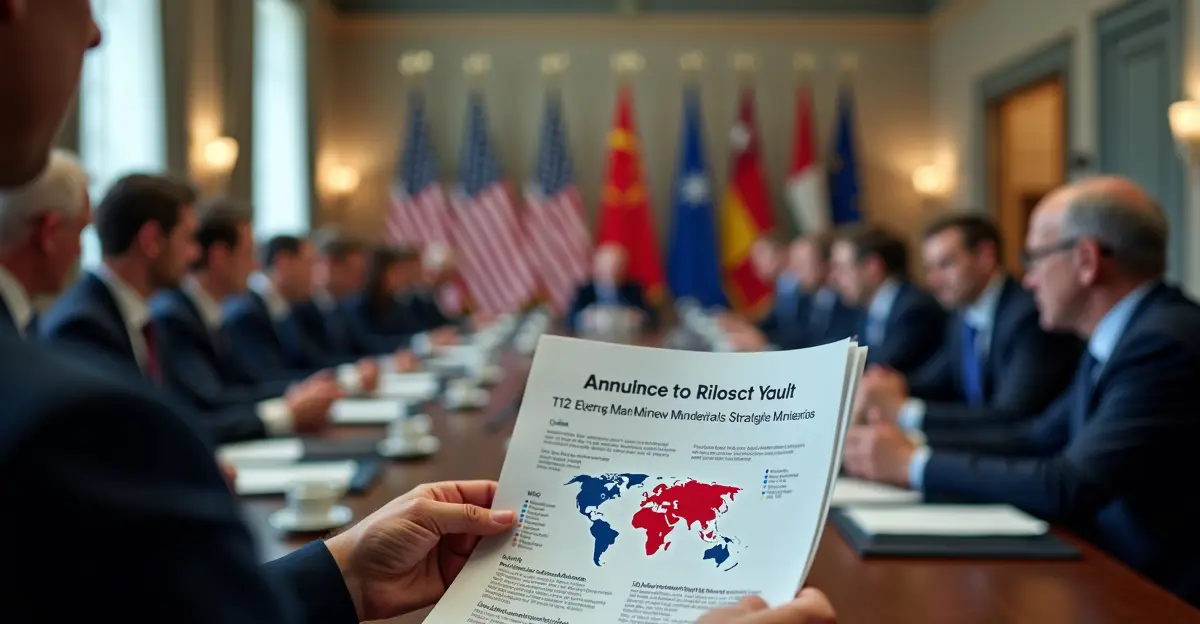
Bilateral agreements signed at the Ministerial include frameworks with Argentina (lithium), Morocco (phosphates and cobalt), Peru (copper), the Philippines (nickel), the UAE (logistics and finance), and the United Kingdom (rare earth processing). These critical minerals bilateral agreements are designed to bypass Chinese-dominated supply chains by creating parallel, allied-controlled routes.
European Union: ReSourceEU and €3 Billion in Funding
The EU has moved aggressively under the Critical Raw Materials Act (CRMA), which came into effect in May 2024. In March 2026, the Council adopted its position to reinforce security of supply and circularity. The European Commission launched the ReSourceEU Action Plan, committing €3 billion ($3.5 billion) in 2026 funding and regulatory fast-tracking for strategic projects. The second call for strategic CRM projects closed in January 2026, building on 60 projects selected from nearly 170 proposals in the first round. However, only ten of those were recycling projects, highlighting the continued emphasis on extraction and processing over circularity.
The EU remains acutely vulnerable: 100% of its heavy rare earth supply comes from China, 99% of boron from Turkey, and 71% of platinum from South Africa. The EU Critical Raw Materials Act implementation aims to reduce these dependencies, but domestic mining faces permitting delays averaging 15 years.
Resource Nationalism 2.0: Producing Countries Push Back
A parallel trend is reshaping the landscape: resource nationalism among mineral-rich nations. Indonesia banned raw nickel exports in 2020, forcing $30 billion in downstream investment and making it the world's dominant nickel producer. Chile's National Lithium Strategy (2023) requires majority state control in future projects. Mexico nationalized lithium via constitutional reform in 2022, creating state company LitioMx. Zimbabwe banned raw lithium exports in 2022, and Namibia followed in 2023. The Democratic Republic of Congo reclassified cobalt as a strategic substance, raising royalties to 10%.
According to a 2025 Oxford TIDE working paper, this new wave of resource nationalism is distinct from the 1970s version: it is driven by the strategic value of minerals essential to the energy transition, giving producing nations unprecedented leverage. For consuming nations, this creates a double bind — dependence on both China's processing monopoly and on increasingly assertive resource-rich states. The resource nationalism critical minerals 2026 trend is forcing mining companies to accept tougher terms or risk losing access entirely.
Systemic Risks and the WEF Warning
The World Economic Forum's Global Risks Report 2026, released in January, identifies geoeconomic confrontation — the weaponization of trade, finance, and technology — as the top risk for 2026. Nearly 60% of surveyed experts expect instability to persist for at least a decade. Half of respondents expect a turbulent or stormy world over the next two years, up 14 percentage points from 2025. Economic risks tied to inflation, asset bubbles, and high debt levels are rising sharply, while environmental risks remain the most severe over the long term.
The report warns that geoeconomic confrontation threatens supply chains, global stability, and the cooperative capacity needed to address economic shocks. Critical minerals are the primary battlefield: export controls, tariffs, sanctions, and the US-China tech war over semiconductors and rare earths are reshaping global supply chains in real time. The geoeconomic confrontation risks 2026 are now front-page strategic reality.
Expert Perspectives
"The 2026 Critical Minerals Ministerial marks a genuine inflection point," said Dr. Sarah Ladislaw, a senior fellow at the Center for Strategic and International Studies. "The shift from the Minerals Security Partnership to FORGE signals a move from dialogue to deal-making. But $30 billion, while significant, is a fraction of what China has invested over two decades. The gap will take years to close."
"Resource nationalism is the wild card," added Dr. Kwasi Ampofo, head of metals and mining at BloombergNEF. "Countries like Indonesia and Chile are not just demanding higher royalties — they want to capture the entire value chain. That changes the calculus for Western automakers and battery manufacturers who need secure, affordable supply."
Frequently Asked Questions
What are critical minerals?
Critical minerals are raw materials essential to national economies and security, with vulnerable supply chains. They include rare earth elements, lithium, cobalt, copper, nickel, and others needed for green energy, electronics, and defense.
Why does China dominate critical mineral supply chains?
China invested heavily over two decades in processing infrastructure, now controlling ~90% of rare earth refining and ~60% of lithium and cobalt processing. Its 2025-2026 export controls have further tightened its grip.
What is FORGE?
The Forum on Resource Geostrategic Engagement (FORGE), launched February 2026, is a U.S.-led multilateral platform to coordinate allied investment in diversified critical mineral supply chains, succeeding the Minerals Security Partnership.
How is the EU responding to critical mineral dependency?
The EU's Critical Raw Materials Act (2024) and ReSourceEU Action Plan (2026) commit €3 billion in funding, fast-track permitting for strategic projects, and set targets for domestic extraction, processing, and recycling.
What is resource nationalism in critical minerals?
Resource nationalism refers to policies by mineral-rich countries to assert greater control over their resources — through export bans, state ownership, higher royalties, or mandatory domestic processing — to capture more value from the energy transition.
Conclusion: A New Map of Power
The critical minerals race is redrawing the map of global power. China's processing dominance, Western alliance-building through FORGE and the CRMA, and the rise of resource nationalism in producing countries are creating a fragmented, multipolar landscape. The WEF warns that without coordinated action, geoeconomic confrontation will deepen, threatening both the energy transition and global stability. For governments and businesses alike, the message is clear: the era of cheap, secure critical minerals is over. The new resource wars have begun.


Follow Discussion