


 Deutsch
 English
 Español
 Français
 Nederlands
 Português


 Share
Share




The global race for critical minerals has entered a new and volatile phase in 2026, as the United States, European Union, and China escalate their competition for control over lithium, rare earth elements, and other strategic resources. No longer just about mining, the fulcrum of geopolitical leverage has shifted decisively to processing — the complex, capital-intensive stage where raw ores are transformed into high-purity materials essential for electric vehicle batteries, wind turbines, and advanced defense systems. With China controlling approximately 90% of global rare earth refining and 65% of lithium chemical processing, Western nations are scrambling to break a dependency that analysts describe as the single greatest vulnerability in the energy transition.
The Processing Bottleneck: Why China Holds the Leverage
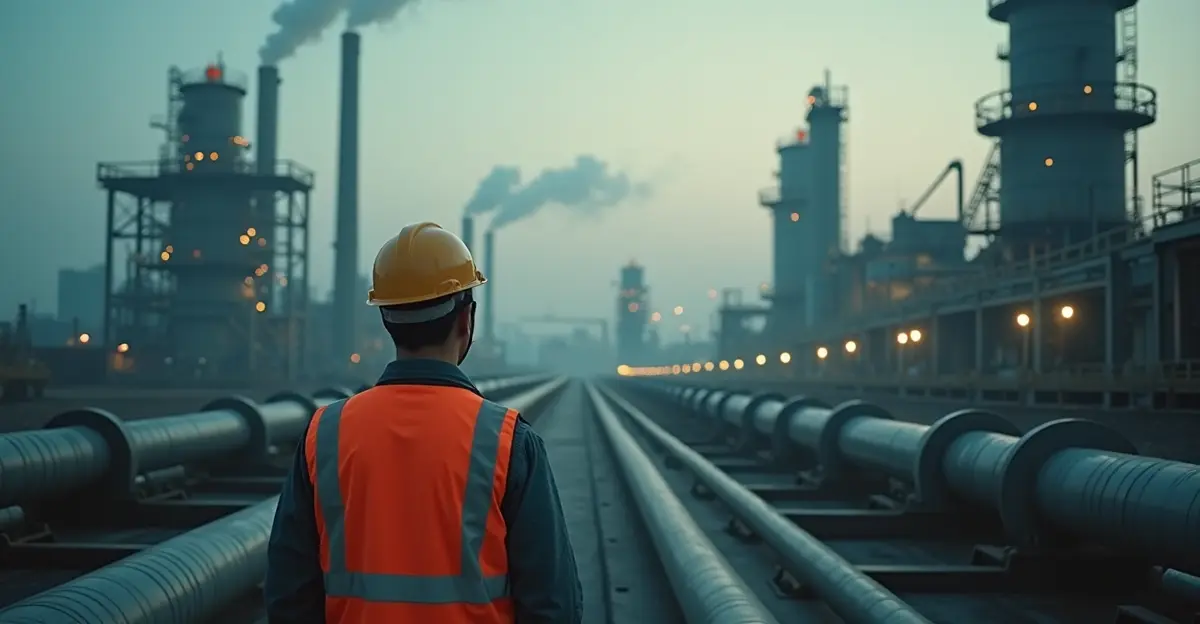
For years, the critical minerals conversation focused on where resources were mined. But in 2026, the bottleneck is unmistakably in midstream processing. China's dominance is not accidental — it is the result of decades of strategic state investment, intellectual property accumulation, and infrastructure buildout. According to the International Energy Agency, China accounted for 91% of global rare earth separation and refining in 2024, and 94% of sintered permanent magnet production. A 2026 patent landscape report found that China filed 81% of all rare-earth-related patents globally between 2014 and 2024.
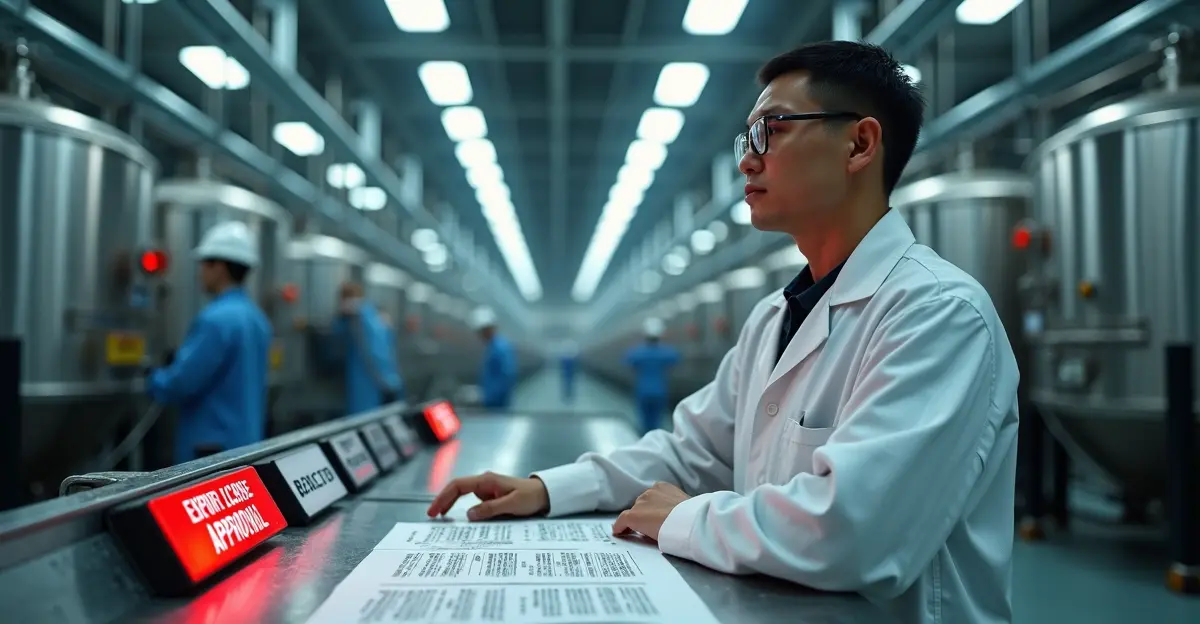
This processing monopoly gives Beijing extraordinary leverage. In early 2026, China introduced new export licensing requirements for seven medium and heavy rare earth elements — samarium, gadolinium, terbium, dysprosium, lutetium, scandium, and yttrium — along with their oxides and alloys. All exports now require a license from China's Ministry of Commerce, with standard processing taking up to 45 working days. Approval rates for European firms have reportedly dropped below 25%. The move follows earlier restrictions on lithium processing technology exports, which were added to China's list of prohibited or restricted exports in 2025.
As one European trade official described the situation: "We are not facing a shortage of minerals in the ground. We are facing a shortage of permission to process them. China has built a wall around the most critical stage of the supply chain, and we are only now realizing how high that wall really is."
The geopolitical implications of supply chain dependency are stark. A multi-institutional analysis published in early 2026 found that over 80% of European companies depend on Chinese supply chains for minerals essential to defense, EVs, and renewable energy. Export controls triggered sixfold price spikes for rare earths outside China, while domestic Chinese prices remained stable — a clear signal that Beijing is weaponizing control rather than scarcity.
Western Counteroffensive: Billions in Refineries and Stockpiles
United States: Project Vault and the $30 Billion Push
The United States has launched the most aggressive response. On February 4, 2026, the State Department hosted the 2026 Critical Minerals Ministerial, led by Secretary of State Marco Rubio and Vice President JD Vance, with representatives from 54 countries. The U.S. signed 11 new bilateral critical minerals frameworks and launched FORGE (Forum on Resource Geostrategic Engagement) as the successor to the Minerals Security Partnership, chaired by South Korea. Over $30 billion in U.S. government-backed financing has been mobilized for strategic minerals projects in the past six months.
Perhaps most significantly, President Trump announced "Project Vault" — a $12 billion strategic stockpile of critical and rare earth minerals, financed by $2 billion in private funds and a $10 billion loan from the Export-Import Bank. Modeled after the Strategic Petroleum Reserve, Project Vault will include potash, aluminum, rhodium, and samarium, and involves companies like General Motors, Boeing, and Google. Manufacturers must commit to purchasing at agreed prices and replenish the stockpile after drawing from it. The project spans 15 years and represents the Export-Import Bank's largest-ever loan.
On the processing front, Tesla confirmed in January 2026 that it has started production at its lithium refinery in Texas, which broke ground in 2023. The U.S. government has also acquired equity stakes in multiple processing companies, including USA Rare Earth, Korea Zinc, Lithium Americas, and MP Materials, aiming to build domestic refining capacity from scratch.
European Union: The Critical Raw Materials Act Takes Effect
The EU's Critical Raw Materials Act (CRMA), adopted in 2024, entered its enforcement phase in 2026 with ambitious benchmarks: at least 10% of extraction, 40% of processing, and 25% of recycling capacity to be met domestically by 2030. No single third country should supply more than 65% of the EU's annual consumption of any strategic raw material at any processing stage. In March 2026, the Council adopted amendments transferring responsibility for identifying large companies using critical raw materials from member states to the European Commission, improving transparency and accountability.
On April 24, 2026, the U.S. and EU signed a preliminary partnership deal on critical minerals — a non-binding memorandum of understanding formalizing cooperation across the value chain from extraction to recycling. The deal includes incentives such as minimum price guarantees favoring non-Chinese suppliers, coordinated standards, and joint investments. EU Trade Commissioner Maroš Šefčovič and U.S. Secretary of State Marco Rubio participated in the signing ceremony.
The EU's strategic autonomy goals for critical minerals face significant headwinds, however. Rebuilding independent supply chains could take 20-30 years, far exceeding the current geopolitical window. Analysts warn that Western nations face a narrowing 12-18 month window to act decisively or accept prolonged vulnerability.
Australia: The Linchpin of Diversification
Australia has positioned itself as a critical partner in the diversification effort. In March 2026, the Albanese government launched the Australian Critical Minerals Prospectus, featuring 49 mines and 29 midstream processing projects ready for investment. The government is providing support through a $1.2 billion Critical Minerals Strategic Reserve, a $4 billion Critical Minerals Facility, and a Critical Minerals Production Tax Incentive. Lynas Rare Earths remains Australia's only significant non-Chinese integrated producer, operating the Mount Weld mine with over 19,000 tonnes per annum of rare earth oxides.
Resources Minister Madeleine King emphasized Australia's capacity to develop these projects reliably and sustainably, while the US-Australia critical minerals framework provides a bilateral channel for investment and technology transfer.
The Strategic Cost of Energy Transition Dependence
The real strategic cost of the current dependence on Chinese processing extends beyond immediate supply disruptions. The IEA warns that global lithium demand rose nearly 30% in 2024 driven by EVs and battery storage, and could double by 2030. Rare earth demand for neodymium-praseodymium (NdPr) — essential for permanent magnets in EVs and wind turbines — is expected to increase 300-400% by 2030.
Yet the gap between ambition and reality remains vast. While China produces only 18% of mined lithium, it controls about 65% of global chemical processing and over 75% of battery cell production. Major firms like CATL and BYD supplied over 1,200 GWh of batteries in 2024 — roughly three-quarters of the world's total. The export controls on processing technology make it harder for the U.S. and Europe to build their own refining systems, creating a classic catch-22: to break dependence, you need processing capacity; to build processing capacity, you need technology that China controls.
The economic security implications of the energy transition are now front and center in national security discussions. As one senior U.S. administration official put it: "We cannot have a green transition that is powered by Chinese coal and controlled by Chinese refineries. That is not energy independence — it is energy dependence with a different label."
Expert Perspectives
Industry analysts are divided on whether the Western response is sufficient. The World Economic Forum, in a February 2026 analysis, noted that while stockpiling can be rational, its increasing prevalence signals growing global fragmentation. The article drew historical parallels from Britain's "Operation Fish" in 1939 to ancient Egyptian grain stores, warning that "it may be time to double down on international cooperation instead."
S&P Global reported in January 2026 that rare earth supply bottlenecks are expected to persist through the year, with limited processing capacity outside China, growing demand from clean energy and technology sectors, and geopolitical tensions continuing to affect trade flows. The message from markets is clear: the processing bottleneck is not going away anytime soon.
Frequently Asked Questions
What are critical minerals and why do they matter in 2026?
Critical minerals include lithium, rare earth elements, cobalt, graphite, and nickel — materials essential for electric vehicle batteries, renewable energy systems, defense technologies, and consumer electronics. In 2026, they have become central to geopolitical competition because China dominates the processing stage, creating strategic vulnerabilities for Western economies.
How much of the world's rare earth processing does China control?
China controls approximately 90% of global rare earth refining and separation capacity, and about 65% of lithium chemical processing. This dominance extends to downstream products: China produces 94% of sintered permanent magnets and over 75% of the world's lithium-ion batteries.
What is Project Vault?
Project Vault is a $12 billion U.S. strategic stockpile of critical minerals announced in 2026, modeled after the Strategic Petroleum Reserve. It is financed by $2 billion in private funds and a $10 billion Export-Import Bank loan, and involves companies like General Motors, Boeing, and Google. The stockpile is intended for civilian use during emergencies and spans 15 years.
What is the EU Critical Raw Materials Act?
The EU Critical Raw Materials Act (CRMA), adopted in 2024 and entering enforcement in 2026, sets targets for the EU to meet at least 10% of its extraction needs, 40% of processing, and 25% of recycling domestically by 2030. It also mandates that no single third country supply more than 65% of the EU's consumption of any strategic raw material at any processing stage.
Can Western countries reduce dependence on China for critical minerals?
Analysts say it could take 20-30 years to rebuild independent supply chains, far exceeding the current geopolitical window. Western nations face a narrowing 12-18 month window to act decisively. While investments in refineries, stockpiles, and international partnerships are accelerating, the technology and infrastructure gap with China remains enormous.
Conclusion: A Defining Economic Security Challenge
The critical minerals reckoning of 2026 is reshaping global power in real time. China's processing monopoly, reinforced by new export controls and a dominant patent portfolio, gives Beijing unprecedented leverage over the technologies that will define the 21st century — from EVs to defense systems. The Western response, while unprecedented in scale, faces structural headwinds that no amount of money alone can solve quickly.
The future of global energy security will depend on whether the U.S., EU, and their allies can translate political urgency into industrial reality before the window of opportunity closes. For now, the race is on — and the finish line is still years away.

Follow Discussion