


 Deutsch
 English
 Español
 Français
 Nederlands
 Português


 Share
Share




The Geopolitical Battle for Critical Minerals: How Supply Chain Vulnerabilities Are Reshaping Global Power Dynamics
In an era defined by technological competition and energy transition, the global struggle for critical minerals has emerged as the defining geopolitical battleground of our time. Recent Atlantic Council stress-testing reveals dangerously underdeveloped crisis response capabilities for critical mineral disruptions, while new US initiatives like 'Project Vault' and the Critical Minerals Playbook represent significant strategic shifts in addressing these vulnerabilities. With China controlling 80-90% of processing for essential minerals like rare earth elements, lithium, and cobalt, Western economies face unprecedented strategic vulnerabilities that could reshape global power dynamics within months of a supply shock.
What Are Critical Minerals and Why Do They Matter?
Critical minerals are materials of strategic or economic importance that are essential for modern technologies, defense systems, and energy infrastructure. Unlike rare earth elements which are a specific group of 17 chemically similar elements, critical minerals encompass a broader range of materials including lithium for batteries, cobalt for electronics, and graphite for energy storage. These minerals form the backbone of everything from electric vehicles and renewable energy systems to advanced weapons platforms and artificial intelligence infrastructure. The global energy transition has dramatically increased demand for these materials, creating what experts call the 'new oil' of the 21st century economy.
The Chinese Processing Monopoly: A Strategic Vulnerability
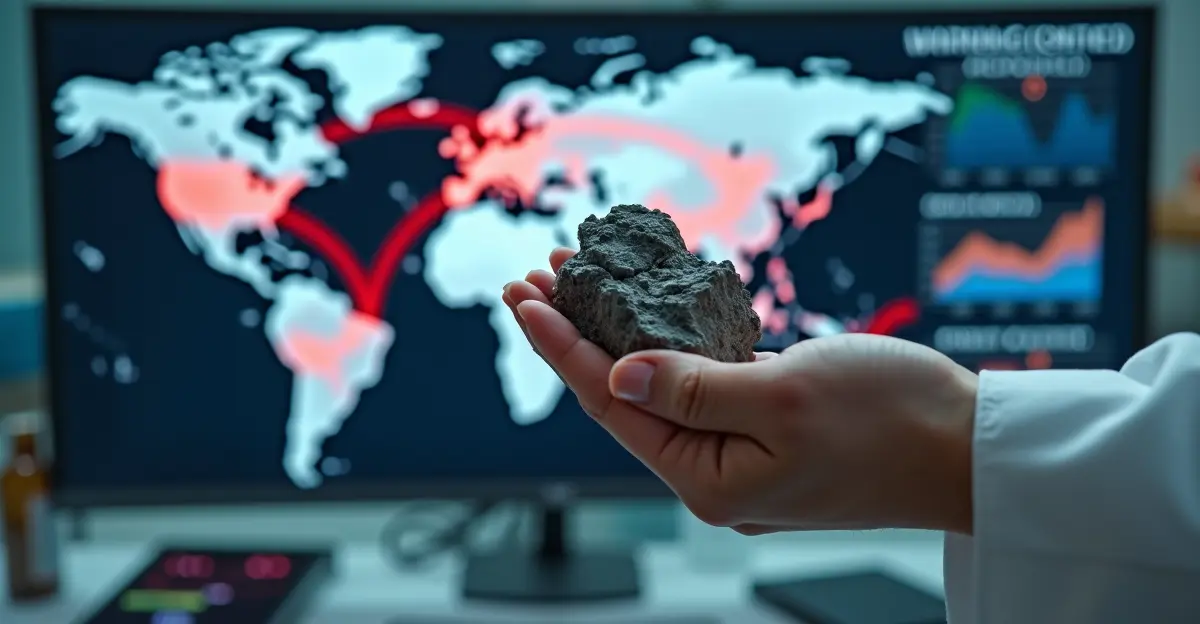
China's dominance in critical mineral processing represents one of the most significant strategic vulnerabilities for Western economies. According to International Energy Agency data, China controls 91% of global rare earth processing, 94% of permanent magnet manufacturing, and similarly dominant positions in lithium, nickel, cobalt, and graphite refining. This concentration creates what defense analysts call 'single points of failure' in global supply chains. 'China has demonstrated willingness to weaponize its market control through export restrictions on graphite, antimony, and rare earths in response to US trade policies,' notes a recent analysis of supply chain vulnerabilities.
The Atlantic Council's July 2025 scenario workshops revealed alarming gaps in Western preparedness. Their stress-testing examined two critical scenarios:
Scenario A1: Geopolitical Export Bans
In this scenario, China imposes export bans on neodymium, dysprosium, and refined manganese – minerals vital for defense systems, AI infrastructure, electric vehicles, and clean energy technologies. The analysis projects that a one-year disruption could cause billions in GDP losses across Western economies, with immediate impacts on defense production and energy transition timelines.
Scenario A2: Climate-Compounded Disruptions
This more severe scenario adds extreme weather shocks that simultaneously disrupt mining and processing operations in China, Australia, South Africa, and Southeast Asia. The compounding effects would create supply shortages that existing emergency tools could not address within relevant timeframes.
The Limitations of Current Crisis Response Tools
Western nations currently rely on a patchwork of crisis response mechanisms that the Atlantic Council analysis reveals would be dangerously inadequate during sustained mineral supply disruptions. The US Defense Production Act, while powerful for mobilizing industrial capacity, faces significant limitations when applied to mineral supply chains that require years to develop. Similarly, national stockpiles like the US National Defense Stockpile (NDS) would be depleted within weeks to months of a major disruption.
'While the US has secured mining deals with countries like Australia, Chile, and Africa, these agreements provide access without true autonomy since materials still require processing in Asian refineries,' explains a recent analysis of refining bottlenecks. The fundamental challenge lies in what experts call the 'midstream gap' – Western nations can secure raw materials but lack the processing infrastructure to convert them into usable forms for defense and energy applications.
Project Vault and the Critical Minerals Playbook: Strategic Responses
In February 2026, the United States launched 'Project Vault,' a $12 billion strategic critical mineral reserve backed by a $10 billion Export-Import Bank loan and nearly $2 billion in private investment. This initiative represents a fundamental shift from traditional stockpiling approaches. Unlike the NDS which prepares for wartime needs, Project Vault serves as an economic security tool designed to prevent crises by absorbing market shocks before conflicts begin.
The initiative faces critical governance decisions that will determine its effectiveness:
- Material Form: Whether to stockpile raw materials or processed, defense-ready forms
- Anti-Crowding Guardrails: Mechanisms to prevent bidding wars during crises
- Release Protocols: Clear guidelines for when and how to deploy reserves
Complementing Project Vault is the broader US Critical Minerals Playbook, which outlines comprehensive strategies for reducing dependence on foreign processing. The playbook emphasizes innovation-focused approaches rather than traditional mining expansion. Key elements include:
- Making innovation central to US critical minerals policy
- Using materials engineering to bypass China's choke points
- Scaling waste-based recovery from mine tailings and industrial waste
- Closing financing gaps for frontier mineral technologies
- Embedding innovation-led mineral security into allied frameworks
Geopolitical Implications and Power Dynamics
The concentration of critical mineral processing in China represents more than an economic vulnerability – it's a fundamental shift in global power dynamics. Nations that control these supply chains gain leverage over competitors' defense capabilities, energy transitions, and technological development. Recent Chinese export controls demonstrate this reality: in April 2025, China introduced restrictions on seven heavy rare earth elements, and by October 2025 expanded these to include parts, components and assemblies containing Chinese-sourced rare earths.
These measures affected strategic sectors including energy, defense, semiconductors, automotive, and AI data centers, demonstrating how theoretical supply concentration risks have materialized into real vulnerabilities. The US-China technology competition has thus expanded from semiconductors and AI to encompass the entire mineral supply chain that underpins these technologies.
Expert Perspectives on the Path Forward
Industry leaders and policy experts emphasize that addressing critical mineral vulnerabilities requires coordinated international action. 'The next battleground for economic security is midstream infrastructure,' notes a recent analysis of refining capacity gaps. Experts point to initiatives like the US-Saudi MP Materials-Ma'aden rare-earth processing venture as strategic attempts to break China's monopoly, though questions remain about efficiency and alignment with American interests.
The Council on Foreign Relations recommends an innovation-focused strategy that leverages breakthroughs in AI-enabled materials research, mine waste recovery, and e-waste recycling. These approaches offer faster, cleaner, and more cost-effective paths to reducing dependence than traditional mining expansion, which can take decades to develop.
Frequently Asked Questions
What are critical minerals and why are they important?
Critical minerals are materials of strategic or economic importance essential for modern technologies, defense systems, and energy infrastructure. They include lithium for batteries, cobalt for electronics, rare earth elements for magnets, and graphite for energy storage.
How much does China control critical mineral processing?
China controls approximately 91% of global rare earth processing, 94% of permanent magnet manufacturing, and similarly dominant positions in lithium, nickel, cobalt, and graphite refining – creating significant strategic vulnerabilities for Western economies.
What is Project Vault and how does it work?
Project Vault is a $12 billion strategic critical mineral reserve launched in February 2026 to address China's weaponization of mineral supply chains. Unlike traditional stockpiles for wartime needs, it serves as an economic security tool to prevent crises by absorbing market shocks before conflicts begin.
What are the limitations of current crisis response tools?
The US Defense Production Act and national stockpiles would be depleted within weeks to months of a major disruption, and scaling alternative production would take years – leaving dangerous gaps in crisis response capabilities.
Can Western nations realistically reduce dependence on Chinese processing?
Yes, through coordinated strategies including innovation in materials engineering, waste recovery technologies, international partnerships, and initiatives like Project Vault – though the transition will require sustained investment and policy commitment over the coming decade.
Conclusion: A Race Against Time
The geopolitical battle for critical minerals represents one of the most urgent challenges facing Western nations in the 2020s. With China's processing dominance creating strategic vulnerabilities that could be weaponized within months, initiatives like Project Vault and the Critical Minerals Playbook represent important but incomplete responses. Success will require not just stockpiling materials but building resilient supply chains, fostering innovation in processing technologies, and strengthening international partnerships. As the global energy transition accelerates and technological competition intensifies, securing critical mineral supply chains has become essential for national security, economic competitiveness, and maintaining technological leadership in the 21st century.


Follow Discussion