


 Deutsch
 English
 Español
 Français
 Nederlands
 Português


 Share
Share




The Strategic Vulnerability of Critical Minerals: How Supply Chain Concentration Threatens Global Security and Energy Transition
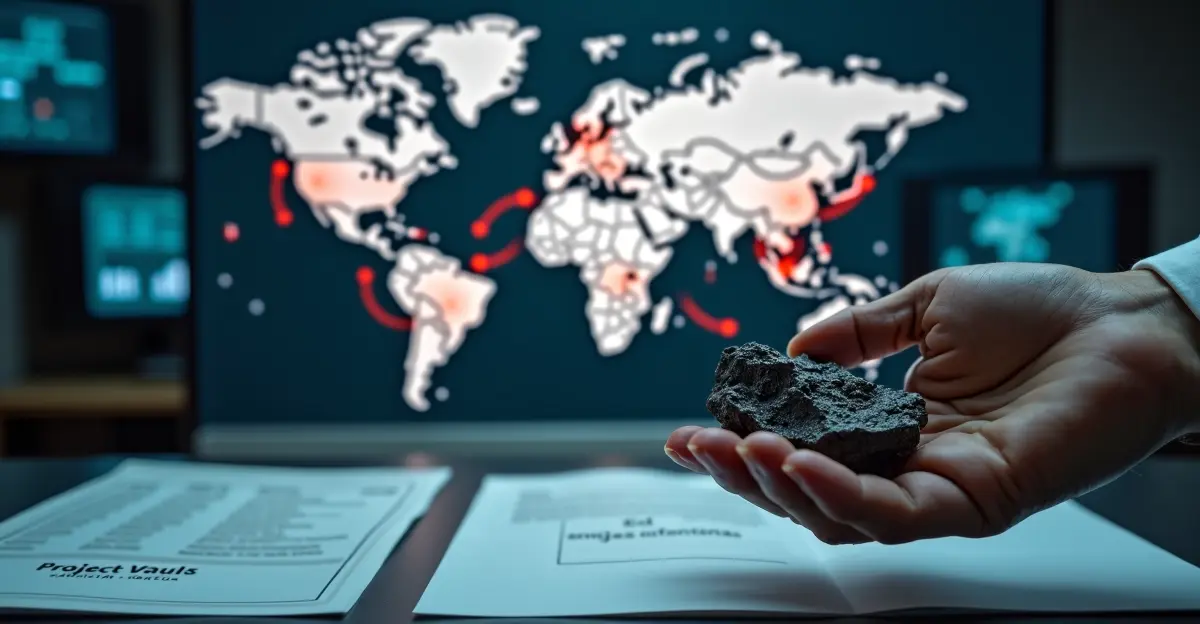
Recent stress tests by the Atlantic Council reveal a sobering reality: US critical mineral stockpiles would be depleted within weeks during geopolitical disruptions, while China's continued dominance of 60-90% of processing capacity for defense-critical minerals creates immediate security vulnerabilities as global tensions escalate. This concentration of supply chains represents one of the most significant strategic vulnerabilities facing Western nations, threatening both national security and the global energy transition simultaneously.
What Are Critical Minerals and Why Do They Matter?
Critical minerals, also known as critical raw materials (CRMs), are designated by governments as essential for their economies and national security. These materials include technology-critical elements, rare-earth elements, and strategic materials vital for advanced defense systems, renewable energy technologies, and digital infrastructure. According to the European Critical Raw Materials Act, these minerals are crucial for everything from fighter jets and missile guidance systems to electric vehicle batteries and solar panels.
China's Dominance: The Geopolitical Reality
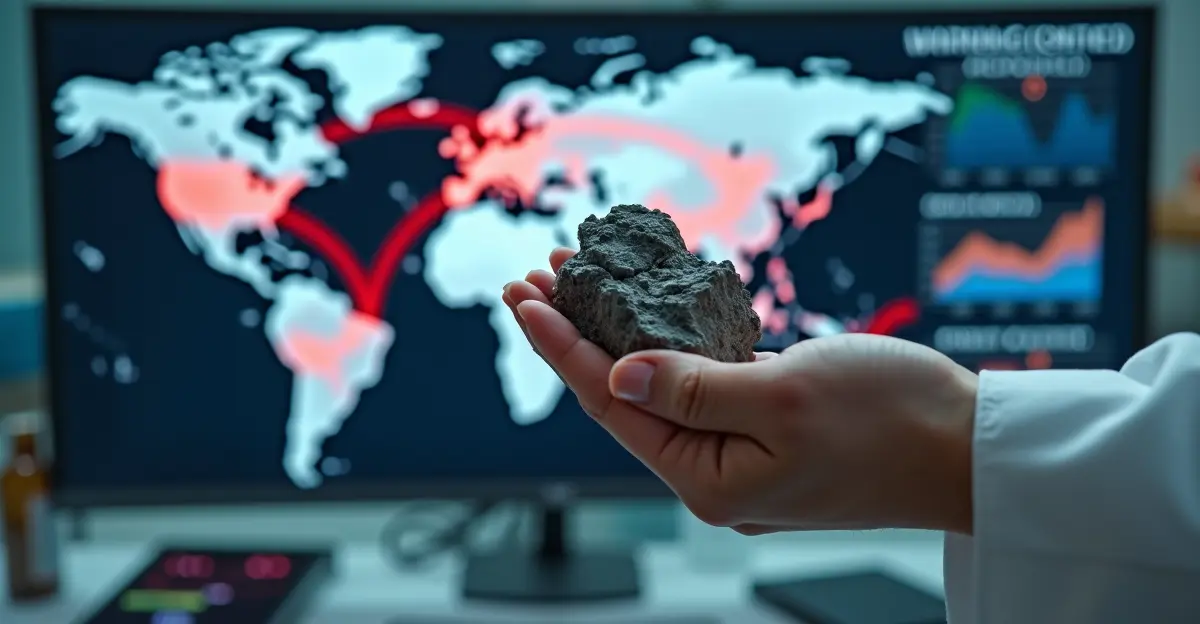
China's strategic control over critical mineral supply chains has reached alarming levels. The International Energy Agency (IEA) reports that China refines 70% of 19 out of 20 strategic minerals and produces 94% of sintered permanent magnets essential for electric vehicles, wind turbines, defense systems, and AI data centers. Recent Chinese export restrictions now cover 12 rare earth elements and related technologies, requiring foreign companies to obtain licenses for products containing Chinese-sourced materials.
Recent Export Restrictions: Gallium and Germanium
In July 2024, China imposed export controls on gallium and germanium, citing national security concerns. These materials are essential for semiconductor manufacturing, radar systems, and fiber optics. The European Union has filed a formal WTO complaint against these restrictions, alleging they violate international trade rules. 'China's export controls have turned supply concentration risks into reality,' warns the IEA in a recent commentary.
NATO's Defense-Critical Materials List
In December 2024, NATO identified 12 defense-critical raw materials essential for Allied defense industries. The list includes aluminium, beryllium, cobalt, gallium, germanium, graphite, lithium, manganese, platinum, rare earth elements, titanium, and tungsten. These materials are crucial for manufacturing advanced defense systems like military aircraft, missiles, tanks, submarines, and jet engines. For example, tungsten is particularly crucial for armor-piercing munitions, with China controlling 85% of global supply, while gallium, vital for radar systems and electronic warfare, faces similar Chinese dominance at over 98% of production.
Stress Test Scenarios: Weeks, Not Months
The Atlantic Council's recent analysis presents alarming scenarios. In Scenario A1, where China imposes export bans on strategic minerals, and Scenario A2, where extreme weather events compound these disruptions, US stockpiles would be depleted within weeks to months. The analysis highlights that a one-year disruption of these minerals could cost the US economy billions in GDP losses and create severe allocation challenges for defense and civilian industries.
The think tank's report emphasizes that while the US has some emergency tools like the Defense Production Act and stockpiles, these would be insufficient during prolonged disruptions. 'The US lacks sufficient capacity to sustain resilience during prolonged disruptions, with alternative production taking years to develop,' the Atlantic Council warns.
Strategic Responses and International Initiatives
The US-Ukraine Critical Minerals Deal
Signed on April 30, 2025, the US-Ukraine critical minerals agreement represents a strategic effort to reduce dependence on China. Ukraine has commercially significant deposits of 22 of 50 minerals deemed essential to US national security, including lithium, cobalt, titanium, graphite, and manganese. However, substantial obstacles exist: many mineral assessments are based on outdated Soviet-era surveys, promising deposits are in contested regions under Russian control, and Ukraine lacks domestic processing capabilities.
EU's Critical Raw Materials Act
The European Critical Raw Materials Act, which came into effect on May 23, 2024, establishes ambitious benchmarks for 2030: 10% domestic extraction, 40% processing, and 25% recycling of EU needs, with no more than 65% from any single third country. The Act focuses on five pillars: setting strategic priorities, building European capacities, improving supply chain resilience, investing in research and skills, and promoting circular economy principles.
2026 Critical Minerals Ministerial
The 2026 Critical Minerals Ministerial, hosted by the United States with Secretary of State Marco Rubio and Vice President JD Vance, brought together representatives from 54 countries and the European Commission. Key outcomes included signing 11 new bilateral critical minerals frameworks/MOUs with countries including Argentina, Cook Islands, Ecuador, Guinea, and Morocco, and establishing the Forum on Resource Geostrategic Engagement (FORGE) as the successor to the Minerals Security Partnership.
Long-Term Implications for Global Power Dynamics
Control over critical minerals has become a primary geopolitical lever in the 21st century. The concentration of supply chains creates systemic vulnerabilities that could force Western nations to make difficult trade-offs between defense capabilities and civilian industries during crises. The Council on Foreign Relations report recommends an innovation-focused strategy to leapfrog China's chokehold, including prioritizing materials science innovation, developing substitute materials, scaling waste-based recovery, and coordinating with allies to build independent supply chains.
The strategic importance of these materials extends beyond immediate security concerns. As the global energy transition accelerates, demand for critical minerals is projected to increase dramatically. The International Energy Agency estimates that demand for lithium could increase 40-fold by 2040, while demand for cobalt and nickel could grow 20-fold.
Expert Perspectives and Analysis
Industry analysts emphasize that refining capacity, not mining access, represents the supply chain's weakest link. 'While the U.S. has secured raw material access through mining deals with Australia, Chile, and Africa, it lacks domestic refining, processing, and conversion capacity,' notes a recent analysis. This means U.S. materials still require Asian processing, creating strategic dependence even when raw materials are sourced elsewhere.
Frequently Asked Questions
What are the most critical minerals for defense systems?
NATO has identified 12 defense-critical materials including tungsten (for armor-piercing munitions), gallium (for radar systems), rare earth elements (for precision-guided weapons), and titanium (for aircraft and submarines).
How long would US stockpiles last during a crisis?
According to Atlantic Council stress tests, US critical mineral stockpiles would be depleted within weeks to months during geopolitical disruptions or combined geopolitical and climate-related crises.
What percentage of critical mineral processing does China control?
China controls 60-90% of global processing capacity for defense-critical minerals, including 85% of tungsten, over 98% of gallium, and 94% of sintered permanent magnets essential for defense and energy technologies.
What is the EU doing to address this vulnerability?
The EU's Critical Raw Materials Act aims to ensure 10% domestic extraction, 40% processing, and 25% recycling of critical mineral needs by 2030, with no more than 65% from any single third country.
Can alternative sources replace Chinese supplies quickly?
Developing alternative production capacity takes years, not months. The US-Ukraine deal and other initiatives face significant obstacles including infrastructure development, processing capacity gaps, and geopolitical challenges.
Conclusion: A Race Against Time
The strategic vulnerability created by critical mineral supply chain concentration represents one of the most pressing security challenges of our time. As global tensions escalate and the energy transition accelerates, Western nations face a race against time to diversify supply chains, develop alternative processing capabilities, and build resilient stockpiles. The geopolitical implications of this vulnerability extend far beyond economic concerns, potentially reshaping global power dynamics in the coming decades.

Follow Discussion