


 Deutsch
 English
 Español
 Français
 Nederlands
 Português


 Share
Share




The Critical Minerals Crisis: How Supply Chain Vulnerabilities Threaten the Global Energy Transition
The global energy transition faces unprecedented challenges as critical mineral supply chain vulnerabilities threaten to derail net-zero ambitions. Recent Atlantic Council stress tests reveal that U.S. critical mineral stockpiles would be depleted within weeks to months if China imposed export restrictions, while the World Economic Forum's May 2025 analysis shows demand for these minerals must triple by 2030 to meet climate goals. This convergence of geopolitical risk and soaring demand creates strategic vulnerabilities that could cripple defense, AI, semiconductor, and clean energy industries worldwide.
What Are Critical Minerals and Why Do They Matter?
Critical minerals encompass 54 essential materials defined by the U.S. Energy Act of 2020 as vital to economic and national security with vulnerable supply chains. These include lithium for electric vehicle batteries, rare earth elements for wind turbines and military systems, cobalt for aerospace applications, and gallium for semiconductor manufacturing. The rare earth elements are particularly crucial, with China controlling 90% of global processing capacity despite these elements being relatively abundant in Earth's crust. According to the International Energy Agency, China refines 70% of 19 out of 20 strategic minerals and produces 94% of sintered permanent magnets essential for electric vehicles and defense systems.
Geographic Concentration: China's Strategic Dominance
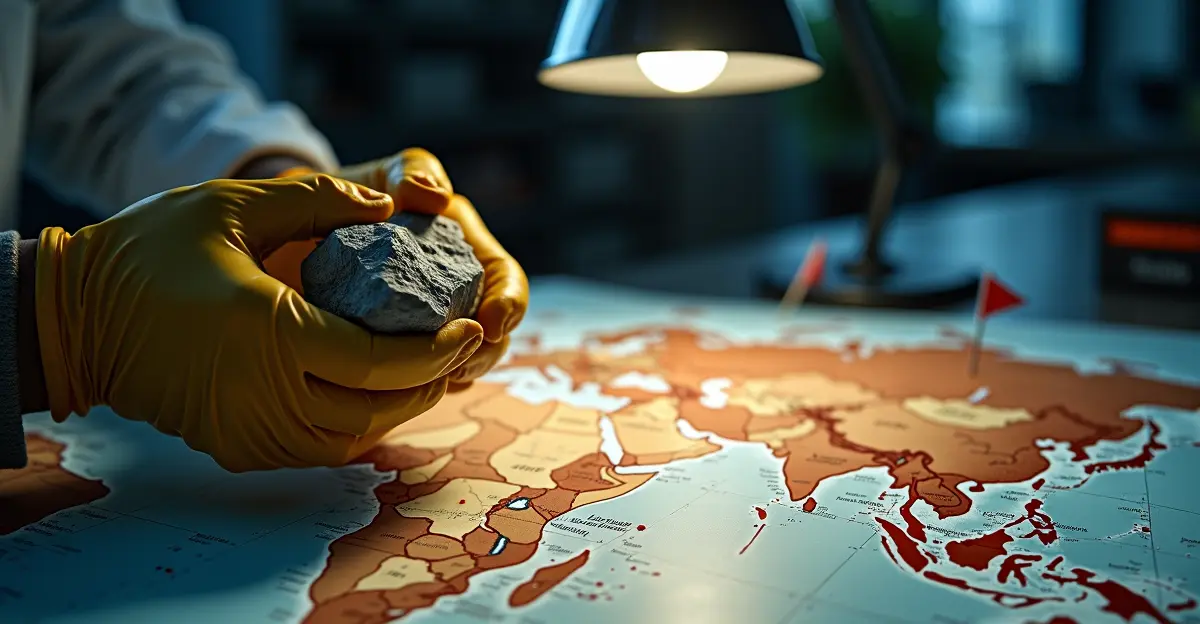
The core vulnerability lies in extreme geographic concentration of production and processing. China's integrated control spans from mining to manufacturing, creating what experts call "strategic leverage points" in global supply chains. The country processes 98% of gallium and 60% of germanium—both essential for AI chips and semiconductor manufacturing—while controlling 73% of cobalt refining and 59% of lithium processing. This dominance was starkly demonstrated in 2010 when China restricted rare earth exports to Japan during territorial disputes, causing prices to spike 600% and highlighting global dependencies.
The Atlantic Council's 2025 stress testing scenarios reveal alarming vulnerabilities. In Scenario A1, where China imposes export bans on strategic minerals, U.S. defense and clean energy industries would face immediate disruptions. The analysis found that while the U.S. has emergency tools like the Defense Production Act and strategic stockpiles, these would be exhausted within weeks to months during a crisis. A one-year disruption could result in billions in GDP losses and force difficult trade-offs between defense and civilian sectors.
Demand Surge: The Energy Transition Imperative
Compounding these vulnerabilities is explosive demand growth. The World Economic Forum projects that demand for critical minerals must triple by 2030 and quadruple by 2040 to achieve net-zero emissions. The IEA's Global Critical Minerals Outlook 2025 shows lithium demand growing fivefold by 2040, graphite and nickel demand doubling, and cobalt and rare earth elements increasing 50-60%. Copper demand grows 30% over the same period despite projected 30% supply deficits by 2035.
This demand surge intersects with multiple strategic sectors:
- Clean Energy: Electric vehicles require six times more minerals than conventional cars
- Defense: Advanced weapons systems depend on rare earth magnets for guidance and targeting
- AI and Semiconductors: High-performance chips require gallium, germanium, and palladium
- Renewables: Wind turbines use permanent magnets containing neodymium and dysprosium
Western Strategies: Onshoring, Friend-Shoring, and Recycling
Western nations are pursuing three primary strategies to secure resilient supply chains, but each faces significant challenges. The U.S. four-pillar approach includes onshoring domestic production, friend-shoring with allies, recycling/circular economy approaches, and technological innovation. However, the timeframe remains daunting due to permitting, infrastructure, and technical scaling challenges.
Onshoring Challenges: Building domestic processing capacity requires massive investment and faces environmental permitting hurdles. The U.S.-Korea Zinc alliance to build a $7.4 billion critical minerals smelter in Tennessee won't begin operations until 2029, highlighting the lengthy timelines involved.
Friend-Shoring Limitations: The Minerals Security Partnership (MSP), launched in June 2022, represents the first institutional application of friend-shoring policy. While democratic countries collectively have sufficient mineral reserves to meet 2030 climate targets, excluding fragile democracies creates significant shortfalls in graphite, silver, and tin. Nickel presents particular challenges due to Indonesia's export bans and Chinese processing dominance.
Recycling Potential: Recycling offers long-term solutions but current infrastructure lags behind demand. The circular economy approaches could eventually supply significant portions of mineral needs, but scaling requires substantial investment and technological advancement.
Geopolitical Implications and Strategic Responses
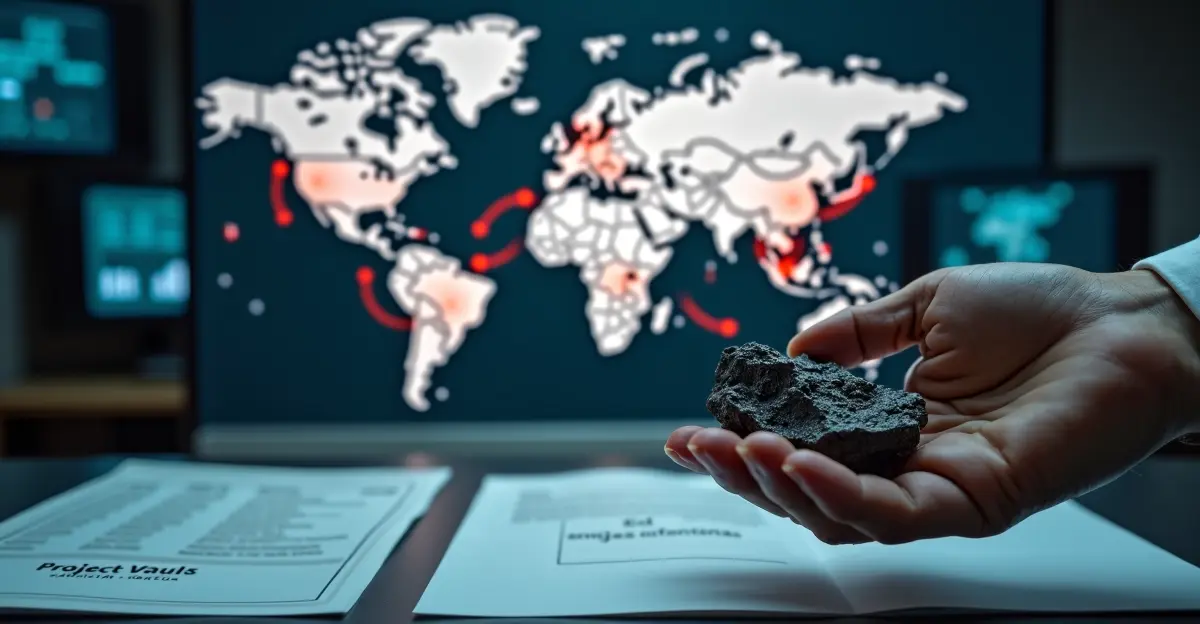
The 2026 Critical Minerals Ministerial, hosted by the United States on February 4, 2026, brought together representatives from 54 countries and the European Commission to reshape global markets. Key outcomes included signing 11 new bilateral critical minerals frameworks and establishing the Forum on Resource Geostrategic Engagement (FORGE) as the successor to the Minerals Security Partnership. The U.S. announced over $30 billion in government support for critical minerals projects over the past six months, including EXIM Bank's $10 billion Project Vault initiative to create a domestic strategic reserve.
China's temporary suspension of export controls from November 2025 through November 2026 provides a one-year reprieve but represents tactical maneuvering rather than permanent policy change. As one analyst noted, "This gives Western nations one year to accelerate supply chain diversification projects, but structural dependencies remain unchanged." The move preserves Beijing's long-term leverage while easing immediate geopolitical tensions.
Industry Impacts and Economic Consequences
The semiconductor industry faces particular vulnerabilities, with AI infrastructure driving unprecedented demand for lesser-known minerals. FP Analytics reports that AI data centers increase demand for copper, rare earth elements, and gallium, with projections showing 2-11% demand increases by 2030. Washington State's AI-driven data center expansion coincides with clean energy goals, intensifying competition for minerals.
Defense industries face equally severe risks. Modern military systems depend on critical minerals for everything from jet engines to missile guidance systems. The Atlantic Council analysis warns that protracted disruptions could force hard trade-offs between maintaining defense capabilities and supporting civilian clean energy transitions.
Frequently Asked Questions
What are critical minerals?
Critical minerals are 54 essential materials vital to economic and national security with vulnerable supply chains, including lithium, cobalt, rare earth elements, and gallium used in clean energy, defense, and technology applications.
Why is China so dominant in critical minerals?
China controls 90% of rare earth processing, 98% of gallium refining, and 73% of cobalt refining through integrated control of mining, processing, and manufacturing stages, combined with significant geological advantages and technical expertise.
How long would U.S. stockpiles last in a crisis?
Atlantic Council stress tests show U.S. critical mineral stockpiles would be depleted within weeks to months if China imposed export restrictions, with defense and clean energy industries facing immediate disruptions.
Can recycling solve the critical minerals crisis?
While recycling offers long-term solutions through circular economy approaches, current infrastructure lags behind demand and requires substantial investment and technological advancement to scale effectively.
What is friend-shoring and can it work?
Friend-shoring involves building supply chains with trusted allies through initiatives like the Minerals Security Partnership. While democratic countries have sufficient reserves, transforming them into production requires unprecedented mining expansion and faces challenges with fragile democracies and technical scaling.
Future Outlook and Strategic Imperatives
The critical minerals crisis represents one of the most significant challenges to the global energy transition and economic security. Meeting projected demand requires around $500-600 billion in new mining investment by 2040, according to IEA estimates. Success depends on coordinated international action, accelerated permitting processes, strategic investments in processing capacity, and technological innovation in recycling and material science.
As the global energy transition accelerates, securing resilient critical mineral supply chains has become not just an economic imperative but a strategic necessity for national security and climate goals. The coming decade will test whether current Western strategies can overcome structural dependencies and build the diversified, secure supply chains essential for a sustainable energy future.



Follow Discussion