


 Deutsch
 English
 Español
 Français
 Nederlands
 Português


 Share
Share




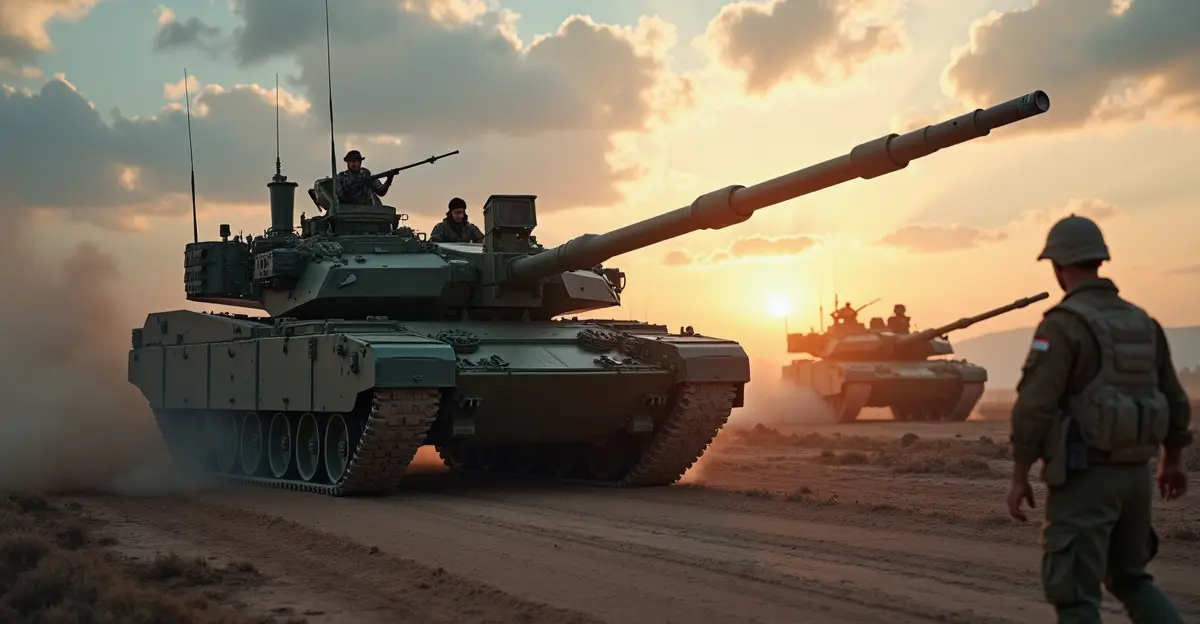
Global military spending is projected to reach a record $2.5 trillion in 2026, as NATO allies, Japan, South Korea, and other nations accelerate defense budgets toward 3% or more of GDP. This structural shift in fiscal priorities—the largest peacetime rearmament since the Cold War—is reshaping economies worldwide, creating winners in defense industries and allied security while raising red flags at the International Monetary Fund (IMF) over inflation, fiscal deficits, and crowding out of social and climate spending.
The World Economic Forum's Global Risks Report 2026 ranks geoeconomic confrontation as the top short-term threat, and the IMF's April 2026 World Economic Outlook flags defense-driven inflation and fiscal crowding-out as new macroeconomic vulnerabilities. With nearly 75% of CEOs reshoring production along geopolitical lines, according to Bain & Company, the rearmament wave is the defining strategic trend of 2026.
The Scale of the Surge
Global defense spending rose 9% to $2.7 trillion in 2024, the steepest annual increase since 1992, according to Reuters. The IISS Military Balance 2026 confirms that spending continues to climb, with Europe posting the fastest growth at 17%. Poland increased spending by 31% and Romania by 43%, while Ukraine allocated $67 billion—34% of its GDP—to defense.
NATO's 2025 Hague Summit adopted a landmark pledge to reach 5% of GDP in defense and security spending by 2035, with an interim review in 2029. The two-tier formula requires 3.5% of GDP for core military expenditures and 1.5% for security-related areas like cyberdefense and supply chain resilience. Already, Poland has pushed spending to 4.7% of GDP, and the Netherlands has committed to 3.5%.
In Asia, Japan's defense budget for fiscal 2026 reached approximately 10.6 trillion yen ($66.5 billion), equivalent to 1.9% of GDP—the fastest rearmament pace since World War II. Tokyo is targeting 2% of GDP by fiscal 2027, driven by threats from China and North Korea. South Korea approved a 2026 defense budget of $44.7 billion, a 7.5% increase, aiming for 3.5% of GDP by 2035. The geopolitical fragmentation in Asia is accelerating these trends.
Macroeconomic Trade-Offs
The IMF warns that defense booms pose significant medium-term risks. According to the April 2026 World Economic Outlook, while defense spending can boost economic activity in the short term, it temporarily increases inflation and creates lasting fiscal challenges. Fiscal deficits worsen by about 2.6 percentage points of GDP, public debt rises by approximately 7 percentage points within three years, and external balances deteriorate.
This creates a classic "guns versus butter" trade-off. The IMF notes that history shows defense booms typically weaken fiscal balances and lead to sharp reductions in social spending. A UN report highlights that less than 4% of global military spending could eradicate world hunger, and in developing countries, a 1% increase in military expenditure correlates with an almost equal reduction in publicly financed health services.
French Finance Minister Roland Lescure argued that higher defense spending can create a "double dividend" by boosting sovereignty and domestic jobs. However, World Bank President Ajay Banga noted that while defense has become a priority, overseas development funding has shrunk. Polish Finance Minister Andrzej Domański emphasized that spending 5% of GDP on defense is necessary given the threat from Russia, despite risks of social unrest. The defense-driven inflation pressures are being closely monitored by central banks.
Industry and Supply Chain Impacts
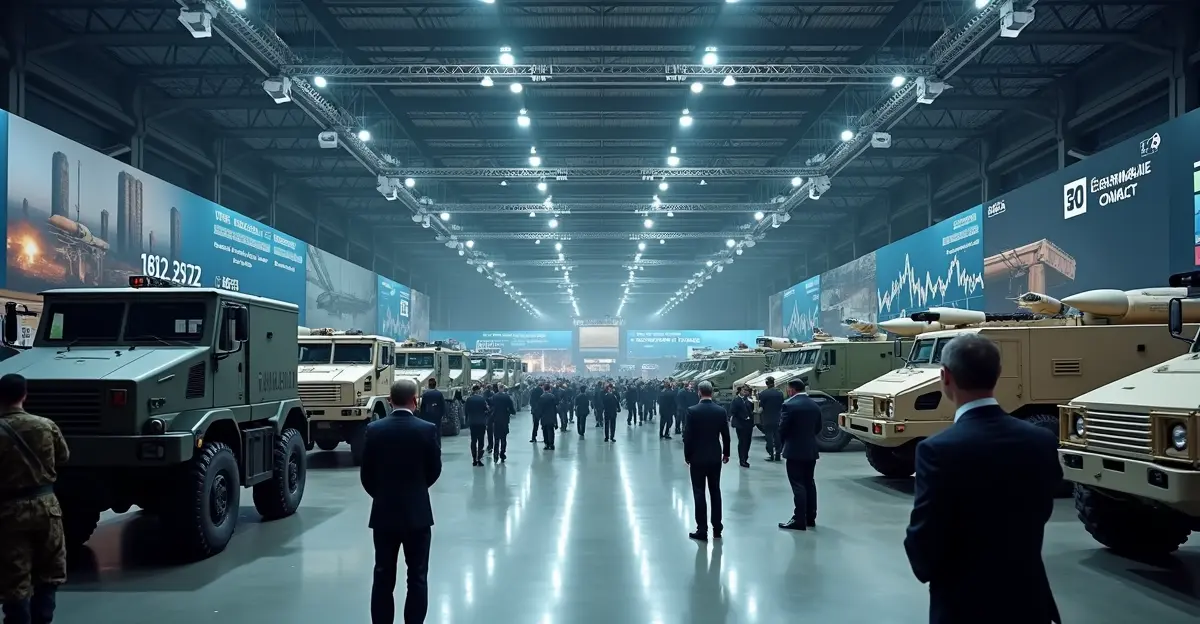
The rearmament wave is a boon for defense contractors. The world's top 100 defense companies earned a record $679 billion in revenue in 2024. American giants like Lockheed Martin, Northrop Grumman, RTX, Boeing, and General Dynamics captured 31% of global arms revenue. Europe's STOXX Aerospace and Defence index has risen over 120% since January 2024.
Supply chains are being reshaped along geopolitical lines. Bain & Company found that 81% of CEOs and COOs plan to bring supply chains closer to home markets, up from 63% in 2022, with 69% shifting operations out of China. McKinsey's January 2026 analysis identifies geopolitically-driven factors—industrial policy, tariffs, export controls—as the primary force reshaping manufacturing footprints, particularly in electronics, machinery, and semiconductors.
Japan's buildup is alliance-integrated with the United States, focusing on surveillance, logistics, and deterrence. Demographic constraints are driving Tokyo toward unmanned systems. South Korea's budget allocates $6 billion to strengthen its "three-axis" deterrence system against North Korea, including Kill Chain strike capabilities and Korea Air and Missile Defense. The reshoring of critical supply chains is creating new industrial clusters.
Fiscal Sustainability Concerns
The IMF's analysis underscores that defense spending increases are primarily financed through higher deficits, not tax increases. This raises concerns about debt sustainability, especially for countries with already high debt-to-GDP ratios. The IMF calls for policies that "carefully manage the trade-offs involved in ramping up defense spending" and lay the foundation for sustained recovery.
For NATO's European members, the 5% target represents a massive fiscal challenge. Many countries would need to double or triple their current defense allocations, potentially requiring cuts to welfare, healthcare, and education—or significant tax hikes. The fiscal sustainability of NATO spending targets is a growing concern among economists.
In developing countries, the opportunity cost is even starker. The UN reports that the SDG financing gap stands at $4 trillion annually, while military spending continues to rise. UN Secretary-General António Guterres has urged redirecting even a fraction of military spending to education, healthcare, and clean energy, noting that extreme poverty could be eliminated for under $300 billion.
Expert Perspectives
"The rearmament wave is a structural shift that will define macroeconomic policy for the next decade," said Dr. Maria Chen, senior fellow at the Atlantic Council. "Countries that can finance defense increases without destabilizing their economies will gain strategic resilience. Those that cannot risk a debt spiral."
"We are seeing a fundamental reprioritization of state resources," added Professor James Miller of the London School of Economics. "The social contract is being rewritten, with security spending taking precedence over welfare and climate investment. This has profound implications for inequality and political stability."
FAQ
What is driving the global defense spending surge in 2026?
The surge is driven by geopolitical tensions including the Russia-Ukraine war, the U.S.-Israeli conflict with Iran, China's regional assertiveness, North Korea's missile programs, and NATO's new 5% GDP spending target adopted at the 2025 Hague Summit.
How does increased defense spending affect inflation?
The IMF warns that defense booms temporarily increase inflation by boosting demand for labor, materials, and capital goods, while supply constraints in defense industries exacerbate price pressures. The April 2026 WEO flags defense-driven inflation as a new macroeconomic vulnerability.
What is the "guns versus butter" trade-off?
This economic concept describes the opportunity cost of allocating more resources to military spending ("guns") at the expense of social programs like healthcare, education, and infrastructure ("butter"). The IMF notes that defense booms historically lead to sharp reductions in social spending.
Which countries are increasing defense spending the most?
Poland (4.7% of GDP), the Baltic states (approaching 4%), the Netherlands (3.5%), Japan (1.9% and rising), and South Korea (2.9% and targeting 3.5%) are among the fastest-growing spenders. Europe overall saw 17% growth in 2024.
How are supply chains being reshaped by the rearmament wave?
Companies are reshoring and near-shoring production along geopolitical lines, with 81% of CEOs planning to bring supply chains closer to home markets. Defense-related industries in electronics, semiconductors, and machinery face the highest disruption pressures, according to McKinsey.
Conclusion
The $2.5 trillion rearmament of 2026 represents a historic pivot in global fiscal priorities. While defense contractors and allied security benefit in the short term, the macroeconomic trade-offs—inflation, fiscal deficits, crowding out of social and climate spending—pose serious risks. The IMF's warning that defense booms worsen fiscal balances and increase public debt by 7 percentage points within three years underscores the need for careful management. As the WEF's Global Risks Report 2026 makes clear, geoeconomic confrontation is now the top risk, and the rearmament wave is both a response to and a driver of that fragmentation. The nations that navigate this trade-off successfully will emerge with greater strategic resilience; those that overextend may face unsustainable debt trajectories and social unrest.



Follow Discussion