


 Deutsch
 English
 Español
 Français
 Nederlands
 Português


 Share
Share




Critical Minerals Geopolitics: How Supply Chain Vulnerabilities Threaten Global Energy Transition
The global energy transition faces a critical paradox: while demand for essential minerals like lithium, cobalt, nickel, copper, and rare earth elements is projected to double by 2030, supply remains dangerously concentrated in just a handful of countries, creating unprecedented geopolitical vulnerabilities. Recent International Energy Agency (IEA) reports warn that fragile critical minerals supply chains threaten to derail climate goals while creating new strategic leverage points for dominant producers, particularly China, which controls up to 98% of key processing capacities. This concentration creates what experts call 'geopolitical dependencies' that could reshape global power dynamics in the coming decade.
What Are Critical Minerals and Why Do They Matter?
Critical minerals, also known as critical raw materials (CRMs), are designated by governments as essential for strategic industries where supply interruption risks exist. For the energy transition, these include lithium for batteries, cobalt for electric vehicle cathodes, nickel for stainless steel and batteries, copper for electrical infrastructure, and rare earth elements for permanent magnets in wind turbines and electric motors. According to the IEA Global Critical Minerals Outlook 2025, demand for these minerals is surging as countries accelerate decarbonization efforts, with lithium demand growing nearly 30% in 2024 alone despite price volatility.
The Concentration Crisis: China's Processing Dominance
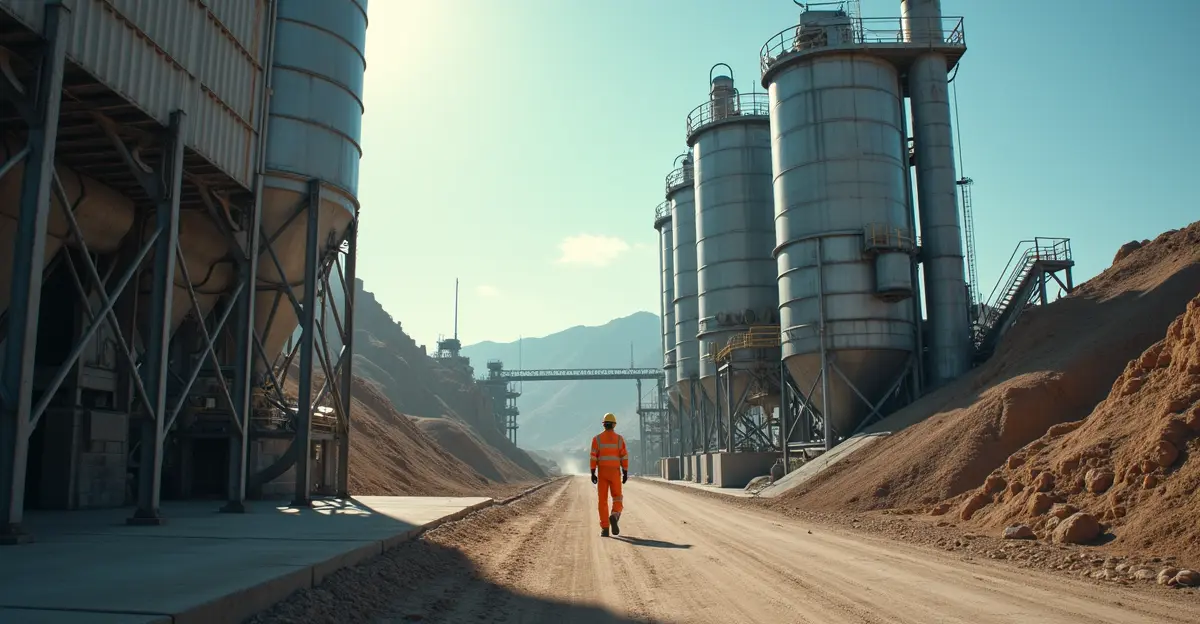
The most alarming vulnerability lies in processing and refining, where China has established near-total control. While mining occurs across multiple continents, China refines 98% of LFP cathode material, over 90% of rare earth elements, and dominates processing for cobalt, graphite, and manganese. This creates what the Council on Foreign Relations calls 'weaponized dominance' through export controls. In 2025, China implemented export restrictions on graphite, gallium, germanium, antimony, tungsten, tellurium, bismuth, indium, and molybdenum, demonstrating how supply chain control translates into geopolitical leverage.
Supply Chain Bottlenecks by Mineral
- Lithium: Prices fell over 80% since 2023 after an eightfold increase, but supply remains concentrated in Australia, Chile, and China, with China controlling most refining capacity.
- Cobalt: The Democratic Republic of Congo produces 70% of global supply, with China controlling most processing and export restrictions creating additional risks.
- Nickel: Indonesia dominates production with 55% of global output, creating single-point failure risks for battery supply chains.
- Copper: Faces structural deficits starting in 2025, with BloombergNEF projecting a 19 million metric ton shortfall by 2050.
- Rare Earth Elements: China controls over half of global mining and 90% of separation and refining capacity, creating monopoly conditions.
Geopolitical Responses and Strategic Partnerships
Major powers are responding through unprecedented diplomatic and economic initiatives. The 2026 Critical Minerals Ministerial, hosted by U.S. Secretary of State Marco Rubio, brought together representatives from 54 countries and the European Commission, resulting in eleven new bilateral critical minerals frameworks. The U.S. has mobilized over $30 billion in support for critical minerals projects over the past six months, including EXIM Bank's $10 billion Project Vault initiative to establish a domestic strategic reserve. The G7 released a Critical Minerals Action Plan focusing on market-based mechanisms and international partnerships to diversify supply chains.
According to the Atlantic Council analysis, China's dominance results from decades of strategic state intervention involving a comprehensive whole-of-government approach that coordinates the Communist Party, state apparatus, military complex, industry, and research institutions. This creates what experts describe as a 'complex web of policies including price controls, tax policies, environmental regulations, standards setting, foreign policy, defense strategy, industry planning, and research and development to maintain global market control.'
Resilience Analysis Reveals Alarming Vulnerabilities
The IEA's N-1 resilience analysis reveals the stark reality of current vulnerabilities: if the largest supplier is excluded, remaining supplies would cover only 25-30% of demand for cobalt and graphite, 55% for nickel, and 60% for lithium by 2035. This vulnerability could lead to price spikes, higher electric vehicle costs, slowed electrification, and significant economic consequences. The systematic review of 327 peer-reviewed articles published in 2025 found that current literature focuses predominantly on upstream disruptions while neglecting midstream and downstream vulnerabilities like demand volatility and manufacturing bottlenecks.
Impact on Climate Goals and Energy Security
The strategic implications extend beyond economics to climate policy. Supply disruptions could derail national decarbonization timelines, increase clean technology costs, and create energy security risks. As countries implement ambitious net-zero emissions targets, the availability of critical minerals becomes a determining factor in transition speed and success. The European Union's Critical Raw Materials Act, which came into effect in May 2024, identifies 34 critical raw materials with 17 considered strategic, acknowledging that the EU is 100% dependent on China for heavy rare-earth elements and 99% dependent on Turkey for boron.
Expert Perspectives and Future Outlook
'Rather than attempting to out-mine or out-process China—a decades-long challenge—the U.S. should pursue an innovation-focused strategy to leapfrog China's position,' recommends the Council on Foreign Relations report. This includes prioritizing materials science innovation, developing substitute materials to bypass Chinese choke points, scaling waste-based recovery from mine tailings and industrial waste, and closing financing gaps for frontier mineral technologies.
The East Asia Forum argues in March 2026 that 'China's critical mineral strategy is more nuanced than geopolitical narratives suggest' and that viewing China exclusively through a geopolitical lens risks unnecessary confrontation. They emphasize that more resilient critical mineral supply chains require inclusive cooperation rather than treating China as the central risk.
Frequently Asked Questions
What are the most critical minerals for the energy transition?
The most critical minerals include lithium for batteries, cobalt for electric vehicle cathodes, nickel for batteries and stainless steel, copper for electrical infrastructure, and rare earth elements for permanent magnets in wind turbines and electric motors.
Why is China's dominance in critical minerals processing concerning?
China controls 98% of LFP cathode material production, over 90% of rare earth element processing, and dominates refining for most energy minerals. This creates geopolitical leverage through export controls and creates single-point failure risks in global supply chains.
How are Western countries responding to these vulnerabilities?
The U.S. and allies have launched multiple initiatives including the 2026 Critical Minerals Ministerial, eleven new bilateral frameworks, over $30 billion in project support, and the G7 Critical Minerals Action Plan to diversify supply chains and reduce dependencies.
What is the N-1 resilience analysis?
The IEA's N-1 analysis calculates what percentage of demand could be met if the largest supplier is excluded. Results show only 25-30% coverage for cobalt and graphite, 55% for nickel, and 60% for lithium by 2035, revealing significant vulnerabilities.
Can recycling and innovation reduce critical mineral dependencies?
Yes, waste recovery and recycling technologies offer faster, cleaner paths to reducing dependence than traditional mining expansion. Innovation in substitute materials and processing technologies could help bypass current choke points.
Follow Discussion