


 Deutsch
 English
 Español
 Français
 Nederlands
 Português


 Share
Share




The New Geopolitical Currency: How Critical Minerals Are Reshaping Global Power Dynamics
In a dramatic shift that has redefined 21st-century geopolitics, critical minerals including lithium, cobalt, and rare earth elements have emerged as the new strategic resource battleground, surpassing oil as the primary focus of international competition. Recent US executive orders and policy shifts in late 2024 and early 2025 have elevated these essential materials to a top-tier geopolitical priority, coinciding with intensifying competition between major powers over control of resources vital for the energy transition and advanced technologies. This transformation represents what experts call the "mineralization of geopolitics," where access to lithium for electric vehicle batteries, cobalt for aerospace applications, and rare earths for defense systems now determines national security and economic competitiveness.
What Are Critical Minerals and Why Do They Matter?
Critical minerals, also known as critical raw materials (CRMs), are raw materials designated by governments as essential for their economies and national security. Unlike traditional commodities, these minerals face supply chain vulnerabilities that make them strategically significant. The US Department of the Interior's 2025 List of Critical Minerals identifies 60 such materials, including 10 new additions like copper, silicon, and uranium. According to the Intergovernmental Forum on Mining, criticality varies by country and context but consistently includes technology-critical elements and rare-earth elements essential for renewable energy technologies, defense systems, and digital infrastructure.
China's Processing Dominance: The New Strategic Reality
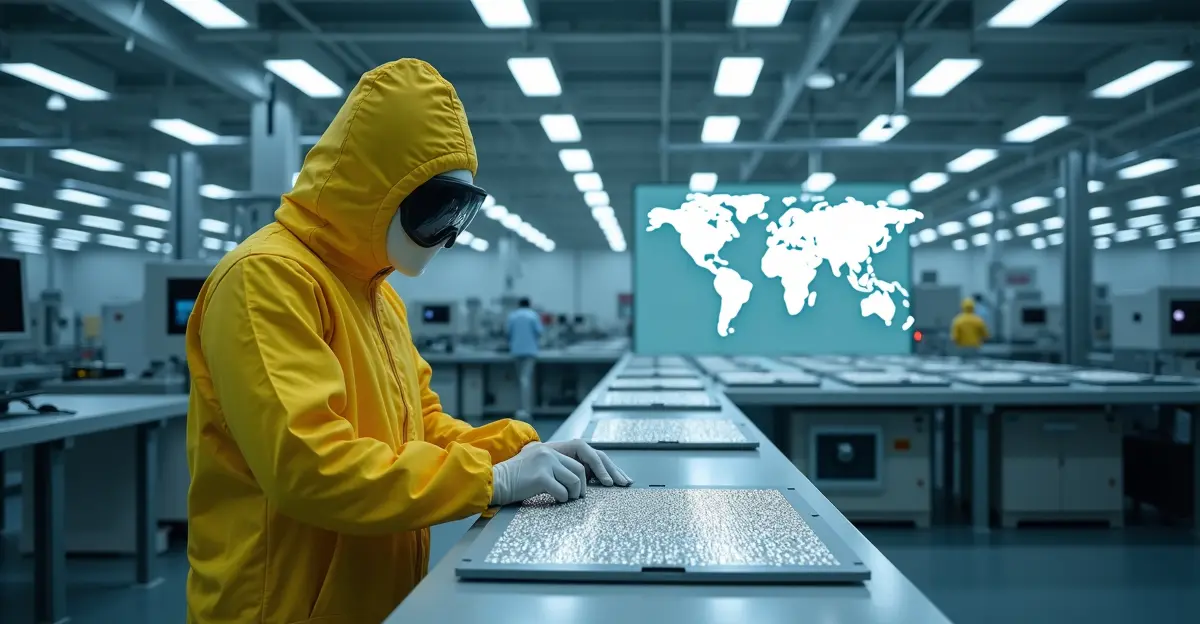
China's comprehensive control over critical mineral supply chains represents the most significant geopolitical development of the decade. Recent analysis reveals China dominates processing and refining for 19 of 20 strategic minerals with approximately 70% average market share. Five key minerals under China's near-monopoly include:
- Graphite (90% of battery-grade production)
- Lithium (70% of global refining capacity)
- Cobalt (controlled through DRC-to-China pipeline)
- High-purity manganese
- Tungsten (80% of global production)
This dominance has been weaponized through export controls on graphite, gallium, germanium, and antimony, demonstrating Beijing's willingness to leverage mineral control for geopolitical advantage. As noted in a Council on Foreign Relations report, "China's near-total control over critical minerals and willingness to weaponize this dominance poses significant risks to U.S. industries including defense, aerospace, autos, and electronics." The European Union faces similar vulnerabilities, importing 100% of its heavy rare-earth elements from China and 99% of its boron from Turkey.
US Policy Response: Executive Orders and Strategic Shifts
The Trump administration's January 2026 executive order, titled 'Adjusting Imports of Processed Critical Minerals and Their Derivative Products into the United States,' represents a fundamental shift in American mineral strategy. Rather than focusing on upstream extraction, the order emphasizes international cooperation to strengthen US minerals security, recognizing that dependence on foreign processing creates national security vulnerabilities. The order directs the Secretary of Commerce to negotiate agreements with foreign partners and authorizes potential trade remedies like tariffs if negotiations fail.
This builds on Executive Order 14272 from 2025 and the US Department of Energy's Critical Minerals and Materials Program, which aims to build secure supply chains for America's energy future. The US Geological Survey reports that the US imported 80% of its rare earth elements in 2024, highlighting the urgency of these policy initiatives. The Atlantic Council's stress-test analysis reveals that US critical mineral supply chains face severe vulnerabilities to geopolitical and climate shocks, with stockpiles potentially depleted within weeks to months during disruptions.
European Initiatives and Global Minerals Diplomacy
The European Union has responded to growing geopolitical risks by planning strategic stockpiles of critical minerals, according to a July 2025 Financial Times report. This initiative aims to reduce dependency on foreign suppliers and secure essential raw materials needed for green technologies, digital infrastructure, and defense systems. The EU's Critical Raw Materials Act, which came into effect in May 2024, specifies a list of 34 critical raw materials, including 17 considered strategic.
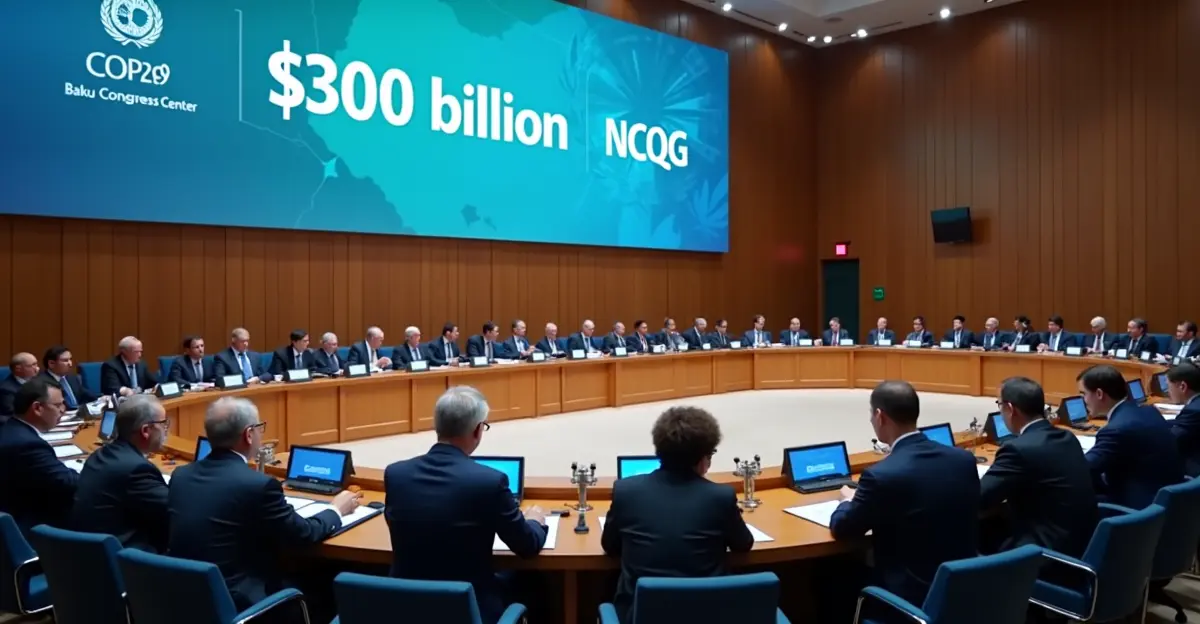
Globally, the G7 Critical Minerals Action Plan represents coordinated efforts among major economies to secure supply chains for minerals essential to clean energy, digital infrastructure, and defense technologies. The Minerals Security Partnership (MSP), launched in April 2024, enhances cooperation among transnational partners to secure stable supplies of raw materials critical to "green and digital transitions." These initiatives reflect what analysts call "minerals diplomacy" – the strategic use of resource agreements as diplomatic instruments in international relations.
Strategic Vulnerabilities and Energy Transition Implications
The concentration of critical mineral supply chains creates significant vulnerabilities for global decarbonization efforts. According to Atlantic Council analysis, China imposing export bans on neodymium, dysprosium, and refined manganese would cause immediate supply shortages and price spikes, potentially derailing electric vehicle production and renewable energy deployment. When combined with extreme weather disruptions in key mining regions, these geopolitical crises could force hard trade-offs between defense and civilian needs.
The Council on Foreign Relations recommends an innovation-focused strategy to leapfrog China's control, including developing substitute materials, scaling waste-based recovery from mine tailings, and closing financing gaps for frontier mineral technologies. As one expert noted, "Rather than trying to out-mine China, the U.S. should leverage its strengths in innovation, materials science, and recycling technologies to build more resilient supply chains independent of Chinese control." This approach aligns with broader circular economy principles gaining traction in sustainable resource management.
Future Outlook: The Mineralized Geopolitical Landscape
As critical minerals continue to reshape global power dynamics, several trends are emerging. First, minerals diplomacy will become increasingly central to international relations, with resource agreements serving as key diplomatic instruments. Second, innovation in recycling and substitution technologies will accelerate as nations seek to bypass Chinese choke points. Third, strategic stockpiling and supply chain diversification will become standard national security practices.
The UK's 2024 Criticality Assessment, which identified 34 minerals as critical, demonstrates how even nations with limited domestic resources are developing comprehensive mineral security strategies. Similarly, the Australian mining sector has become a focal point for Western efforts to develop alternative supply chains, with an $8.5 billion pipeline project and $7.4 billion Tennessee smelter initiative representing significant investments in mineral independence.
Frequently Asked Questions
What are the most critical minerals for national security?
The US 2025 List identifies 60 critical minerals, with rare earth elements, lithium, cobalt, graphite, and manganese being particularly crucial for defense, energy, and technology sectors. China controls processing for 19 of 20 strategic minerals with 70% average market share.
How does China dominate critical mineral supply chains?
China controls approximately 90% of battery-grade graphite production, 70% of lithium refining capacity, 80% of tungsten production, and the majority of cobalt processing through DRC-to-China pipelines. This dominance extends across mining, processing, and supply chain management.
What is the US doing to address critical mineral vulnerabilities?
The January 2026 executive order focuses on international cooperation for processed minerals security, building on 2025 initiatives. The Department of Energy's Critical Minerals Program and strategic investments like the $7.4 billion Tennessee smelter project aim to build resilient domestic and allied supply chains.
How do critical minerals affect the energy transition?
Critical minerals are essential for electric vehicles, renewable energy systems, and grid storage. Supply chain vulnerabilities could delay decarbonization timelines, increase costs, and create geopolitical dependencies that undermine climate goals.
What are alternative strategies to reduce dependence on China?
Innovation-focused approaches include developing substitute materials, scaling recycling from electronic waste and mine tailings, investing in advanced extraction technologies, and building allied supply chains through partnerships like the Minerals Security Partnership.



Follow Discussion