


 Deutsch
 English
 Español
 Français
 Nederlands
 Português


 Share
Share




Critical Minerals Geopolitics: How Energy Transition is Redrawing Global Power Maps
The global race for critical minerals essential to the clean energy transition is fundamentally reshaping international relations and creating new geopolitical dependencies. According to the International Energy Agency, demand for minerals like lithium, cobalt, and rare earth elements must triple by 2030 and quadruple by 2040 to achieve net-zero emissions, creating urgent strategic pressure on governments and corporations worldwide. This unprecedented demand surge is transforming resource-rich nations into strategic partners and creating new security vulnerabilities that could fragment global supply chains along geopolitical lines.
What Are Critical Minerals and Why Do They Matter?
Critical minerals, also known as critical raw materials (CRMs), are elements designated by governments as essential for their economies and national security. While definitions vary by country, these typically include lithium for batteries, cobalt for electric vehicles, rare earth elements for wind turbines and electronics, and copper for electrical infrastructure. The clean energy transition has elevated these minerals from industrial commodities to strategic assets, with China currently dominating processing for nearly half the world's copper supply and controlling over 90% of rare earth element refining capacity.
China's Processing Dominance and Strategic Position
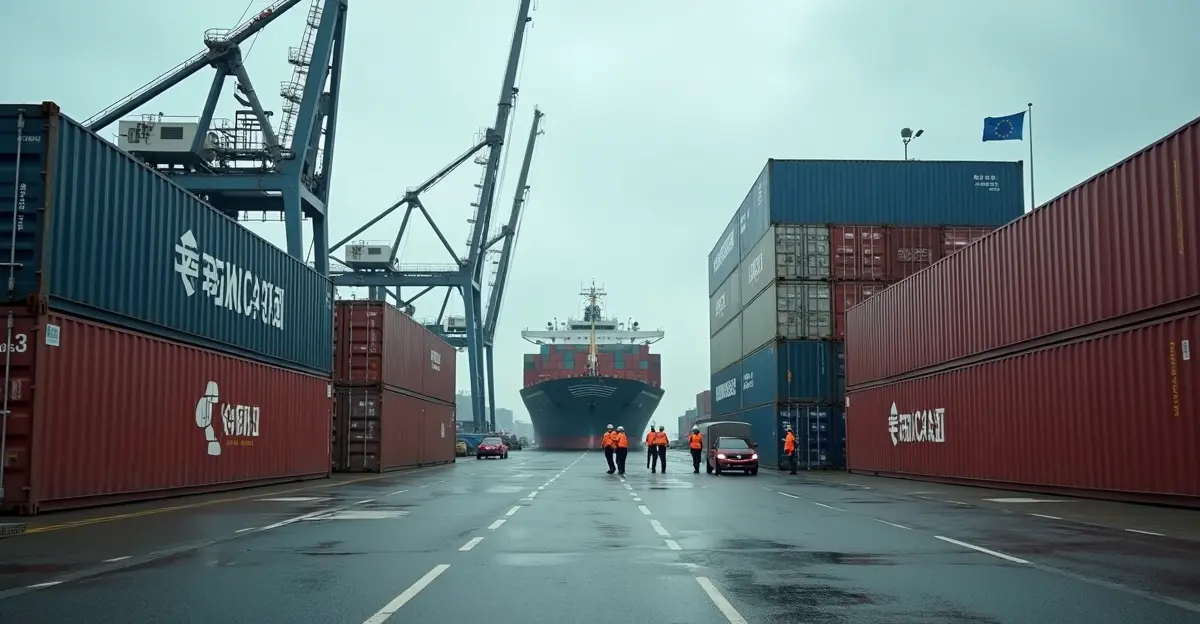
China's decades-long investment in mineral processing infrastructure has created what experts call a "strategic choke point" in global supply chains. According to the IEA's Global Critical Minerals Outlook 2025, China processes approximately 60% of the world's lithium, 80% of cobalt, and over 90% of rare earth elements. This dominance extends beyond extraction to the entire value chain, giving Beijing significant leverage in international negotiations. "China's critical mineral strategy balances supply security with environmental reform and industrial upgrading," notes an analysis from East Asia Forum, highlighting that while often viewed as a geopolitical risk, China's approach is more nuanced than simple resource nationalism.
The Copper Conundrum
Copper presents a particularly acute challenge, with the IEA warning of a potential 30% supply shortfall by 2035 due to declining ore grades and long lead times for new mines. China's control over nearly half of global copper refining capacity gives it disproportionate influence over a mineral essential for everything from electric vehicles to renewable energy infrastructure. This concentration creates vulnerabilities that Western nations are scrambling to address through alternative supply chain development.
Western Counter-Strategies and Mineral Diplomacy
The United States and European Union have launched ambitious initiatives to reduce dependence on Chinese processing. The 2026 Critical Minerals Ministerial, hosted by the U.S. with Secretary of State Marco Rubio and Vice President JD Vance leading, brought together representatives from 54 countries and the European Commission to address supply chain security. Key outcomes included signing 11 new bilateral critical minerals frameworks with countries like Argentina, Ecuador, Morocco, and the Philippines.
U.S. Strategic Framework
On January 15, 2026, President Trump signed a critical minerals executive order focused on strengthening U.S. minerals security through international partnerships. The order recognizes that domestic mining alone doesn't secure national security if processing remains foreign-dependent. The U.S. government has mobilized over $30 billion in support for critical minerals projects through letters of interest, investments, and loans over six months, including EXIM Bank's $10 billion Project Vault for a domestic strategic reserve.
EU's Diversification Approach
The European Union's Critical Raw Materials Act, which came into effect in May 2024, emphasizes diversification of sources and circular economy principles. The EU is mostly dependent on imports for these minerals, with 100% of its supply of heavy rare-earth elements coming from China and 99% of its boron from Turkey. The EU Green Deal implementation depends heavily on securing stable mineral supplies for clean energy technologies.
Emerging Geopolitical Realignments
The scramble for critical minerals is creating new diplomatic alignments and trade patterns. Resource-rich nations in Africa, Latin America, and Southeast Asia are finding themselves at the center of intense geopolitical competition. The Democratic Republic of Congo, which produces over 70% of the world's cobalt, has become a focal point for both Chinese investment and Western diplomatic outreach. Similarly, Indonesia's nickel reserves have made it a strategic partner for multiple competing powers.
The New 'Mineral Diplomacy'
What experts term "mineral diplomacy" is reshaping traditional alliances. The U.S.-led Minerals Security Partnership (MSP), now succeeded by the Forum on Resource Geostrategic Engagement (FORGE), represents a coordinated effort among like-minded nations to build alternative supply chains. Meanwhile, China continues to expand its Belt and Road Initiative investments in mining infrastructure across Africa and Asia, creating parallel supply networks that bypass Western-controlled routes.
Security Implications and Supply Chain Fragmentation
The concentration of critical mineral processing in geopolitically sensitive regions creates significant security vulnerabilities. Export restrictions are proliferating, with China and the Democratic Republic of the Congo implementing controls on various critical minerals. According to the Council on Foreign Relations, this creates risks of supply disruptions that could impact everything from defense systems to consumer electronics.
Economic and Environmental Trade-offs
The rush to secure mineral supplies raises complex questions about environmental sustainability and economic justice. The UN's Panel on Critical Energy Transition Minerals, launched in 2024, emphasizes that the energy transition must be just and equitable, protecting human rights and ensuring environmental protection. Research published in ScienceDirect examines the modern resurgence of the 'resource curse' in the context of critical minerals, noting that traditional models overlook critical external dimensions like geopolitical competition and commodity market maturity.
Expert Perspectives on Future Developments
Industry analysts warn that current market dynamics may not reflect long-term realities. While lithium prices have fallen over 80% since 2023 due to increased production, investment momentum weakened in 2024 with only 5% spending growth as low prices discourage new projects. "The current price environment creates a false sense of security," notes a minerals market analyst. "The structural supply-demand imbalances will reemerge as demand continues its exponential growth trajectory."
Frequently Asked Questions
What are the most critical minerals for the energy transition?
The most critical minerals include lithium for batteries, cobalt for electric vehicles, rare earth elements for wind turbines and electronics, copper for electrical infrastructure, and nickel for stainless steel and batteries. Demand for these is projected to triple by 2030 and quadruple by 2040.
Why is China so dominant in mineral processing?
China invested decades in building processing infrastructure and developing technical expertise, creating economies of scale that are difficult to replicate. Strategic government policies and lower environmental standards historically gave Chinese processors competitive advantages.
How are Western countries responding to Chinese dominance?
The U.S. and EU are pursuing diversification through bilateral agreements, investing in domestic processing capacity, developing recycling technologies, and forming strategic partnerships with resource-rich nations through initiatives like the Minerals Security Partnership.
What risks does mineral concentration create?
Geographic concentration creates supply chain vulnerabilities, potential for political coercion, price volatility, and environmental risks in extraction regions. It also fragments global trade along geopolitical lines.
Can recycling solve critical mineral shortages?
While recycling will play an increasingly important role, current infrastructure lags behind growing demand. The IEA estimates recycling could supply only 10% of lithium demand by 2040, making traditional extraction still essential.
Future Outlook and Strategic Implications
The geopolitical competition over critical minerals represents one of the defining challenges of the 21st century energy transition. As nations race to secure supplies, we are witnessing the emergence of parallel supply chains that could fragment the global economy along geopolitical lines. The success of climate goals depends not only on technological innovation but also on navigating these complex geopolitical realities. The coming decade will determine whether the world can build resilient, diversified mineral supply chains or whether strategic dependencies will create new vulnerabilities in an increasingly multipolar world.


Follow Discussion