


 Deutsch
 English
 Español
 Français
 Nederlands
 Português


 Share
Share




The 2026 Critical Minerals Ministerial: A Geopolitical Turning Point
The 2026 Critical Minerals Ministerial has concluded with seismic implications for global supply chains, marking a decisive shift in how nations compete for lithium, rare earths, cobalt, and copper—resources now dubbed the 'new oil' of the 21st century. Hosted by U.S. Secretary of State Marco Rubio and Vice President JD Vance, the February 2026 gathering brought together representatives from 54 countries and the European Commission to address what experts call the most significant geopolitical resource competition since the Cold War. With China projected to control 60-80% of refined critical minerals by 2035, the ministerial's 11 new bilateral agreements and $30+ billion in U.S. financing support represent a strategic counteroffensive against concentrated market power that threatens global energy transition, AI development, and defense capabilities.
What Are Critical Minerals and Why Do They Matter?
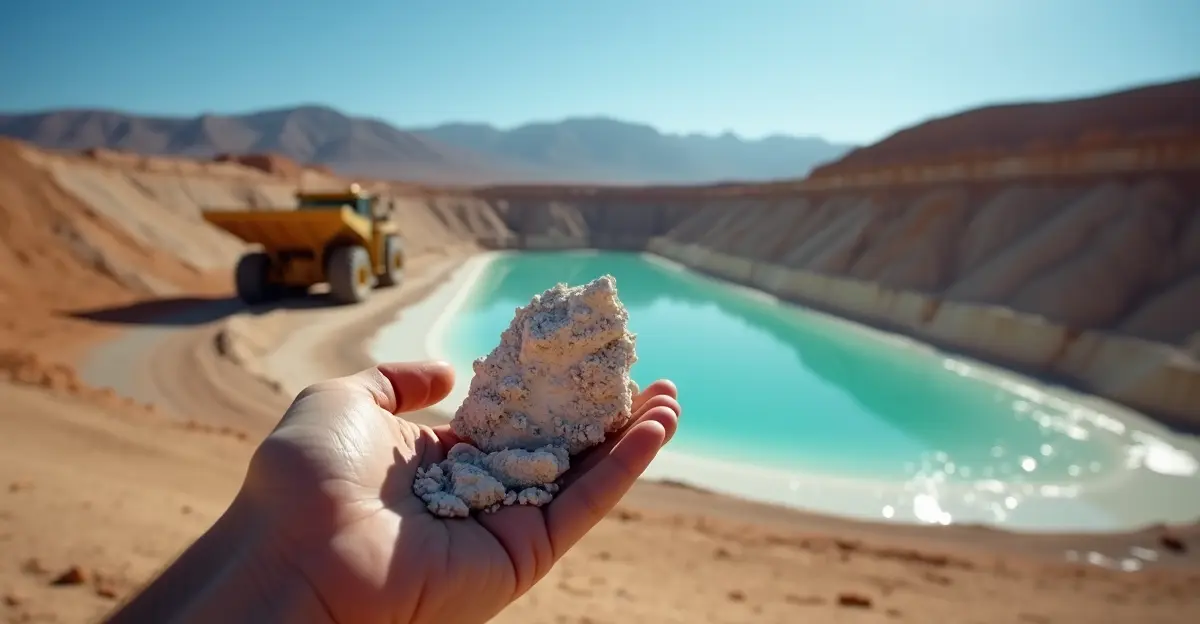
Critical minerals encompass a group of 50+ elements essential for modern technologies, national security, and economic competitiveness. Unlike traditional commodities, these minerals—including lithium for batteries, rare earths for permanent magnets, cobalt for aerospace alloys, and copper for electrification—have become strategic assets in the age of digitalization and decarbonization. According to the International Energy Agency, demand for these minerals could increase 4-6 times by 2040 to meet climate goals, creating unprecedented pressure on global supply chains. 'Control over critical minerals now equates to industrial capability and national resilience,' notes a 2026 Economist analysis, highlighting how these resources have replaced oil as the foundation of 21st-century power.
China's Projected Dominance: The 2035 Challenge
Current projections paint a concerning picture: China already controls approximately 90% of rare earth refining capacity, 65% of lithium processing, and significant portions of cobalt and copper supply chains. By 2035, analysts predict China could control 60-80% of refined critical minerals globally, creating what U.S. officials call 'strategic choke points' in essential supply chains. This dominance stems from decades of strategic investment in mining assets across Africa, Latin America, and Southeast Asia, coupled with domestic processing facilities that benefit from lower environmental standards and energy costs. The China rare earth monopoly has already demonstrated its geopolitical leverage through export controls on gallium and germanium in 2023, causing price spikes and supply disruptions for Western manufacturers.
The U.S. Response: $30+ Billion and 11 Bilateral Agreements
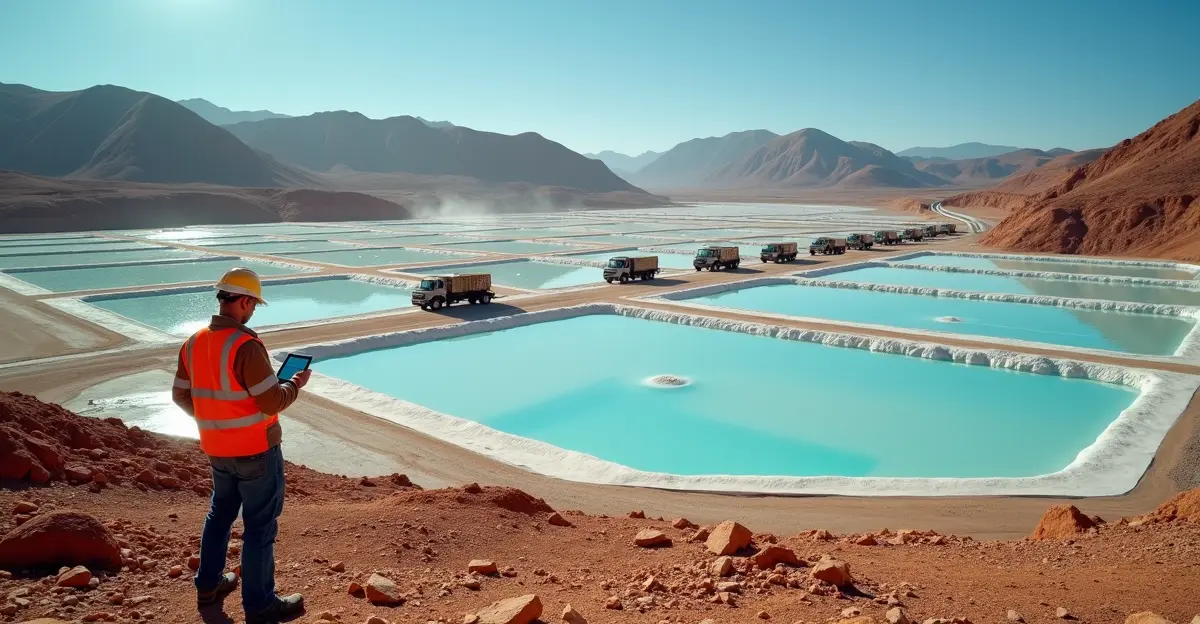
In response to this concentration risk, the 2026 Critical Minerals Ministerial produced concrete countermeasures. The United States announced over $30 billion in financing support for domestic and allied projects over the past six months, including the Export-Import Bank's $10 billion 'Project Vault' initiative to establish a domestic strategic reserve. Additionally, Washington signed 11 new bilateral critical minerals frameworks with resource-rich nations:
- Argentina (lithium)
- Cook Islands (seabed minerals)
- Ecuador (copper)
- Guinea (bauxite, critical minerals)
- Morocco (phosphates, cobalt)
- Paraguay (lithium)
- Peru (copper, lithium)
- Philippines (nickel, cobalt)
- United Arab Emirates (strategic partnerships)
- United Kingdom (technology collaboration)
- Uzbekistan (rare earths)
These agreements represent a shift from multilateral to bilateral approaches, allowing for tailored partnerships that address specific supply chain vulnerabilities. The U.S. also launched the Forum on Resource Geostrategic Engagement (FORGE) as successor to the Minerals Security Partnership, with South Korea serving as initial chair.
Strategic Choke Points and Supply Chain Vulnerabilities
The concentration of critical mineral processing creates multiple strategic vulnerabilities. For example, the Democratic Republic of Congo produces over 80% of global cobalt, but Chinese companies control most mining operations and processing facilities. Similarly, Indonesia supplies 71% of global nickel, with Chinese refineries dominating downstream processing. These concentrations create what analysts call 'single points of failure' in global supply chains. 'We're witnessing the weaponization of mineral supply chains,' warns Dr. Sarah Chen, a resource geopolitics expert at the Center for Strategic Studies. 'Nations that control processing capacity can disrupt entire industries, from electric vehicles to defense systems, with export controls or logistical bottlenecks.'
Impact on Energy Transition and Technology Development
The critical minerals race directly impacts three key sectors: energy transition, artificial intelligence, and defense capabilities. Electric vehicles require six times more minerals than conventional cars, while renewable energy systems need substantial copper and rare earth elements. AI data centers and semiconductor manufacturing depend on gallium, germanium, and other specialized minerals. Defense applications include rare earth magnets for guidance systems, tungsten for armor-piercing rounds, and cobalt for jet engine alloys. The energy transition minerals demand surge has created what some call a 'green paradox': the shift to clean energy depends on mining and processing operations that currently lack environmental and labor standards in many producing regions.
Global Power Dynamics and Resource Diplomacy
The 2026 ministerial reflects broader shifts in global power dynamics. Resource-rich nations in the Global South—from Argentina's lithium triangle to Africa's copper belt—are gaining newfound geopolitical leverage as major economies compete for access. This has led to what analysts term 'resource diplomacy,' where mineral agreements become central to broader strategic partnerships. The European Union, while participating in the ministerial, faces particular challenges due to limited domestic resources and lengthy permitting processes for new mines. However, Sweden's 2023 discovery of over one million tonnes of rare earth oxides—the largest known deposit in Europe—offers potential long-term relief, though development could take 10-15 years.
Expert Perspectives and Future Outlook
Industry experts emphasize the long-term nature of supply chain restructuring. 'Building alternative processing capacity takes 5-10 years and requires overcoming significant technical, environmental, and financial hurdles,' notes mining analyst James Rodriguez. 'The $30 billion in U.S. support is a strong start, but represents only a fraction of the estimated $500-700 billion needed globally by 2040.' The success of bilateral agreements will depend on sustained investment, technology transfer, and addressing environmental and social governance concerns in producing regions.
Looking forward, several trends will shape the critical minerals landscape:
- Accelerated exploration and mining in previously untapped regions
- Increased focus on recycling and circular economy solutions
- Technological innovation in extraction and processing methods
- Greater integration of mineral agreements with broader trade and security partnerships
- Emergence of new strategic reserves similar to the U.S. Project Vault initiative
Frequently Asked Questions (FAQ)
What are critical minerals?
Critical minerals are elements essential for modern technologies, national security, and economic competitiveness, including lithium, rare earths, cobalt, copper, nickel, and others used in batteries, magnets, electronics, and defense systems.
Why is China dominant in critical minerals?
China achieved dominance through decades of strategic investment in global mining assets, development of domestic processing capacity with lower environmental and energy costs, and integration of mineral supply chains with manufacturing industries.
What is the 2026 Critical Minerals Ministerial?
The February 2026 ministerial hosted by the United States brought together 54 countries to address supply chain vulnerabilities, resulting in 11 bilateral agreements and over $30 billion in financing support for critical minerals projects.
How do critical minerals affect energy transition?
Electric vehicles, renewable energy systems, and grid infrastructure require substantial amounts of lithium, cobalt, copper, and rare earth elements, making mineral supply chains essential for achieving climate goals.
What are strategic choke points in supply chains?
Strategic choke points occur when processing or production of essential materials is concentrated in one country or region, creating vulnerability to export controls, logistical disruptions, or political coercion.
Conclusion: The New Geopolitical Reality
The 2026 Critical Minerals Ministerial marks a watershed moment in global resource competition, reflecting a fundamental recognition that mineral security equals economic and national security in the 21st century. As nations race to secure lithium, rare earths, cobalt, and copper supplies, the traditional distinction between energy policy, trade policy, and security policy has blurred. The success of diversification efforts will determine not only which nations lead the energy transition and AI revolution, but also how resilient global supply chains remain in an era of increasing geopolitical competition. With China's projected dominance accelerating and Western responses gaining momentum, the critical minerals race has become the defining geopolitical competition of our time—one that will shape global power dynamics for decades to come.

Follow Discussion