


 Deutsch
 English
 Español
 Français
 Nederlands
 Português


 Share
Share




Critical Minerals Stress Test: How Vulnerable Are Global Energy Transition Supply Chains?
The global energy transition faces a critical vulnerability that could derail climate goals and national security: fragile supply chains for essential minerals. According to recent stress-testing analyses from organizations like the Atlantic Council, global critical mineral supply chains would collapse within weeks to months during geopolitical disruptions, particularly China's potential export bans on strategic minerals like neodymium, dysprosium, and refined manganese. This alarming revelation comes alongside the International Energy Agency's Global Critical Minerals Outlook 2025, which warns that diversification efforts are moving too slowly to address systemic risks before major disruptions occur.
What Are Critical Minerals and Why Do They Matter?
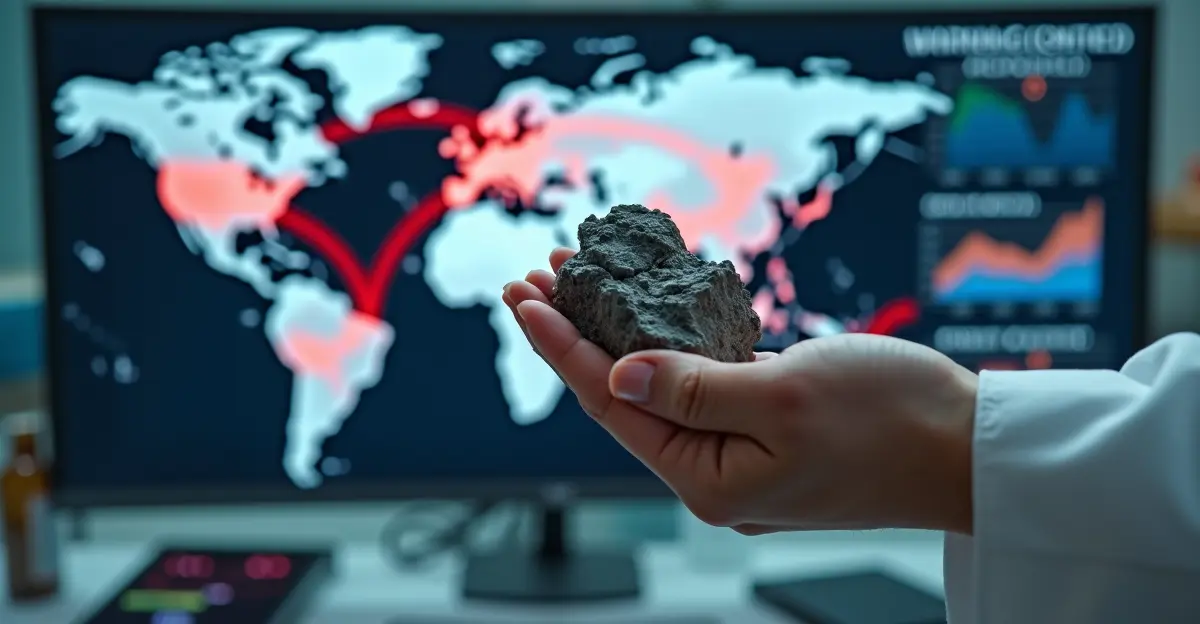
Critical minerals are elements essential for modern technologies, defense systems, and clean energy infrastructure. These include rare earth elements like neodymium and dysprosium for permanent magnets in wind turbines and electric vehicles, lithium and cobalt for batteries, and refined manganese for steel production. The clean energy transition has dramatically increased demand for these materials, creating unprecedented pressure on global supply chains. According to the IEA report, demand for critical minerals has tripled since 2010 and is projected to increase sixfold by 2040 under net-zero scenarios.
The Atlantic Council's Alarming Findings
The Atlantic Council's recent stress-testing report reveals shocking vulnerabilities in US critical mineral supply chains. The analysis examined two crisis scenarios: Scenario A1 where China imposes export bans on neodymium, dysprosium, and refined manganese, and Scenario A2 where extreme weather events compound these geopolitical disruptions. The findings show that US stockpiles would be depleted within weeks to months, forcing difficult trade-offs between defense and civilian industries.
'While the US has some emergency tools like the Defense Production Act and stockpiles, its ability to sustain resilience during prolonged disruptions remains dangerously underdeveloped,' the report states. China currently dominates the global market, refining 70% of 19 out of 20 strategic minerals and controlling 94% of sintered permanent magnet production used in cars, wind turbines, defense systems, and AI data centers.
Specific Mineral Vulnerabilities
The report highlights three particularly vulnerable minerals:
- Neodymium: Essential for high-strength permanent magnets in electric vehicle motors and wind turbines. China controls over 90% of global production.
- Dysprosium: Used to stabilize neodymium magnets at high temperatures. Critical for defense applications including fighter jets and submarines.
- Refined Manganese: Vital for steel production and emerging battery technologies. China processes approximately 95% of global manganese.
Global Implications and Regional Comparisons
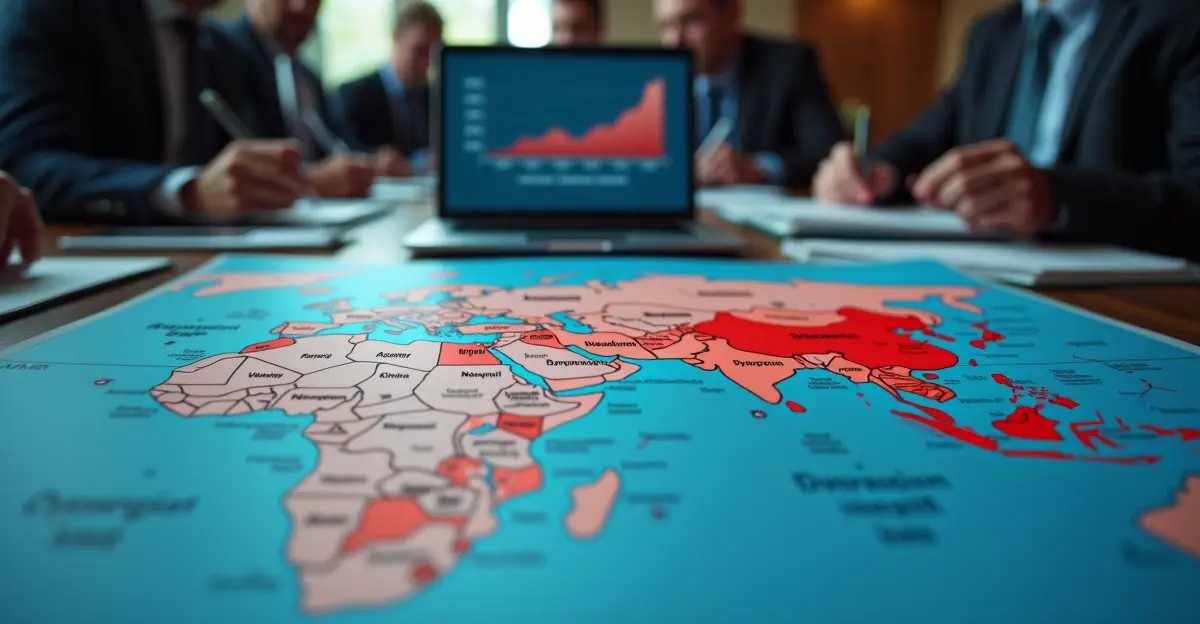
The vulnerability extends beyond the United States. The European Union faces similar risks, with rare earth prices reaching up to six times Chinese levels following recent export controls. The geopolitical tensions between major powers have transformed critical minerals into instruments of economic warfare. China's October 2025 export controls expanded to include 'internationally made' products containing Chinese-sourced materials and five additional rare earth elements, threatening global supply chains in energy, automotive, defense, semiconductors, and aerospace sectors.
According to the IEA's Global Critical Minerals Outlook 2025, 'without adequate and diverse mineral supplies, the clean energy transition risks slowing down.' The report emphasizes that current diversification efforts are insufficient to address the scale of vulnerability revealed by recent stress tests.
Can Diversification Strategies Address Systemic Risks?
Current efforts to diversify supply chains face significant challenges. The Minerals Security Partnership and recent strategic alliances like the U.S.-Australia critical minerals partnership with an $8.5 billion commitment represent important steps toward 'ally-shoring.' However, the Atlantic Council report warns that scaling alternative production capacity takes years, leaving nations vulnerable despite growing policy focus on domestic production.
The supply chain resilience challenge is compounded by environmental and social considerations. Responsible mining practices, land rights, worker safety, and reduced environmental impacts must be balanced against urgent security needs. Recycling and material efficiency innovations offer partial solutions but cannot meet the exponential growth in demand projected for the coming decades.
Expert Perspectives on the Crisis
Jennifer Layke, Global Energy Director at the World Resources Institute, emphasizes the need for comprehensive solutions: 'We need responsible mining that respects land rights, improves worker safety, and reduces environmental impacts, while also promoting recycling and designing technology that uses fewer materials.'
Industry analysts note that companies like Lynas Rare Earths and Cameco Corporation are positioned as winners in this realignment, while those reliant on China-centric supply chains face significant challenges. This represents a fundamental shift from globalization toward 'ally-shoring' where geopolitical alignment takes precedence over cost optimization.
Frequently Asked Questions
What are critical minerals?
Critical minerals are elements essential for modern technologies, defense systems, and clean energy infrastructure, including rare earth elements, lithium, cobalt, and refined manganese.
How vulnerable are global supply chains?
Extremely vulnerable. Stress tests show US stockpiles would be depleted within weeks to months during geopolitical disruptions, with similar risks for other regions.
Which minerals are most at risk?
Neodymium, dysprosium, and refined manganese face the highest risks due to China's market dominance and strategic importance for defense and energy technologies.
What solutions are being implemented?
Strategic alliances like the Minerals Security Partnership, increased recycling efforts, material efficiency innovations, and responsible mining practices are being pursued, but progress remains slow.
How does this affect the energy transition?
Without secure mineral supplies, the clean energy transition could slow significantly, undermining global climate goals and increasing energy security risks.
Future Outlook and Recommendations
The intersection of geopolitics, climate policy, and economic security has created a perfect storm for critical mineral supply chains. The energy security implications are profound, requiring coordinated international action, accelerated investment in alternative supply chains, and innovative policy solutions. As nations race to secure their mineral futures, the coming years will test whether current diversification strategies can realistically address these systemic risks before major disruptions occur.



Follow Discussion