


 Deutsch
 English
 Español
 Français
 Nederlands
 Português


 Share
Share




Critical Minerals Crisis: How Supply Chain Stress Tests Reveal Systemic Vulnerabilities
Recent stress test analyses from December 2024 to January 2025 have exposed alarming vulnerabilities in global critical mineral supply chains, revealing that geopolitical tensions combined with climate disruptions could cripple U.S. and allied defense, AI, electric vehicle, and clean energy sectors within weeks. The Atlantic Council's groundbreaking study demonstrates that China's potential export bans on strategic minerals like neodymium, dysprosium, and refined manganese - when compounded by extreme weather events in key mining regions - would rapidly deplete strategic stockpiles, forcing governments to make impossible allocation choices between national security priorities and economic transformation goals.
What Are Critical Minerals and Why Do They Matter?
Critical minerals are non-fuel mineral resources essential to modern technology, national security, and economic prosperity. According to the U.S. Geological Survey, these include rare earth elements like neodymium and dysprosium, along with manganese, lithium, cobalt, and dozens of other commodities. These minerals power everything from precision-guided munitions and fighter jet engines to electric vehicle motors, wind turbines, and advanced semiconductor chips. The global energy transition has dramatically increased demand, with lithium consumption surging nearly 30% in 2024 alone, according to the International Energy Agency's 2025 outlook.
The Atlantic Council's Stress Test Scenarios
The Atlantic Council's analysis examined two crisis scenarios that reveal the fragility of current supply chains:
Scenario A1: Geopolitical Weaponization
In this scenario, China imposes targeted export bans on neodymium, dysprosium, and refined manganese - minerals where it controls over 80% of global processing capacity. Neodymium is essential for powerful permanent magnets used in defense systems and EV motors, while dysprosium enhances high-temperature performance in these applications. Manganese is critical for advanced steel production and battery cathodes. The study found that such bans would create immediate shortages affecting multiple sectors simultaneously.
Scenario A2: Climate Compounding Effect
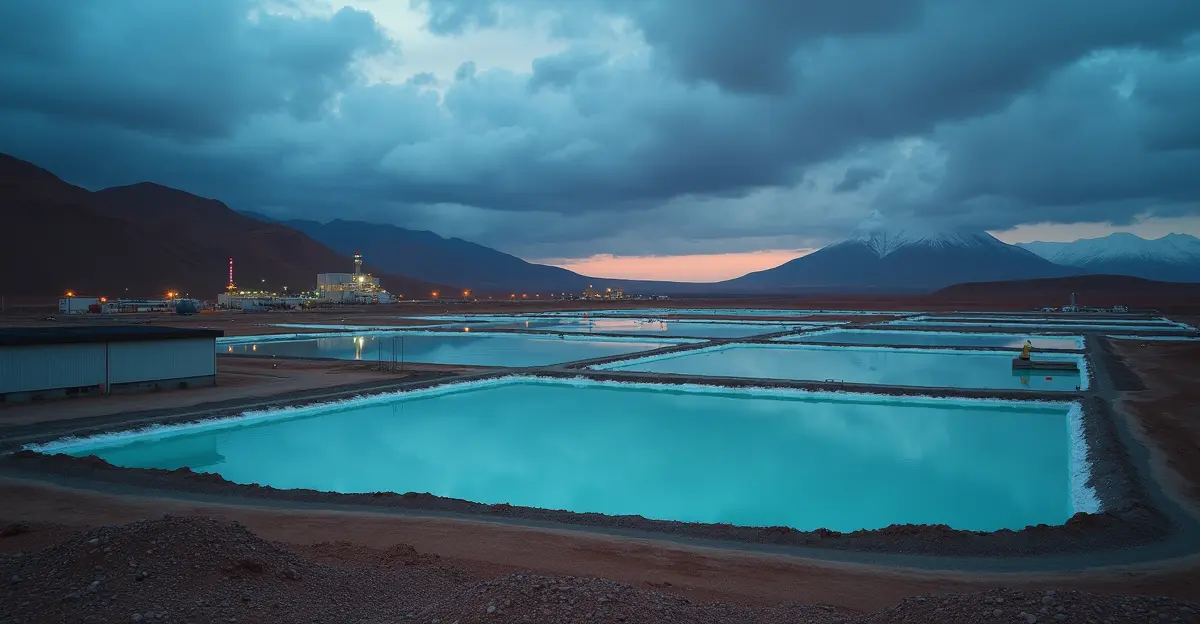
This scenario adds extreme weather disruptions to the geopolitical crisis, with flooding in Indonesian nickel mines, droughts affecting Chilean lithium operations, and hurricanes disrupting cobalt shipments from the Democratic Republic of Congo. The compounding effect would create a perfect storm where alternative sources cannot compensate for multiple simultaneous disruptions.
Key Findings: Weeks, Not Months
The most alarming revelation from the stress tests is the timeline of vulnerability. According to the Atlantic Council report, 'Current strategic stockpiles would be depleted within weeks to months, not years, forcing hard trade-offs between defense systems, AI infrastructure, electric vehicle production, and renewable energy deployment.' This rapid depletion occurs because:
- Defense applications require specialized grades of minerals not easily substituted
- AI data centers and semiconductor manufacturing have just-in-time supply chains
- EV production lines cannot easily switch to alternative materials
- Wind turbine manufacturing requires specific rare earth compositions
The U.S. defense industrial base would face particularly acute challenges, as military systems often require certified materials with specific performance characteristics that cannot be quickly replaced.
The Allocation Dilemma: Defense vs. Clean Energy vs. AI
During a crisis, governments would face impossible choices about which sectors receive priority access to dwindling mineral supplies. The stress tests identified three competing priorities:
- National Defense: Precision weapons, radar systems, fighter jets, and naval vessels require rare earth magnets and specialty metals
- Clean Energy Transition: Wind turbines, EV motors, and grid-scale batteries depend on the same materials
- AI Infrastructure: Advanced semiconductors, data center components, and quantum computing systems need specialized minerals
The report notes that 'There is no established framework for making these allocation decisions, creating potential for chaotic responses that could exacerbate economic damage.'
Current Policy Responses and Their Limitations
Nations are pursuing multiple strategies to address these vulnerabilities, but the Atlantic Council analysis questions whether current approaches are sufficient:
Diversification Efforts
The U.S. has secured mining agreements with Australia, Chile, and African nations, but these deals primarily address raw material extraction, not processing. China dominates the midstream refining and processing stages, creating what experts call a 'bottleneck dependency.' The U.S.-Australia critical minerals partnership shows promise but will take years to scale.
Stockpiling Strategies
The U.S. National Defense Stockpile received $2 billion in new appropriations in 2025, with plans to procure up to $1 billion in critical minerals. However, the stress tests reveal that even expanded stockpiles would only provide temporary relief during prolonged disruptions. The Department of Defense is exploring a Strategic Resilience Reserve concept, but implementation remains in early stages.
Technological Innovation
Research into substitute materials, advanced recycling, and waste recovery offers longer-term solutions. The Council on Foreign Relations recommends making innovation central to U.S. strategy, noting that breakthroughs in materials science could bypass China's choke points. However, these technologies require significant investment and time to commercialize.
Expert Perspectives on Systemic Risks
Industry analysts emphasize that the convergence of geopolitical weaponization and climate-related supply shocks creates unprecedented risks. 'We're facing a perfect storm where political decisions in Beijing could intersect with climate events in multiple regions simultaneously,' notes one supply chain expert. The EU's critical raw materials act represents a regional response, but global coordination remains limited.
The International Energy Agency's 2025 outlook warns that while supply-demand balances are improving for most minerals, copper faces a potential 30% supply shortfall by 2035 due to declining ore grades and long lead times. This adds another layer of complexity to an already strained system.
Frequently Asked Questions
What are the most vulnerable critical minerals?
Neodymium, dysprosium, refined manganese, lithium, cobalt, and rare earth elements face the highest risk due to geographic concentration in China and limited substitution options.
How quickly would stockpiles be depleted?
According to stress tests, strategic stockpiles would last only weeks to months during combined geopolitical and climate disruptions, forcing immediate allocation decisions.
Which sectors would be most affected?
Defense systems, electric vehicle manufacturing, renewable energy infrastructure, and AI/data center development would face simultaneous shortages, creating impossible trade-offs.
What are governments doing to address these risks?
Strategies include diversification through mining agreements, stockpile expansion, domestic processing investment, recycling programs, and research into substitute materials.
Are current policy responses sufficient?
Most experts believe current efforts are inadequate for addressing the convergence of geopolitical weaponization and climate-related supply shocks, calling for more coordinated, accelerated action.
Conclusion: An Urgent Call for Action
The Atlantic Council's stress tests reveal that the window for addressing critical mineral vulnerabilities is closing rapidly. As nations accelerate energy transition investments and AI deployment, supply chain resilience has become a matter of national security and economic stability. The convergence of geopolitical tensions and climate disruptions creates systemic risks that cannot be addressed through incremental measures alone. What's needed is a comprehensive, coordinated strategy that addresses mining, processing, recycling, and innovation simultaneously - before the next crisis forces impossible choices between our defense capabilities, clean energy ambitions, and technological future.




Follow Discussion