


 Deutsch
 English
 Español
 Français
 Nederlands
 Português


 Share
Share




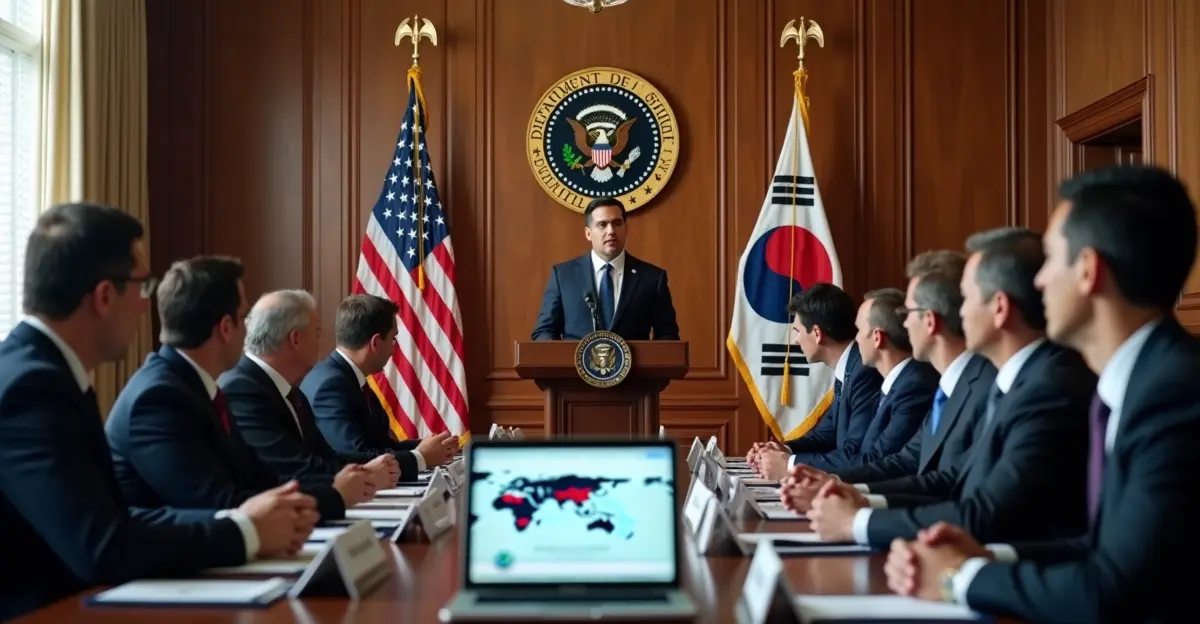
In a landmark move to counter China's stranglehold on rare earths and critical minerals, the United States launched the Forum on Resource Geostrategic Engagement (FORGE) on February 4, 2026, at a historic Critical Minerals Ministerial in Washington, D.C. Backed by over $30 billion in financing and 11 new bilateral framework agreements, FORGE brings together 54 nations and the European Commission in what experts call the most ambitious plurilateral effort to date to build a resilient, Western-led supply chain for the minerals powering AI, batteries, defense systems, and the global energy transition.
What Is FORGE and Why Does It Matter?
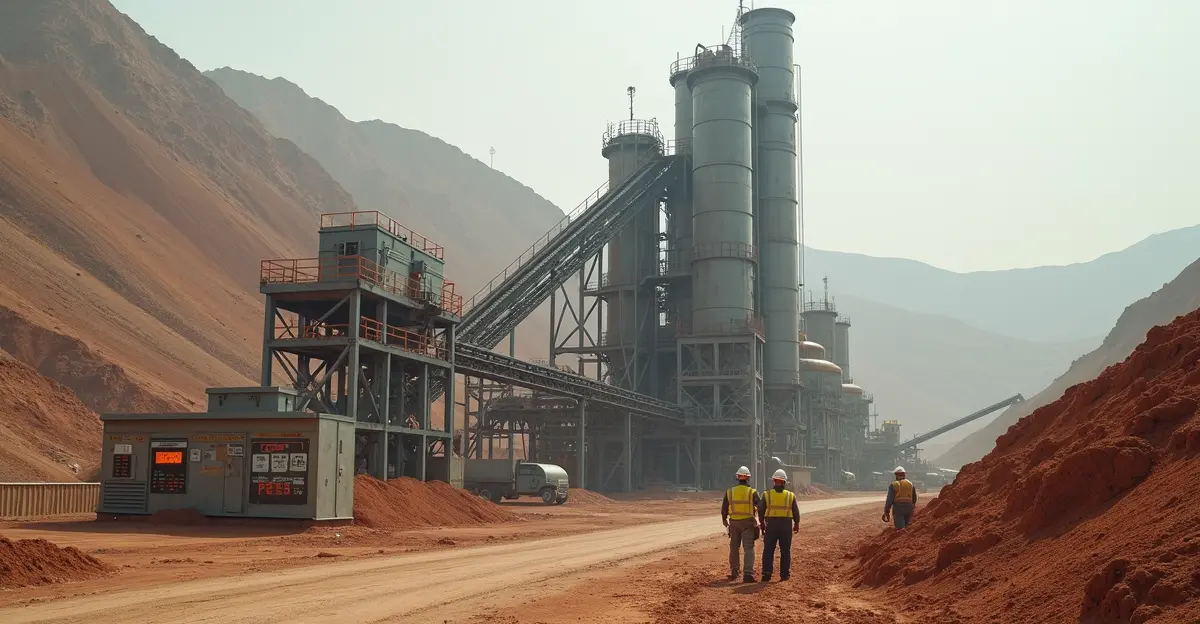
FORGE is the successor to the Minerals Security Partnership (MSP), redesigned to drive both policy coordination and project-level collaboration. Chaired by South Korea through June 2026, the initiative aims to dismantle China's near-monopoly on critical mineral processing—China controls 90% of global rare earth processing, 80% of tungsten, and 60% of antimony, according to a multi-institutional analysis published in early 2026. The critical minerals supply chain has become the defining geopolitical battleground of the decade, with China's 2025 export controls triggering price spikes of up to sixfold outside China and licensing approval rates for European firms falling below 25% in some sectors.
U.S. Secretary of State Marco Rubio, who co-hosted the ministerial alongside Vice President JD Vance, emphasized the urgency: "We cannot allow any single nation to hold a chokehold on the resources that power our economies, our militaries, and our future. FORGE represents a new model of alliance-driven resource security."
The $30 Billion Backing: Project Vault and Beyond
The financial firepower behind FORGE is unprecedented. The U.S. Export-Import Bank (EXIM) announced Project Vault, a $12 billion public-private partnership (including a $10 billion EXIM loan and nearly $2 billion in private capital) to establish the U.S. Strategic Critical Minerals Reserve. This independently governed stockpile will store essential raw materials in secure facilities across the United States, allowing companies to lock in fixed prices and draw from the reserve during supply disruptions.
Beyond Project Vault, the U.S. is mobilizing over $30 billion in total support for critical mineral projects, including direct government financing, private investment commitments, and multilateral development bank contributions. The Pax Silica initiative, launched by Under Secretary Jacob Helberg, adds another layer with a $250 million fund for extraction, processing, and manufacturing assets among partner nations. Signatories to the Pax Silica Declaration include Australia, Finland, Greece, India, Israel, Japan, Norway, Qatar, South Korea, Singapore, Sweden, the Philippines, the UAE, and the UK, with Taiwan endorsing the principles.
11 New Bilateral Frameworks: A Web of Agreements
At the ministerial, the U.S. signed 11 new bilateral critical minerals framework agreements with countries including Argentina, Morocco, the Philippines, Peru, and the United Arab Emirates. These frameworks are designed to streamline investment, share technology, and ensure responsible mining and processing standards. Each agreement includes provisions for environmental safeguards, community engagement, and transparent governance—addressing past criticisms of resource extraction in developing nations.
The bilateral approach complements FORGE's multilateral structure. As one State Department official explained: "We need both depth and breadth—deep bilateral partnerships with resource-rich countries and a broad multilateral forum to align standards, share intelligence, and coordinate crisis response."
Can FORGE Succeed Against China's Dominance?
The scale of the challenge is daunting. China's vertically integrated model—spanning mining, processing, refining, and manufacturing—has been built over decades with state-backed financing and minimal environmental constraints. A January 2026 analysis from the University of Michigan's Journal of Economics warns that rebuilding independent supply chains could take 20 to 30 years. The same report notes that Western nations face a narrowing 12- to 18-month window to act decisively before prolonged vulnerability becomes entrenched.
However, FORGE offers several structural advantages. First, its plurilateral design allows for flexible participation—countries can join specific projects without committing to the entire framework. Second, the combination of public financing (Project Vault) and private-sector partnerships (Pax Silica) creates a hybrid model that can move faster than purely government-led initiatives. Third, South Korea's chairmanship brings a major manufacturing economy with deep expertise in battery and semiconductor supply chains.
Dr. Maria Shagina, a critical minerals expert at the International Institute for Strategic Studies, notes: "FORGE's success hinges on whether it can translate political commitments into actual mines, refineries, and processing plants. The financing is there, but permitting timelines, infrastructure gaps, and skilled labor shortages remain significant bottlenecks."
Implications for Global Industrial Competitiveness Through 2030
The geopolitical implications of FORGE extend far beyond mineral markets. By securing supply chains for rare earths, lithium, cobalt, and graphite, the alliance aims to underpin Western competitiveness in electric vehicles, renewable energy, defense systems, and artificial intelligence. Without reliable access to these inputs, the U.S. and its allies risk falling behind in the technologies that will define the 21st century economy.
China has already responded. In early 2026, Beijing tightened export licensing for gallium, germanium, and antimony—materials essential for semiconductors and defense applications. The message is clear: China will use its mineral leverage as a strategic weapon. FORGE's ability to offer alternative supply routes will determine whether the West can maintain its technological edge.
Vice President JD Vance hinted at further measures during the ministerial, mentioning a potential "preferential trade zone" with adjustable tariffs and price floors for critical minerals. While details remain unconfirmed, such a mechanism could create a parallel trading system that incentivizes investment in allied supply chains.
Expert Perspectives
Ambassador Jovanovic, Chairman of EXIM, praised Project Vault as "a game-changer for American manufacturing. By stockpiling critical minerals, we're not just protecting against shocks—we're sending a signal to the market that the United States is open for business in this sector."
However, the Bipartisan Policy Center cautions that stockpiling alone does little to stimulate new domestic supply without accompanying procurement contracts. The center's March 2026 analysis notes that specialized storage infrastructure, potential market destabilization from removing minerals from circulation, and the need for long-term offtake agreements remain unresolved challenges.
Frequently Asked Questions
What is FORGE?
FORGE (Forum on Resource Geostrategic Engagement) is a U.S.-led plurilateral initiative launched in February 2026 to coordinate policy and investment in critical mineral supply chains among 54 partner nations and the European Commission. It succeeds the Minerals Security Partnership.
How much funding is behind FORGE?
The U.S. has mobilized over $30 billion in financing, including EXIM's $10 billion Project Vault for a strategic reserve, plus additional private and multilateral commitments. The Pax Silica initiative adds a $250 million fund for partner-nation projects.
Which country chairs FORGE?
South Korea will chair FORGE through June 2026, bringing expertise in battery and semiconductor supply chains.
How does FORGE differ from the Minerals Security Partnership?
FORGE expands on the MSP by adding a formal governance structure, a dedicated chair, a larger financing mechanism, and deeper integration with private-sector initiatives like Pax Silica. It also includes a broader set of partner countries.
Can FORGE break China's monopoly on rare earths?
While FORGE cannot immediately replace China's dominant position—which controls 90% of processing—it aims to create parallel, diversified supply chains over the next decade. Success depends on timely project execution, permitting reform, and sustained political commitment.
Conclusion: A Defining Test for Alliance-Based Resource Security
FORGE represents the most serious attempt yet to build a Western-led critical mineral ecosystem. With $30 billion in backing, 54 nations, and a clear mandate to reduce dependency on China, the initiative has the resources and political momentum to make a difference. But the road ahead is long. The future of critical mineral geopolitics will depend on whether FORGE can move from announcements to actual mines, refineries, and processing facilities before China's leverage becomes irreversible. For now, the alliance has bought itself a window of opportunity—the question is whether it can use it wisely.




Follow Discussion