


 Deutsch
 English
 Español
 Français
 Nederlands
 Português


 Share
Share




The New Geopolitical Flashpoint: Critical Minerals and Supply Chain Weaponization
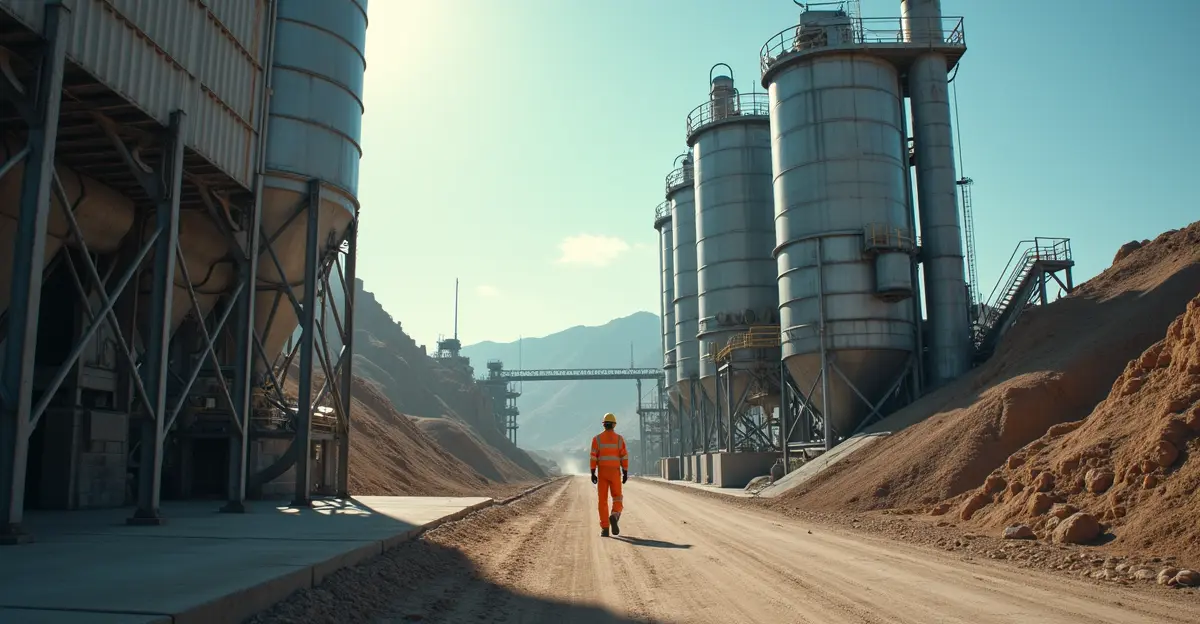
Critical minerals including lithium, cobalt, and rare earth elements have emerged as the central battleground in 21st-century geopolitics, with China's strategic dominance in processing and refining creating unprecedented vulnerabilities for Western economies. As the world accelerates its energy transition and technological advancement, these essential materials have become the new oil, with control over their supply chains representing both economic leverage and national security imperatives. Recent developments show China demonstrating willingness to weaponize mineral export controls, while the U.S. intensifies efforts to secure alternative supply chains, making this a critical strategic issue for 2025 global economic and security planning.
What Are Critical Minerals and Why Do They Matter?
Critical minerals encompass a group of 17 rare earth elements along with lithium, cobalt, nickel, graphite, and other materials essential for modern technologies. These minerals are fundamental components in electric vehicle batteries, wind turbines, solar panels, defense systems, semiconductors, and advanced electronics. Unlike traditional commodities, their strategic importance stems from concentrated supply chains and complex processing requirements. China currently dominates the refining of 19 out of 20 strategic minerals with a 70% average market share, controlling 94% of global sintered permanent magnet production used in electric vehicles, wind turbines, and defense systems according to the International Energy Agency.
China's Strategic Dominance and Export Controls
China's position in the critical minerals ecosystem represents decades of strategic planning, evolving from nurturing rare earth industries in the 1970s to a comprehensive framework under the National Plan for Mineral Resources (2016-2020). The country identifies 24 strategic minerals and has built processing capabilities that give it near-monopoly control over key segments of the supply chain. Recent export restrictions on rare earth elements and related technologies, including expanded controls on 12 rare earth elements and processing equipment, have made supply concentration risks a reality. "China's new export controls on critical minerals have made supply concentration risks a reality," warns the IEA, noting these measures threaten global supply chains in energy, automotive, defense, semiconductors, and AI sectors.
The Weaponization of Mineral Supply Chains
The strategic use of mineral export controls represents a new form of economic statecraft, with China demonstrating willingness to leverage its dominance for geopolitical advantage. This weaponization follows patterns seen in other resource-rich nations but operates at a scale unprecedented in modern history. The EU carbon border tax has sparked international debate about economic coercion, but mineral export controls represent a more direct form of supply chain manipulation. Similar patterns emerged during the 2025 economic crisis when resource nationalism intensified globally.
U.S. Response: Diversification Through Strategic Partnerships
In response to these vulnerabilities, the United States has launched an aggressive diversification strategy through partnerships with key allies and resource-rich nations. The 2026 Critical Minerals Ministerial, hosted by the U.S. Department of State on February 4, 2026, brought together representatives from 54 countries and the European Commission to reshape the global critical minerals market. Key outcomes included signing 11 new bilateral critical minerals frameworks/MOUs with countries including Argentina, Cook Islands, Ecuador, Guinea, Morocco, Paraguay, Peru, Philippines, UAE, UK, and Uzbekistan.
Canada's Critical Minerals Production Alliance
On October 31, 2025, Canada announced 26 new investments and partnerships with 9 allied countries under the Critical Minerals Production Alliance to secure global critical minerals supply chains. These initiatives will unlock $6.4 billion in critical minerals projects essential for defense, clean energy, and advanced manufacturing. Key projects include Nouveau Monde Graphite's Matawinie Mine in Quebec with Japanese partnerships, Rio Tinto's Scandium Production Plant expansion, and Ucore Rare Metals' rare earth processing facility in Ontario.
Greenland's Rare Earth Potential
The U.S. Export-Import Bank is considering a $120 million loan to support a rare earths mining project in Greenland, reflecting growing geopolitical competition over critical mineral resources. Critical Metals Corp. is positioned to receive this funding to finance a rare earth mining project that contains an estimated 44.97 million tonnes of rare earth materials. Greenland possesses significant rare earth deposits, making this investment strategically important for U.S. efforts to secure alternative sources of these vital materials.
Pakistan's Emerging Role
In September 2025, Pakistan and US Strategic Metals (USSM) established a landmark $500 million critical minerals partnership, marking the first-ever delivery of rare earth elements from Pakistan to the United States. Pakistan, with an estimated $6 trillion in rare earth mineral reserves, emerges as a key alternative supplier for materials essential to advanced manufacturing, defense, and clean energy technologies. The collaboration represents a strategic 'friend-shoring' approach to diversify US mineral supply chains away from overdependence on dominant suppliers like China.
Economic and Security Implications
The weaponization of critical mineral supply chains carries profound implications for global economic stability and national security. NATO has identified 12 defence-critical raw materials including aluminium, cobalt, lithium, rare earth elements, tungsten, and gallium that are essential for military hardware like fighter jets and missile systems. China controls 60-90% of global processing capacity for many of these minerals, creating significant supply chain vulnerabilities. Tungsten is particularly crucial for armour-piercing munitions, with China controlling 85% of global supply while the US has almost no domestic production.
Energy Transition Timelines at Risk
The concentration of critical mineral supply chains threatens to delay global energy transition timelines, as renewable energy technologies depend heavily on these materials. Electric vehicles require six times more mineral inputs than conventional cars, while offshore wind plants need thirteen times more minerals than gas-fired power plants. Experts in artificial intelligence regulation warn that similar supply chain vulnerabilities could emerge in other strategic sectors.
Expert Perspectives on the New Resource Competition
Industry analysts and geopolitical experts emphasize that the critical minerals competition represents a fundamental reshaping of global alliances and trade policies. The Council on Foreign Relations recommends leapfrogging China's dominance through innovation-focused strategies rather than trying to out-mine or out-process China. Key recommendations include making innovation central to U.S. critical minerals strategy, using materials engineering to bypass China's choke points, and scaling waste-based recovery from mine tailings and industrial waste.
FAQ: Critical Minerals and Geopolitical Competition
What are the most critical minerals for global security?
The most critical minerals include lithium for batteries, cobalt for electronics and defense, rare earth elements for magnets and electronics, nickel for stainless steel and batteries, and graphite for anodes in lithium-ion batteries. China dominates processing for most of these materials.
How is the U.S. responding to China's dominance?
The U.S. is pursuing a multi-pronged strategy including domestic production incentives, strategic partnerships with allies like Canada and Australia, investments in Greenland and Pakistan, and innovation in recycling and alternative materials through initiatives like the $30 billion financing support announced in 2026.
What risks do concentrated supply chains pose?
Concentrated supply chains create vulnerabilities to price manipulation, export restrictions, and geopolitical coercion. They can disrupt manufacturing across multiple industries including automotive, defense, electronics, and renewable energy, potentially delaying climate goals and technological advancement.
How long will it take to diversify supply chains?
Industry experts estimate 5-10 years to develop significant alternative supply chains, given the time required for mine development, processing facility construction, and workforce training. However, recycling and technological innovation could provide faster solutions in some areas.
What role do recycling and innovation play?
Recycling critical minerals from electronic waste and industrial byproducts offers a faster, cleaner path to reducing dependence on primary mining. Innovation in materials science could also reduce or eliminate the need for certain critical minerals in key applications.
Future Outlook and Strategic Considerations
The competition for critical minerals will continue to intensify through 2026 and beyond, reshaping global alliances and economic relationships. The U.S. government is mobilizing over $30 billion in support for critical minerals projects over the past six months, including EXIM Bank's $10 billion Project Vault initiative to establish a domestic strategic reserve. Meanwhile, China's 15th Five-Year Plan will likely further consolidate its position in mineral processing and refining. The global semiconductor shortage of recent years provides a cautionary tale about the economic impacts of concentrated supply chains, suggesting that proactive diversification is essential for economic resilience.
Sources
International Energy Agency (IEA) analysis on critical mineral export controls; U.S. Department of State 2026 Critical Minerals Ministerial outcomes; Canada Natural Resources October 2025 Critical Minerals Production Alliance announcement; ODI analysis of critical minerals geopolitics in 2026; Reuters reporting on Greenland rare earth projects; Pakistan-US critical minerals partnership reports; Council on Foreign Relations leapfrogging strategy recommendations.
Follow Discussion