


 Deutsch
 English
 Español
 Français
 Nederlands
 Português


 Share
Share




The Great Chip Pivot: How the US-China Semiconductor War Entered a New Phase in 2026
In a dramatic reversal of policy, the United States lifted export restrictions on Nvidia's H200 AI processor to China in January 2026 — but attached strict conditions including a 50% volume cap and a 25% tariff on foreign-produced chips. Simultaneously, China's Semiconductor Manufacturing International Corporation (SMIC) achieved 5nm-class manufacturing without extreme ultraviolet (EUV) lithography, and Beijing's '50% Mandate' now requires domestic fabs to source half their equipment locally. This analysis explores how the semiconductor rivalry is shifting from blanket bans toward managed competition, what it means for the $600 billion global chip market, and whether this new phase stabilizes or further fragments supply chains.
Background: From Blanket Bans to Conditional Approvals
The Bureau of Industry and Security (BIS) rule change, effective January 13, 2026, revised the licensing policy for advanced AI chips exported to China. Under the new framework, applications for chips such as the Nvidia H200 and AMD MI325X are reviewed on a case-by-case basis, provided certain security requirements are met. This follows President Trump's December 8, 2025 announcement permitting H200 shipments to approved Chinese customers. Qualifying conditions require applicants to demonstrate that exports will not reduce global semiconductor production capacity for U.S. customers, that Chinese purchasers have adopted export compliance procedures, and that products have undergone independent third-party testing in the U.S. for performance and security verification. The BIS export controls 2026 represent a calibrated approach, balancing national security concerns with the economic interests of American chipmakers.
SMIC's 5nm Breakthrough Without EUV
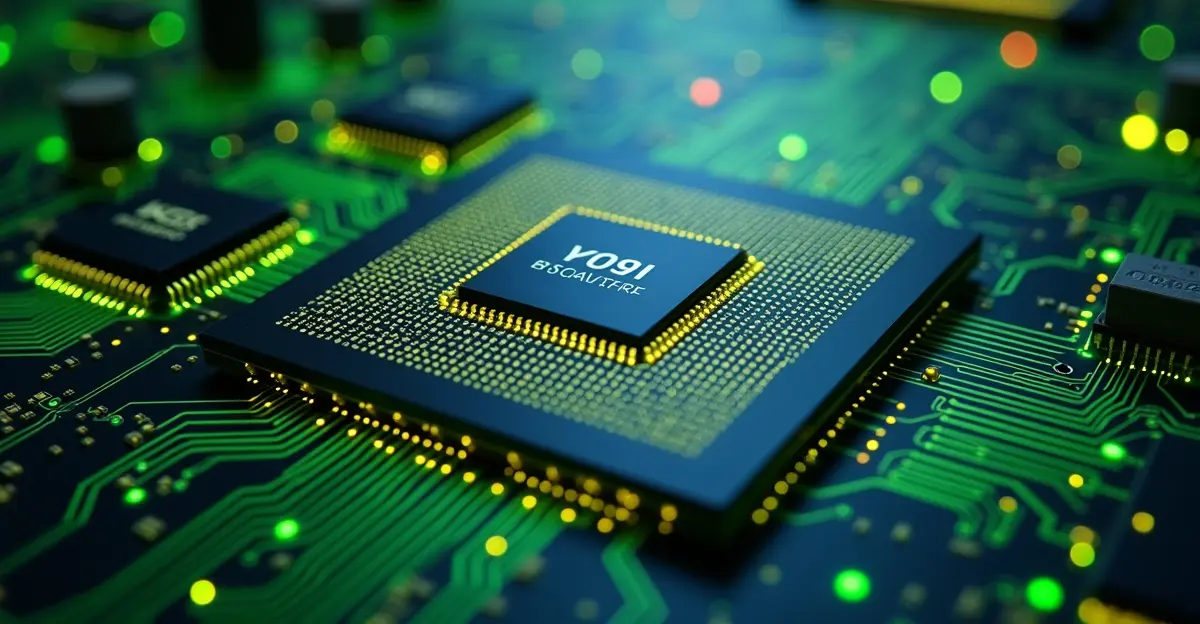
China's SMIC has achieved volume production of its 5nm-class N+3 node, confirmed by TechInsights' analysis of the Huawei Kirin 9030 SoC. This milestone represents China's most advanced semiconductor node produced without EUV lithography tools, relying instead on deep ultraviolet (DUV) multi-patterning techniques. The node is a full generation ahead of the older SMIC N+2 (7nm-class) used for Huawei's Ascend AI accelerators. However, the achievement comes with significant challenges. Since DUV has a much larger wavelength (193 nm) compared to EUV (13.5 nm), SMIC faces severe yield issues due to aggressively scaled metal pitch and complex multi-patterning requirements. TechInsights notes the Kirin 9030 is likely produced at an operating loss with many dies discarded or downgraded. The node is believed to still use ASML's DUV tools rather than domestic equipment. This SMIC 5nm breakthrough 2026 underscores China's resilience but also its continued dependence on foreign technology.
China's 50% Domestic Equipment Mandate
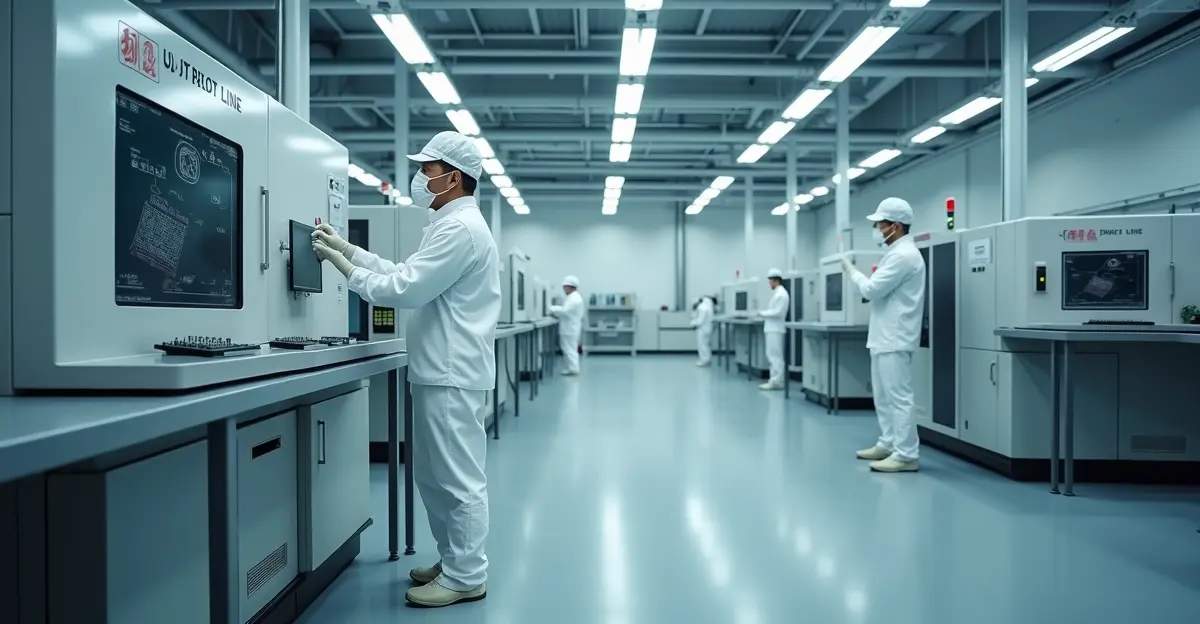
Beijing's new mandate requires chipmakers to use at least 50% domestically made equipment when adding new production capacity to secure state approval. The rule, part of President Xi Jinping's 'whole nation' effort for semiconductor self-sufficiency, has accelerated following 2023 US export restrictions. Chipmakers must demonstrate compliance through procurement tenders, though flexibility is granted for advanced production lines where domestic alternatives aren't yet available. The ultimate goal is 100% domestic equipment usage. The policy is already yielding results: Naura Technology's revenue jumped 30% to 16 billion yuan (H1 2025), while Advanced Micro-Fabrication Equipment saw 44% revenue growth. China has reached approximately 50% self-sufficiency in photoresist-removal and cleaning equipment, a market previously dominated by Japanese firms. Beijing has invested hundreds of billions through the 'Big Fund,' including a third phase launched in 2024 with 344 billion yuan ($49 billion). The China semiconductor self-sufficiency policy is reshaping global supply chains.
Impact on the $600 Billion Global Chip Market
The shift from blanket bans to managed competition has immediate and long-term implications for the global semiconductor industry. Nvidia, which derives roughly 20% of its data center revenue from China, stands to benefit from the eased restrictions, though the 50% volume cap and 25% tariff on foreign-produced chips will constrain margins. The conditions also require Chinese purchasers to adopt export compliance procedures, adding administrative costs. For the broader market, the new rules create a bifurcated landscape: advanced chips flow under strict conditions, while legacy chips face fewer barriers. This could stabilize supply chains in the short term but may accelerate China's push for self-sufficiency, potentially fragmenting the market further. The global chip market impact 2026 is already visible in trade data and corporate earnings.
Expert Perspectives
"The BIS rule change is a pragmatic recognition that blanket bans were hurting U.S. companies more than they were slowing China's progress," said Dr. Emily Zhao, a semiconductor policy analyst at the Center for Strategic and International Studies. "But the conditions attached — especially the volume cap and tariff — signal that Washington is not backing down. It's a managed competition, not a détente." Meanwhile, industry insiders note that SMIC's 5nm achievement, while impressive, is not commercially viable at scale. "SMIC's N+3 node is a technical marvel given the constraints, but the yields are too low for mass production," said Mark Liu, a former TSMC executive. "China still needs EUV for true competitiveness."
FAQ
What changed in the BIS export rules for AI chips in January 2026?
The BIS shifted from a policy of denial to case-by-case review for Nvidia H200-class chips, conditional on security requirements, volume caps (50%), and a 25% tariff on foreign-produced chips.
How did SMIC achieve 5nm without EUV?
SMIC used deep ultraviolet (DUV) lithography with self-aligned quadruple patterning (SAQP), a complex multi-patterning technique, to produce 5nm-class chips, though yields are low and costs high.
What is China's 50% domestic equipment mandate?
Effective from early 2026, Chinese chipmakers must source at least 50% of equipment for new capacity from domestic suppliers to receive state approval, aiming for full self-sufficiency.
Will the new US policy stabilize the global chip supply chain?
In the short term, it may ease supply constraints for AI chips, but the conditions and China's push for self-sufficiency could lead to further fragmentation of the global semiconductor market.
What does this mean for Nvidia's business in China?
Nvidia can now export H200 chips to approved Chinese customers, but the 50% volume cap and 25% tariff will limit revenue growth and profitability from the Chinese market.
Conclusion and Future Outlook
The US-China semiconductor war has entered a new phase of managed competition, characterized by conditional approvals, domestic mandates, and technological breakthroughs under duress. While the BIS rule change offers a temporary reprieve for American chipmakers, China's rapid progress in domestic equipment and advanced packaging suggests the rivalry will intensify. The $600 billion global chip market faces a future of dual supply chains, with the US and its allies on one side and China on the other. The coming years will determine whether this new phase leads to stability or deeper fragmentation.



Follow Discussion