


 Deutsch
 English
 Español
 Français
 Nederlands
 Português


 Share
Share




Massive Wildfire Erupts on Spain's Costa Brava, Forcing Thousands into Lockdown
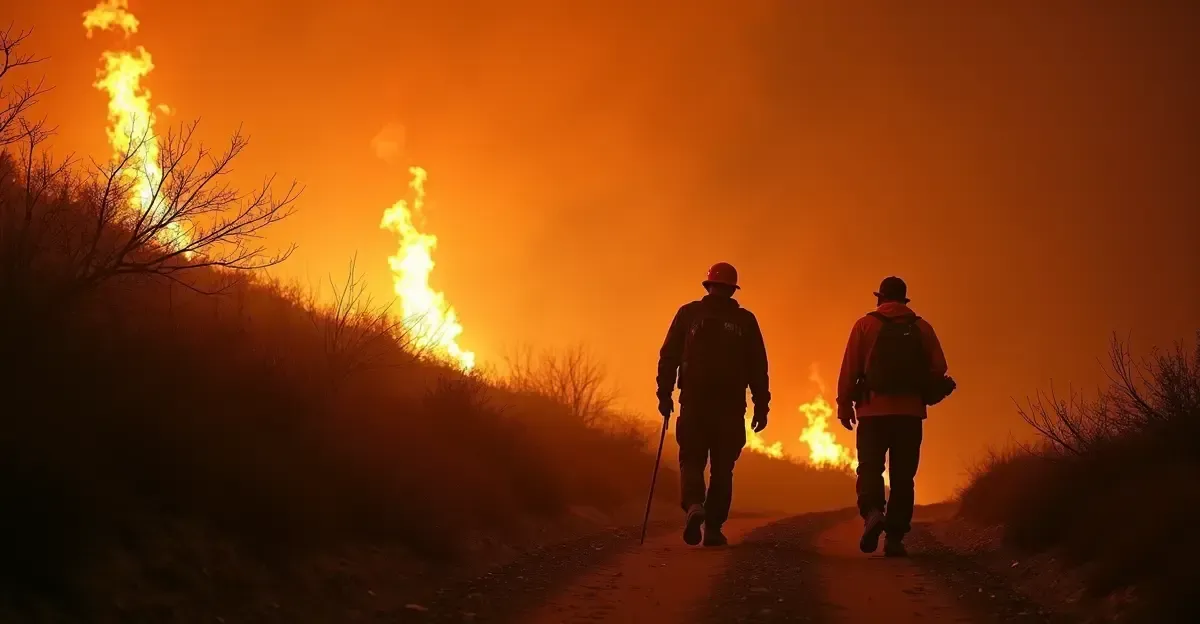
A devastating wildfire tore through Spain's popular Costa Brava region on July 3, 2026, burning at least 2,300 hectares of forest and forcing tens of thousands of residents and tourists into preventive confinement. The blaze, which started near La Bisbal d'Empordà in the province of Girona, has been classified as a 'sixth-generation' megafire due to its extreme behavior, rapid spread, and ability to generate its own weather conditions.
The fire erupted around midday on Friday and quickly spread toward the protected Les Gavarres massif, fueled by strong tramontana winds gusting up to 44 km/h and tinder-dry vegetation after months of drought. By late Friday, the burned area had reached over 2,300 hectares, with a perimeter of 8 km and the fire advancing at 2.2 km/h. Authorities fear up to 10,000 hectares could be affected if the fire remains uncontrolled.
Lockdown and Evacuations Across Girona Province
Catalonia's civil protection agency issued confinement orders for at least seven municipalities, including La Bisbal d'Empordà, Calonge, Castell d'Aro, Platja d'Aro, Santa Cristina d'Aro, Llagostera, and parts of Sant Feliu de Guíxols. More than 45,000 residents received emergency alerts via the Es-Alert mobile system, with approximately 40,000 phone warnings sent. Around 12,000 people were directly confined indoors, while 150 children at a holiday camp near La Bisbal were kept safe under supervision.
Catalan regional president Salvador Illa urged residents to follow instructions from emergency services. 'Stay indoors, close windows and doors, and do not travel unless absolutely necessary,' Illa said in a televised address. He also appealed to people with second homes in the area to avoid traveling there, as multiple roads including the C-66 at Palafrugell and the GI-660 were closed to facilitate firefighting operations.
Arrest Made: Angle Grinder Sparks Blaze
The Catalan police, Mossos d'Esquadra, arrested a man on suspicion of starting the fire. According to authorities, the man was using an angle grinder (radial) along a roadside near La Bisbal d'Empordà when sparks ignited dry vegetation. The work was being carried out despite a regional ban on such activities due to extreme fire risk. 'All evidence points to the fire starting while he was working with an angle grinder by the road,' police stated on social media.
The arrest has sparked debate about the enforcement of fire prevention regulations during high-risk periods. Spain has experienced an intense wildfire season in 2026, with nearly 50,000 hectares burned across the country, following the worst season in modern history in 2025 when over 393,000 hectares were destroyed.
Sixth-Generation Megafire: A New Reality for Southern Europe
Fire officials described the Costa Brava blaze as a 'sixth-generation wildfire' — a term used for megafires that create their own weather systems, including pyrocumulus clouds, firestorms, and erratic winds that can spark new outbreaks. These fires are nearly impossible to extinguish with conventional methods and often overwhelm firefighting resources.
More than 400 firefighters from the Generalitat de Catalunya, supported by 11 aerial units and over 50 ground vehicles, battled the flames through the night. Spain's Military Emergencies Unit (UME) deployed 200 soldiers and 60 vehicles to reinforce the response. 'The fire has grown beyond our capacity to extinguish it directly,' admitted Ferran Garcia, head of firefighting operations for the Catalan fire service. 'We are focused on protecting populated areas and critical infrastructure.'
The sixth-generation megafire phenomenon is increasingly linked to climate change, with prolonged droughts, record heatwaves, and the accumulation of dry vegetation creating perfect conditions for extreme fires. Southern Europe, particularly Spain, Portugal, Greece, and France, has seen a sharp rise in such events over the past decade.
Impact on Tourism and Environment
The Costa Brava, known for its rugged coastline, coves, and beach resorts, is one of Spain's most popular summer destinations, attracting millions of international tourists each year. The wildfire has caused significant disruption, with smoke plumes visible from satellite imagery stretching across the Mediterranean Sea toward Mallorca. Beaches in the area were largely empty as thick smoke reduced visibility and air quality deteriorated.
Environmental damage is severe, with 97% of the burned area located within the protected Les Gavarres natural park, a biodiversity hotspot home to Mediterranean pine forests, cork oaks, and diverse wildlife. The fire threatens to destroy habitats that have taken decades to recover from previous blazes.
The impact of wildfires on Mediterranean tourism is a growing concern for regional economies. Local businesses, hotels, and restaurants in the affected towns face cancellations and reduced bookings during the peak summer season.
Regional and National Response
Catalan president Salvador Illa has requested additional support from the Spanish central government, and Prime Minister Pedro Sánchez offered full cooperation. The UME deployment marks a significant escalation of resources. Emergency services have established a command center in Girona to coordinate operations.
Neighboring France, which has also been battling wildfires near Perpignan, offered assistance through the European Union's Civil Protection Mechanism. The EU has activated the Copernicus satellite system to provide real-time mapping of the fire's progression.
The EU's wildfire response coordination has been tested repeatedly in recent years, with 2026 shaping up to be another challenging season across the continent.
FAQ: Costa Brava Wildfire 2026
What caused the Costa Brava wildfire?
The fire is believed to have been sparked by a man using an angle grinder during roadworks near La Bisbal d'Empordà. He has been arrested by Catalan police.
How many hectares have burned?
As of July 3-4, 2026, at least 2,300 hectares have been destroyed, with the fire still active. Authorities fear up to 10,000 hectares could be affected.
How many people are affected?
Around 45,000 people received confinement alerts, with approximately 12,000 directly confined indoors across seven municipalities.
What is a sixth-generation wildfire?
It is an extreme megafire that creates its own weather conditions, including pyrocumulus clouds and firestorms, making it highly unpredictable and difficult to extinguish.
Is the Costa Brava safe for tourists?
Authorities advise against non-essential travel to the affected areas. Several roads are closed, and air quality is poor due to smoke. Tourists should follow official guidance and check with local authorities.
How can I help?
Donations to Spanish Red Cross or local firefighting charities support relief efforts. Avoid traveling to affected areas to keep roads clear for emergency services.
Sources
Information compiled from Spanish media reports including RTVE, EFE, 3Cat, EuroWeekly News, Manchester Evening News, and official statements from the Generalitat de Catalunya, Mossos d'Esquadra, and the Spanish Military Emergencies Unit (UME). Satellite imagery provided by Copernicus and Sat24.
Follow Discussion