


 Deutsch
 English
 Español
 Français
 Nederlands
 Português


 Share
Share




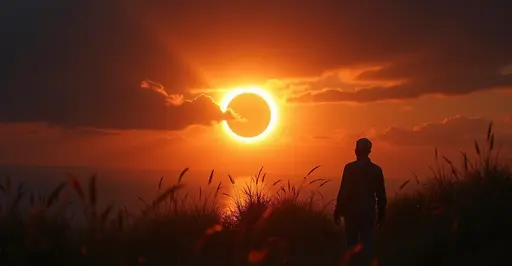
On Wednesday, August 12, 2026, a total solar eclipse swept across the Northern Hemisphere, casting a shadow from Siberia to Spain. While the path of totality passed through Russia, Greenland, Iceland, and Spain, Ukraine witnessed a partial eclipse — a rare celestial event that offered a brief moment of awe in a nation battered by war and record-breaking heat.
Eclipse Path and Visibility in Ukraine
The total eclipse began at dawn in northern Siberia and raced across the Arctic, reaching maximum duration of 2 minutes 18 seconds off the coast of Iceland. In Ukraine, the moon obscured up to 40% of the sun in western regions like Lviv and Uzhhorod, while Kyiv saw roughly 25% coverage. The partial eclipse started around 20:30 local time and lasted until sunset.
"We handed out eclipse glasses to children in a bomb shelter in Kharkiv," said Olena Kovalenko, a volunteer with the Ukrainian Red Cross. "For a few minutes, they forgot the war and looked up in wonder."
Ukraine war civilian impact has been severe, with over 1,300 civilians killed in the first half of 2026 alone, according to the UN.
A Moment of Respite Amidst Conflict
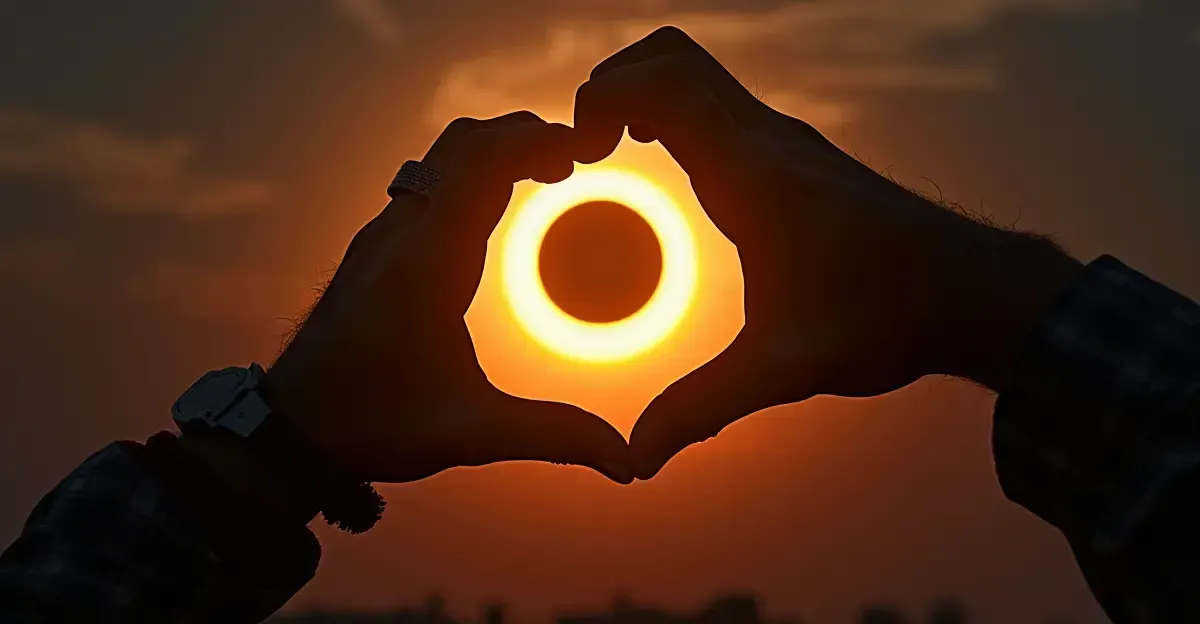
Despite the ongoing Russian invasion, thousands of Ukrainians gathered in parks and rooftops to view the eclipse. In Lviv, the city's historic Market Square filled with families wearing protective glasses. In Kyiv, the Astronomy Museum organized a public viewing event, though air raid sirens briefly interrupted the gathering.
"It's a symbol of hope," said Dr. Ihor Petrov, an astronomer at Taras Shevchenko National University. "The heavens remind us that there is still beauty beyond this conflict."
The Eastern European human rights crisis has drawn international condemnation, but moments like the eclipse provide a rare respite for civilians.
Heatwave and Visibility Challenges
The 2026 European heatwave, which has already claimed over 30,000 lives across the continent, added another layer of complexity. In southern Ukraine, temperatures soared above 40°C (104°F), making outdoor observation dangerous. Authorities advised against prolonged sun exposure, even with eclipse glasses.
"We had to balance eclipse viewing with heat safety," said Dr. Natalia Ivchenko, a public health official in Odesa. "Many elderly and vulnerable people were told to watch via livestream."
The 2026 European heatwave emergency response has strained resources across the region.
Scientific and Cultural Significance
This was the first total solar eclipse visible from mainland Europe since 1999. For Ukraine, the last partial eclipse of this magnitude occurred in 2015. Scientists used the event to study the sun's corona and its effects on Earth's atmosphere. Amateur astronomers across the country documented the eclipse with telescopes and cameras, contributing to citizen science projects.
In a unique twist, northern Russia — including parts of occupied Ukraine — experienced the eclipse at sunrise, where the aurora borealis might have been visible simultaneously. However, wartime restrictions prevented independent verification.
FAQ
What time was the solar eclipse on August 12, 2026 in Ukraine?
The partial eclipse was visible in Ukraine starting around 20:30 local time (EEST), with maximum obscuration around 21:15, and ending at sunset.
How much of the sun was covered in Kyiv?
About 25% of the sun's disk was covered by the moon in Kyiv; western regions saw up to 40% coverage.
Was it safe to watch the eclipse during the heatwave?
Yes, with proper ISO-certified solar eclipse glasses, but health officials advised limiting direct sun exposure due to extreme heat.
Did the war affect eclipse observations?
Air raid sirens and security concerns interrupted some public gatherings, but many still managed to view the eclipse safely.



Follow Discussion