


 Deutsch
 English
 Español
 Français
 Nederlands
 Português


 Share
Share




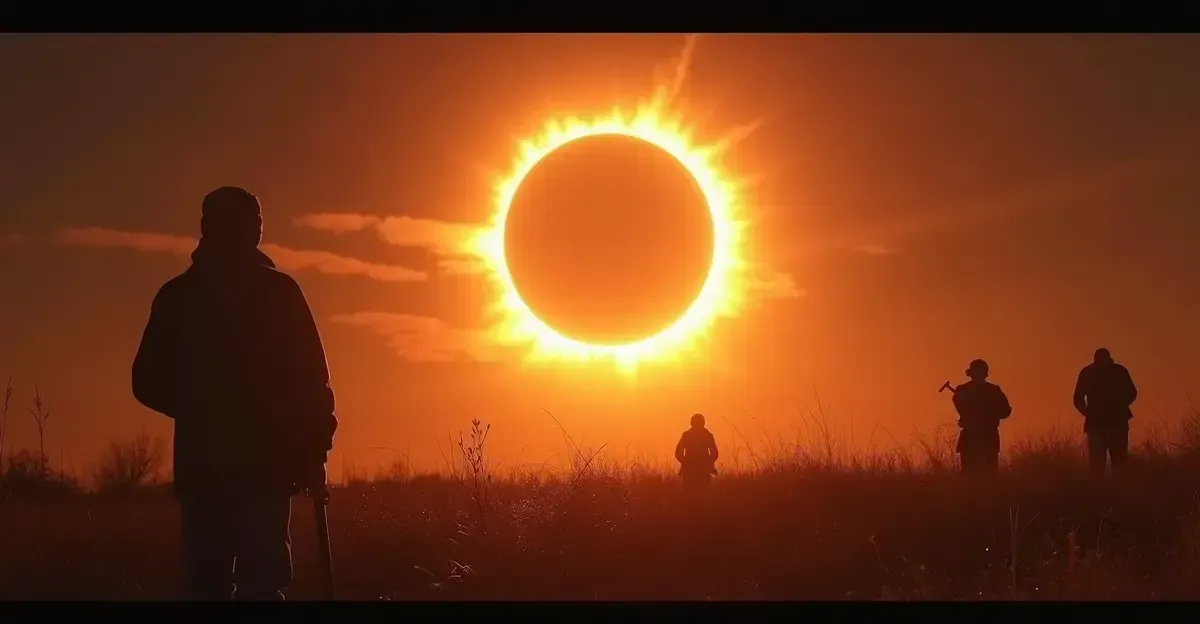
As the August 12, 2026 total solar eclipse approaches, millions across Europe are preparing to witness the Moon pass between Earth and the Sun. But ophthalmologists warn that viewing the eclipse without proper protection can cause irreversible eye damage—and even certified eclipse glasses may not be safe. 'A colander works better,' says Professor Mor Dickman, head of Ophthalmology at UMC Utrecht, urging the public to use simple household items for a safe, projection-based view of the celestial event.
Why Looking at a Solar Eclipse Can Blind You
During a partial eclipse, the Sun appears dimmer, leading many to believe it is safe to look directly at it. According to Dickman, this is dangerously misleading. 'You often do not feel that damage is occurring,' he explains. The retina — the light-sensitive tissue at the back of the eye — does not register pain. By the time symptoms such as a dark or blurry spot appear, often hours or even days later, the injury is permanent. Solar retinopathy, the condition caused by staring at the Sun, has no cure and can lead to central vision loss.
The risk is heightened during eclipses because the reduced brightness suppresses the natural reflex to squint or look away. Unlike the 1999 total solar eclipse over Europe, which many viewed safely with proper guidance, the current event has triggered a wave of unsafe DIY solutions online.
Why Eclipse Glasses Aren't Always Safe
Special eclipse glasses bearing the ISO 12312-2 certification have long been the gold standard for direct solar viewing. However, Dickman cautions that certification alone is no guarantee. 'The fact that an ISO certificate is printed on them does not automatically mean they offer sufficient protection,' he told BNR Nieuwsradio. Counterfeit glasses have flooded the market ahead of the 2026 eclipse, and even legitimate pairs can degrade over time — scratches, pinholes, or delamination can render them useless.
Dickman is so wary that he would not let his own children use eclipse glasses. 'I would not let them look directly at the eclipse, even with eclipse glasses,' he said, echoing concerns raised by the American Astronomical Society about the prevalence of non-compliant viewers.
Other common household items are even riskier. 'Absolutely do not use CDs, ordinary sunglasses, or two sunglasses on top of each other,' Dickman warns. These materials block only visible light, allowing harmful ultraviolet and infrared radiation to reach the retina unimpeded.
The Colander Method: A Safe, Free Alternative
Instead of looking directly at the Sun, Dickman recommends indirect viewing through pinhole projection — and a kitchen colander is the perfect tool. 'A colander, sieve, or a piece of cardboard with a small hole in it is enough,' he says. The method works by letting sunlight pass through multiple small openings, projecting dozens of crescent-shaped images of the eclipsed Sun onto any flat, white surface.
How to Use a Colander for Eclipse Viewing
- Stand with your back to the Sun.
- Hold the colander (or any object with small holes) above your shoulder.
- Allow sunlight to pass through the holes onto a white wall, sheet of paper, or the ground.
- Observe the projected images — never look through the holes at the Sun itself.
This technique has been endorsed by astronomy organizations worldwide. The European Space Agency eclipse livestream offers an even safer option: watching the event unfold in high definition from the comfort of your screen. 'That is a safe and simple solution,' Dickman notes, adding that livestreams often provide better views than what the naked eye can discern from the ground.
Grid Operators Also Sound the Alarm
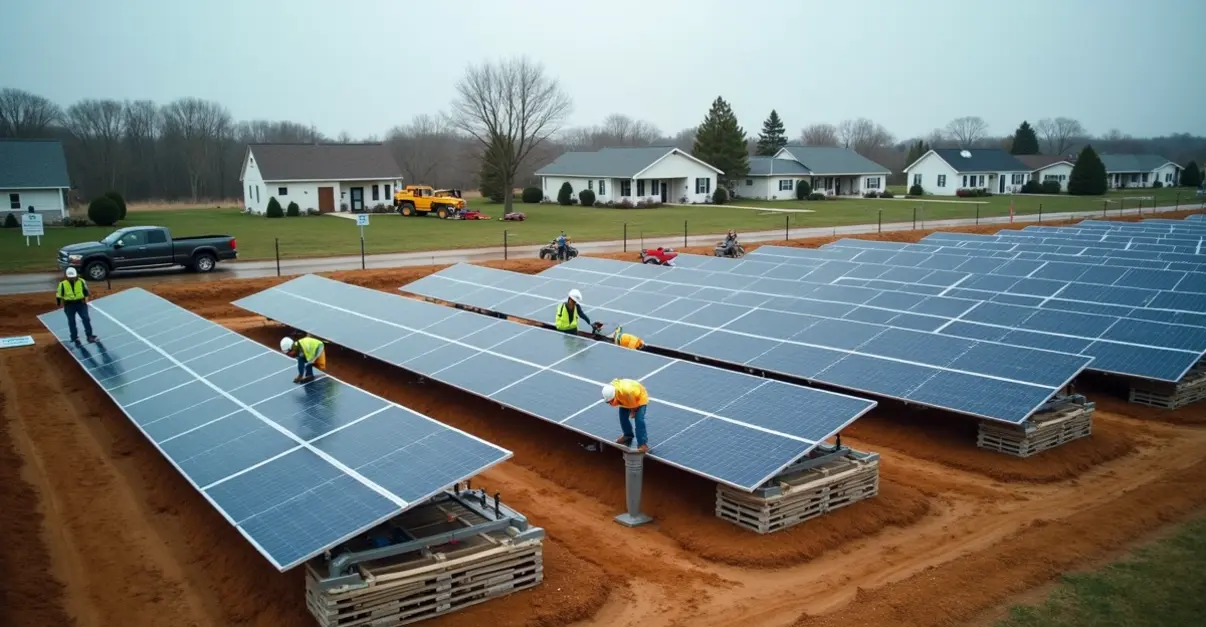
The eclipse's impact extends beyond eye safety. Dutch grid operator TenneT has advised households to avoid charging electric vehicles, running washing machines, or using other high-consumption appliances during the eclipse. The sudden drop in solar power generation — expected to reach over 80% obscuration in the Netherlands — could strain the electrical grid if demand remains high. Similar warnings were issued ahead of the 2024 North American total solar eclipse, which caused measurable dips in solar output across the United States.
Frequently Asked Questions
Can I really go blind from looking at a solar eclipse?
Yes. Even a few seconds of unfiltered viewing can cause solar retinopathy — permanent damage to the retina that can result in central vision loss or blindness. The damage is painless and may not become apparent for hours or days.
What if I don't have a colander?
Almost any object with small holes works: a pasta strainer, a straw hat, interlaced fingers, or even the dappled light under a leafy tree. The key is to project the Sun's image, not to look directly at it.
Are eclipse glasses with ISO 12312-2 certification definitely safe?
Not necessarily. Certification labels can be counterfeited, and even genuine glasses can be damaged by scratches, pinholes, or age. Always inspect glasses carefully using a bright light test before use, and never let children rely on them unsupervised.
When does the August 12, 2026 eclipse start in the Netherlands?
The partial eclipse begins around 19:14 CEST, reaches maximum at approximately 20:10 CEST, and ends by 21:04 CEST. Exact times vary by location; the western parts of the country see deeper coverage.
Where can I watch the eclipse safely online?
The European Space Agency (ESA) and other space organizations will broadcast the eclipse live. Streaming links are typically posted on their official websites and YouTube channels the day before the event.
Follow Discussion