


 Deutsch
 English
 Español
 Français
 Nederlands
 Português


 Share
Share




The Semiconductor Decoupling Dilemma: Economic Costs vs. Strategic Security
The escalating US-China semiconductor decoupling presents a critical dilemma for policymakers: balancing national security objectives against economic competitiveness. Recent analysis from the Information Technology and Innovation Foundation (ITIF) reveals that semiconductor export controls could cost US firms approximately $77 billion in sales and reduce research and development investment by 24%, highlighting the urgent need to reassess the economic-strategic balance. As China makes significant progress in chip self-sufficiency despite restrictions, the global semiconductor landscape is undergoing a fundamental transformation that could reshape technological leadership for decades.
What is Semiconductor Decoupling?
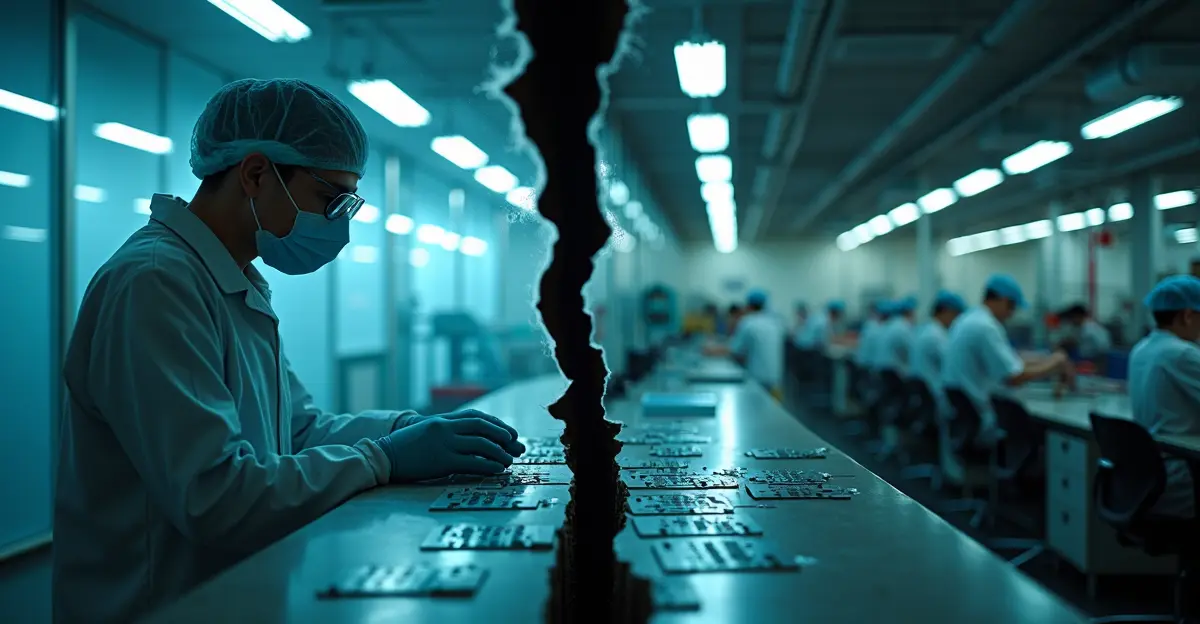
Semiconductor decoupling refers to the strategic separation of US and Chinese technology ecosystems, particularly in advanced chip manufacturing and design. This process accelerated dramatically with the October 2022 export controls implemented by the US Department of Commerce's Bureau of Industry and Security, which targeted China's access to advanced computing chips and semiconductor manufacturing equipment. The controls represent a fundamental shift in US policy toward strategic technology protection, creating what experts call a "bifurcated market" where companies must navigate increasingly separate technological ecosystems.
The Economic Toll on US Chipmakers
The ITIF report, published in November 2025, provides sobering projections about the economic consequences of semiconductor decoupling. In a full decoupling scenario, US firms could lose approximately $77 billion in semiconductor sales in the first year alone. This revenue loss would translate to a 24% reduction in R&D investment—approximately $14 billion—undermining the long-term innovation capacity that has sustained US technological leadership. The industry could also lose over 80,000 direct jobs and nearly 500,000 downstream jobs across the broader economy.
Key Economic Impacts:
- $77 billion potential sales loss for US semiconductor firms
- 24% reduction in R&D investment ($14 billion)
- 80,000+ direct jobs at risk in semiconductor industry
- 500,000 downstream jobs potentially affected
- South Korean, EU, Taiwanese, and Japanese firms gaining market share from US losses
The US semiconductor industry faces particular challenges as companies like Nvidia and AMD have already reported significant revenue declines—$5.5 billion and $800 million respectively—due to restrictions on AI chip exports to China. These companies must now develop "China-compliant" versions of their products with capped capabilities, creating additional R&D burdens while potentially ceding market share to competitors.
China's Accelerated Push for Self-Sufficiency
Despite export controls, China is making remarkable progress toward semiconductor self-sufficiency, driven by national security concerns and $150 billion in state subsidies. According to recent data, China's domestic semiconductor production reached 28% self-sufficiency in Q4 2025, up from just 16% in 2024. The breakthrough came with Semiconductor Manufacturing International Corporation (SMIC) successfully mass-producing 7nm chips without EUV lithography using novel multi-patterning techniques, effectively bypassing Western export controls.
China's Semiconductor Progress:
- 28% self-sufficiency achieved in Q4 2025 (up from 16% in 2024)
- 7nm chip production by SMIC without EUV equipment
- Huawei achieving 100% domestic sourcing for Kirin 9100 processor
- 12% year-over-year drop in chip imports
- 3,000+ engineers returning to China with 5x salary packages
This technological shift fundamentally alters global assumptions about export control effectiveness. Chinese alternatives are becoming increasingly viable, creating what analysts describe as a "bifurcated AI landscape" where Chinese companies like Tencent and Alibaba integrate domestic chips while US firms face export restrictions and competition. The China semiconductor industry is pursuing "asymmetric" advantages through targeted breakthroughs in key areas while leveraging its vast domestic market.
Global Supply Chain Reshaping
The semiconductor decoupling is creating significant opportunities for non-US, non-Chinese firms in the global market. South Korean, EU, and Taiwanese companies are positioned to gain market share as US firms lose access to the Chinese market. Taiwan Semiconductor Manufacturing Company (TSMC), which accounts for over 90% of global advanced chip manufacturing capacity, navigates complex US export controls while maintaining operations in China at older technology generations.
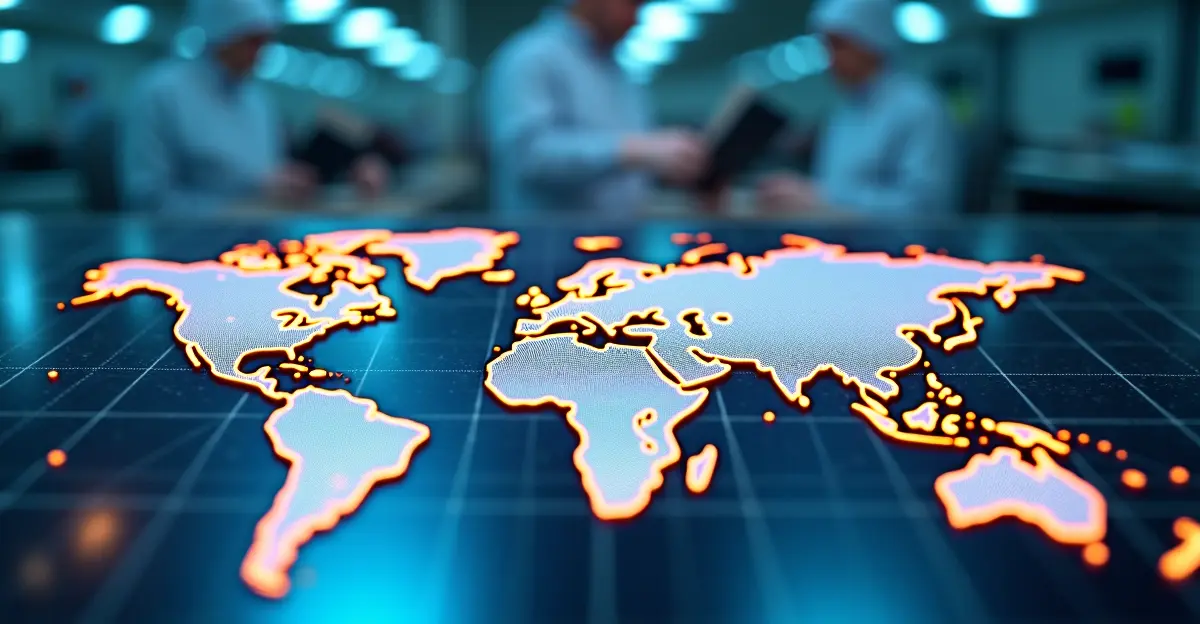
The global semiconductor market is increasingly dividing into two incompatible ecosystems, forcing companies to choose between serving China or Western markets. This bifurcation represents a fundamental reshaping of global supply chains and technological competition, with significant implications for industries worldwide. The global semiconductor supply chain faces unprecedented fragmentation as geopolitical tensions reshape production networks.
Strategic Implications and Policy Dilemmas
The central policy dilemma revolves around balancing national security concerns with economic competitiveness. While export controls aim to restrict China's access to cutting-edge semiconductor technologies that could enhance military capabilities, they simultaneously undermine US firms' revenue streams and innovation capacity. The ITIF report examines four decoupling scenarios and concludes that US policymakers should keep semiconductor export controls to a minimum to protect American innovation and employment.
Experts warn that current policies risk creating a self-fulfilling prophecy: by restricting US firms' access to the Chinese market, policymakers may inadvertently accelerate China's technological independence while weakening America's own innovation ecosystem. The US technology policy faces critical decisions about how to maintain strategic advantages without sacrificing economic competitiveness.
Expert Perspectives on the Decoupling Dilemma
Industry analysts emphasize the complexity of the semiconductor decoupling challenge. "The fundamental question is whether we're sacrificing long-term technological leadership for short-term security gains," notes a senior technology policy analyst. "The $77 billion in potential losses and 24% R&D reduction represent more than just economic costs—they represent a potential erosion of America's innovation capacity at precisely the moment when technological competition is intensifying."
Another expert highlights the strategic implications: "China's progress toward semiconductor self-sufficiency demonstrates that export controls alone cannot prevent technological advancement. We need a more nuanced approach that protects critical technologies while maintaining economic engagement in areas that don't pose national security risks."
FAQ: Semiconductor Decoupling Questions Answered
What are semiconductor export controls?
Semiconductor export controls are US government restrictions on the export of advanced computing chips and semiconductor manufacturing equipment to China, implemented to address national security concerns about China's technological advancement.
How much could US firms lose from decoupling?
According to ITIF analysis, US semiconductor firms could lose approximately $77 billion in sales in a full decoupling scenario, with R&D investment reduced by 24% ($14 billion).
Is China achieving semiconductor self-sufficiency?
Yes, China has made significant progress, reaching 28% semiconductor self-sufficiency in Q4 2025 (up from 16% in 2024), with SMIC producing 7nm chips without restricted EUV equipment.
Who benefits from US-China semiconductor decoupling?
South Korean, EU, Taiwanese, and Japanese semiconductor firms stand to gain market share as US firms lose access to the Chinese market, creating opportunities in the bifurcated global market.
What are the long-term implications?
The decoupling could create two incompatible technological ecosystems, potentially weakening US innovation capacity while accelerating China's technological independence, reshaping global supply chains for decades.
Conclusion: Navigating the Strategic Crossroads
The semiconductor decoupling dilemma represents one of the most significant strategic challenges in US-China relations. As the ITIF analysis reveals, the economic costs of export controls—$77 billion in potential sales losses and 24% R&D reduction—must be weighed against legitimate national security concerns. China's accelerating progress toward semiconductor self-sufficiency suggests that current policies may be less effective than projected while imposing substantial costs on US firms.
The future of technological leadership may depend on developing more nuanced approaches that protect critical technologies without sacrificing economic competitiveness. As the global semiconductor market continues to bifurcate, policymakers face increasingly complex decisions about how to maintain strategic advantages in an era of intensifying technological competition. The US-China technology competition will likely define the global economic and security landscape for decades to come.




Follow Discussion