


 Deutsch
 English
 Español
 Français
 Nederlands
 Português


 Share
Share




The Semiconductor Bifurcation: How US Export Controls Are Reshaping Global Tech Supply Chains
The October 2025 US semiconductor export controls represent the most significant expansion of technology restrictions to date, fundamentally restructuring global supply chains and creating a bifurcated market between US-aligned and China-aligned ecosystems. With over 140 new entities added to export lists and major manufacturers losing their Validated End-User status for Chinese operations, these measures have triggered immediate disruptions and strategic realignments across the global technology landscape.
What Are the October 2025 Semiconductor Export Controls?
The October 2025 export controls represent a dramatic escalation of US efforts to restrict China's access to advanced semiconductor technology. Building on the 2022 semiconductor restrictions, these new measures specifically target three critical areas: advanced computing chips below 16/14nm nodes, high-bandwidth memory (HBM) technology, and semiconductor manufacturing equipment. The US Department of Commerce's Bureau of Industry and Security (BIS) announced these strengthened restrictions to enhance foundry due diligence requirements and prevent circumvention of existing controls. According to official documents, the rules expand license requirements for items destined for supercomputer or semiconductor development in China, with facilities owned by Chinese entities facing a "presumption of denial" for licenses.
Manufacturer Navigation: TSMC, Samsung, and SK Hynix Face Complex Licensing
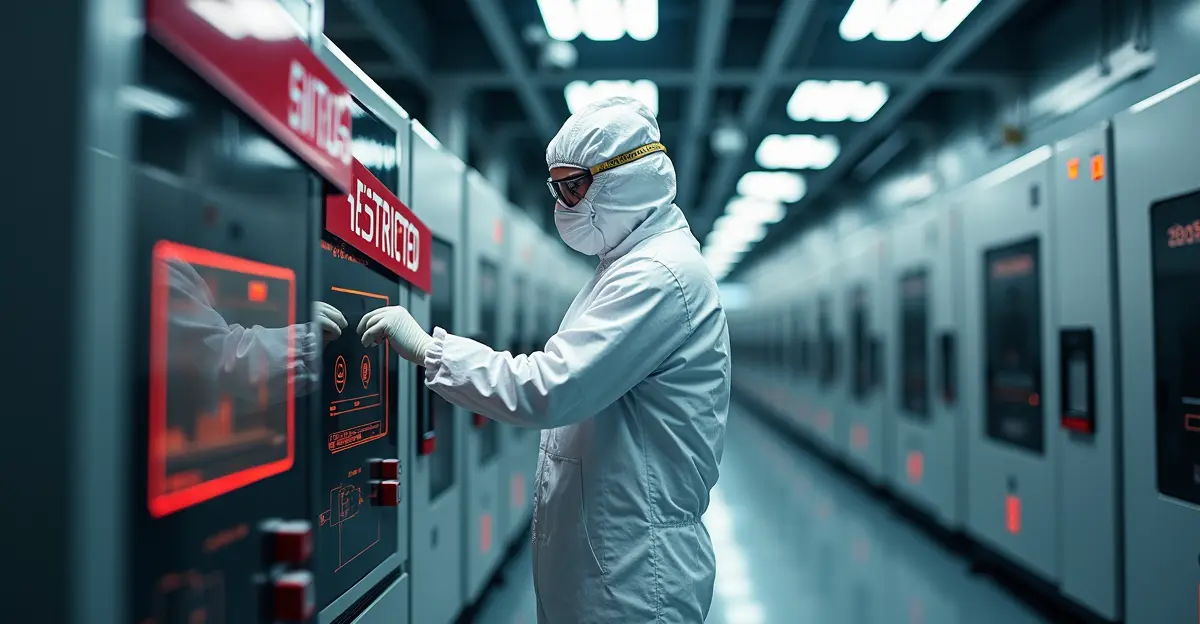
The revocation of Validated End-User (VEU) status for major manufacturers represents one of the most consequential aspects of the 2025 controls. TSMC, Samsung, and SK Hynix have lost their fast-track export privileges for chipmaking equipment to their Chinese facilities, effective December 31, 2025. This policy change requires these companies to obtain individual US export licenses for every shipment of American-origin chipmaking tools to their manufacturing plants in China.
TSMC's Strategic Response
TSMC confirmed the change affects its Nanjing plant, which contributes less than 3% of its total revenue. The company has stated it will comply with all licensing requirements while maintaining operations at existing capacity levels. The Commerce Department has indicated it will grant export licenses for maintaining existing facilities but not for capacity expansion or technology upgrades in China. This creates a strategic dilemma for TSMC as it balances its global customer base with geopolitical realities.
Samsung and SK Hynix's Memory Challenges
South Korean memory chip giants face particularly complex challenges, as their Chinese operations represent significant portions of their global production capacity. The new restrictions specifically target high-bandwidth memory technology, which is critical for AI accelerators and advanced computing systems. Both companies are now developing "China-compliant" product variants with capped capabilities to navigate the export control landscape while maintaining some market presence.
China's Accelerated Self-Sufficiency Push
The export controls have dramatically accelerated China's push for semiconductor self-sufficiency, with domestic production capacity reaching 28% self-sufficiency in Q4 2025, up from just 16% in 2024. This rapid progress is driven by three key developments that fundamentally alter global technology assumptions.
SMIC's Technological Breakthroughs
Semiconductor Manufacturing International Corporation (SMIC) has achieved major milestones despite international restrictions, successfully producing 7nm and 5nm-class chips using existing DUV lithography equipment through sophisticated multi-patterning techniques. This circumvents the need for advanced EUV equipment that remains under strict export controls. SMIC's yield rate for 5nm wafers now exceeds 55%, with chips being used in government projects, edge computing systems, and AI accelerators. According to industry analysts, "SMIC's breakthrough represents a strategic leap in China's pursuit of technological self-reliance and economic security."
Huawei's Domestic Production Expansion
Huawei's HiSilicon division is expanding production of its Ascend AI accelerator series, with plans to double production to 600,000 units in 2025 and reach 1.6 million by 2026. The company's Kirin 9100 processor is now 100% domestically sourced, representing a significant achievement in China's technology independence efforts.
Revenue Impacts and Economic Consequences
The export controls have created significant economic consequences for US semiconductor companies while reshaping global market dynamics. A recent ITIF report warns that in a full decoupling scenario, US firms could lose $77 billion in semiconductor sales in the first year alone, with South Korean, European, Taiwanese, Japanese, and Chinese firms gaining market share.
US Company Revenue Declines
This revenue loss would reduce US semiconductor R&D investments by 24% ($14 billion) compared to current levels and could result in the loss of over 80,000 direct jobs and nearly 500,000 downstream jobs. US chip designers like Nvidia and AMD have been forced to develop "China-compliant" versions of their AI accelerators, with Nvidia reportedly agreeing to give the US government a 15% revenue cut from these restricted sales.
Global Supply Chain Restructuring
The controls have triggered a global supply chain restructuring, forcing companies to diversify production and R&D efforts while balancing national security concerns with economic interdependence. Chinese chip imports dropped 12% year-over-year in Q4 2025, reflecting the accelerating shift toward domestic production and alternative supply sources.
Geopolitical Implications and Strategic Competition
The October 2025 controls represent a fundamental escalation in US-China strategic competition, with semiconductors becoming the central battleground in technological and geopolitical rivalry. This bifurcation creates two potentially incompatible semiconductor ecosystems, forcing technology companies worldwide to make difficult choices about which market to serve.
Long-Term Strategic Consequences
Experts warn that the bifurcated market could lead to technological divergence, with different standards, architectures, and innovation pathways developing in US-aligned and China-aligned ecosystems. This represents a significant departure from the previously globalized semiconductor industry and could have profound implications for artificial intelligence development and technological innovation worldwide.
International Coordination Challenges
The success of US export controls depends heavily on international coordination with allies, particularly South Korea, Japan, and the Netherlands, which control critical segments of the semiconductor manufacturing equipment supply chain. Maintaining this coalition while managing economic pressures represents a significant diplomatic challenge for US policymakers.
FAQ: Understanding the Semiconductor Export Controls
What specific technologies are targeted by the October 2025 export controls?
The controls specifically target advanced computing chips below 16/14nm nodes, high-bandwidth memory technology, and semiconductor manufacturing equipment. They also expand restrictions on items destined for supercomputer or semiconductor development in China.
How do the controls affect companies like TSMC and Samsung?
Major manufacturers have lost their Validated End-User status, requiring individual export licenses for every shipment of US-origin chipmaking equipment to their Chinese facilities. This creates significant operational complexity and restricts capacity expansion in China.
What is China's response to these restrictions?
China has dramatically accelerated its semiconductor self-sufficiency push, with domestic production capacity reaching 28% self-sufficiency in Q4 2025. Companies like SMIC have achieved breakthroughs in advanced node manufacturing despite equipment restrictions.
How do the controls impact US semiconductor companies?
US companies face significant revenue declines from restricted Chinese market access, with potential losses of $77 billion in a full decoupling scenario. This could reduce R&D investments by 24% and result in substantial job losses.
What are the long-term implications of semiconductor bifurcation?
The bifurcation could lead to two incompatible technological ecosystems with different standards and innovation pathways, fundamentally reshaping global technology competition and supply chain dynamics for decades to come.
Sources and Further Reading
This analysis draws on multiple sources including the US Department of Commerce announcements, industry analysis reports, ITIF economic impact studies, and financial news coverage. Additional context comes from the Congressional Research Service report R48642 examining US export controls on advanced semiconductors to China.


Follow Discussion