


 Deutsch
 English
 Español
 Français
 Nederlands
 Português


 Share
Share




The February 2026 eruption of the Iran War and the subsequent effective closure of the Strait of Hormuz have unleashed the largest oil supply disruption on record, sending shockwaves through energy markets, global supply chains, and food security systems. With Brent crude prices surging past $115 per barrel and the International Monetary Fund (IMF) slashing its 2026 global growth forecast to 3.1%, the crisis is forcing a strategic reevaluation of energy dependence on critical chokepoints and accelerating defense buildups worldwide.
The Largest Oil Supply Shock in History
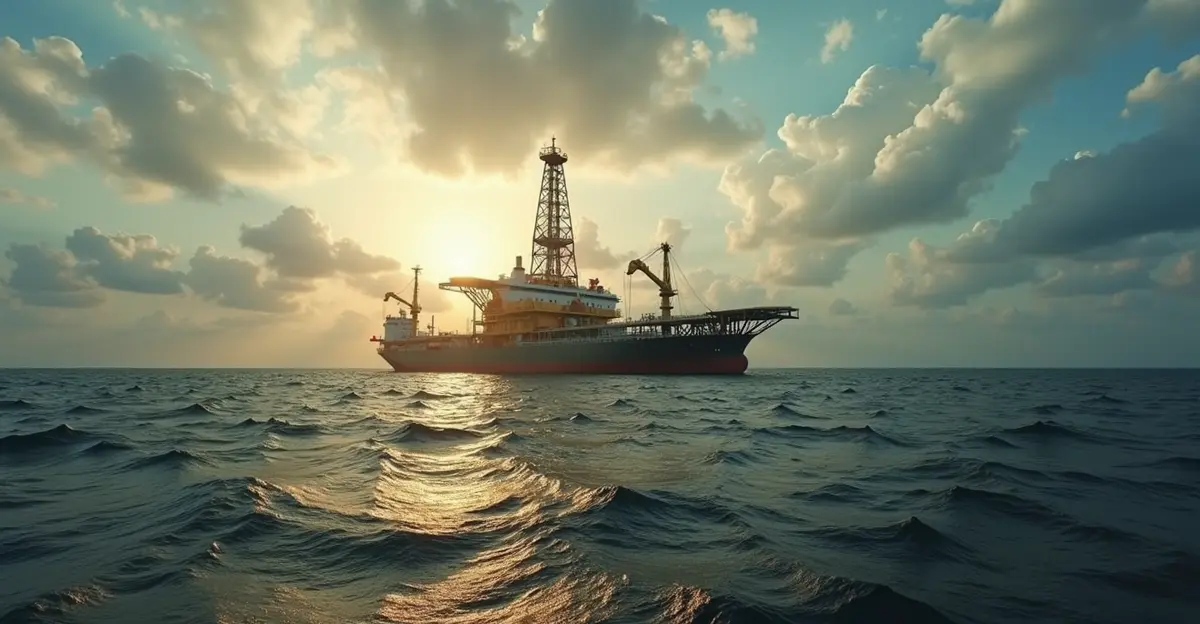
Hostilities that began on February 28, 2026, rapidly escalated into a full-blown regional conflict, effectively shutting the Strait of Hormuz — a 21-mile-wide waterway through which roughly 25% of the world's seaborne oil and 20% of its liquefied natural gas (LNG) pass daily. According to the International Energy Agency (IEA), global oil supply plummeted by 10.1 million barrels per day (mb/d) to 97 mb/d in March 2026, marking the single largest disruption in history. The U.S. Energy Information Administration (EIA) reported production shut-ins of approximately 7.5 mb/d in March, rising to 9.1 mb/d in April across Iraq, Saudi Arabia, Kuwait, the UAE, Qatar, and Bahrain.
Brent crude oil, which traded around $70 per barrel before the conflict, surged to nearly $120 per barrel in early March before settling at an average of $103 in March and peaking at $115 in the second quarter of 2026, according to the EIA's April Short-Term Energy Outlook. The World Bank's Commodity Markets Outlook, released on April 28, 2026, warned that energy prices would rise 24% in 2026, with overall commodity prices up 16% — the highest since Russia's 2022 invasion of Ukraine. In a worst-case scenario, the World Bank projected Brent could hit $115 per barrel, while Wood Mackenzie warned that an extended closure could push prices toward $200 per barrel and trigger a global recession.
Cascading Effects Across Global Supply Chains
The disruption extends far beyond oil markets. The global shipping industry has been paralyzed. By early March, only about eight commercial vessels per day transited the strait, a near-complete standstill. Major carriers including COSCO, Maersk, and MSC suspended new bookings to the region. Freight rates on some routes skyrocketed by 750-900%, and ports across the Persian Gulf — Bahrain, Salalah, Al-Fujairah — experienced closures or severe disruptions. Vessels have been rerouted via the Cape of Good Hope, adding weeks to transit times and straining global logistics networks.
The petrochemicals sector is under intense scrutiny. S&P Global reported at the World Petrochemical Conference in March 2026 that shipping disruptions are forcing fundamental rethinking of supply chains, with companies navigating complex sanctions, regulations, and geopolitical tensions. The global supply chain resilience debate has been reignited, with governments and corporations scrambling to diversify sourcing and reduce dependence on chokepoints.
Food Security Under Threat
One of the most alarming secondary effects is the threat to global food security. The Strait of Hormuz is a critical artery for fertilizer trade: 34% of globally traded urea and 23% of traded ammonia pass through the waterway. The United Nations Conference on Trade and Development (UNCTAD) reported that 30-35% of crude oil, 20% of natural gas, and 20-30% of fertilizer shipments have been halted since hostilities began.
The World Bank projects fertilizer prices will surge 31% in 2026, threatening food security for up to 45 million additional people. Yara International CEO Svein Tore Holsether warned that the disruption could result in up to ten billion meals lost weekly. The Food and Agriculture Organization (FAO) noted that nearly 1.07 billion people rely on food produced from imported nitrogen fertilizers. Rising costs are pushing farmers to reduce usage, directly impacting crop yields — with some crops seeing up to 50% yield reduction without nitrogen fertilizer. The global food crisis 2026 looms as a 'perfect storm' if export restrictions or climate shocks emerge.
IMF Revises Global Growth Outlook
The economic fallout has forced the IMF to revise its global growth forecast downward. In its January 2026 World Economic Outlook Update, the IMF had projected global growth of 3.3% for 2026. Following the conflict, it slashed the forecast to 3.1% — a 0.2 percentage-point cut — while maintaining the 2027 outlook at 3.2%. The IMF warned that prolonged hostilities could further weaken the global economy and destabilize financial markets, noting that the energy supply shock is comparable in severity to the 1974 oil crisis, though the global economy is now more resilient.
Regionally, the U.S. economy is expected to grow by 2.3% in 2026 and 2.1% in 2027. China's growth is forecast to slow to 4.4% and 4.0%, respectively. The Euro Area is projected to expand by just 1.1% in 2026 and 1.2% in 2027, while the UK and Japan face modest growth of 0.8% and 0.7% in 2026. Global inflation is expected to rise modestly in 2026 before declining in 2027. Developing economies face inflation projected at 5.1%, with growth downgraded to 3.6%, according to the World Bank.
Accelerating Defense Buildups Worldwide
The crisis has triggered the largest global arms race since the Cold War. According to the International Institute for Strategic Studies (IISS), global defense spending reached $2.63 trillion in 2025 and is accelerating into 2026. The Iran War has prompted $400 billion in new defense commitments worldwide, with the U.S. alone requesting an additional $200 billion from Congress. Saudi Arabia, the world's largest arms importer, secured $9 billion in Patriot systems and $3 billion in F-15 sustainment from the U.S. in January 2026.
Three forces are driving the surge: depletion of existing stockpiles (interceptors like THAAD and PAC-3 being exhausted within days), the demonstration effect of modern warfare (cheap drones overwhelming expensive defenses), and allies realizing U.S. military capacity is stretched. A critical interceptor shortage has emerged — Patriot PAC-3 missiles cost $4-12 million each while Iran's Shahed-136 drones cost $20,000-50,000, creating an 80-to-1 attrition ratio favoring attackers. The global defense spending trends are reshaping military strategies and budget priorities across continents.
Strategic Reevaluation of Energy Dependence
The crisis is forcing a fundamental strategic reevaluation of energy dependence on chokepoints. The Strait of Hormuz has long been recognized as the world's most critical energy artery, but the 2026 conflict has demonstrated the catastrophic consequences of its closure. Wood Mackenzie's analysis outlines three scenarios: Quick Peace (Strait reopens by June, Brent falls to ~$80/bbl by end-2026), Summer Settlement (Strait closed until September, shallow global recession), and Extended Disruption (Strait closed through 2026, Brent could approach $200/bbl, global GDP could contract by 0.4%). Under the worst case, the Middle East GDP could contract 10.7%, with diesel prices nearing $300/bbl.
The analysis warns of long-term structural changes, including accelerated electrification and reduced oil dependence by importing countries, potentially lowering Brent by $10/bbl below the quick peace scenario over the medium term. The energy security policy 2026 landscape is being redrawn, with nations investing heavily in alternative energy sources, strategic reserves, and diversification of supply routes.
Expert Perspectives
Neil Atkinson, former head of the IEA's oil industry and markets division, described the crisis as 'game-changing' with no precedent, stating: 'The sky is the limit for prices.' Rystad Energy predicted Brent could reach $135 per barrel if closures persist for four months. The IEA's April 2026 Oil Market Report noted that global observed oil inventories fell by 85 million barrels in March, while oil prices surged to around $130 per barrel (North Sea Dated), $60 above pre-conflict levels.
The World Bank's Commodity Markets Outlook emphasized that war is 'development in reverse,' with the poorest hit hardest. The Bank urged targeted support for vulnerable households rather than broad fiscal measures. UNCTAD's emergency report highlighted that while a fragile U.S.-Iran ceasefire exists, shipping remains stalled due to lingering insecurity and a newly announced U.S. blockade on ships using Iranian ports.
FAQ
What caused the Strait of Hormuz closure in 2026?
The closure was triggered by U.S. and Israeli airstrikes across Iran on February 28, 2026, which escalated into a regional conflict. The strait became effectively impassable due to military operations, mining, and security risks, halting the vast majority of commercial shipping.
How much oil supply was lost?
The IEA reported a global oil supply plunge of 10.1 million barrels per day in March 2026, the largest disruption in history. The EIA estimated production shut-ins of up to 9.1 mb/d across Gulf states.
How high did oil prices go?
Brent crude surged to nearly $120 per barrel in early March, averaging $103 in March and peaking at $115 in Q2 2026. In a worst-case scenario, analysts warned prices could approach $200 per barrel.
How is food security affected?
The strait handles 34% of globally traded urea and 23% of ammonia. Fertilizer prices are projected to rise 31%, threatening food security for up to 45 million additional people. The FAO warned of potential 'perfect storm' conditions if export restrictions or climate shocks emerge.
What is the IMF's revised growth forecast?
The IMF cut its 2026 global growth forecast to 3.1% from 3.3%, citing the conflict's economic fallout. The World Bank downgraded developing economy growth to 3.6% with inflation at 5.1%.
Conclusion and Future Outlook
The Strait of Hormuz shock of 2026 stands as the single most consequential geopolitical and economic event of the year, with ramifications that will persist for years. The crisis has exposed the fragility of global energy systems, the interconnectedness of food and fuel markets, and the urgent need for diversification. Whether the strait reopens quickly or remains closed for an extended period, the world is already being reshaped — with accelerated energy transitions, unprecedented defense buildups, and a fundamental rethinking of supply chain resilience. The decisions made in the coming months will determine whether the global economy can weather this storm or faces a prolonged period of instability.




Follow Discussion