


 Deutsch
 English
 Español
 Français
 Nederlands
 Português


 Share
Share




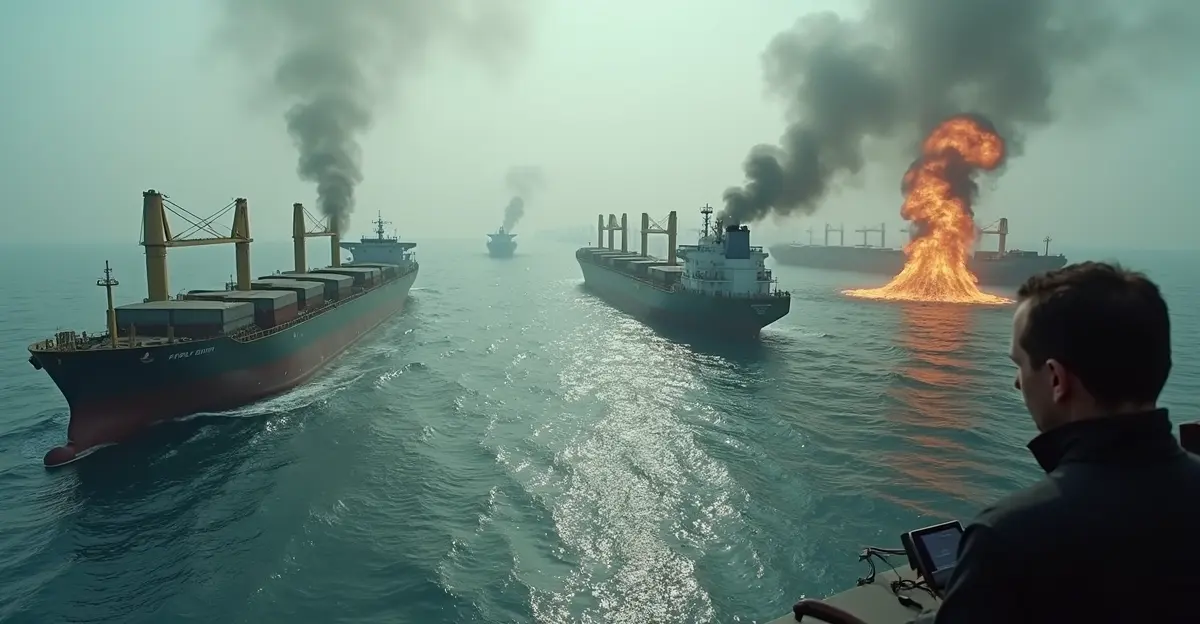
The Strait of Hormuz, the world's most critical energy chokepoint, has been effectively closed since February 28, 2026, following the outbreak of military conflict between the United States, Israel, and Iran. This unprecedented disruption has removed nearly 20% of global oil supply from the market — a shock three to five times larger than the 1973 oil crisis — and is reshaping global energy security, trade corridors, and financial stability in ways not seen since the 1970s.
Context: How the Strait of Hormuz Closure Began
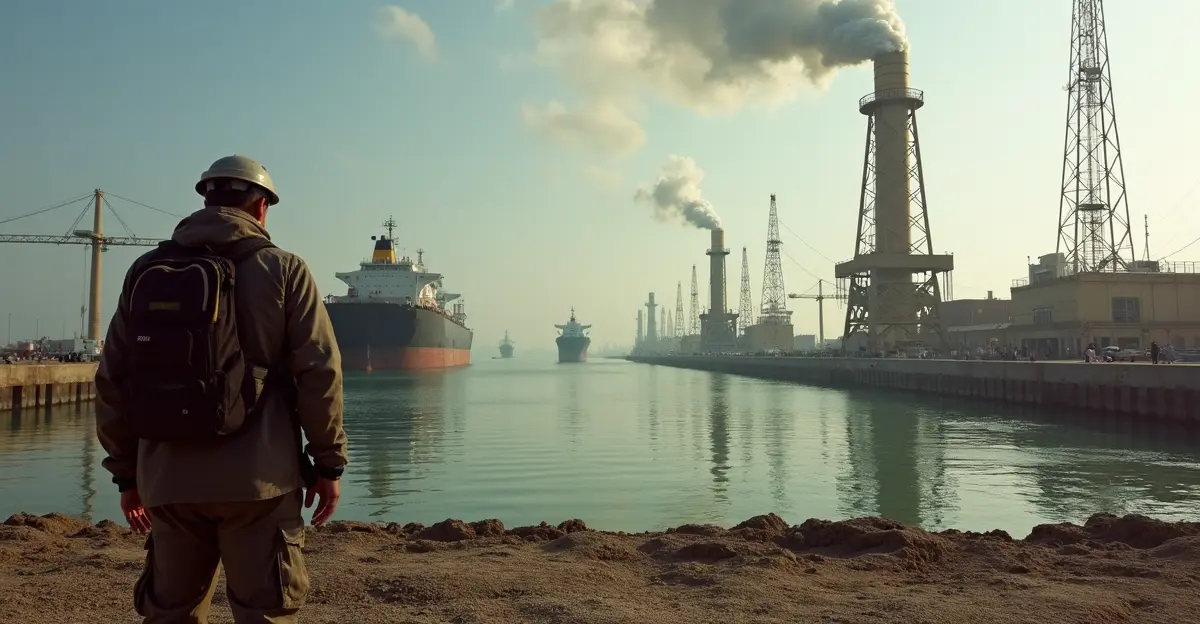
On February 28, 2026, the United States and Israel launched Operation Epic Fury, a coordinated air campaign targeting Iranian military infrastructure and leadership, resulting in the assassination of Supreme Leader Ali Khamenei. Iran retaliated with missile and drone attacks on U.S. bases, Israeli territory, and Gulf state oil infrastructure. The Islamic Revolutionary Guard Corps (IRGC) declared control of the Strait of Hormuz, forbidding passage to vessels bound for the U.S., Israel, and their allies. Within days, tanker traffic collapsed by 95%, with over 150 ships anchoring outside the strait and some 20,000 mariners stranded in the Persian Gulf. By late March, the IRGC announced the strait was closed to all vessels going 'to and from' enemy ports, a move that breaches the UN Convention on the Law of the Sea.
The 2026 Iran war fuel crisis quickly escalated into the largest supply disruption in oil market history. A fragile ceasefire was agreed on April 8, but Iran began charging tolls exceeding $1 million per ship. After the failure of the Islamabad Talks, the U.S. Navy imposed its own blockade on Iranian ports from April 13, creating a 'dual blockade' that persists as of late April 2026.
Energy Market Shock: Oil, LNG, and Refined Products
Oil Prices and Supply
The closure has removed approximately 20 million barrels per day of crude oil and condensate from global markets. According to the Dallas Federal Reserve, a one-quarter closure would raise WTI oil prices to $98 per barrel and reduce annualized global real GDP growth by 2.9 percentage points in Q2 2026. If the closure extends to two or three quarters, oil prices could reach $115 to $132 per barrel. The U.S. Energy Information Administration (EIA) reported that an estimated 7.5 million barrels per day of crude production was shut in across Gulf states in March, rising to 9.1 million b/d in April. Brent crude surged past $100 per barrel on March 8 for the first time in four years, peaking at $126, while the physical market saw Dated Brent trade at a $35 premium over futures — a sign of acute scarcity.
Liquefied Natural Gas (LNG)
Qatar, the world's largest LNG exporter, declared Force Majeure after an attack on its Ras Laffan complex. Asian LNG spot prices surged over 140%, and Europe — which receives 12–14% of its LNG from Qatar — faced medium-to-long-term supply risks. The International Energy Agency (IEA) recommended a record release of 400 million barrels of oil to absorb the shock, though analysts questioned whether strategic reserves could compensate for a prolonged closure.
Beyond Energy: Supply Chains Under Siege
The Strait of Hormuz closure extends far beyond oil and gas, threatening critical supply chains for fertilizers, metals, petrochemicals, and helium. According to the World Economic Forum, nine non-oil commodities are severely affected:
- Fertilizers: 46% of globally traded urea and 30% of ammonia originate from the Gulf region. Middle East urea prices have jumped 40%, and analysts warn nitrogen fertilizer prices could double if the closure persists through the Northern Hemisphere planting season.
- Aluminum: Gulf smelters produce 9% of global supply and 20% of exports. Prices have hit four-year highs, and the U.S. imports over 20% of its aluminum from the Persian Gulf.
- Helium: Qatar supplies nearly one-third of the world's helium, critical for MRI scanners and semiconductor manufacturing. Shortages are already expected.
- Petrochemicals: Methanol, monoethylene glycol (MEG), and sulfur — essential for batteries, textiles, and packaging — face severe disruptions, with $20–25 billion worth of products normally passing through annually.
The global supply chain disruption 2026 is fragmenting trade routes, with shipping firms rerouting via longer, costlier paths around Africa, adding 10–15 days to transit times and driving up freight and insurance costs.
Macroeconomic Fallout: Inflation, Growth, and Debt
The macroeconomic consequences are severe. The Dallas Fed model estimates that even a one-quarter closure reduces global GDP growth by 2.9 percentage points in Q2 2026, with GDP levels remaining below pre-closure baselines through 2027. A separate analysis by Solability calculates daily global GDP losses of approximately $20 billion, totaling $3.57 trillion (3.24% of global GDP) under the most likely 'phantom ceasefire' scenario.
Inflation is surging worldwide. Diesel trades near $200 per barrel, jet fuel at $195, and retail gasoline in the U.S. is projected to peak at $4.30 per gallon in April, with diesel exceeding $5.80. Fertilizer price spikes threaten food production, with the FAO warning of a potential 'perfect storm' if export restrictions or climate shocks compound the crisis. Developing economies face cascading risks: higher energy import bills, debt servicing costs, and food insecurity. Jordan, Lebanon, and Singapore are among the most exposed, with GDP losses exceeding 5% in worst-case scenarios.
The IMF global economic outlook 2026 has been revised downward sharply, with the IMF, UNCTAD, and WEF all publishing emergency assessments in March–April 2026. Central banks face a stagflationary dilemma: raising rates to combat inflation would further depress growth, while cutting rates risks de-anchoring inflation expectations.
Financial Stability and Risk Management
Financial markets have experienced extreme volatility. Oil futures saw the largest monthly price increase in history in March 2026. Shipping insurance premiums for Gulf transits have risen tenfold, and some insurers have excluded the region entirely. The UNCTAD report highlights risks of financial contagion, particularly for emerging market sovereign debt, as energy-importing nations face ballooning current account deficits.
In response, governments are accelerating structural shifts in energy security. The U.S. has invoked the Defense Production Act to boost domestic critical mineral processing. The European Union is fast-tracking renewable energy permits and LNG import terminals. Asian nations — which receive 84% of Gulf oil — are scrambling: China halted fuel exports, South Korea imposed price caps, and Bangladesh closed universities to conserve power. The global energy security policy shifts 2026 are likely to have lasting effects on investment in renewables, nuclear, and domestic production.
Expert Perspectives
'This is the largest supply disruption in oil market history — three to five times the shock of 1973,' said a Dallas Fed economist. 'Even after reopening, the global economy will take years to fully recover.'
FAO Chief Economist Máximo Torero warned: 'While global food prices remain stable for now due to strong stocks, the coming planting season faces serious risks. Farmers may face higher costs and limited fertilizer access, potentially reducing crop yields and driving up food prices later in the year.'
The ADNOC chief described the closure as 'economic terrorism,' while U.S. President Donald Trump falsely claimed on March 9 that the strait had reopened, later demanding NATO and China help secure passage.
Frequently Asked Questions
What caused the Strait of Hormuz closure in 2026?
The closure began on February 28, 2026, after the U.S. and Israel launched airstrikes on Iran, killing Supreme Leader Ali Khamenei. Iran retaliated by blocking the strait to vessels bound for enemy ports, and the IRGC declared full control of the waterway.
How much oil passes through the Strait of Hormuz daily?
Approximately 20 million barrels per day of crude oil and condensate, representing about 20% of global oil consumption and 25% of seaborne oil trade, along with 20% of global LNG.
What is the economic impact of the closure?
The Dallas Fed estimates a 2.9 percentage point reduction in global GDP growth in Q2 2026 for a one-quarter closure, with oil prices potentially reaching $132 per barrel if the disruption extends to three quarters. Daily global GDP losses are estimated at $20 billion.
Which commodities are most affected besides oil?
Fertilizers (46% of urea trade), aluminum (9% of global supply), helium (33% of global supply), LNG, methanol, sulfur, and petrochemicals are all severely disrupted, driving up prices and threatening supply chains.
How long will the Strait of Hormuz remain closed?
As of late April 2026, a 'dual blockade' persists — Iran blocks the strait while the U.S. blockades Iranian ports. A ceasefire agreed on April 8 failed to restore normal traffic. Analysts consider a multi-quarter closure likely, with full restoration of flows taking months even after a resolution.
Conclusion and Future Outlook
The Strait of Hormuz closure of 2026 represents the most consequential geopolitical and economic shock of the year, with implications that will reverberate for years. Even under optimistic scenarios of reopening within one quarter, global GDP remains below pre-closure levels through 2027. The crisis is accelerating structural shifts in energy security, trade diversification, and financial risk management — from renewable energy investment to nearshoring of critical supply chains. For developing economies, the combination of high energy prices, fertilizer shortages, and debt stress poses existential risks. The world is learning a painful lesson about the fragility of globalized energy dependence, and the response will shape the geopolitical and economic landscape for a generation.
Follow Discussion