


 Deutsch
 English
 Español
 Français
 Nederlands
 Português


 Share
Share




The near-total closure of the Strait of Hormuz in early 2026 has triggered the largest oil supply disruption in history, slashing ship transits by roughly 95%—from 130 per day in February to just 6 in March—and sending Brent crude above $90 per barrel. But the crisis extends far beyond energy markets, disrupting critical non-oil commodities including fertilizers, helium, graphite feedstocks, and aluminium. The United Nations Conference on Trade and Development (UNCTAD) now projects global merchandise trade growth will decelerate sharply from 4.7% in 2025 to between 1.5% and 2.5% in 2026, with developing economies bearing the heaviest burden. This analysis examines the cascading economic and strategic consequences across energy markets, food security, supply chain architecture, and the green transition.
Background: The Strait of Hormuz as a Strategic Chokepoint
The Strait of Hormuz, a narrow waterway between the Persian Gulf and the Gulf of Oman, is one of the world's most strategically important maritime chokepoints. Under normal conditions, it carries about 25% of global seaborne oil trade and 20% of liquefied natural gas (LNG) annually. The strait is the only sea passage from the Persian Gulf to the open ocean, making it indispensable for energy exports from Iran, Iraq, Kuwait, Qatar, Saudi Arabia, and the United Arab Emirates.
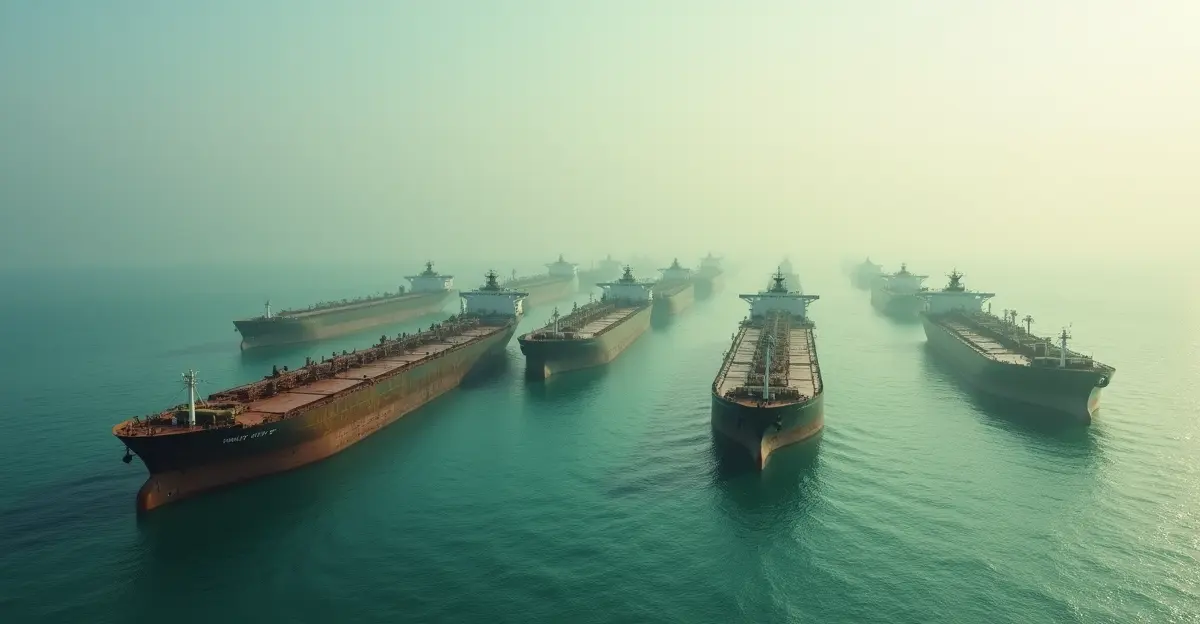
The crisis began on February 28, 2026, when Iran blocked shipping through the strait in retaliation for US–Israeli airstrikes. By March 2, the Islamic Revolutionary Guard Corps (IRGC) had effectively closed the chokepoint. A brief ceasefire reopening in April was reversed within 24 hours. As of July 2026, the strait had been effectively closed for over 120 days, with more than 1,550 vessels and 22,500 mariners stranded in the Persian Gulf.
The disruption is three to five times larger than previous geopolitical oil crises, including the 1973 Yom Kippur War and the 1979 Iranian Revolution. The 2026 Iran War has fundamentally altered the global energy landscape.
Energy Markets: The Largest Oil Supply Shock in History
Brent crude surged from approximately $72 per barrel in February to a peak of $126 per barrel in March 2026—the largest monthly increase in history. Dubai crude reached a record $166.80 per barrel. Diesel hit $200 per barrel at the peak. Although prices have partially stabilized following diplomatic progress, Brent remains elevated above $90 per barrel as of mid-2026.
The Dallas Federal Reserve projects that a one-quarter closure of the strait would reduce global GDP growth by 2.9 percentage points. Barclays economists estimate that sustained $100 per barrel oil could reduce global GDP growth by 0.2 percentage points to 2.8% while raising inflation by 0.7 points to 3.8%, creating stagflationary pressures.
Alternative pipeline routes can offset only about 35% of lost volumes, leaving a supply gap exceeding 10 million barrels per day. Ships are rerouting via the Cape of Good Hope, adding 10–14 transit days and $200–$400 per TEU in operational costs. Port congestion at Singapore and Rotterdam has worsened significantly.
Beyond Oil: Nine Non-Oil Commodities Under Threat
The World Economic Forum has identified nine critical non-oil commodities severely impacted by the strait's closure:
- Fertilizers (Urea and Ammonia): The Middle East supplies 46% of global seaborne urea trade. Urea prices surged over 40%, threatening food security in import-dependent countries across Africa, Asia, and the Middle East. The Food and Agriculture Organization (FAO) warns that fertilizer scarcity will reduce crop yields and tighten food supplies into 2027.
- Sulfur: Nearly half of global seaborne sulfur trade passes through the strait. Sulfur is essential for EV battery processing, and Indonesian nickel producers have already reduced output.
- Helium: Qatar's helium plants, which supply approximately 35% of global helium, were shut down. This has created severe shortages for MRI scanners, semiconductor manufacturing, and scientific research.
- Aluminium: Gulf aluminium smelters account for 9% of world output. Production curtailments have pushed LME aluminium prices past $3,500 per tonne.
- Graphite Feedstocks: Essential for EV battery anodes, graphite supply chains have been disrupted, threatening the green transition.
- Methanol and Monoethylene Glycol (MEG): One-third of global seaborne methanol trade is affected, impacting plastics, textiles, and antifreeze production.
- Iron Ore/Steel Pellets: Construction and manufacturing supply chains face disruptions.
- Green Hydrogen Infrastructure: Projects reliant on Middle Eastern exports have been delayed.
The critical mineral supply chains are undergoing a structural transformation as governments scramble to diversify sources.
Food Security: A Looming Humanitarian Crisis
The FAO has warned that the Strait of Hormuz crisis is fundamentally disrupting the global agrifood system. Fertilizers must be applied at specific points in the crop cycle; even weeks of delay force farmers to reduce usage, transmitting impacts into future harvests. Import-dependent countries in Africa, Asia, and the Middle East are most exposed.
UNCTAD estimates that 45 million more people could face extreme hunger if disruptions persist. The FAO has outlined three priorities: keeping supply chains functioning in the short term, diversifying fertilizer sources in the medium term, and investing in sustainable agriculture and renewable energy for long-term resilience.
Global Trade and Economic Growth: UNCTAD's Dire Projections
UNCTAD's latest report, released in June 2026, projects global merchandise trade growth will slow from 4.7% in 2025 to between 1.5% and 2.5% in 2026. The strait's closure is the primary driver, alongside rising geopolitical uncertainty and weakening global demand.
Developing economies are hit hardest. UNCTAD identifies 61 vulnerable economies facing simultaneous oil and food price shocks, affecting approximately 3.4 billion people. These nations face rising import bills, currency crises, fertilizer shortages threatening food production, and worsening debt problems. Financial ramifications include falling stock prices, weakening currencies, and rising costs of external debt.
EY analysis shows that even a relatively diversified economy like Australia could see GDP reduced by $42 billion and investment by $54 billion in 2026 under a prolonged disruption. The economic impact on developing nations is disproportionately severe.
The Green Transition: Catalyst or Casualty?
The crisis has sparked intense debate about the energy transition. On one hand, the vulnerability of fossil fuel supply chains has never been more apparent. Chatham House argues that the crisis demonstrates why the EU's carbon pricing approach is correct, while the Renewable Energy Institute in Japan has quantified how expanding renewables could have reduced Japan's vulnerability—Japan imports over 90% of its crude oil through the strait.
On the other hand, the immediate scramble for alternative energy supplies may delay climate goals. Countries are turning to coal and domestic oil reserves, while investment in renewable energy infrastructure faces supply chain constraints for critical minerals. The crisis has, however, accelerated policy discussions around energy independence and diversification, with several nations announcing accelerated renewable energy targets.
Expert Perspectives
"The Strait of Hormuz crisis is not just about oil—it is about the fundamental architecture of global supply chains," said UNCTAD Secretary-General Rebeca Grynspan. "The ripple effects are being felt from fertilizer markets in Africa to semiconductor fabs in East Asia."
"This is the largest supply disruption in the history of the global oil market, but its most enduring impact may be on non-oil critical mineral supply chains," noted a World Economic Forum report published in March 2026.
FAO Director-General QU Dongyu emphasized: "The crisis goes beyond geopolitics—it is fundamentally disrupting the global agrifood system. Fertilizer scarcity will affect next harvests and food supplies."
Frequently Asked Questions
What caused the Strait of Hormuz crisis in 2026?
The crisis began on February 28, 2026, when Iran blocked shipping through the Strait of Hormuz in retaliation for US–Israeli airstrikes (Operation Epic Fury). The IRGC formally closed the strait on March 2, 2026.
How much has oil prices increased due to the crisis?
Brent crude surged from approximately $72 per barrel in February to a peak of $126 per barrel in March 2026—the largest monthly increase in history. As of mid-2026, Brent remains above $90 per barrel.
Which commodities beyond oil are affected?
At least nine non-oil commodities are severely impacted: fertilizers (urea, ammonia), sulfur, helium, aluminium, graphite feedstocks, methanol, monoethylene glycol (MEG), iron ore/steel pellets, and green hydrogen infrastructure components.
How does this crisis affect food security?
The FAO warns that fertilizer scarcity will reduce crop yields and tighten food supplies into 2027. UNCTAD estimates 45 million more people could face extreme hunger if disruptions persist, with import-dependent countries in Africa, Asia, and the Middle East most exposed.
What is the projected impact on global trade growth?
UNCTAD projects global merchandise trade growth will slow from 4.7% in 2025 to between 1.5% and 2.5% in 2026, with developing economies bearing the heaviest burden.
Conclusion: A Watershed Moment for Global Supply Chains
The Strait of Hormuz crisis of 2026 is a defining geopolitical-economic event that has exposed the fragility of globalized supply chains. Beyond the immediate energy price shocks, the disruption is reshaping trade routes, accelerating supply chain diversification, and forcing a fundamental reassessment of energy security. Governments and industries are increasingly treating access to critical inputs as a matter of economic and national security. The future of global trade architecture will be shaped by the lessons of this crisis, with resilience and diversification becoming paramount priorities.

Follow Discussion