


 Deutsch
 English
 Español
 Français
 Nederlands
 Português


 Share
Share




The Strait of Hormuz blockade that began in late February 2026 has become the largest oil supply shock since the 1973 embargo, cutting off roughly 20% of the world's daily oil supply and one-third of global LNG trade. With Brent crude surging past $110 per barrel and the Dallas Federal Reserve estimating a 2.9 percentage point drag on annualized global GDP growth in Q2 2026 alone, this ongoing crisis represents the most consequential economic disruption of the year. Beyond energy markets, the closure is sending shockwaves through supply chains for aluminum, fertilizers, petrochemicals, and helium, threatening a global stagflation scenario that could reshape energy security strategy for decades.
How the Strait of Hormuz Closure Unfolded
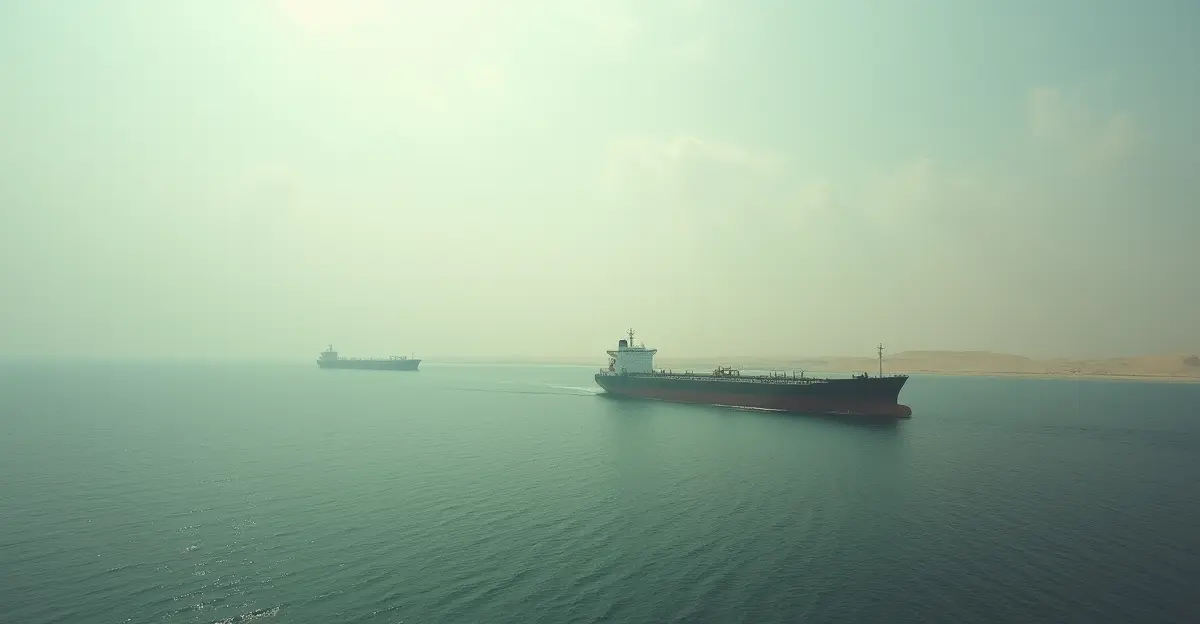
The crisis began on February 28, 2026, when coordinated U.S.-Israeli airstrikes targeted Iranian nuclear facilities in an operation dubbed "Epic Fury," which also resulted in the assassination of Supreme Leader Ali Khamenei. Iran retaliated immediately by mining the strait, attacking merchant vessels with drone swarms and fast-attack boats, and issuing warnings to international shipping. Within days, daily ship transits collapsed from approximately 130 to fewer than 10, and by early March the waterway was effectively closed to commercial traffic.
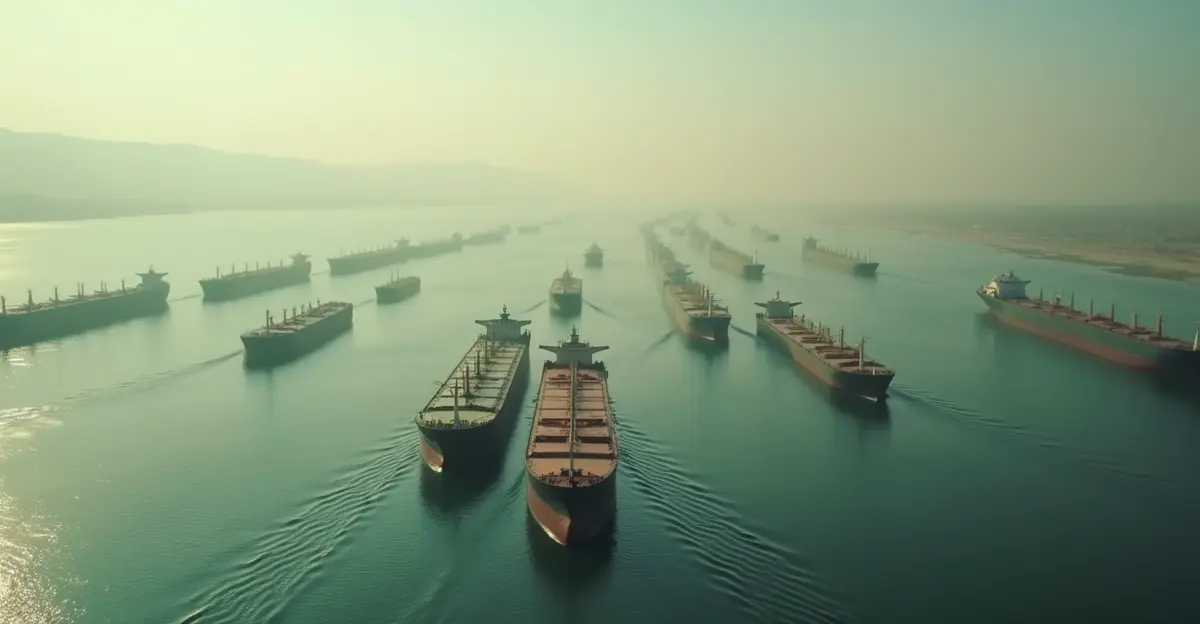
The United States responded on April 13 by ordering a formal naval blockade of Iranian ports, and on May 4 launched "Project Freedom" — a military operation to escort commercial vessels through the strait. However, Iran's asymmetric tactics, including sea mines and anti-ship missiles, have kept the route largely impassable. As of late April 2026, over 100 vessels had been turned away and roughly 1,600 ships remained stranded in the Persian Gulf, with an estimated 20,000 mariners trapped aboard.
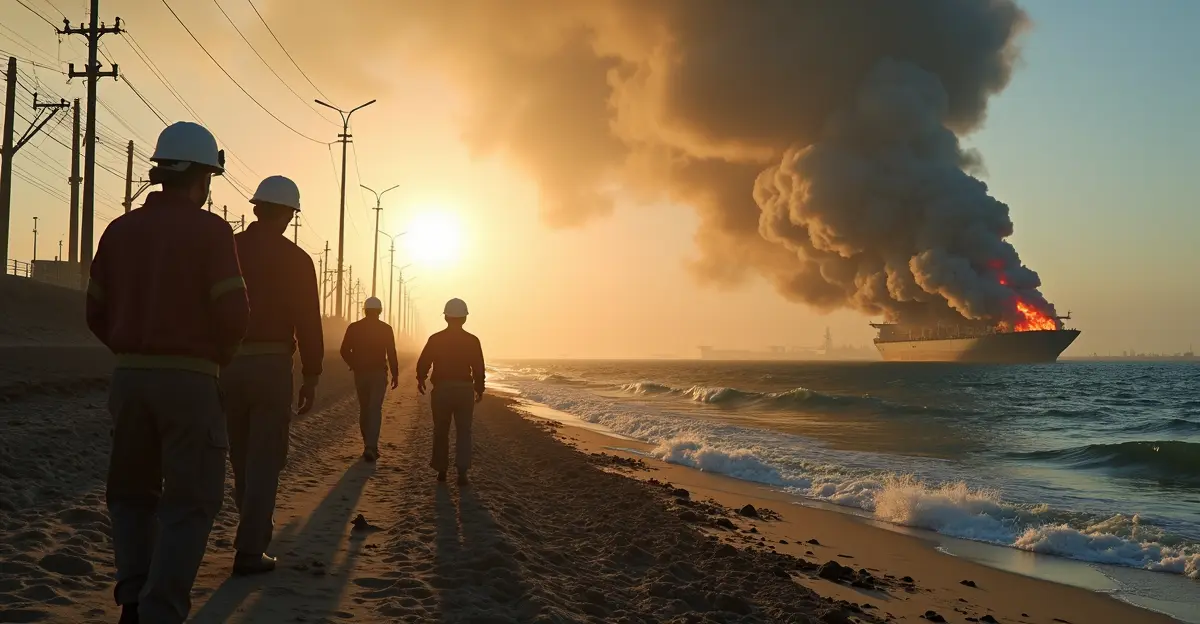
The 2026 Iran war has drawn in regional powers, with Iran launching missile strikes on the UAE's Fujairah Oil Industry Zone and targeting facilities in Qatar, Kuwait, Bahrain, and Saudi Arabia. Diplomatic efforts mediated by Pakistan — the so-called "Islamabad Talks" — have so far failed to produce a lasting ceasefire, though a 14-point Memorandum of Understanding framework has been circulated proposing a 60-day truce in exchange for sanctions relief.
Energy Market Shock: Oil and LNG at the Epicenter
The Strait of Hormuz handles approximately 21 million barrels of oil per day — roughly 21% of global supply — along with one-fifth of the world's liquefied natural gas production. The blockade has removed roughly 10 million barrels per day from global markets, a supply loss three to five times larger than previous geopolitical disruptions such as the 1973 Yom Kippur War or the 1990 Gulf War.
Brent crude, which traded around $75 per barrel in early February, surged past $100 by March 8 and peaked at $126 per barrel in late March. The World Bank reported that the disruption triggered the largest monthly oil price surge in history, with Brent rising approximately 65% ($46 per barrel) in March alone. European natural gas prices jumped 24% in the first week of the crisis, compounding the continent's ongoing energy challenges.
The global LNG market disruption is particularly severe. Qatar, which supplies roughly 93% of LNG transiting the strait, has seen 83% of its exports — destined primarily for Asian markets — effectively halted. This has created a bifurcated energy market where Asian buyers pay premiums of $20-25 per barrel for alternative supplies, while Europe scrambles to secure LNG cargoes from the United States and other producers.
Alternative Routes Prove Insufficient
Existing pipeline bypass capacity offers only 3.5 to 5.5 million barrels per day — far short of the 21 million barrels that typically transit the strait. The UAE's Abu Dhabi Crude Oil Pipeline can move about 1.5 million barrels per day to the Gulf of Oman, and Saudi Arabia's East-West Pipeline adds another 5 million barrels of capacity, but these alternatives are already operating near maximum and cannot compensate for the scale of the disruption.
Shipping companies including Maersk have rerouted vessels around the Cape of Good Hope, adding 10 to 14 days to each voyage and driving up freight costs. Transpacific container rates to the U.S. West Coast rose approximately 40%, while Asia-North Europe rates climbed 20%. Major carriers declared force majeure and imposed emergency surcharges of up to $3,000 per forty-foot equivalent unit.
Beyond Oil: Supply Chain Fallout Across Commodities
The blockade's economic impact extends far beyond energy markets. The Strait of Hormuz handles roughly one-third of global fertilizer trade, 21% of unwrought aluminum imports, and approximately 85% of Middle East polyethylene exports. These supply chains are now under severe strain.
Fertilizer prices have surged from $475 to $680 per metric ton, with ammonia, urea, and sulfur — critical inputs for global agriculture — all facing acute shortages. Nearly 50% of global urea exports and 50% of sulfur exports transit the strait. The Fertilizer Institute has warned that disruptions could jeopardize the Midwest planting season in the United States, potentially worsening food inflation worldwide.
Aluminum prices are rising sharply, threatening the automotive, aerospace, and construction sectors. The Middle East accounts for a significant share of global aluminum production, much of which relies on natural gas feedstocks that are now constrained. Helium supplies — critical for medical imaging and semiconductor manufacturing — are also disrupted, with prices climbing as the region produces roughly 25% of global output.
The global supply chain crisis 2026 is further compounded by disruptions to rubber, electronics, batteries, pharmaceuticals, and sugar supply chains. Inventory buffers cover only a few weeks for most commodities, and diverted containers are causing severe port congestion in alternative hubs within two to five weeks of rerouting.
Macroeconomic Fallout: Stagflation Risks Intensify
The Dallas Federal Reserve's modeling indicates that if the Strait of Hormuz closure persists through June 2026, global real GDP growth will be reduced by an annualized 2.9 percentage points in the second quarter. Even if the strait reopens after one quarter, GDP would remain 0.2% below pre-closure levels through the end of 2026. Longer closures of two or three quarters could drive oil prices to $115-132 per barrel and produce sustained negative growth impacts.
The World Bank projects global merchandise trade growth will slow from 4.7% in 2025 to between 1.5% and 2.5% in 2026. Developing countries are most exposed, facing higher energy import costs, weaker currencies, and tighter financial conditions. Around 3.4 billion people live in countries already spending more on debt service than on health or education, making them particularly vulnerable to the cascading crisis.
Global bond markets have sold off as the crisis becomes a macro-financial event, and the S&P 500 declined for five consecutive weeks through late March. The U.S. national average gas price reached $3.98 per gallon, while diesel hit $5.38 — 43% higher than pre-war levels. The global stagflation risk 2026 is prompting central banks to reconsider monetary policy stances, caught between rising inflation and slowing growth.
Asia's Energy Dependence Exposed
Asian economies are bearing the brunt of the crisis. China is the largest importer of oil transiting the strait, accounting for 37.7% of flows, followed by India (14.7%) and South Korea (12%). India is the most exposed among major economies, with only 20-25 days of oil inventory cover. The blockade has also created a geopolitical dilemma for China, which is Iran's largest oil buyer and now faces the choice of challenging the U.S. blockade or accepting severe energy shortages.
Reports indicate that Iran has selectively allowed Chinese-owned ships passage through the strait while imposing tolls exceeding $1 million per vessel on other nations' ships. This preferential treatment has strained relations between China and other Asian importers and could reignite U.S.-China tensions. The crisis is accelerating structural shifts toward energy security and infrastructure resilience, with Asian nations rapidly expanding strategic petroleum reserves and diversifying supply sources.
Expert Perspectives on the Crisis
"This is the most consequential energy disruption since the 1973 Arab oil embargo, but the global economy is far more interconnected today," said Dr. Amina Al-Rashid, a senior fellow at the Center for Strategic and International Studies. "The supply chain effects — from fertilizer to aluminum to semiconductors — mean the economic damage will be felt far beyond the pump."
John Heinberg, a market advisor cited by the Fertilizer Institute, urged farmers to be proactive in securing inputs ahead of planting season. "The highly integrated global fertilizer market means disruptions ripple across all trade routes. Farmers who wait may find themselves without the inputs they need," he warned.
Legal experts have noted that the United States has no authority under international law to close the strait, which is considered an international waterway under the United Nations Convention on the Law of the Sea. Critics view the blockade as a dangerous escalation that risks counterstrikes and further military confrontation.
FAQ: Strait of Hormuz Blockade 2026
What caused the Strait of Hormuz blockade in 2026?
The blockade began on February 28, 2026, after the United States and Israel launched airstrikes on Iranian nuclear facilities and assassinated Supreme Leader Ali Khamenei. Iran retaliated by mining the strait, attacking vessels, and warning shipping companies, effectively closing the waterway to commercial traffic.
How much oil passes through the Strait of Hormuz daily?
Approximately 21 million barrels of oil per day — roughly 21% of global supply — transit the strait, along with one-fifth of the world's LNG production. The blockade has removed about 10 million barrels per day from global markets.
What is the economic impact of the blockade?
The Dallas Federal Reserve estimates the closure will reduce annualized global GDP growth by 2.9 percentage points in Q2 2026. Brent crude surged past $110 per barrel, and the World Bank projects global trade growth will slow to 1.5-2.5% in 2026. Commodity prices for fertilizer, aluminum, and helium have spiked sharply.
How long is the Strait of Hormuz expected to remain closed?
As of late April 2026, the strait remains effectively closed after more than 60 days. Diplomatic efforts through the Islamabad Talks have not produced a ceasefire. Analysts expect disruption could persist through the remainder of 2026, with worst-case scenarios extending into 2027.
What are the alternatives to the Strait of Hormuz?
Existing pipeline bypass capacity offers only 3.5-5.5 million barrels per day — far short of the 21 million barrels that typically transit the strait. Shipping reroutes via the Cape of Good Hope add 10-14 days per voyage, increasing costs and causing port congestion at alternative hubs.
Conclusion: A Permanent Shift in Energy Security?
The Strait of Hormuz blockade of 2026 is more than a temporary disruption — it represents a potential inflection point for global energy security. The crisis has exposed the vulnerability of relying on a single maritime chokepoint for one-fifth of the world's oil supply, and governments from Tokyo to Berlin are now accelerating investments in energy diversification, strategic reserves, and alternative supply routes.
The future of energy security post-Hormuz will likely involve accelerated development of renewable energy, expanded pipeline networks, increased strategic stockpiling, and a fundamental reassessment of the globalization model that has dominated trade for decades. Whether the crisis lasts one quarter or three, the post-Hormuz world will look fundamentally different from what came before.
Follow Discussion