


 Deutsch
 English
 Español
 Français
 Nederlands
 Português


 Share
Share




The effective closure of the Strait of Hormuz since late February 2026 has triggered the most severe disruption to global energy supply since the 1970s oil crisis, removing an estimated 13% of global oil supply from the market and sending Brent crude prices above $135 per barrel at their peak. This unprecedented chokepoint crisis is fundamentally reshaping global energy security, forcing the world's largest economies to confront vulnerabilities in fossil fuel supply chains and accelerating a strategic pivot toward energy diversification.
Context: How the Strait of Hormuz Became a Battlefield
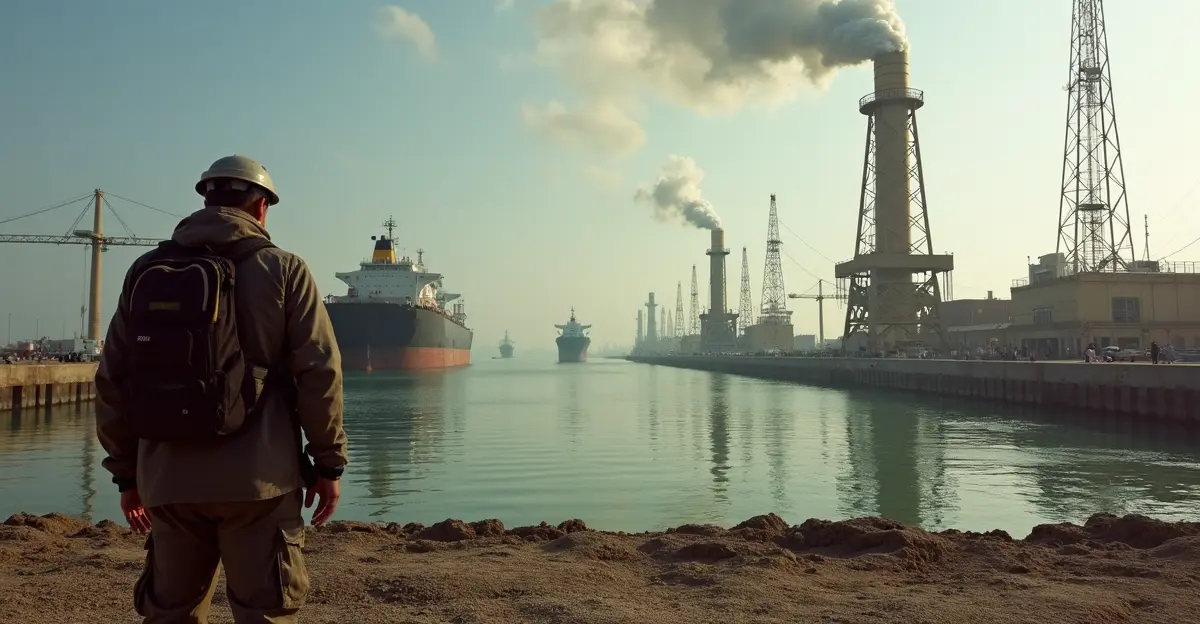
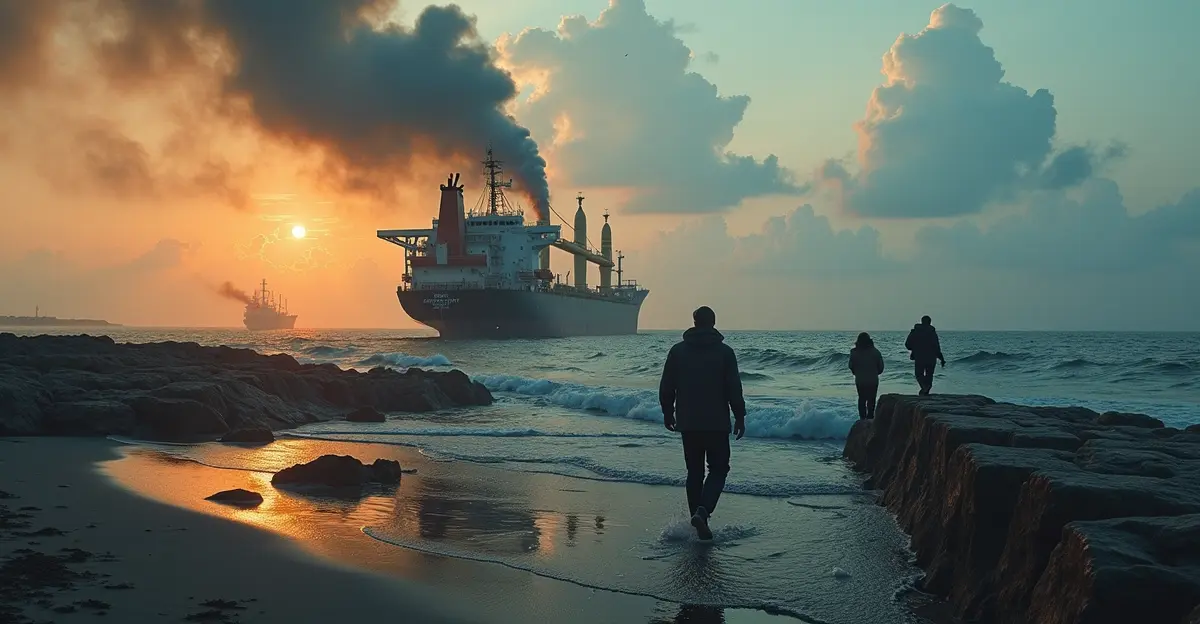
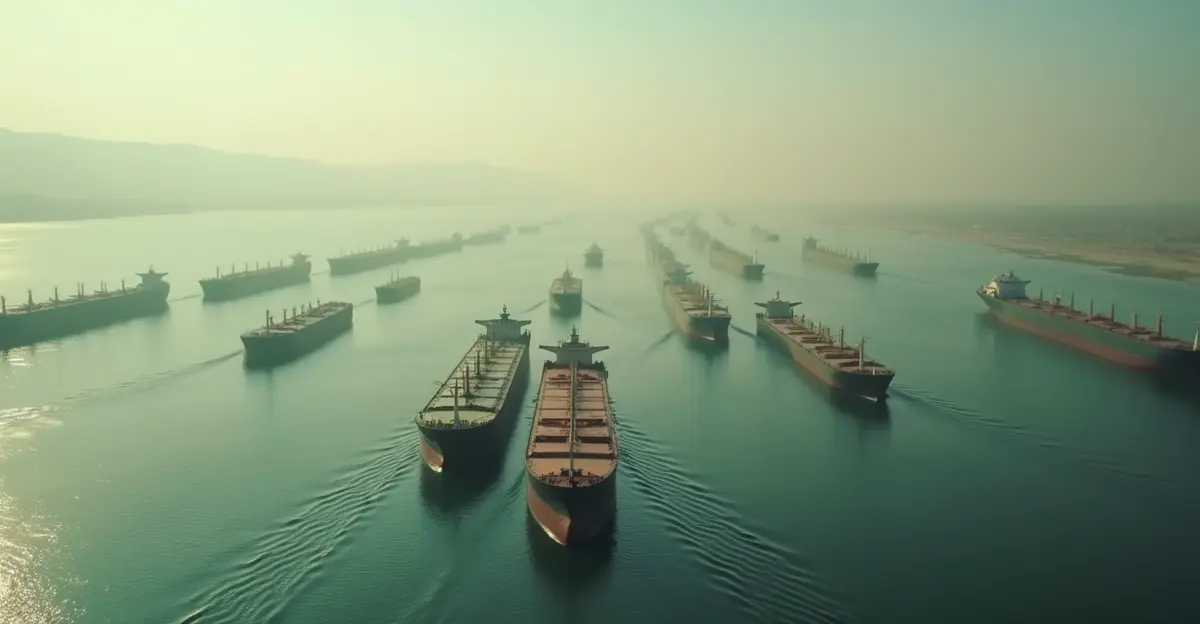
The crisis began on February 28, 2026, when coordinated US and Israeli airstrikes against Iran triggered a swift and devastating retaliation. Iran's Islamic Revolutionary Guard Corps (IRGC) issued warnings forbidding passage through the 21-mile-wide strait, boarded and attacked merchant vessels, and laid sea mines in the shipping lanes. By early March, tanker traffic through the chokepoint — which normally carries roughly 20% of the world's seaborne oil trade and 20% of global liquefied natural gas (LNG) — had dropped by over 70%, with more than 150 ships anchoring outside the strait to avoid risks. By late March, traffic had effectively fallen to zero.
The situation escalated further on April 13, when the US Navy imposed a blockade on Iranian ports, creating what The Guardian described as a "dual blockade" — Iran blocking the Gulf and the US blockading Iran. The International Maritime Organization reported on April 21 that approximately 20,000 mariners and 2,000 ships were stranded in the Persian Gulf. The 2026 Iran-US conflict has become the defining geopolitical event of the year, with no clear resolution in sight.
The Scale of the Supply Shock
The EIA's May 2026 Short-Term Energy Outlook (STEO) confirms that oil supply losses have exceeded 10 million barrels per day (b/d), making this the most consequential energy security event of the year. Production shut-ins across Iraq, Saudi Arabia, Kuwait, UAE, Qatar, and Bahrain averaged 10.5 million b/d in April and are expected to peak at 10.8 million b/d in May. The EIA now assumes the strait will remain effectively closed through late May, with flows slowly resuming in late May or early June. Even after reopening, the agency projects it will take until late 2026 or early 2027 for most pre-conflict production and trade patterns to recover.
Brent crude oil prices averaged $117 per barrel in April, with daily spot prices reaching $138 on April 7 — the highest since June 2022. Implied volatility in oil markets hit 78% on average, spiking to 106% in March. The World Bank reported that the March 2026 monthly oil price surge of 65% ($46/bbl) was the largest in history. Global oil output is expected to fall by 6.9 million b/d (6.6%) year-on-year in Q2 2026, the largest quarterly decline since the COVID-19 pandemic.
Beyond Oil: Commodity Contagion
The crisis extends far beyond crude oil. The Strait of Hormuz is also a critical artery for LNG, with Qatar supplying nearly one-third of the world's helium — essential for MRI machines and semiconductor manufacturing. Other commodities severely impacted include aluminum (9% of global supply originates from Gulf producers), fertilizers such as urea and ammonia (46% of global urea trade), sulfur (critical for battery chemistry), methanol, and graphite feedstocks for EV batteries. The global commodity supply chain disruption has sent shockwaves through industrial sectors worldwide, with aluminum prices surging and fertilizer shortages threatening food production in developing nations.
Economic Fallout: Inflation, Growth, and Poverty
United Nations Secretary-General António Guterres warned on April 30 that the crisis could push tens of millions into poverty, trigger a surge in global hunger, and tip the world toward recession. Even in the best-case scenario of immediate restoration of free passage, supply chains would take months to recover, with global growth falling from 3.4% to 3.1% and inflation rising to 4.4%. If disruptions continue through midyear, 32 million people could be pushed into poverty and 45 million more could face extreme hunger. A worst-case scenario of disruptions persisting through year-end would bring the specter of a global recession.
Higher prices and fuel shortages have already reduced global oil demand growth to just 0.2 million b/d for 2026, down from 0.6 million b/d projected before the crisis. US average gasoline prices reached $4.48 per gallon, up from $2.98 before the war, with analysts warning prices could hit $5 if the strait remains closed. The Federal Reserve is now 97.5% likely to hold rates steady in June 2026 due to inflationary pressure, according to Polymarket prediction markets.
Reshaping Energy Security Strategies
The crisis is accelerating a fundamental rethinking of energy security. The global energy diversification push has gained unprecedented momentum as governments and corporations confront the fragility of just-in-time supply chains for fossil fuels. Schroders Capital notes that the closure has "opened up energy opportunities," with investments in alternative energy sources, diversified supply routes, and energy infrastructure resilience surging.
China, which imports a significant portion of its oil through the strait, faces a "dual chokepoint" logic in its energy security calculus, as noted by The Diplomat. The crisis has reinforced Beijing's push for strategic petroleum reserves, alternative pipeline routes, and accelerated renewable energy deployment. European nations, already reeling from the 2022 Russia-Ukraine energy crisis, are now accelerating LNG import terminal construction and renewable energy investments at an unprecedented pace.
Expert Perspectives
EIA Administrator Tristan Abbey noted that petroleum forecasts depend on three critical variables: the duration of the closure, estimated production outages, and the uncertain timeline for full restoration of flows after reopening. "A one-month delay in reopening could raise crude prices by over $20 per barrel in the near term," the EIA's May STEO warns.
UNCTAD's analysis highlights the particular vulnerability of developing economies, which face higher import bills, inflationary pressures, and balance-of-payments difficulties. The UNCTAD Strait of Hormuz economic impact report emphasizes that even after the strait reopens, the economic scars will persist for years.
FAQ
What caused the Strait of Hormuz closure in 2026?
The closure resulted from the US-Israeli air war against Iran that began on February 28, 2026, which assassinated Iran's supreme leader. In retaliation, Iran blocked the strait by issuing warnings, attacking ships, and laying sea mines. The US later blockaded Iranian ports, creating a dual blockade.
How much oil supply has been lost?
The EIA estimates production shut-ins of over 10 million barrels per day, peaking at 10.8 million b/d in May 2026, representing roughly 10-13% of global oil supply.
When will the Strait of Hormuz reopen?
The EIA's May 2026 STEO assumes the strait will reopen in late May or early June, with flows slowly resuming. However, full recovery of pre-conflict production and trade patterns is not expected until late 2026 or early 2027.
How high could oil prices go?
Brent crude has already reached $138 per barrel. Analysts warn that a prolonged closure could push prices to $130-$150 per barrel. A one-month delay in reopening could add over $20 per barrel to current forecasts.
What are the long-term implications for energy security?
The crisis is accelerating energy diversification, with accelerated investments in renewables, alternative supply routes, and strategic reserves. The fragility of just-in-time fossil fuel supply chains has been exposed, prompting a fundamental rethinking of global energy security strategies.
Conclusion: A Watershed Moment for Global Energy
The Strait of Hormuz crisis of 2026 represents a watershed moment for global energy security. Even as diplomatic efforts continue and the EIA projects a gradual reopening, the structural vulnerabilities exposed by this crisis will reshape energy policy for decades. The future of global energy trade will likely involve greater diversification, enhanced strategic reserves, and a more rapid transition to renewable energy sources. As Secretary-General Guterres implored, "Open the Strait. Let all ships pass. Let the global economy breathe again." But even when the strait reopens, the global energy landscape will never be the same.

Follow Discussion