


 Deutsch
 English
 Español
 Français
 Nederlands
 Português


 Share
Share




Introduction: The Unthinkable Becomes Reality
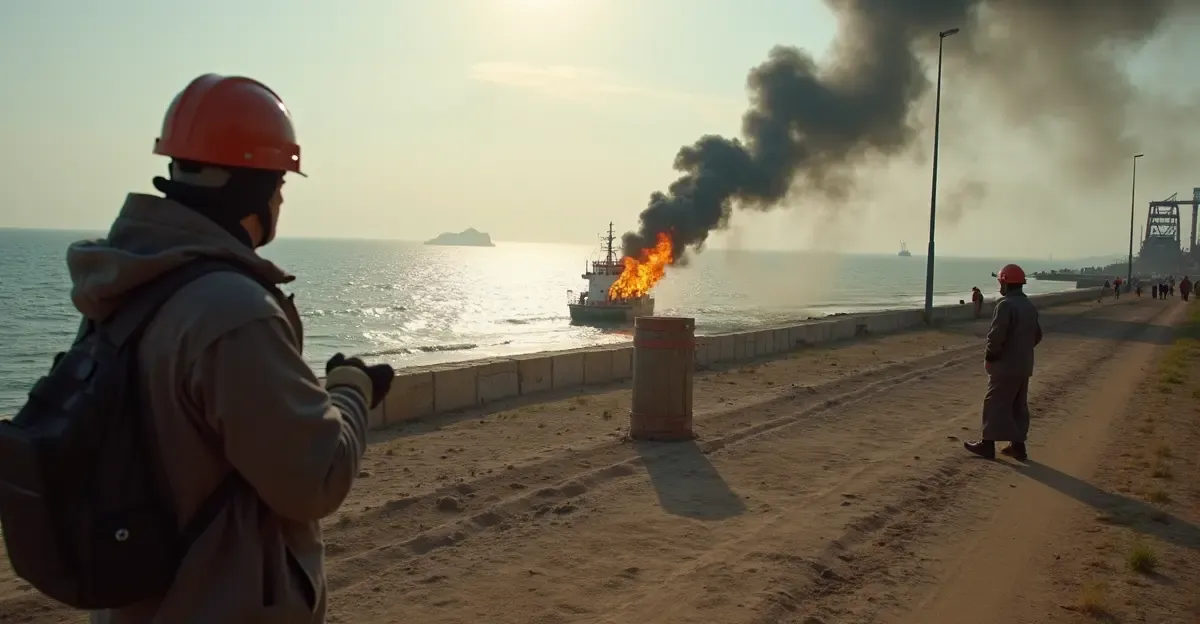
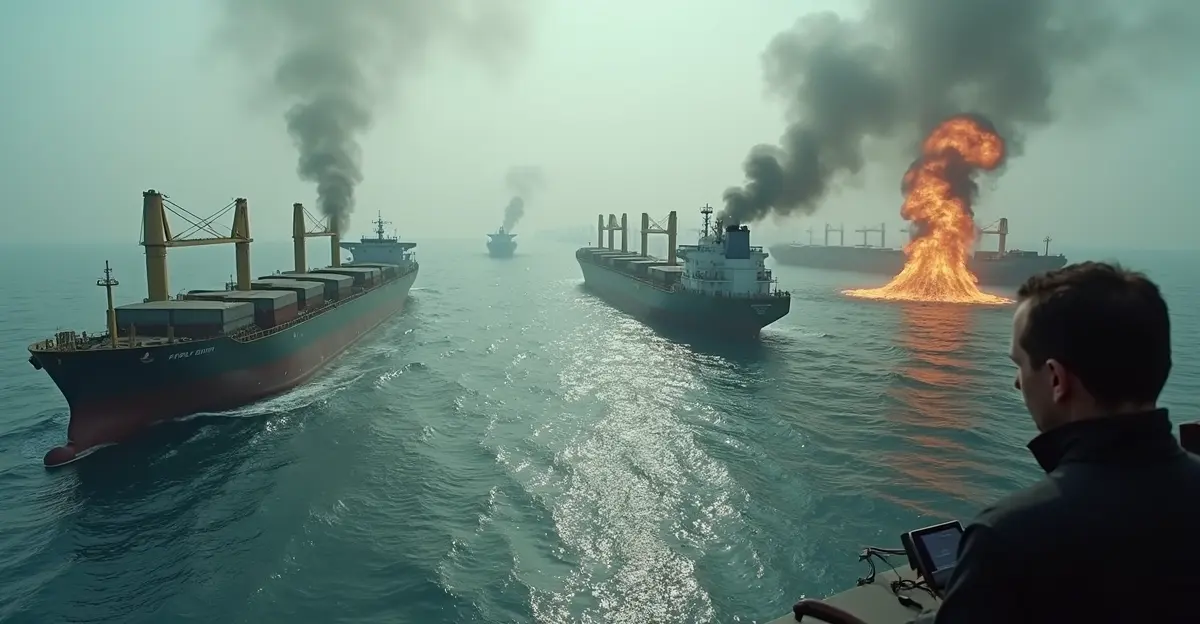
On February 28, 2026, the world woke up to a nightmare that energy analysts had warned about for decades: the Strait of Hormuz, the world's most critical maritime chokepoint, was effectively closed. What began with U.S.-led airstrikes on Iran and the assassination of Supreme Leader Ali Khamenei quickly escalated into a full-blown crisis. Iran's Islamic Revolutionary Guard Corps (IRGC) retaliated by blockading the strait—laying naval mines, attacking merchant vessels, and issuing warnings that brought shipping to a near standstill. Within days, daily ship traffic through the strait collapsed from roughly 20 million barrels of oil and oil products to just a handful of vessels. The result: roughly 20% of global oil supply was removed from markets, triggering the largest oil price shock in history. Brent crude surged 65% in March alone, from around $61 to over $138 per barrel. This article analyzes the strategic implications of the Strait of Hormuz crisis for global energy security, supply chain diversification, and the structural vulnerability of a world economy still dangerously dependent on maritime chokepoints.
Background: The Strait of Hormuz as a Global Chokepoint
The Strait of Hormuz is a narrow sea passage between the Arabian Peninsula and Iran, connecting the Persian Gulf with the Gulf of Oman. At its narrowest point, it is just 29 nautical miles wide, with two 2-mile-wide navigable channels for inbound and outbound traffic. In 2025, approximately 20 million barrels per day (mb/d) of crude oil and oil products transited the strait—about 25% of global seaborne oil trade. Additionally, roughly 19% of global liquefied natural gas (LNG) trade, primarily from Qatar and the UAE, passes through these waters. Countries like Iran, Iraq, Kuwait, Qatar, and Bahrain rely almost entirely on the strait for their oil exports. Alternative pipeline routes exist—Saudi Arabia's Petroline has 3–5 mb/d of spare capacity, and the UAE's ADCOP can carry up to 700 kb/d—but these are far from sufficient to replace the volume lost when the strait closes.
The 2026 Strait of Hormuz crisis is not the first disruption at this chokepoint, but it is by far the most severe. During the Iran–Iraq War (1980–88), the Tanker War saw periodic attacks on shipping, but traffic never fully stopped. The 2019 Abqaiq–Khurais attacks temporarily knocked out 5.7 mb/d of Saudi production, but the strait remained open. What makes the 2026 crisis unprecedented is the complete and sustained closure, combined with a dual blockade: Iran blocks the strait from the east, while the U.S. Navy blockades Iranian ports from the west, trapping over 2,000 ships and 20,000 mariners in the Persian Gulf.
Economic Fallout: A Shock Three to Five Times Larger Than 1973
The Dallas Federal Reserve has been at the forefront of modeling the economic impact. In a March 20, 2026 analysis, Fed economists estimated that a one-quarter closure would push West Texas Intermediate (WTI) crude oil prices to $98 per barrel and reduce annualized global real GDP growth by 2.9 percentage points in Q2 2026. If the closure extends to two quarters, oil prices could reach $115 per barrel, with negative growth impacts persisting through year-end. A three-quarter closure would push prices above $132 per barrel. To put this in perspective, the 1973 Arab oil embargo removed about 4–5 mb/d from markets; the 2026 crisis removes roughly 20 mb/d—three to five times larger.
The World Bank, in a March 2026 analysis, confirmed that this is the largest oil market shock in history. Global oil supply crashed by 10.1 mb/d in March due to attacks on energy infrastructure and tanker restrictions. Oil output is expected to fall by 6.9 mb/d (6.6%) year-on-year in Q2 2026, the largest quarterly decline since COVID-19. Brent crude is forecast to average $86/bbl in 2026, but with major upside risks pushing prices to $95–$115/bbl. The International Monetary Fund (IMF) cut its 2026 global growth forecast to 3.1%, warning of potential recession in several economies.
Beyond Oil: Nine Critical Commodities at Risk
The crisis extends far beyond crude oil. According to an analysis by Informed Clearly, nine critical commodities face severe disruption: fertilizers (46% of global urea trade transits the strait), helium, aluminum, LNG, sulfur, and methanol. The fertilizer shortage alone threatens global food security, particularly in developing nations that rely on imports from Persian Gulf producers. The UNCTAD analysis on trade disruptions warns that cascading effects on developing economies could be catastrophic, with rising food prices and labor market instability.
Supply Chain Transformation: From Just-in-Time to Just-in-Case
The crisis is accelerating a structural shift in global supply chains that was already underway after COVID-19 and the Russia-Ukraine war. According to a survey cited by Informed Clearly, 51% of companies are accelerating nearshoring, with Mexico emerging as North America's manufacturing hub, receiving over $40 billion in foreign direct investment. South-South trade corridors are rising, now accounting for 57% of developing-country exports. Safety stock levels are increasing by 35% on average as companies shift from 'just-in-time' to 'just-in-case' inventory models.
The Dallas Fed's June 2026 analysis highlights a unique feature of this crisis: two opposing trade shocks hitting the U.S. economy simultaneously. In February 2026, the Supreme Court struck down a portion of IEEPA tariffs, reducing average U.S. import tariffs by roughly 4.8 percentage points. However, the shipping cost increase from the Strait of Hormuz blockade completely offset the disinflationary effects of the tariff reduction, leaving net inflation through 2026 close to zero. This means the Federal Reserve faces a stagflationary dilemma—rising prices and slowing growth—with limited policy tools to address both.
Geopolitical and Military Dimensions
The crisis has drawn in multiple actors. The U.S. launched Operation Project Freedom, a naval escort mission to clear mines and protect commercial shipping, but it was paused in May 2026 after limited success. Diplomatic efforts, including the Islamabad Talks, failed to reach a resolution. Iran's asymmetric capabilities—including a stockpile of up to 6,000 naval mines—make the strait extraordinarily difficult to clear. The confined geography of the chokepoint means even a small number of mines can effectively shut down traffic.
The human toll is also mounting. Over 20,000 mariners remain stranded on vessels in the Persian Gulf, with dwindling supplies of food, water, and medicine. Several tankers have been damaged, including the Stena Imperative and MKD VYOM, resulting in casualties. The International Maritime Organization has called for a humanitarian corridor, but no agreement has been reached.
Expert Perspectives
Ricardo Reyes-Heroles, a Dallas Fed economist, stated: 'The Strait of Hormuz closure is not just an oil shock—it's a trade shock that works through multiple channels. Higher shipping costs, supply chain disruptions, and reduced demand all feed into a slower global economy.'
UNCTAD Secretary-General Rebeca Grynspan warned: 'Developing economies are bearing the brunt of this crisis. Food prices are rising, fertilizer supplies are cut off, and millions of jobs are at risk. The international community must act to restore safe passage and provide emergency support.'
FAQ: The Strait of Hormuz Crisis
What caused the Strait of Hormuz closure in 2026?
The closure began on February 28, 2026, after the U.S. and Israel launched airstrikes on Iran and assassinated Supreme Leader Ali Khamenei. In retaliation, Iran's IRGC blockaded the strait by issuing warnings, attacking ships, and laying naval mines.
How much oil transits the Strait of Hormuz daily?
Approximately 20 million barrels per day of crude oil and oil products, representing about 25% of global seaborne oil trade. Additionally, about 19% of global LNG trade passes through the strait.
What is the economic impact of the closure?
The Dallas Federal Reserve estimates that a two-quarter closure could push oil prices above $115 per barrel and reduce global GDP growth by nearly 3 percentage points. The World Bank calls it the largest oil market shock in history.
Are there alternative routes for Persian Gulf oil?
Limited pipeline capacity exists: Saudi Arabia's Petroline (3–5 mb/d spare capacity) and the UAE's ADCOP (up to 700 kb/d). However, these cannot replace the 20 mb/d that normally transits the strait.
How is the crisis affecting global supply chains?
Companies are accelerating nearshoring, increasing safety stock levels by 35%, and shifting from 'just-in-time' to 'just-in-case' models. Mexico is emerging as a major manufacturing hub, receiving over $40 billion in FDI.
Conclusion: A Watershed Moment for Global Energy Security
The Strait of Hormuz crisis of 2026 is a watershed moment that exposes the structural vulnerability of a global economy still dependent on a handful of maritime chokepoints. The shock is forcing a fundamental reassessment of energy security, supply chain resilience, and geopolitical risk. In the short term, the world faces the prospect of sustained high oil prices, slower growth, and rising food insecurity. In the long term, the crisis is accelerating the transition to more diversified energy sources, regionalized supply chains, and—perhaps most importantly—a recognition that the era of cheap, secure, and uninterrupted global trade may be over. As the Dallas Fed's models show, the costs of inaction are measured in trillions of dollars and millions of livelihoods. The question now is whether the international community can restore stability in the Persian Gulf before the damage becomes irreversible.

Follow Discussion