


 Deutsch
 English
 Español
 Français
 Nederlands
 Português


 Share
Share




The near-total closure of the Strait of Hormuz following the outbreak of military conflict between the United States, Israel, and Iran on February 28, 2026, has triggered the largest disruption to global energy supplies since the 1970s. Removing nearly 20% of the world's seaborne oil trade—roughly 20 million barrels per day—from the market, the crisis has created an energy shock three to five times larger than the 1973 Arab oil embargo or the 1990 Gulf War, according to the Dallas Federal Reserve Bank. With Brent crude surging from $61 to a peak of $138 per barrel in March 2026, the economic fallout is cascading through trade, inflation, supply chains, and geopolitical alliances, reshaping the foundations of global energy and economic security.
The Scale of the Disruption
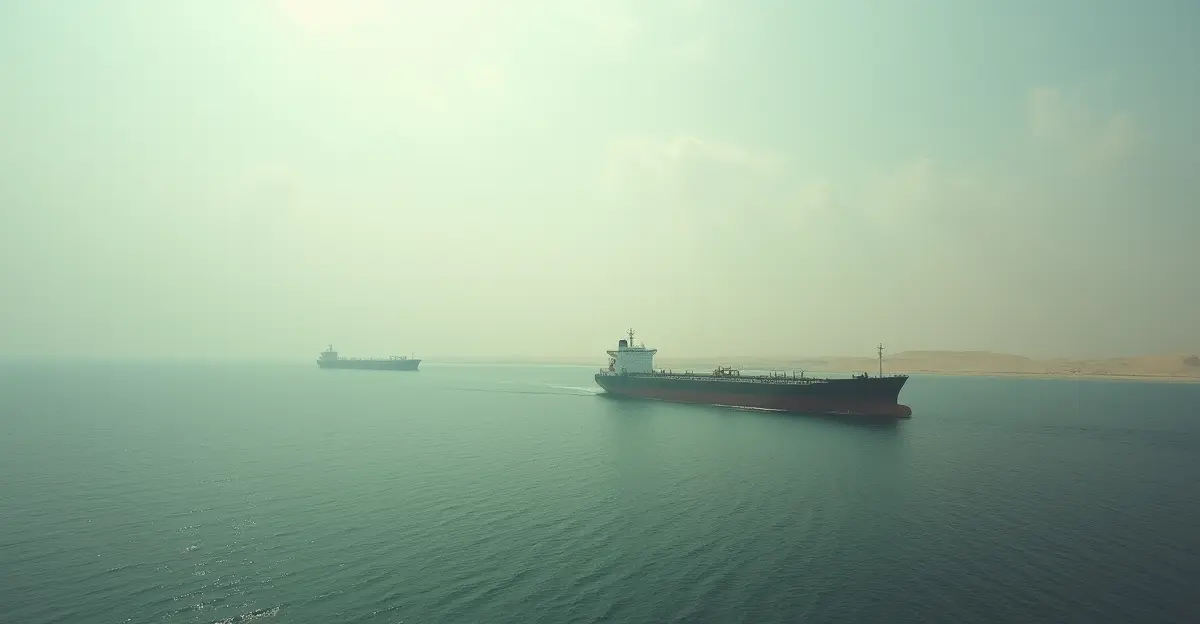
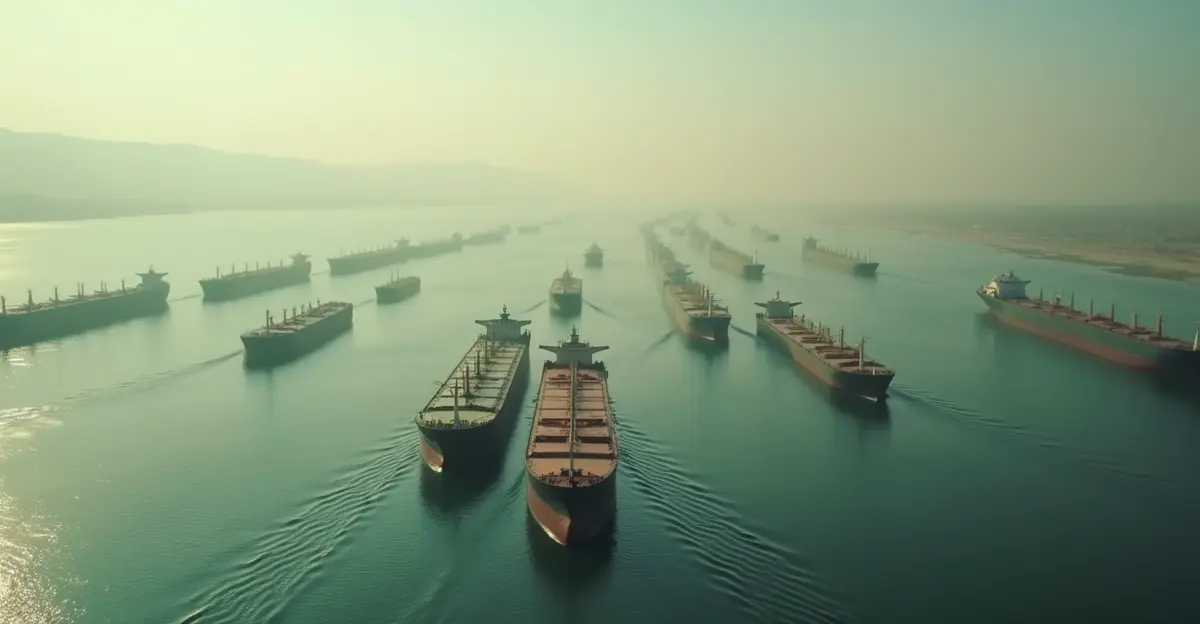
The Strait of Hormuz, a 34-kilometer-wide maritime chokepoint between Iran and Oman, normally handles about 25% of the world's seaborne oil and 20% of its liquefied natural gas (LNG) trade. Within days of the conflict's start, tanker traffic dropped to near zero as Iran's Islamic Revolutionary Guard Corps (IRGC) warned against passage, boarded vessels, and laid sea mines. By late March, the IRGC declared the strait closed to vessels going to or from ports of the US, Israel, and their allies. The International Maritime Organization reported that some 20,000 mariners and 2,000 ships were stranded in the Persian Gulf.
The Dallas Fed's modeling projects that a one-quarter closure would raise West Texas Intermediate oil prices to $98 per barrel and reduce annualized global real GDP growth by 2.9 percentage points in Q2 2026. If the closure extends to two or three quarters, oil prices could reach $115 or $132 per barrel, respectively, with global output remaining below pre-crisis levels through at least 2027. The World Bank's April 2026 Commodity Markets Outlook confirms this is the largest oil market shock in history, with global oil supply crashing by 10.1 million barrels per day in March alone.
Global Trade and Inflation Under Siege
The global trade slowdown is one of the most visible consequences. UNCTAD reports that global merchandise trade growth has been slashed from 4.7% in 2025 to an estimated 1.5–2.5% in 2026. The energy shock is reigniting inflation across both developed and developing economies, increasing the cost of living and squeezing household budgets. Financial stress is mounting, particularly for developing countries facing falling stock prices, weakening currencies, and rising costs of external debt.
Beyond oil, the crisis has severely impacted nine non-oil commodities. Fertilizer markets have been hit especially hard: the Strait normally carries 46% of globally traded urea. FAO Director-General QU Dongyu warned that the resulting fertilizer scarcity will reduce crop yields and tighten food supplies through late 2026 and into 2027, with import-dependent countries in Africa, Asia, and parts of the Middle East most exposed. Aluminum production in the Gulf collapsed by 38%, while helium, sulfur, and methanol markets also face severe constraints. The World Bank warns that up to 45 million additional people could face acute food insecurity as a result.
Supply Chain Reconfiguration and Corporate Response
The crisis is forcing a permanent structural shift in global supply chains. According to McKinsey, 57% of multinational companies are executing operational changes in response to the disruption, with 51% accelerating nearshoring strategies. Mexico has surpassed China as the United States' largest trading partner, while South-South trade corridors are rising, now accounting for 57% of developing-country exports. Shipping routes are being reconfigured via the Cape of Good Hope, adding 8–15 days to transit times and increasing costs by 11–14%.
The supply chain resilience strategies being adopted include building greater visibility into multi-tier networks, diversifying supplier bases, investing in real-time monitoring, and developing rapid-response playbooks. The crisis has also accelerated the formation of FORGE (Forum on Resource Geostrategic Engagement), a multilateral security framework for critical minerals involving 54 countries.
Financial Stability and Geopolitical Realignments
The financial ramifications are profound. UNCTAD warns that if military escalation and disruptions persist, the suffering will extend far beyond the region, translating into widespread economic hardship. The IMF projects that global growth could fall to 2% with inflation exceeding 6% under a severe scenario. The US strategic petroleum reserve has been depleted to 1982 levels—243 million barrels—after a record IEA-coordinated release of 400 million barrels, which analysts note equals only 16 days of lost Persian Gulf flow.
Geopolitically, the crisis has triggered a major geopolitical realignment. The US launched a naval blockade of Iran from April 13 to May 29, followed by Operation Project Freedom to escort ships, creating what The Guardian described as a "dual blockade." A fragile Pakistan-brokered ceasefire in April offered temporary relief, but the situation remains volatile. On June 17, a memorandum of understanding was signed to end the war, but Iran re-closed the strait shortly after, citing Israeli violations. The crisis has structurally elevated energy prices above pre-war levels and is accelerating a shift toward regionalized supply chains and renewable energy investments as nations seek energy sovereignty.
Expert Perspectives
"This is the most consequential geopolitical and economic disruption of the year," said Isabella Kowalska, geopolitical analyst. "The Strait of Hormuz closure is not just an energy crisis—it is a systemic shock that is reshaping global trade, financial stability, and the architecture of international security." The Dallas Fed researchers emphasize that even the anticipation of such disruptions can cause oil price surges and economic contraction, highlighting the fragility of the global energy system.
Frequently Asked Questions
What caused the Strait of Hormuz closure in 2026?
The closure began on February 28, 2026, when Iran largely blocked shipping through the strait in retaliation for US-Israeli air strikes (Operation Epic Fury). Iran mined the waterway, attacked vessels, and warned against passage.
How much oil passes through the Strait of Hormuz daily?
Under normal conditions, about 20 million barrels of oil per day pass through the strait, representing roughly 20% of global seaborne oil trade and 25% of LNG trade.
What is the economic impact of the closure?
The Dallas Fed projects a 2.9 percentage point reduction in annualized global GDP growth for Q2 2026, with oil prices potentially reaching $132 per barrel if the closure extends. Global trade growth has been cut from 4.7% to 1.5–2.5%.
Which countries are most affected?
Asian economies (China, India, Japan, South Korea) are hardest hit, accounting for 75% of regional oil exports. Iraq and Kuwait are 100% reliant on the strait for oil exports, while Iran (90%), UAE (85%), and Saudi Arabia (65%) also face severe exposure.
How are supply chains being reconfigured?
Companies are accelerating nearshoring, diversifying suppliers, and rerouting shipping via the Cape of Good Hope. The crisis has also spurred the formation of FORGE, a 54-country framework for critical mineral security.
Conclusion and Future Outlook
The Strait of Hormuz shock of 2026 represents a watershed moment for global energy and economic security. Even if the strait reopens fully—which remains uncertain given the fragile ceasefire—the structural vulnerabilities exposed by the crisis will drive lasting changes in energy policy, supply chain architecture, and geopolitical alliances. The future of energy security will likely involve greater diversification, accelerated renewable energy adoption, and a more multipolar global order. Policymakers and investors must prepare for a world where critical chokepoints can no longer be taken for granted.


Follow Discussion