


 Deutsch
 English
 Español
 Français
 Nederlands
 Português


 Share
Share




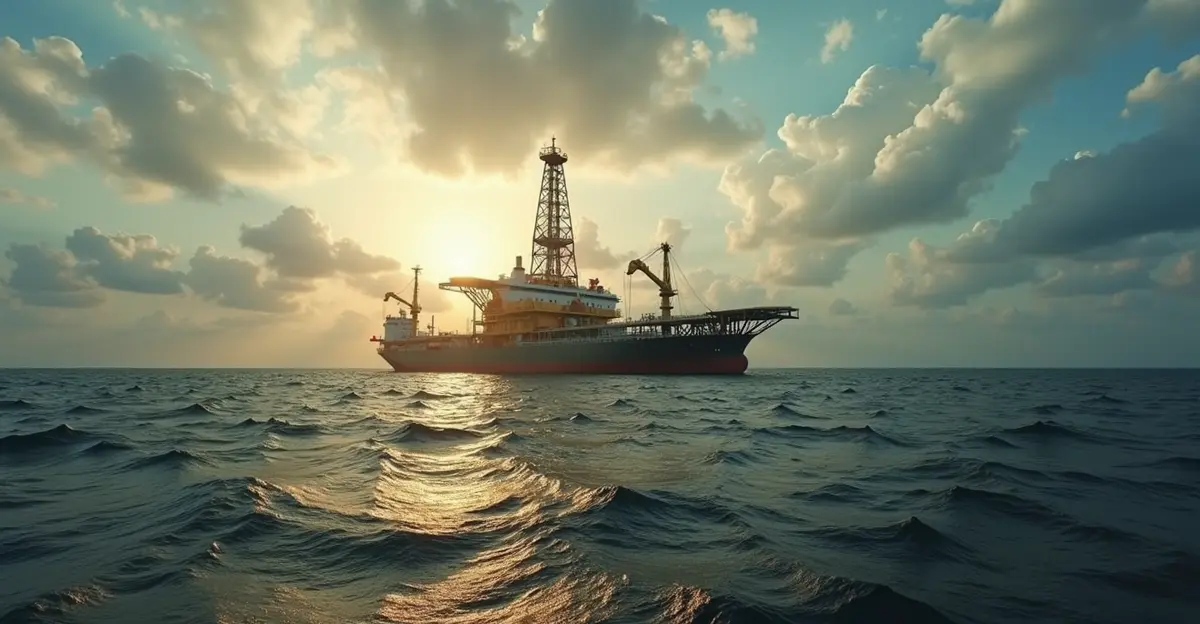
The conflict-related disruption of the Strait of Hormuz in early 2026 has triggered the largest oil market shock in history, with Brent crude surging 65% and global oil supply crashing by 10 million barrels per day. Simultaneously, LNG flows from Qatar and the UAE have collapsed, delaying the global LNG supply wave by at least two years. This article analyzes how the crisis is forcing a structural reassessment of energy security, accelerating renewable investment as a matter of economic security, and driving a permanent reconfiguration of global supply chains away from chokepoint-dependent routes.
What Happened: The Strait of Hormuz Disruption
The Strait of Hormuz, a narrow 29-nautical-mile-wide sea passage between Iran and Oman, is one of the world's most critical oil transit chokepoints. In 2025, approximately 20 million barrels per day (mb/d) of crude oil and oil products transited the strait, representing about 25% of global seaborne oil trade. The bulk of this oil heads to Asian markets, with China, India, and Japan as the main importers. Countries including Iran, Iraq, Kuwait, Qatar, and Bahrain rely almost entirely on the Strait for oil exports. Saudi Arabia and the UAE have some alternative pipeline routes (Abqaiq-Yanbu and ADCOP pipelines) with an estimated 3.5-5.5 mb/d of bypass capacity, but these are insufficient to compensate for a full closure.
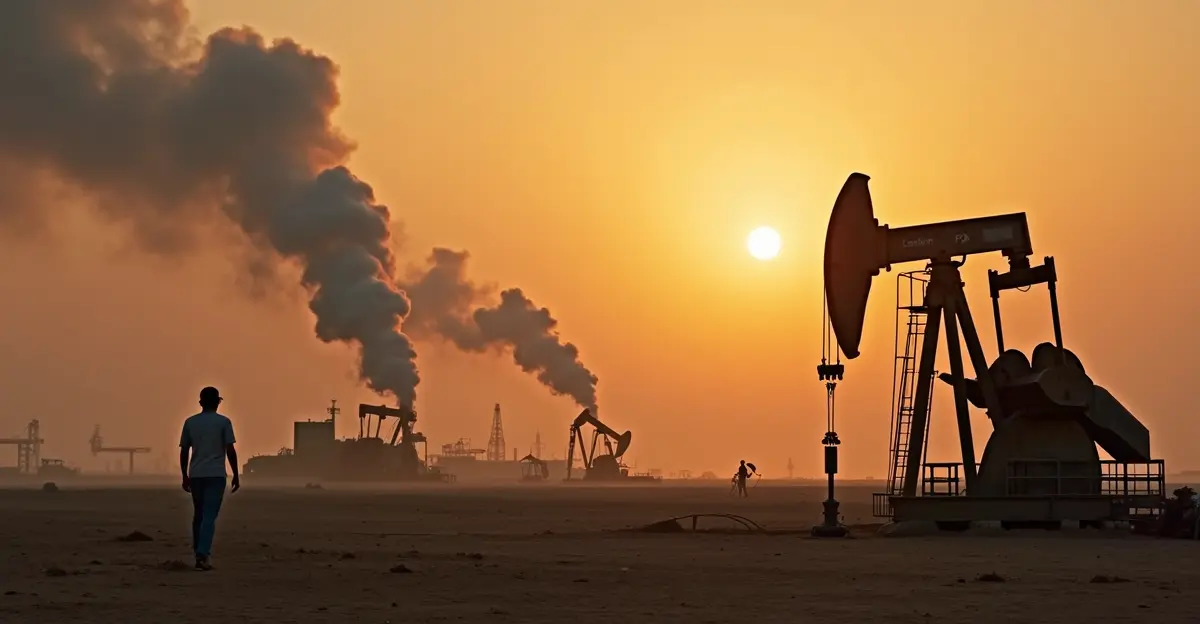
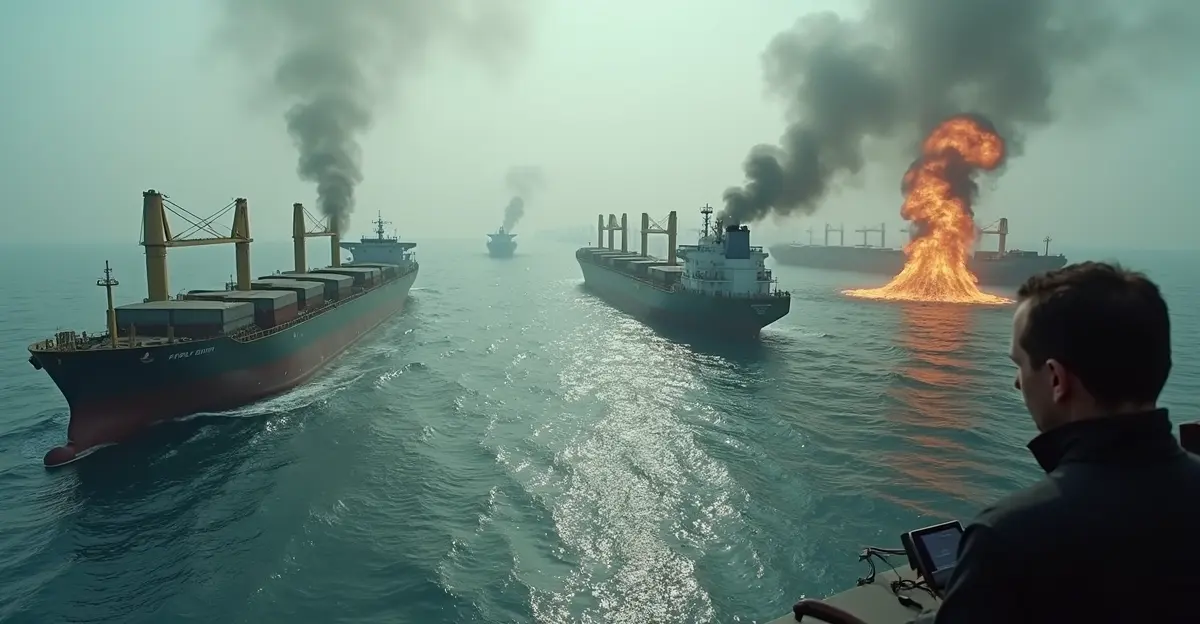
In early 2026, escalating geopolitical tensions led to attacks on energy infrastructure and tanker restrictions, effectively shutting the strait. The global oil supply chain faced an unprecedented disruption. According to the World Bank, global oil supply crashed by 10.1 mb/d in March 2026, the largest monthly decline ever recorded. The IEA's May 2026 Oil Market Report notes that cumulative supply losses from Gulf producers exceeded 1 billion barrels, with over 14 mb/d of oil shut in by April.
Market Impact: Oil Price Surge and Volatility
Brent crude surged approximately 65% ($46 per barrel) in March 2026, its highest monthly rise on record, amid pronounced volatility. The EIA's April 2026 Short-Term Energy Outlook reported that Brent averaged $103/bbl in March and peaked at $115/bbl in Q2 2026. The IEA recorded North Sea Dated crude averaging $120.36/bbl in April, with prices swinging wildly between $144 and below $100/bbl. The World Bank forecasts Brent to average $86/bbl in 2026, dropping to $70/bbl in 2027 if supply stabilizes, but upside risks could push prices to $95–$115/bbl if hostilities escalate.
Global Supply and Demand Imbalance
The supply shock has created a massive market deficit. The World Bank projects a 3.7 mb/d deficit in Q2 2026. Global oil output is expected to fall by 6.9 mb/d year-on-year in Q2 2026, its largest quarterly decline since COVID-19. Oil demand fell 0.8 mb/d year-on-year in March, with further drops of 1.5 mb/d forecast for Q2. The IEA forecasts world oil demand to contract by 420 kb/d year-on-year in 2026 to 104 mb/d, with the steepest decline of 2.45 mb/d in Q2. Chinese crude imports fell 3.6 mb/d from February to April, reflecting the demand destruction.
LNG Collapse and Energy Security Reassessment
The crisis has also devastated global LNG markets. Nearly 20% of global LNG exports from Qatar and the UAE transit the Strait of Hormuz. With flows effectively halted, the global LNG supply wave has been delayed by at least two years. The global LNG market disruption has forced countries to scramble for alternative supplies, with U.S. LNG export facilities running at near-peak capacity at 18 billion cubic feet per day, according to the EIA. However, Europe's pivot to U.S. LNG has created new geopolitical exposure, as highlighted at the Eurelectric Power Summit in Helsinki.
Accelerating Renewable Investment
The crisis has fundamentally reframed the energy security debate. As CNBC reported from the Eurelectric Power Summit, energy experts and CEOs of Nordic giants Fortum and Statkraft discussed how the crisis has exposed the risks of fragile fossil fuel supply chains. Ember strategist Kingsmill Bond noted that fossil fuels are now the "intermittent and uncertain" source, while renewables with batteries have become more constant. Fortum CEO Markus Rauramo advocated for "homegrown clean electricity" as a solution, and Statkraft CEO Birgitte Ringstad Vartdal highlighted how cheaper, longer-duration batteries are mitigating intermittency. The renewable energy investment surge is now being driven not just by climate goals but by immediate economic security imperatives.
Supply Chain Reconfiguration
The crisis is driving a permanent reconfiguration of global supply chains away from chokepoint-dependent routes. Shipping has been paralyzed, with freight rates soaring 750-900%. Food security is threatened as 34% of globally traded urea and 23% of ammonia pass through the strait, with fertilizer prices projected to rise 31%, according to the World Bank. The IMF slashed its 2026 growth forecast to 3.1%. The conflict has triggered $400 billion in new global defense commitments, while driving a strategic reevaluation of energy dependence on critical chokepoints.
Expert Perspectives
The head of the International Energy Agency warned in March 2026 that the closure of the Strait of Hormuz represents "the greatest global energy security threat in history." The World Bank's April 2026 Commodity Markets Outlook states that the conflict "is development in reverse," with developing economies facing 5.1% inflation and growth downgraded to 3.6%. In a worst-case scenario, oil could hit $115/bbl, with devastating ripple effects on food prices and global stability.
FAQ
What caused the Strait of Hormuz disruption in 2026?
Escalating geopolitical tensions in early 2026 led to attacks on energy infrastructure and tanker restrictions, effectively shutting the Strait of Hormuz to commercial shipping.
How much oil transits the Strait of Hormuz daily?
Approximately 20 million barrels per day of crude oil and oil products transited the strait in 2025, representing about 25% of global seaborne oil trade.
What is the impact on global oil prices?
Brent crude surged 65% in March 2026, peaking at $115/bbl in Q2. The World Bank forecasts Brent to average $86/bbl in 2026, with upside risks to $115/bbl.
How is the crisis affecting renewable energy?
The crisis has accelerated renewable energy investment as a matter of economic security, with governments and companies seeking to reduce dependence on vulnerable fossil fuel supply chains.
What are the long-term implications for global trade?
The crisis is driving a permanent reconfiguration of supply chains away from chokepoint-dependent routes, with increased investment in alternative energy sources and supply route diversification.
Conclusion
The Strait of Hormuz shock of 2026 represents the most consequential energy supply disruption in modern history. It is fundamentally altering the strategic calculus for governments, central banks, and global investors. The future of global energy security now hinges on the rapid deployment of renewables and the diversification of supply routes away from critical chokepoints. As the crisis unfolds in real time, the world is witnessing a structural shift that will define energy and trade policy for decades to come.


Follow Discussion