


 Deutsch
 English
 Español
 Français
 Nederlands
 Português


 Share
Share




The February 2026 closure of the Strait of Hormuz triggered the largest oil supply shock in history, with Brent crude surging 65% and 10.1 million barrels per day of production shut in, according to the World Bank. Beyond energy markets, the crisis is forcing a permanent structural shift in global trade: 51% of companies are accelerating nearshoring, critical non-oil commodities from fertilizers to helium face severe disruption, and South-South trade corridors are displacing traditional Western hub-and-spoke models. This article analyzes how the post-Hormuz supply chain redesign is reshaping corporate strategy, energy security, and geopolitical alignments across the Middle East, Asia, and the Americas.
Context: The Strait of Hormuz Crisis of 2026
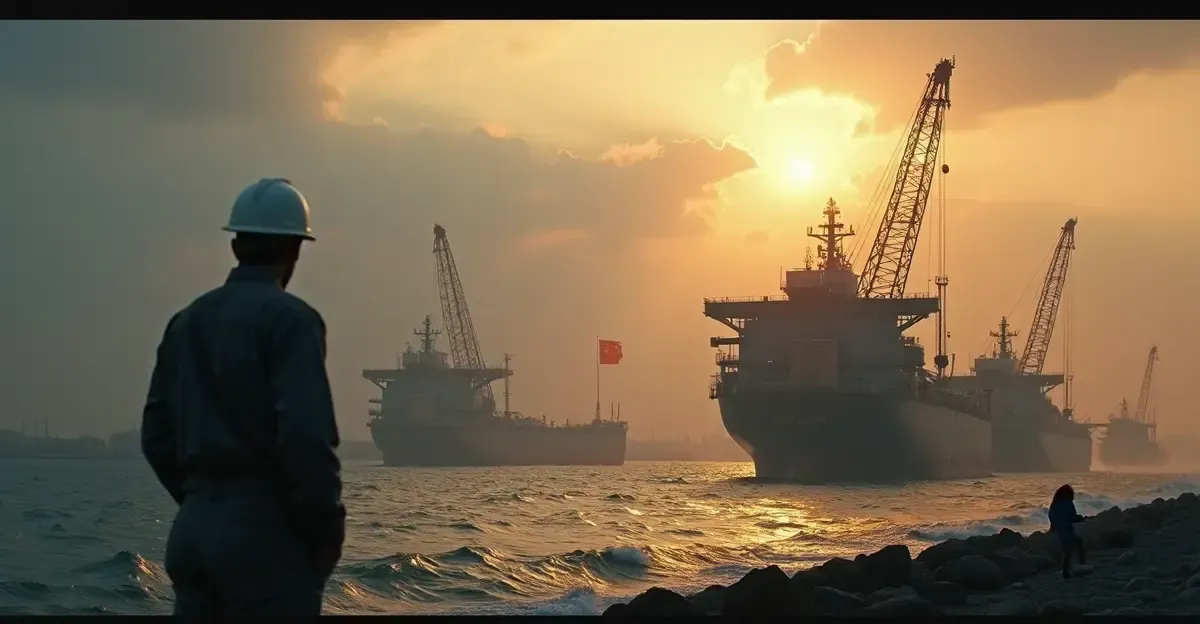
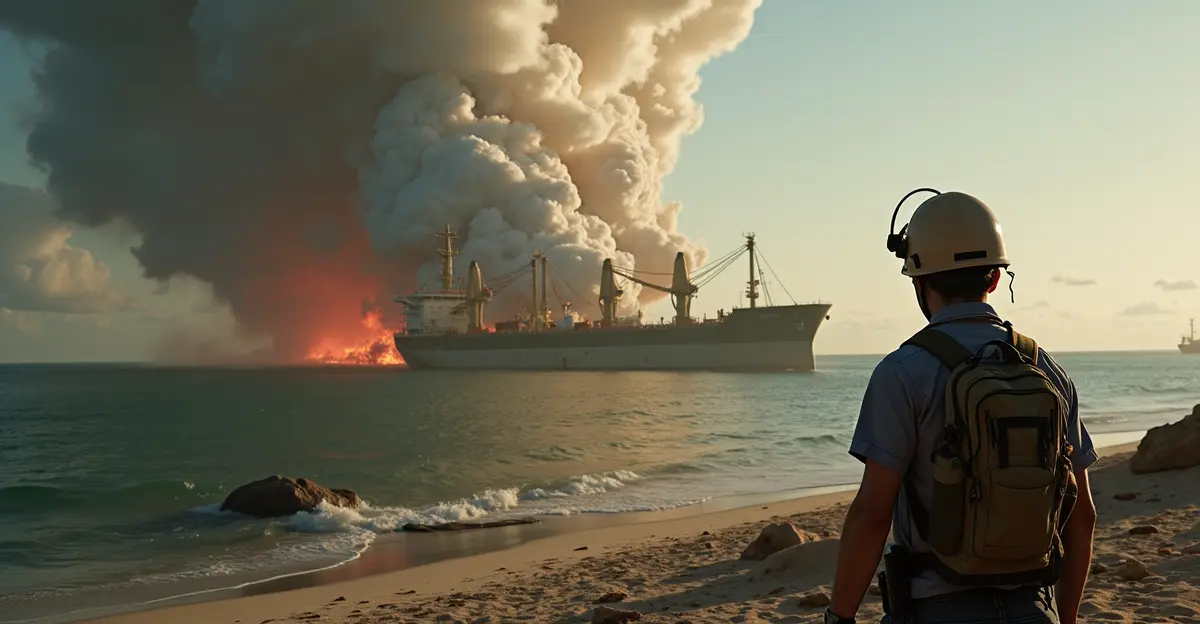
The Strait of Hormuz, a narrow 39-kilometer-wide waterway between Iran and Oman, carries about 20% of the world's oil and 25% of seaborne LNG trade. On February 28, 2026, following U.S.-led airstrikes under Operation Epic Fury, Iran effectively blockaded the strait, reducing vessel traffic by over 95%. By March, Brent crude had surged from $61 to $138 per barrel before settling near $106 after a fragile Pakistan-brokered ceasefire in April. The EIA's May 2026 Short-Term Energy Outlook confirmed that 10.5 million barrels per day of crude production had been shut in across six countries, with global oil inventories forecast to decline by 2.6 million b/d for the year. The 2026 Iran war fundamentally altered energy security calculations worldwide.
Beyond Oil: Nine Commodities in Crisis
While oil dominates headlines, the Hormuz closure disrupted a vast array of non-energy commodities critical to global industry and food security. According to the World Economic Forum and UNCTAD, nine key commodities faced severe supply constraints:
- Fertilizers: 46% of global urea trade passes through Hormuz. Prices surged 31-80%, with urea exceeding $850/ton, threatening spring planting across Asia and Africa.
- Helium: One-third of global supply, critical for MRI scanners and semiconductor manufacturing, was disrupted.
- Aluminum: Gulf production collapsed 38%, affecting 9% of global primary aluminum supply.
- LNG: 140 billion cubic meters of annual gas trade was halted, with Asian spot prices tripling.
- Sulfur, methanol, and naphtha: 50% of seaborne sulfur and 60-70% of Asia's naphtha imports were blocked.
The IMF cut its 2026 global growth forecast to 3.1%, warning of a potential 'Severe Scenario' at 2.0% with developing-economy inflation at 5.1%. The World Bank projects energy prices up 24% and warns up to 45 million additional people could face acute food insecurity. The global food supply chain crisis is now inextricably linked to maritime security.
Supply Chain Redesign: Nearshoring and Regionalization
The crisis has dramatically accelerated the shift from 'just-in-time' to 'just-in-case' supply chain models. A Thomson Reuters/UNCTAD survey found that 51% of companies are now pursuing nearshoring, 65% are diversifying suppliers, and 68% have made supply chain management their top priority — nearly double pre-crisis levels. Safety stock levels have increased 35% on average.
Mexico Emerges as North America's Manufacturing Hub
Mexico has become the epicenter of nearshoring for North American supply chains. With fuel costs representing 20-40% of shipping operating expenses, the economics of long-haul supply chains have collapsed. Mexico received $40+ billion in FDI in 2025 and surpassed China as the U.S.'s largest trading partner, with bilateral trade exceeding $800 billion. The USMCA framework provides tariff-free access, while Mexico's labor costs remain roughly one-fifth of U.S. levels. Key sectors include automotive (4 million+ vehicles annually), aerospace (400+ companies), electronics, and medical devices. Cross-border truck crossings at U.S.-Mexico borders have grown 18% since 2023, while trans-Pacific ocean volumes plateau. The USMCA trade agreement review in July 2026 will be critical for sustaining this momentum.
Other Nearshoring Hotspots
Beyond Mexico, supply chain diversification is reshaping multiple regions. Southeast Asia (Vietnam, Thailand) continues attracting electronics and textile manufacturing. Eastern Europe (Poland, Czech Republic) is benefiting from European nearshoring. North Africa (Morocco, Tunisia) is emerging as a hub for automotive and aerospace components. The crisis has fundamentally shifted total cost of ownership models, making regional production competitive even without subsidies.
The Rise of South-South Trade Corridors
The most profound structural shift is the acceleration of South-South trade, now accounting for 57% of developing-country exports — up from under 10% in 1990. These corridors bypass traditional Western hub-and-spoke models, creating direct links between emerging economies. Key developments include:
- FORGE Alliance: Launched in February 2026 at the U.S.-hosted Critical Minerals Ministerial, the Forum on Resource Geostrategic Engagement (FORGE) brings together 54 countries to create a preferential trade-and-investment zone for critical minerals, with $30+ billion in U.S. government financing.
- Lobito Corridor: The Angola-DRC-Zambia rail link, backed by $550 million from the U.S., EU, and African Development Bank, is emerging as a strategic alternative for copper and cobalt exports.
- RCEP and AfCFTA: Regional trade agreements are deepening intra-Asia and intra-Africa trade, with RCEP forecast to add $245 billion annually by 2030.
By 2033, Global South trade is expected to reach nearly $14 trillion annually, growing at 3.8% per year, outpacing North-North trade (2.2%). The global trade corridor realignment is reshaping geopolitical alliances.
Energy Security: Pipelines and Strategic Reserves
The crisis exposed the vulnerability of even bypass pipelines. Saudi Arabia's East-West pipeline and the UAE's Habshan-Fujairah pipeline, with combined capacity of 3.5-5.5 million b/d, proved insufficient to replace the 20 million b/d that transited the strait. Iranian attacks reduced Saudi pipeline throughput by 700,000 b/d and targeted Fujairah port. The IEA coordinated the largest emergency release in history — 400 million barrels — while U.S. strategic reserves fell to 243 million barrels, the lowest since 1982. China, holding 1,541 million barrels in strategic reserves (3.7 times the U.S.), was better positioned. The crisis is driving massive investment in alternative export routes, with Gulf states now prioritizing permanent diversification away from the Hormuz chokepoint.
Expert Perspectives
"This is three times the severity of the 1970s Arab oil embargo," warned Saul Kavonic of MST Marquee. "The duration of the conflict will determine whether we face a recession or a depression." Vandana Hari of Vanda Insights described the situation as "a full-scale military conflict with an impossible trajectory to assess." Bob McNally of Rapidan Energy Group emphasized that "the extent of price spikes depends entirely on how long Gulf production and flows are disrupted."
Robin Brooks and Ben Harris of Brookings noted in May 2026 that temporary buffers — IEA releases, floating storage, and pipeline bypasses — have prevented catastrophic price spikes, but warned that "as temporary buffers deplete and the closure drags on, the supply shortfall will intensify. If markets grow pessimistic about resolution, oil prices could rise to levels consistent with a global recession."
FAQ: The Strait of Hormuz Crisis and Supply Chains
What caused the Strait of Hormuz closure in 2026?
The closure was triggered by U.S.-led airstrikes on Iran (Operation Epic Fury) in late February 2026, followed by Iran's Revolutionary Guards blockading the strait, effectively halting over 95% of vessel traffic.
How much did oil prices rise?
Brent crude surged from $61/barrel before the crisis to a peak of $138/barrel in April 2026 — a 126% increase — before settling near $106 after a ceasefire. The EIA projects Brent averaging $86/barrel for 2026.
Which commodities beyond oil were affected?
Nine critical commodities faced severe disruption: fertilizers (46% of global urea trade), helium (33% of supply), aluminum (9% of global primary supply), LNG, sulfur, methanol, naphtha, and various petrochemicals. Fertilizer prices rose 31-80%, threatening global food security.
How are companies restructuring supply chains?
51% of companies are accelerating nearshoring, 65% are diversifying suppliers, and safety stock levels have increased 35% on average. Mexico has emerged as the primary beneficiary for North American supply chains, while South-South trade corridors are gaining prominence.
What is the FORGE Alliance?
The Forum on Resource Geostrategic Engagement (FORGE), launched in February 2026, is a 54-country coalition creating a preferential trade-and-investment zone for critical minerals, with over $30 billion in U.S. government financing. It replaces the Minerals Security Partnership.
Conclusion: A Permanent Structural Shift
The post-Hormuz supply chain redesign is not a temporary adjustment but a permanent transformation. With 76% of trade professionals expecting current tariff and disruption regimes to persist for at least four years, companies are fundamentally restructuring their operations. The crisis has accelerated the transition from efficiency-first, globally optimized supply chains to resilience-focused, regionally diversified networks. For energy markets, the lesson is clear: reliance on a single chokepoint carrying 20% of global oil is no longer acceptable. For global trade, the rise of South-South corridors and nearshoring hubs represents a reordering of economic geography that will define the next decade. As the IMF warns of potential global growth declining to 2% and inflation exceeding 6% under severe scenarios, the stakes could not be higher. The world is redesigning its supply chains in real time — and the Hormuz crisis is the catalyst.
Sources
- EIA Short-Term Energy Outlook, May 2026
- World Bank Blog, 'Strait of Hormuz Disruption Sends Oil Prices Surging,' May 7, 2026
- UNCTAD, 'Strait of Hormuz Disruptions,' 2026
- IEA Oil Market Report, May 13, 2026
- Brookings Institution, 'The Timing of the Impending Crude Crisis,' May 22, 2026
- World Economic Forum, 'Beyond Oil: 9 Commodities Impacted by the Strait of Hormuz Crisis,' April 2026
- U.S. State Department, '2026 Critical Minerals Ministerial,' February 4, 2026
- Thomson Reuters/UNCTAD Supply Chain Survey, 2026


Follow Discussion