


 Deutsch
 English
 Español
 Français
 Nederlands
 Português


 Share
Share




The Hormuz Shock: How the 2026 Oil Supply Crisis Is Reshaping Global Alliances and Supply Chains
The near-total closure of the Strait of Hormuz in early 2026 removed nearly 20% of global oil supply from the market — a disruption three to five times larger than the 1973 oil embargo. Beyond oil, the crisis disrupted nine critical non-oil commodities including fertilizers, helium, and aluminum, triggering cascading effects on global food security, manufacturing, and trade. This article analyzes how the crisis catalyzed the formation of the FORGE alliance (a 54-country coalition for critical minerals security), accelerated a permanent shift toward regionalized supply chains, and is reshaping geopolitical alignments as nations race to reduce energy vulnerability.
Context: The Largest Energy Disruption in History
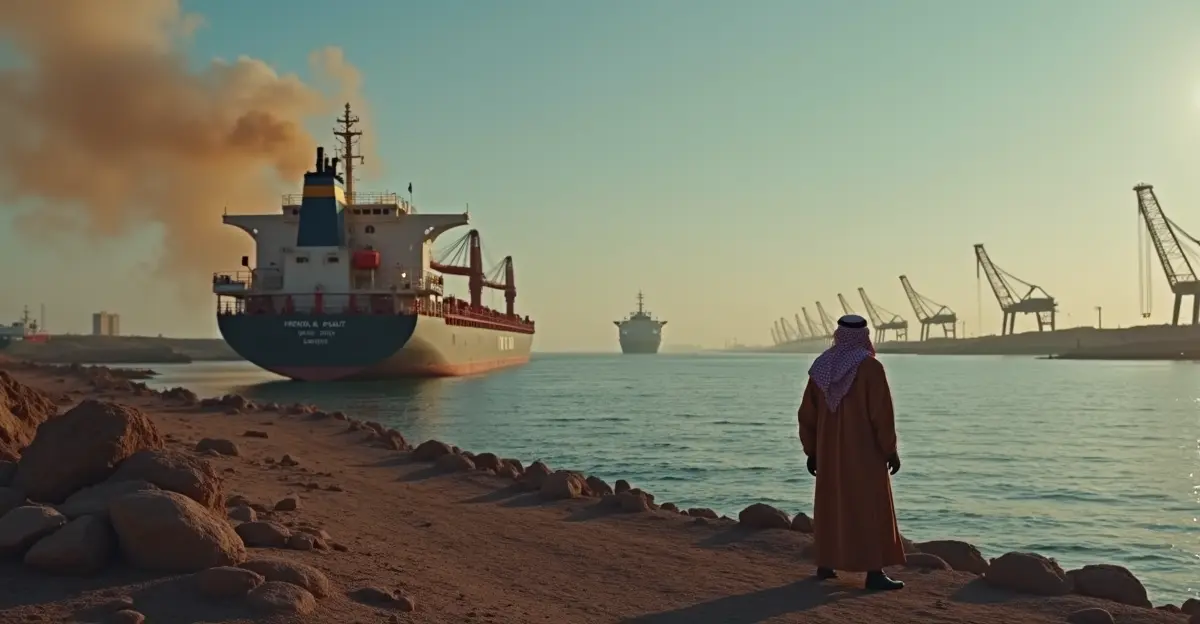
On February 28, 2026, joint Israeli-U.S. strikes under Operation Epic Fury triggered the Islamic Revolutionary Guard Corps (IRGC) to announce the closure of the Strait of Hormuz on March 2. The strait, a narrow passage between Iran and Oman, normally carries roughly 13 million barrels per day (bpd) of crude oil and liquefied natural gas — about 20% of global consumption. Brent crude prices surged 64% from ~$72 to $118 per barrel, with physical cargoes trading as high as $150/bbl. The International Energy Agency (IEA) described it as the largest oil supply disruption in history, dwarfing the 1973 Arab oil embargo and the 1990 Gulf War crisis.
The closure also severed the flow of nine critical non-oil commodities. Fertilizer exports from the Gulf — accounting for 25% of global urea trade — were halted, threatening food production in import-dependent regions. Helium supplies, vital for medical imaging and semiconductor manufacturing, were cut by 30%. Aluminum smelters in the Gulf, which produce 10% of the world's primary aluminum, faced feedstock shortages as alumina shipments stalled. The 2026 global supply chain crisis quickly spread beyond energy into manufacturing and agriculture.
The FORGE Alliance: A New Framework for Critical Minerals Security
Even before the Hormuz closure, the U.S. Department of State had convened the 2026 Critical Minerals Ministerial on February 4, bringing together 54 countries and the European Commission. The centerpiece was the launch of the Forum on Resource Geostrategic Engagement (FORGE), the successor to the Minerals Security Partnership. FORGE is designed as a plurilateral coalition creating a preferential trade-and-investment zone for critical minerals, with coordinated price floors to counter adversarial market manipulation. Secretary of State Marco Rubio announced 11 new bilateral critical minerals frameworks with countries including Argentina, Morocco, the Philippines, the UAE, and the UK. Over $30 billion in U.S. government financing was mobilized, including Project Vault — a $10 billion EXIM initiative to establish a U.S. Strategic Critical Minerals Reserve.
The Hormuz crisis supercharged FORGE's urgency. Within weeks of the closure, six additional countries — including Japan, South Korea, and India — signed framework agreements, bringing total bilateral deals to 21. The alliance's 'membership by trade' model, where participation depends on shared trade rules rather than joint capital deployment, proved attractive to nations seeking to diversify away from Chinese-dominated processing supply chains. The FORGE alliance critical minerals framework is now seen as a template for post-crisis economic security architecture.
Regionalized Supply Chains: The Permanent Shift
The crisis accelerated a structural shift from globalized just-in-time supply chains to regionalized, resilience-first networks. Major container lines including Maersk, CMA CGM, and Hapag-Lloyd rerouted vessels via the Cape of Good Hope, adding ~3,800 nautical miles and 10–14 days per voyage. Container spot rates on Asia-Europe and Asia-U.S. East Coast lanes rose ~150%. War-risk insurance premiums for transiting the Persian Gulf surged from 0.125% to as high as 5% of hull value per transit — equivalent to $5 million per very large crude carrier (VLCC).
Governments responded with unprecedented intervention. The IEA coordinated a record 400-million-barrel release of strategic petroleum reserves. The Philippines declared a national energy emergency. Across Asia, diesel price caps, fuel tax adjustments, export restrictions, and rationing were implemented. Europe and Africa faced growing energy insecurity, while the U.S. was somewhat cushioned by domestic production but still saw gasoline prices rise 35%. The regionalized supply chains 2026 trend is now embedded in corporate planning, with many firms announcing nearshoring investments in North America, Southeast Asia, and the Gulf Cooperation Council (GCC) states that have pipeline alternatives.
Geopolitical Realignments: Winners and Losers
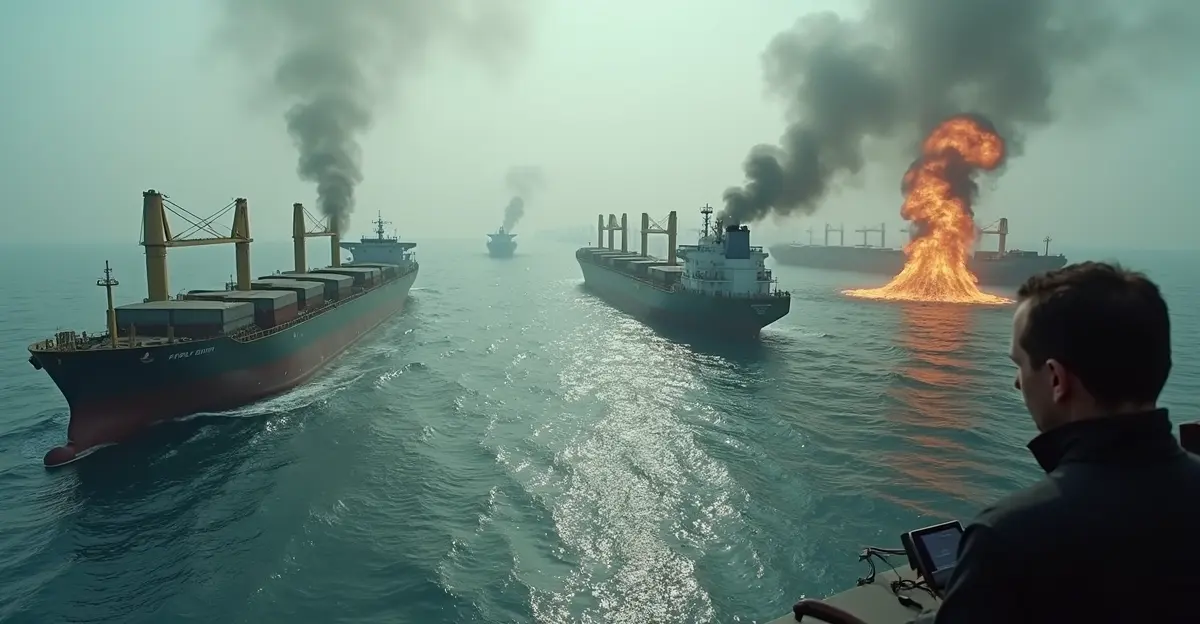
The crisis reshaped geopolitical alignments. The Pakistan-brokered ceasefire on April 8 allowed limited reopening, but Iran formally re-closed on April 18, with IRGC gunboats firing on tankers. This deepened the divide between nations supporting the U.S.-Israel coalition and those seeking neutrality. Saudi Arabia and the UAE, despite having some pipeline alternatives, were forced to cut production as storage facilities filled up. Their strategic pivot toward Asia — particularly China and India — accelerated as they sought new markets for discounted crude.
China, which imports 40% of its crude via the strait, faced a severe energy squeeze. Beijing called for de-escalation but refrained from condemning Iran, straining relations with Washington. Russia, a major oil producer, benefited from higher prices but saw its Arctic LNG ambitions complicated by the crisis. The 2026 geopolitical realignments are still unfolding, but the crisis has clearly accelerated the fragmentation of global energy markets into competing blocs.
Expert Perspectives
This is not a temporary spike; it is a structural break. The Hormuz shock has exposed the fatal vulnerability of relying on a single chokepoint for 20% of the world's energy. The FORGE alliance and regional supply chains are the new reality, said Dr. Amina Al-Jaber, a geopolitical risk analyst at the Gulf Research Center. The crisis has permanently altered the calculus of energy security. Countries that were slow to diversify will pay the price for years, added Michael Davidson, a senior fellow at the Atlantic Council's Global Energy Center.
FAQ
What caused the Strait of Hormuz closure in 2026?
The closure was triggered by joint Israeli-U.S. military strikes on Iran (Operation Epic Fury) starting February 28, 2026, after which the IRGC announced the strait's closure on March 2.
How much oil supply was lost?
Approximately 13 million barrels per day — 20% of global consumption — was removed from the market, making it the largest oil supply disruption in history.
What is the FORGE alliance?
The Forum on Resource Geostrategic Engagement (FORGE) is a 54-country coalition launched in February 2026 to secure critical mineral supply chains through bilateral agreements, price floors, and coordinated investment.
How did the crisis affect non-oil commodities?
Nine critical commodities were disrupted, including fertilizers (25% of global urea trade), helium (30% of supply), and aluminum (10% of primary production), impacting food security, healthcare, and manufacturing.
Are supply chains returning to normal?
No. The crisis has triggered a permanent shift toward regionalized supply chains, with companies nearshoring production and governments investing in strategic reserves and alternative trade routes.
Conclusion
The Hormuz shock of 2026 is a watershed moment for global energy security, trade architecture, and geopolitical alliances. The FORGE alliance represents a new model for critical mineral cooperation, while the shift to regionalized supply chains is likely to persist even after the strait reopens. Nations that invest in diversification, strategic reserves, and multilateral frameworks will be best positioned to navigate the volatile new landscape. The crisis has made one thing clear: the era of cheap, secure, and globalized energy is over.

Follow Discussion