


 Deutsch
 English
 Español
 Français
 Nederlands
 Português


 Share
Share




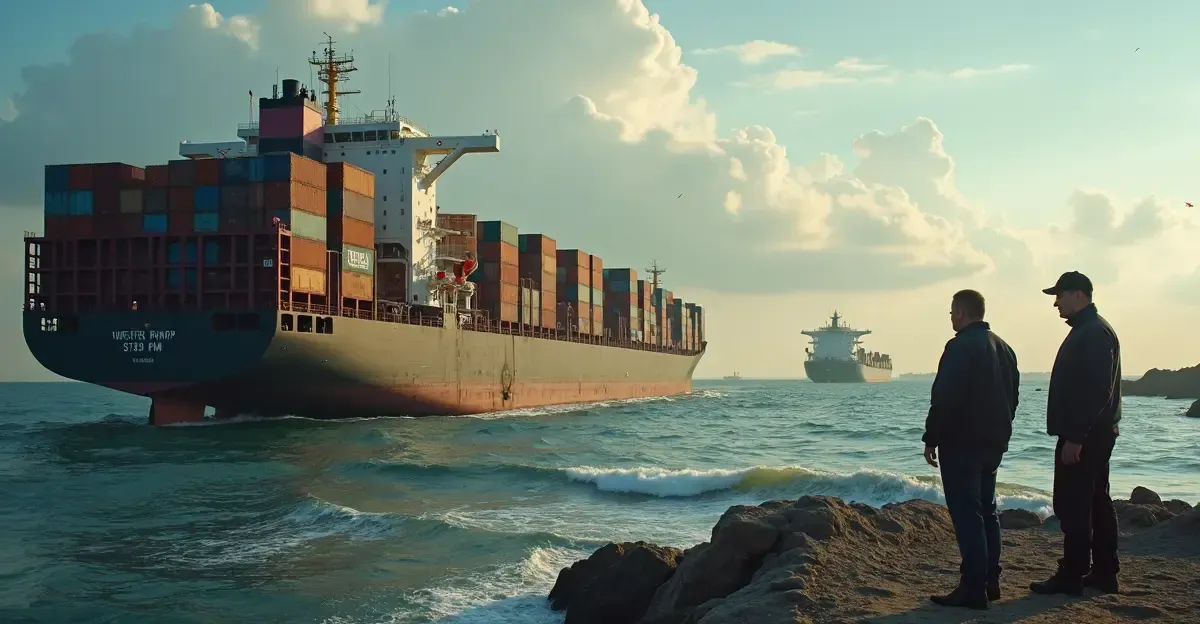
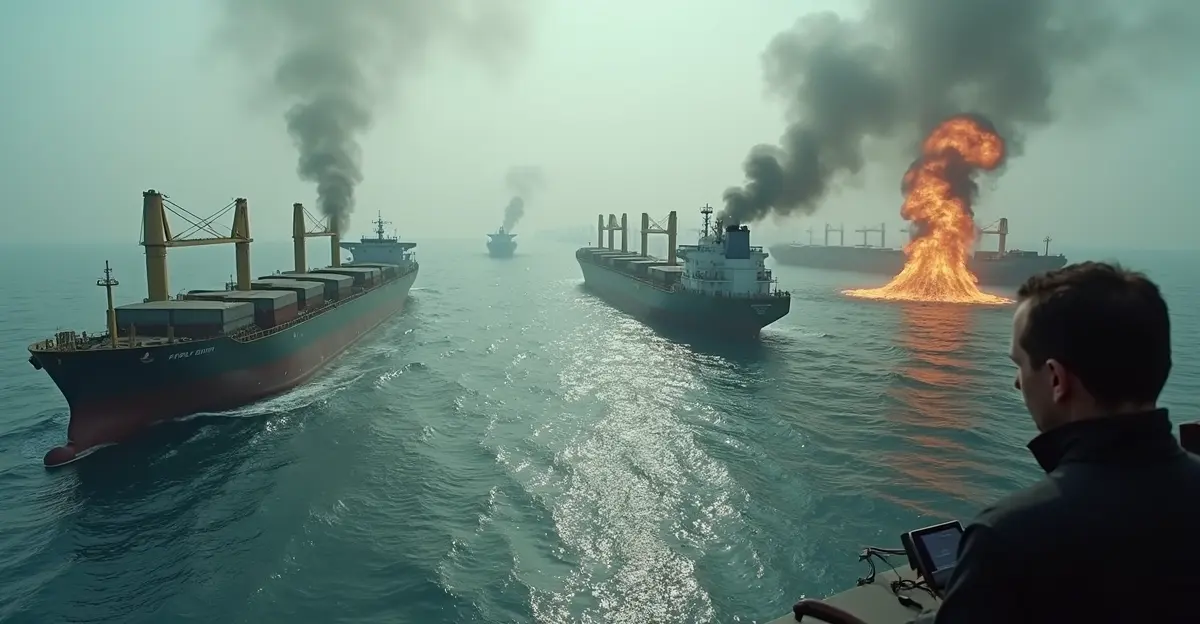
The February 2026 closure of the Strait of Hormuz—triggered by the US-Israeli air war against Iran—has become the largest oil supply disruption in history, but its most enduring impact may be on the global supply chain for non-oil critical minerals. Beyond the immediate oil shock that sent Brent crude above $126 per barrel, the crisis has exposed profound vulnerabilities in the flow of sulfur for EV batteries, helium for semiconductors and MRI scanners, aluminum, graphite, and rare earth feedstocks. With fertilizer prices surging 31% and food security threatened across developing Asia, governments and corporations are being forced to accelerate supply chain diversification, domestic stockpiling, and strategic autonomy initiatives in ways that will permanently reshape global trade architecture.
Beyond Oil: The Nine Commodities at Risk
According to the World Economic Forum, the Strait of Hormuz blockage threatens at least nine non-oil commodities crucial to global industry and food security. The Strait of Hormuz closure impacts extends far beyond energy markets. Nearly half of global seaborne sulfur trade passes through the strait—sulfur that is essential for producing sulfuric acid used in processing nickel, copper, and lithium for EV batteries. Indonesia, which produces about 60% of the world's nickel, has only about a month's sulfur inventory, and several Indonesian nickel producers have already reduced output. Battery manufacturers like CATL are seeing rising costs, and the shortage is also expected to impact copper production and lithium refining globally.
Helium supply has been hit catastrophically. On March 2, 2026, Iran's blockade shut down Qatar's helium plants, removing approximately 35% of global supply in a single day. Helium has no practical substitute at industrial scale for cryogenic cooling in MRI scanners and particle accelerators, or for semiconductor fabrication. The semiconductor industry, now the largest helium consumer, uses the gas for precise temperature control during wafer etching—a process performed hundreds of times per chip. Fabs in Japan, Singapore, South Korea, and Taiwan are feeling the impact first. Even if the strait reopens soon, experts estimate the disruption will last at least two additional months due to logistical delays.
Aluminum and Graphite: Industrial Backbone Under Siege
Gulf-region smelters in the UAE, Bahrain, Qatar, Oman, and Saudi Arabia account for roughly 9% of world primary aluminum output—over 6.16 million tonnes per year—with 75-80% exported via Hormuz. In 2025, the Gulf Cooperation Council supplied 21% of US, 19% of EU, and 25% of Japan's primary aluminum imports. The closure has forced curtailments at major smelters like Emirates Global Aluminium (2.7 Mt/yr) and Alba (1.6 Mt/yr), while also disrupting alumina imports from Australia that feed these smelters. LME aluminum prices have surged past $3,500 per tonne, with analysts predicting $4,000 by Q2 2026. The crisis signals a permanent shift toward regionalization, higher costs, and increased investment in recycled aluminum and local refining capacity.
Synthetic graphite for EV batteries relies on oil refining byproducts now in shortage. The critical minerals supply chain disruption is cascading through battery manufacturing, with graphite feedstocks becoming increasingly scarce. This comes at a time when global demand for EV batteries is accelerating, creating a perfect storm for the energy transition.
Fertilizer Crisis Threatens Global Food Security
The Strait handles roughly one-third of globally traded fertilizers. Urea prices have surged over 40% since the conflict began, hitting during spring planting season and risking food price inflation. India has front-loaded imports and raised domestic urea production by 23%, but its fertilizer subsidy bill—already approximately $50 billion annually—is set to rise. In sub-Saharan Africa, expected maize yield losses range between 40-50% due to reduced fertilizer access on already depleted soils. The International Rescue Committee warns June could see a food-security crisis as weak harvests push millions toward extreme hunger.
The closure of the Strait of Hormuz is not just an energy crisis—it is a food crisis in the making, said a senior UNCTAD official. Developing Asian economies that rely on fertilizer imports from the Gulf are facing a double blow of higher prices and physical shortages.
Rare Earths and the Hidden Cost Multiplier
While China dominates rare earth processing, the Strait of Hormuz crisis acts as a hidden cost multiplier. The disruption raises shipping costs, insurance premiums, and transit times for all commodities passing through the region. War risk insurance has surged to $5 million per tanker transit, and rerouting via the Cape of Good Hope adds 10-14 days to shipping times. The rare earth supply chain risks are compounded by the fact that many critical mineral processing routes depend on energy inputs and chemical reagents that pass through Hormuz.
The crisis has accelerated Western efforts to build alternative supply chains. On February 4, 2026, the United States hosted the 2026 Critical Minerals Ministerial, signing 11 new bilateral critical minerals frameworks with countries including Argentina, Morocco, the Philippines, and the UK. The US also launched Project Vault, a $12 billion public-private partnership to establish a domestic strategic reserve for critical minerals. However, experts warn these efforts will take years to materialize, and in the near term, building processed reserves would likely depend on Chinese suppliers.
Strategic Autonomy: The New Imperative
The Strait of Hormuz crisis is accelerating a structural shift toward energy security-focused supply chains and regionalized production, ending the post-Cold War globalization era. The Dallas Fed projects a 2.9 percentage point drag on global GDP growth, with Asian economies hit hardest: China gets a third of its oil via the strait, Japan and South Korea 75% and 70% respectively. The US and IEA launched the largest emergency oil release in history (400 million barrels), depleting US reserves to 1982 levels.
Gulf nations like the UAE and Saudi Arabia are accelerating diversification efforts by securing international mining assets to reduce dependency on China. The strategic autonomy in critical minerals movement is gaining momentum, with Europe's Critical Raw Materials Act targeting 10% extraction, 40% processing, and 25% recycling by 2030. Saudi Arabia's Public Investment Fund has anchored State Street's new Saudi equity ETF, deepening access to Tadawul-listed names.
FAQ
What is the Strait of Hormuz crisis?
The Strait of Hormuz crisis began in February 2026 when the US and Israel launched an air war against Iran, prompting Iran to blockade the strait. The closure has become the largest disruption to world energy supply since the 1970s, removing approximately 20% of global oil supply and severely impacting critical mineral supply chains.
Which critical minerals are most affected?
The most affected minerals include sulfur (for EV batteries and fertilizer), helium (for semiconductors and MRI scanners), aluminum, graphite, and rare earth feedstocks. Nearly half of global seaborne sulfur trade and about 35% of global helium supply pass through the strait.
How does this affect food security?
The Strait handles roughly one-third of globally traded fertilizers. Urea prices have surged over 40%, threatening food production in India, Brazil, and China. Sub-Saharan Africa faces expected maize yield losses of 40-50% due to reduced fertilizer access.
What is Project Vault?
Project Vault is a $12 billion US public-private initiative launched in February 2026 to establish a Strategic Critical Minerals Reserve. It aims to stockpile essential raw materials for semiconductors, renewable energy, AI, and defense systems.
How long will the disruption last?
A fragile ceasefire was reached in April 2026, but underlying tensions remain unresolved. Even if the strait reopens soon, experts estimate supply chain disruptions will last at least two additional months due to logistical delays. The structural shift toward supply chain diversification is expected to be permanent.
Conclusion: A Permanent Reshaping
The Strait of Hormuz crisis of 2026 is a watershed moment for global trade. The global trade architecture changes underway will persist long after the strait reopens. Governments and corporations are now prioritizing supply chain resilience over efficiency, domestic stockpiling over just-in-time inventory, and strategic autonomy over global integration. The era of cheap, reliable global supply chains is over—replaced by a more fragmented, regionalized, and strategically managed system that will define the economic landscape for decades to come.

Follow Discussion