


 Deutsch
 English
 Español
 Français
 Nederlands
 Português


 Share
Share




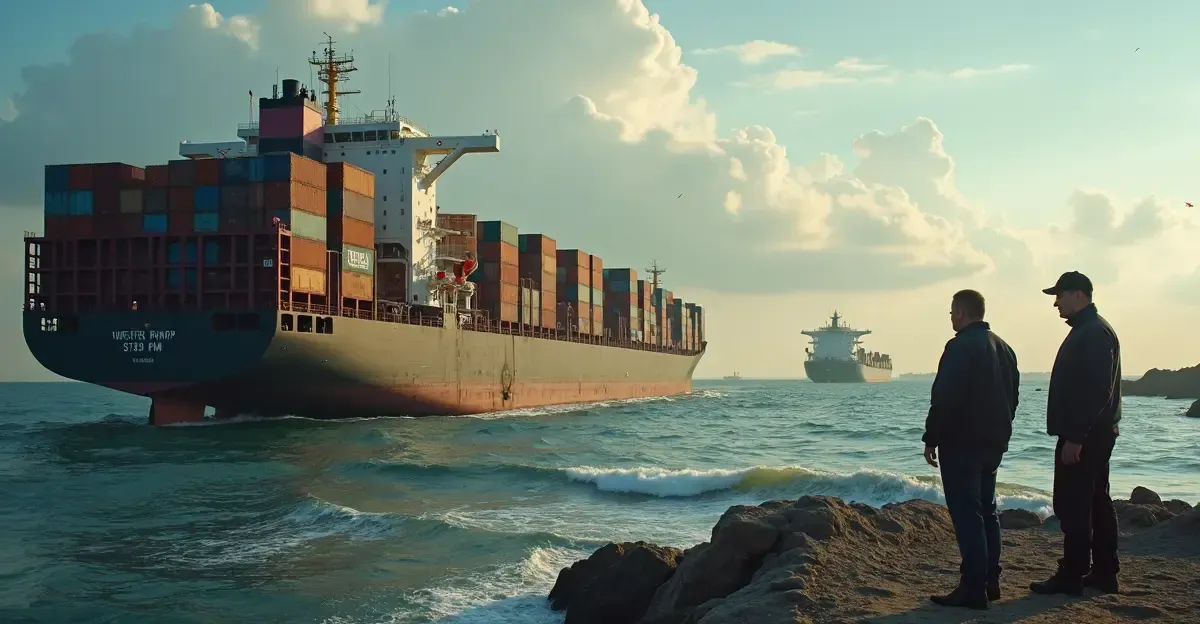
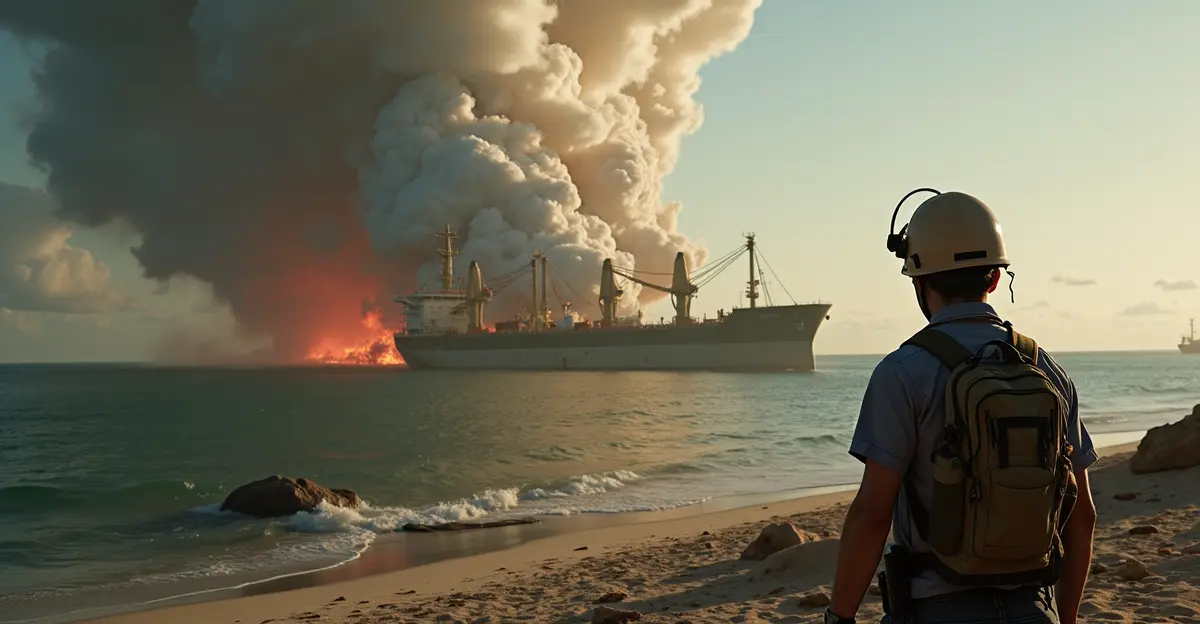
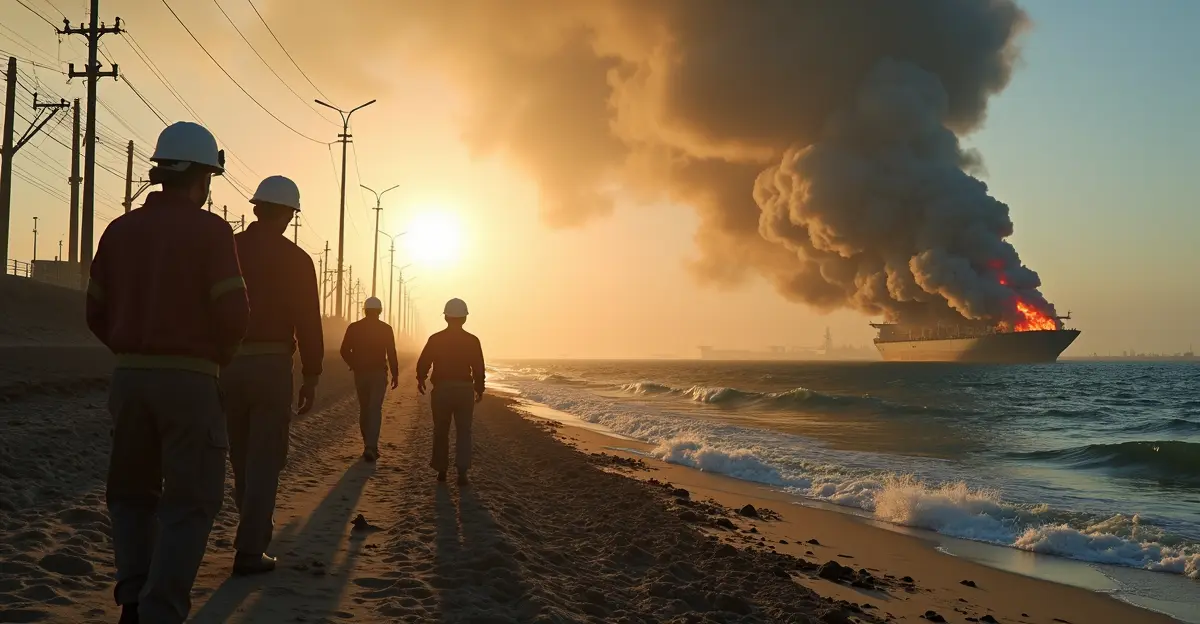
The near-total closure of the Strait of Hormuz since late February 2026 has triggered the largest oil supply disruption in history, but its deeper strategic impact extends to nine non-oil commodities essential to global industry and food security. Disruptions to flows of fertilizers, helium, aluminum, sulfur, methanol, and graphite feedstocks are exposing acute vulnerabilities in supply chains for electronics, healthcare, EV batteries, and agriculture. This crisis is forcing governments and corporations to treat access to these strategic inputs as a matter of economic security, accelerating a structural shift toward supply chain diversification, domestic production, and allied sourcing blocs.
The Multi-Commodity Chokepoint
The Strait of Hormuz, a narrow waterway between Iran, Oman, and the UAE, handles approximately 20% of the world's oil supply. However, its importance extends far beyond crude. According to the World Economic Forum, the region accounts for 46% of global urea trade, one-third of seaborne methanol trade, nearly half of seaborne sulfur, and roughly 9% of global primary aluminum output. Qatar alone supplies nearly one-third of the world's helium, a gas critical for MRI scanners and semiconductor manufacturing. The 2026 global supply chain crisis has shown that these non-energy commodities face equally severe disruption.
Fertilizers: Threatening Global Food Security
Fertilizer trade is among the hardest hit. The Persian Gulf region is the world's largest exporter of urea and ammonia, with 46% of global urea trade and 23% of ammonia trade originating there. Since the closure, urea prices have surged approximately 40%, with warnings that nitrogen prices could double. India, which imports 54% of its fertilizer from the Gulf, faces acute shortages ahead of its planting season. Brazil (40% of urea imports) and Australia (68% of urea imports) are similarly vulnerable. The UN warns that fertilizer shortages could reduce crop yields, pushing 45 million more people into extreme hunger if disruptions persist through mid-2026. The global food security risks are mounting as the Northern Hemisphere planting season coincides with the blockade.
Helium: A Crisis for Healthcare and Semiconductors
Helium has no practical substitute at industrial scale for cryogenic cooling in MRI scanners, particle accelerators, and semiconductor fabrication. On March 2, 2026, Iran's blockade shut down Qatar's helium plants, removing approximately 64 million cubic meters per year — roughly 35% of global supply — in a single day. The closure has trapped a third of the world's commercial helium, threatening the irreplaceable coolant that makes advanced microchips and medical imaging possible. Even if the strait reopened immediately, industry experts estimate it would take four to six months to normalize supply. Semiconductor manufacturers are now accelerating helium reclamation and conservation techniques, similar to closed-loop systems used in modern MRI machines.
Aluminum: A Four-Year Price High
Gulf states produce roughly 10% of the world's aluminum, with major smelters in Bahrain and the UAE heavily reliant on the waterway for exports. The blockade has sent aluminum prices to a four-year high. The United States imports about 20% of its raw aluminum capacity from the Gulf region, but those shipments are now trapped. Compounding the crisis, the U.S. had already imposed 50% tariffs on aluminum imports, including from Canada, which had led Canadian producers to shift exports to Europe. American manufacturers turned to Middle Eastern suppliers — only to see that supply severed. Some smelters are attempting costly overland rerouting to other ports, but trade experts suggest a temporary suspension of aluminum tariffs could help ease the crisis. The aluminum supply chain disruption highlights how trade policy and geopolitical risk can compound each other.
Sulfur, Methanol, and Graphite: Hidden Vulnerabilities
Sulfur, a byproduct of Gulf oil refining, is essential for fertilizer production and battery chemistry — particularly for processing nickel and cobalt used in EV batteries. Nearly half of global seaborne sulfur trade passes through the strait, with shipments destined for fertilizer manufacturers in Morocco, India, and Indonesia. Methanol faces the most concentrated exposure: about one-third of global seaborne methanol trade flows through Hormuz, with Iran as a dominant supplier to China's methanol-to-olefins plants that produce plastics and packaging. Graphite feedstocks for EV battery anodes, reliant on petroleum coke from Gulf refineries, are also severely constrained. Unlike crude oil, these materials lack strategic reserves, forcing procurement teams across Asia to absorb direct price shocks.
Economic Fallout and the UN Warning
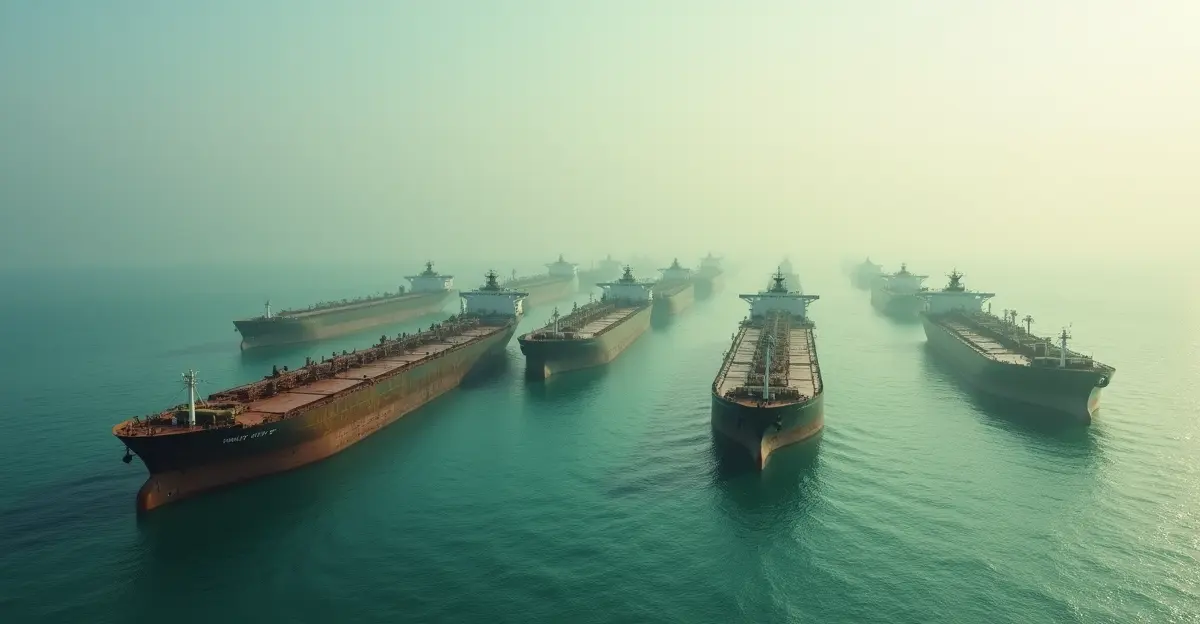
UN Secretary-General António Guterres has warned that the crisis is "strangling the global economy." Ship transits through the strait have dropped by over 90% — from 130 per day in February to just 6 in March. UNCTAD projects global merchandise trade growth will decelerate from 4.7% in 2025 to 1.5–2.5% in 2026. The Dallas Federal Reserve estimates that a one-quarter closure would lower annualized global real GDP growth by 2.9 percentage points in Q2 2026, with oil prices reaching $98 per barrel. If the closure extends to two quarters, oil could hit $115 per barrel, and global GDP would remain below pre-closure levels for years. The UN's worst-case scenario warns of a global recession, with 32 million people pushed into poverty and 45 million more facing extreme hunger. The economic impact of the Hormuz blockade is being felt across every continent.
Accelerating Supply Chain Transformation
The crisis is forcing a structural shift in how governments and corporations approach supply chain security. According to the QIMA 2026 Global Sourcing Survey, four in five companies expect costs to be a major disruption in 2026, and 43% of businesses made notable sourcing geography changes in 2025 — with Vietnam, India, and Bangladesh as top destinations. The Hormuz crisis is accelerating this trend, pushing companies toward "ally-shoring" — sourcing from geopolitically aligned partners. The European Union is fast-tracking domestic production of critical raw materials, while the U.S. is exploring tariff suspensions and strategic stockpiles for non-oil commodities. The supply chain diversification strategies emerging from this crisis may reshape global trade patterns for decades.
Expert Perspectives
"This is not just an oil crisis — it's a multi-commodity shock that exposes the fragility of our globalized supply chains," said Fatih Birol, Executive Director of the International Energy Agency, describing the disruption as the largest oil supply disruption in history. ADNOC's CEO called the closure "economic terrorism." The Singapore Foreign Minister described it as "an Asian crisis," given the region's heavy dependence on Gulf fertilizers, petrochemicals, and metals.
FAQ
What non-oil commodities are affected by the Strait of Hormuz closure?
The crisis affects at least nine non-oil commodities: fertilizers (urea and ammonia), helium, aluminum, sulfur, methanol, graphite feedstocks, monoethylene glycol (MEG), iron ore/steel pellets, and green hydrogen infrastructure components.
How much global fertilizer trade passes through the Strait of Hormuz?
Approximately 46% of global urea trade and 23% of ammonia trade originates from the Persian Gulf region and transits the Strait of Hormuz.
Why is helium supply critical in this crisis?
Helium is essential for cooling MRI scanners and semiconductor manufacturing. Qatar, which produces about one-third of global helium, had its plants shut down by the blockade, removing 35% of global supply overnight.
What are the UN's projections for economic impact?
The UN warns that if disruptions continue through mid-2026, 32 million people could be pushed into poverty and 45 million more could face extreme hunger. A worst-case scenario through year-end risks a global recession.
How are companies responding to the supply chain risks?
Companies are accelerating supply chain diversification, with 43% of businesses already making notable sourcing geography changes in 2025. Strategies include ally-shoring, domestic production, strategic stockpiling, and supplier audits to build resilience.
Conclusion: A Defining Inflection Point
The Strait of Hormuz crisis of 2026 marks a historic inflection point where commodity choke points are being weaponized. The disruption extends far beyond oil, threatening global food security, healthcare, electronics manufacturing, and the green energy transition. As governments and corporations race to diversify supply chains and build strategic reserves, the crisis is reshaping the global economic order — making this the defining supply chain story of 2026.

Follow Discussion