


 Deutsch
 English
 Español
 Français
 Nederlands
 Português


 Share
Share




The February 2026 closure of the Strait of Hormuz, triggered by the outbreak of military conflict between the U.S.-led coalition and Iran, has removed nearly 20% of global oil supplies from the market — a disruption three to five times larger than the 1973 Arab oil embargo or the 1990 Gulf War. Beyond the immediate energy price spike, this chokepoint crisis is sending shockwaves through markets for fertilizers, sulfur, methanol, helium, and aluminium — commodities critical to food production, semiconductor manufacturing, and EV batteries. As a fragile April ceasefire holds but strategic oil reserves have been depleted to 1982 levels, the Strait of Hormuz crisis is rewriting the rules of global trade resilience and accelerating a structural shift toward regionalized supply chains.
What Happened: The February 2026 Closure
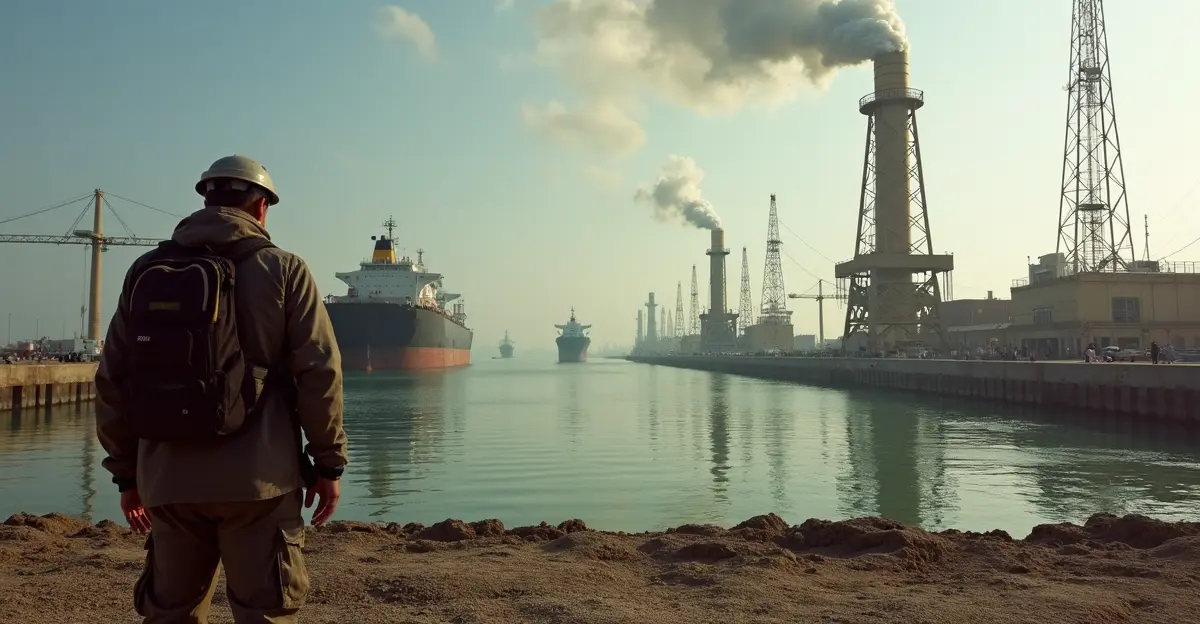
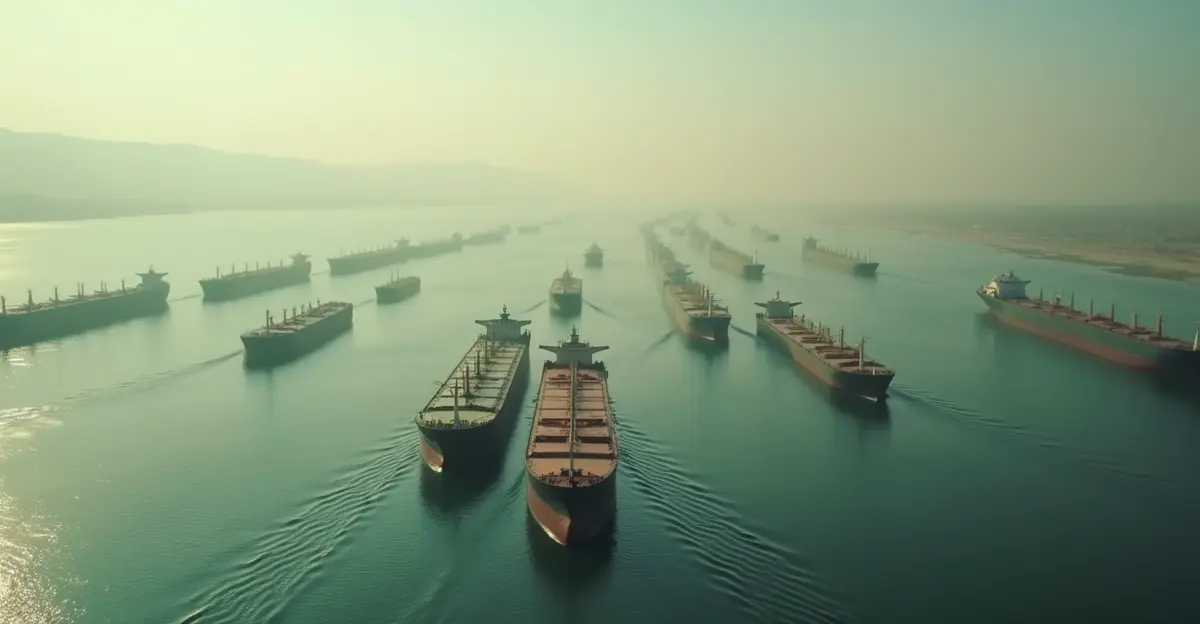
On February 28, 2026, the United States and Israel launched coordinated airstrikes on Iran under Operation Epic Fury. Iran responded by effectively closing the Strait of Hormuz, the world's most critical maritime chokepoint, through which roughly 20% of global petroleum and 25% of seaborne oil trade normally passes. The strait, located between Iran and Oman, is only 21 miles wide at its narrowest point and provides the only sea passage from the Persian Gulf to the open ocean. The disruption trapped up to 470,000 TEUs of shipping capacity in the Persian Gulf, with major carriers like MSC, CMA CGM, and Maersk declaring force majeure and imposing emergency surcharges up to $3,000 per FEU. Container routes were diverted around the Cape of Good Hope, adding 10 to 14 days per voyage. Transpacific shipping rates rose approximately 40%, while Asia-North Europe rates climbed about 20%.
The International Energy Agency (IEA) described this as "the largest supply disruption in the history of global oil markets." Brent crude surged from $61 per barrel in early February to a peak of $138 per barrel in April, before settling around $106 per barrel after the ceasefire. The Dallas Federal Reserve estimates that a one-quarter closure would lower global real GDP growth by an annualized 2.9 percentage points, with longer closures pushing oil prices as high as $132 per barrel.
Beyond Oil: Nine Commodities in Crisis
While oil and LNG dominate headlines, the Strait of Hormuz crisis has severely impacted at least nine non-oil commodities essential to modern economies. The global fertilizer supply chain has been hit particularly hard. The Persian Gulf region accounts for 46% of global urea trade and roughly one-third of all seaborne fertilizer shipments. The World Bank's fertilizer price index rose over 12% in Q1 2026, reaching its highest level since October 2022. Urea prices climbed above $850 per metric ton in April — an 80% increase since February — as Iran halted ammonia production and Qatar suspended urea output. The World Food Program estimates that 260 million people already faced acute food insecurity before this supply shock, and reduced fertilizer application in 2026 could compound food security risks well into 2027.
Sulfur, a byproduct of oil refining critical for battery chemistry and fertilizer production, has also been disrupted. Nearly half of global seaborne sulfur trade normally passes through the Strait of Hormuz. Methanol supplies to China are tightening, while synthetic graphite feedstocks for EV batteries face price surges. Aluminium production in the Gulf — which supplies roughly 8% of global primary output — collapsed 38% below pre-war levels by April 2026, with prices surging to approximately $3,571 per tonne on the London Metal Exchange. Qatar's helium supply, vital for MRI scanners and semiconductor manufacturing, has been endangered, with roughly one-third of global commercial helium trapped behind the blockade. The helium shortage impact on semiconductors is particularly acute, as chip fabricators in Japan, Singapore, South Korea, and Taiwan feel the effects first.
The FORGE Alliance: A New Security Framework
The crisis has accelerated the formation of new multilateral security frameworks for critical minerals and supply chains. On February 4, 2026 — just weeks before the strait closure — U.S. Secretary of State Marco Rubio convened 54 countries and the European Commission in Washington to launch FORGE: the Forum on Resource Geostrategic Engagement. FORGE succeeds the Minerals Security Partnership as a plurilateral coalition designed to create a preferential trade-and-investment zone for critical minerals, with coordinated price floors to counter adversarial market manipulation. Vice President JD Vance outlined plans for reference prices maintained through adjustable tariffs. The ministerial produced 11 new bilateral framework agreements, bringing the total to 21 deals in five months, with 17 more countries having completed negotiations. The administration has mobilized over $30 billion in investments and support, including $10 billion from the Export-Import Bank for Project Vault — a domestic strategic reserve for critical minerals.
The FORGE alliance critical minerals strategy aims to link these bilateral deals into a functioning plurilateral system covering two-thirds of the global economy. The crisis has underscored the urgency of this effort, as China controls 69.2% of global rare earth production and has invested over $120 billion in overseas mining since 2023.
Strategic Reserves Depleted to 1982 Levels
In response to the crisis, the Trump administration ordered the release of 172 million barrels of oil from the U.S. Strategic Petroleum Reserve (SPR) — the second-largest drawdown in history, after President Biden's 2022 release of 180 million barrels. This reduced the reserve from 415 million barrels to approximately 243 million barrels, the lowest level since 1982. Energy Secretary Chris Wright stated the U.S. has arranged to replace these reserves with approximately 200 million barrels within the next year. Globally, Morgan Stanley estimates that stockpiles fell by about 4.8 million barrels per day between March 1 and April 25, far exceeding any previous quarterly drawdown. JPMorgan warns that OECD inventories could reach operational stress levels by early June 2026 if the strait does not reopen, and hit minimum operational floors by September. Fuel-import-reliant Asian countries like Indonesia, Vietnam, Pakistan, and the Philippines could face critical supply levels within a month.
The strategic petroleum reserve depletion 2026 has left governments with fewer options to prevent price spikes and shortages, making the current crisis fundamentally different from past oil shocks where reserves provided a meaningful buffer.
Economic Fallout and the Fragile Ceasefire
A fragile two-week ceasefire between the U.S. and Iran, brokered by Pakistan in early April 2026, sparked a broad market relief rally. Oil prices cooled below $100 per barrel, down from war-driven highs, and global stocks surged. However, experts warn of a deep trust deficit and significant ambiguities in the agreement. Key conditions include the reopening of the Strait of Hormuz, though Iran added caveats about coordination with its armed forces — which analysts say could derail the truce. Talks are set to resume in Islamabad, but without a durable resolution, conflicts could reignite later this year, keeping energy prices structurally elevated above pre-war levels.
The IMF's April 2026 analysis outlines three impact channels: higher commodity prices creating a negative supply shock, risks of wage-price spirals, and potential financial market repricing. The reference forecast (short-lived conflict, 19% energy price rise) puts global growth at 3.1% with 4.4% inflation. A severe scenario extends growth decline to 2% with inflation exceeding 6%. Low-income economies and energy importers are hit hardest. The Dallas Fed projects that even a one-quarter closure would leave GDP 0.2% below pre-closure levels by year-end 2026.
Expert Perspectives
"This is the first time the Strait has been closed in modern history," notes a Dallas Federal Reserve analysis. "The disruption removes nearly 20% of global oil supplies from the market — three to five times larger than past geopolitical oil shocks."
UN Secretary-General António Guterres welcomed the ceasefire extension as "an important step toward de-escalation" but warned that nearly 20,000 seafarers remain stranded and attacks on commercial ships are unacceptable. The World Bank warns that fertilizer prices could rise by more than 30% in 2026 if the blockade persists, compounding food security risks for millions.
FAQ: Strait of Hormuz Crisis 2026
What caused the Strait of Hormuz closure in 2026?
The closure was triggered by the outbreak of military conflict on February 28, 2026, when the U.S. and Israel launched airstrikes on Iran (Operation Epic Fury). Iran responded by effectively closing the strait through military action, including mining and naval deployments.
How much global oil supply was disrupted?
Nearly 20% of global oil supplies were removed from the market — approximately 10.5 million barrels per day in April 2026, peaking at an estimated 10.8 million b/d in May. This is three to five times larger than the 1973 Arab oil embargo.
Which commodities beyond oil were affected?
At least nine non-oil commodities were severely impacted: fertilizers (urea/ammonia), sulfur, methanol, graphite feedstocks, aluminium, helium, monoethylene glycol (MEG), iron ore/steel pellets, and green hydrogen infrastructure projects.
What is the FORGE alliance?
FORGE (Forum on Resource Geostrategic Engagement) is a plurilateral coalition launched by the U.S. in February 2026, involving 54 countries and the EU. It aims to create a preferential trade-and-investment zone for critical minerals with coordinated price floors to counter Chinese market dominance.
How long will the supply chain disruption last?
Even if the strait reopened immediately, supply disruption would last at least two extra months due to logistics backlogs. The Dallas Fed models scenarios ranging from one quarter (reopening by late May) to three quarters (reopening by late 2026), with oil prices ranging from $68 to $132 per barrel depending on duration.
Conclusion: A New Era for Global Trade
The Strait of Hormuz crisis of 2026 marks a turning point in global economic history. The future of global trade resilience now hinges on regionalized supply chains, emergency stockpile strategies, and new security frameworks like FORGE. With strategic reserves depleted, GDP growth projections slashed, and food security threatened, the long-term repercussions of this single chokepoint disruption are only beginning to unfold. As governments and businesses race to reconfigure supply chains around energy security and regionalized production, the post-Cold War era of globalization has given way to a more fragmented, resilient, and strategically managed world economy.
Follow Discussion