


 Deutsch
 English
 Español
 Français
 Nederlands
 Português


 Share
Share




Introduction: The Defining Geopolitical-Economic Event of 2026
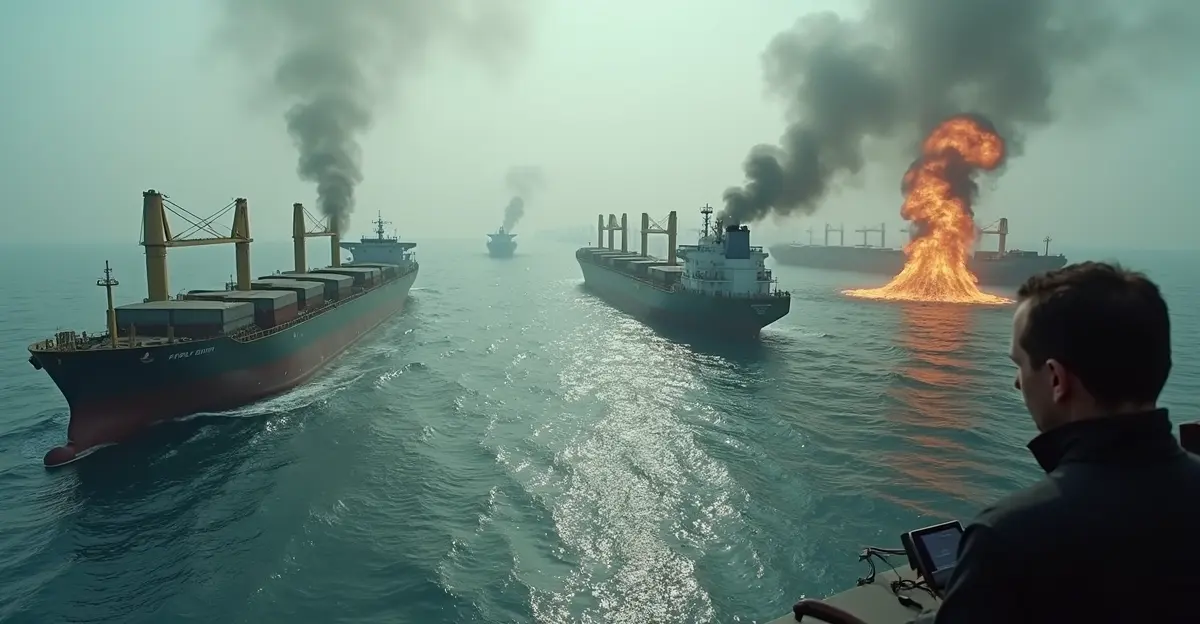
The near-total closure of the Strait of Hormuz in early 2026 has triggered the largest oil supply disruption in history, removing roughly 20% of global oil supply and sending shockwaves through energy markets, trade supply chains, and developing-nation finances. According to UNCTAD, ship transits through the critical energy corridor collapsed by about 95%—from 130 per day in February to just 6 in March 2026. This article analyzes the systemic risks and examines whether the gradual reopening can prevent a cascading global crisis.
Context: How the Strait of Hormuz Closure Unfolded
The crisis began on February 28, 2026, when military conflict erupted with Iran, leading the Islamic Revolutionary Guard Corps (IRGC) to close the Strait on March 2. The Strait of Hormuz, a 21-mile-wide chokepoint between the Persian Gulf and the Gulf of Oman, normally carries about 13 million barrels per day (mb/d) of oil—roughly 20% of global consumption—along with significant liquefied natural gas (LNG) and other cargo. The 2026 Iran conflict marked the first time the Strait has been closed in modern history, making this disruption unprecedented in scale and duration.
A Pakistan-brokered ceasefire on April 8 allowed partial reopening, but Iran re-closed the Strait on April 19 with gunboat attacks on tankers. The killing of IRGC Navy commander Alireza Tangsiri on March 26 further escalated tensions. As of July 4, 2026, the Strait had been effectively closed for 124 days, with only limited passage for humanitarian and diplomatic vessels.
Energy Market Fallout: Oil Prices Surge Over 60%
The supply shock sent oil prices soaring. Brent crude spiked from $72 per barrel before the crisis to a peak of $118 per barrel (futures), with physical cargoes reaching approximately $150 per barrel—a 64% increase. The Dallas Federal Reserve's analysis projects that if the closure persists for one quarter (Q2 2026), West Texas Intermediate (WTI) oil prices would average $98 per barrel, and global real GDP growth would fall by an annualized 2.9 percentage points. Longer closures could push oil prices as high as $132 per barrel, with negative growth impacts persisting through year-end 2026.
The World Bank reports that global oil supply crashed by 10.1 mb/d in March 2026 alone due to attacks on infrastructure and tanker restrictions, with output expected to fall by 6.9 mb/d in Q2. The market faces a 3.7 mb/d deficit in Q2 2026. While Brent is forecast to average $86/bbl in 2026 if disruptions ease, upside risks including re-escalation could push prices to between $95 and $115 per barrel.
Shipping and Trade Disruption
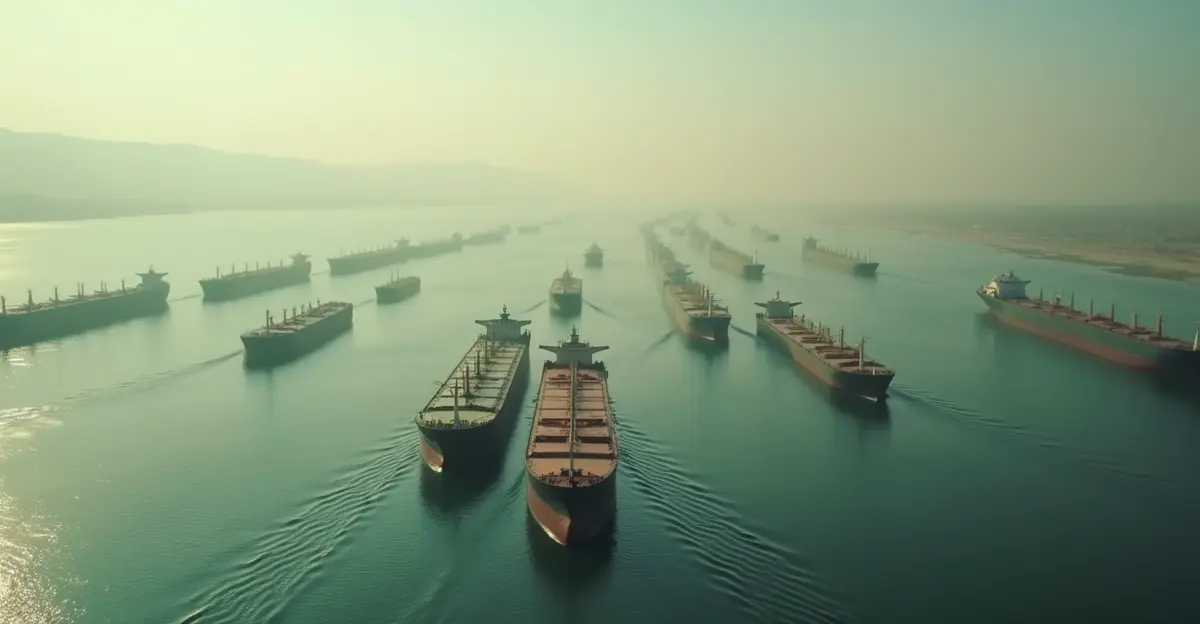
Beyond oil, the closure has severely disrupted global shipping. Major container lines—including Maersk, CMA CGM, and Hapag-Lloyd—have rerouted vessels via the Cape of Good Hope, adding approximately 3,800 nautical miles and $40–50 million per week in fleet-wide costs. War-risk premiums for very large crude carriers (VLCCs) peaked at about $5 million per transit. The global shipping crisis 2026 has driven up freight rates and insurance costs across all major trade routes.
UNCTAD's rapid assessment warns that global merchandise trade growth is projected to slow from 4.7% in 2025 to between 1.5% and 2.5% in 2026, while overall economic growth is expected to decelerate from 2.9% to 2.6%. The International Energy Agency (IEA) reported more than 360 million barrels of cumulative supply loss in March alone.
Impact on Developing Economies: A Double Shock
Developing countries are bearing the brunt of the crisis. The UNCTAD assessment identifies 61 vulnerable economies facing simultaneous oil and food price shocks. Higher import costs, weaker currencies, tighter financial conditions, and reduced borrowing capacity are compounding existing debt vulnerabilities that affect approximately 3.4 billion people. Regions dependent on Middle East energy—particularly South Asia and Europe—are most exposed.
The developing nation debt crisis 2026 is exacerbated by fertilizer price surges, which threaten food security for an estimated 45 million people. The World Bank notes that the shock comes as many developing economies struggle with debt servicing and limited fiscal capacity to absorb new price shocks.
Systemic Risks and Potential Cascading Crisis
The Dallas Fed's analysis highlights that the Strait of Hormuz disruption is three to five times larger than previous geopolitical oil shocks, including the 1973 Yom Kippur War, the 1979 Iranian Revolution, and the 1990 Persian Gulf War. Most Persian Gulf oil exports go to Asia, forcing importers to seek alternative suppliers worldwide—a process that takes time and drives up costs.
Adding to the complexity, the Dallas Fed's June 2026 analysis reveals that the shipping cost increases from the strait closure have completely offset the disinflationary impact of a U.S. Supreme Court ruling that struck down IEEPA tariffs in February 2026. This leaves net core PCE inflation essentially unchanged, with any additional upward pressure from higher oil prices adding further upside inflation risk beyond pre-2026 forecasts.
Expert Perspectives
The Strait of Hormuz disruption is the largest oil supply shock in history—three to five times larger than any previous geopolitical oil crisis. The global economy has never faced a disruption of this magnitude, and the ripple effects will be felt for years, said a Dallas Fed economist in the March 2026 analysis.
UNCTAD's rapid assessment warns of a potential cascading crisis if disruptions persist: The combination of energy price spikes, trade slowdown, and debt vulnerabilities creates a perfect storm for developing economies. We are monitoring the situation closely and urge de-escalation to safeguard maritime transport and civilian infrastructure.
FAQ: Strait of Hormuz Crisis 2026
What caused the Strait of Hormuz closure in 2026?
The closure was triggered by military conflict with Iran on February 28, 2026, followed by the IRGC's decision to close the Strait on March 2. A brief reopening in April was reversed after renewed hostilities.
How much oil transits the Strait of Hormuz daily?
Normally, about 13 million barrels per day (mb/d) of oil pass through the Strait, representing roughly 20% of global consumption. The closure has removed nearly all of this supply from the market.
What is the economic impact of the closure?
The Dallas Fed estimates that a one-quarter closure reduces global GDP growth by an annualized 2.9 percentage points. Oil prices have surged over 60%, and global trade growth has slowed from 4.7% to as low as 1.5%.
Which countries are most affected?
Developing economies in South Asia and Europe are most exposed, with 61 vulnerable nations facing simultaneous oil and food price shocks. About 3.4 billion people are affected by compounding debt vulnerabilities.
Is the Strait of Hormuz reopening?
Partial reopening occurred in April 2026 but was reversed. As of July 2026, the Strait remains effectively closed, with only limited humanitarian and diplomatic passage. The duration of the closure remains uncertain.
Conclusion: Can a Cascading Crisis Be Prevented?
The Strait of Hormuz shock represents the defining geopolitical-economic event of 2026. While a gradual reopening could ease pressures, the risk of re-escalation remains high. The global energy security 2026 landscape has been fundamentally altered, and the world must prepare for a prolonged period of higher energy costs, slower trade, and increased financial strain on vulnerable economies. International cooperation and de-escalation are essential to prevent a full-blown global crisis.

Follow Discussion