


 Deutsch
 English
 Español
 Français
 Nederlands
 Português


 Share
Share




The effective closure of the Strait of Hormuz since late February 2026 has triggered the largest oil market disruption in history, with Brent crude spiking above $138 per barrel and global supply falling by over 10 million barrels per day. According to UNCTAD's second rapid assessment, global merchandise trade growth is projected to halve to between 1.5% and 2.5% in 2026, down from 4.7% in 2025. Developing economies face cascading currency crises, soaring food import costs, and rising debt distress, exposing the fragility of global energy interdependence.
Context: The Strait of Hormuz as a Global Chokepoint
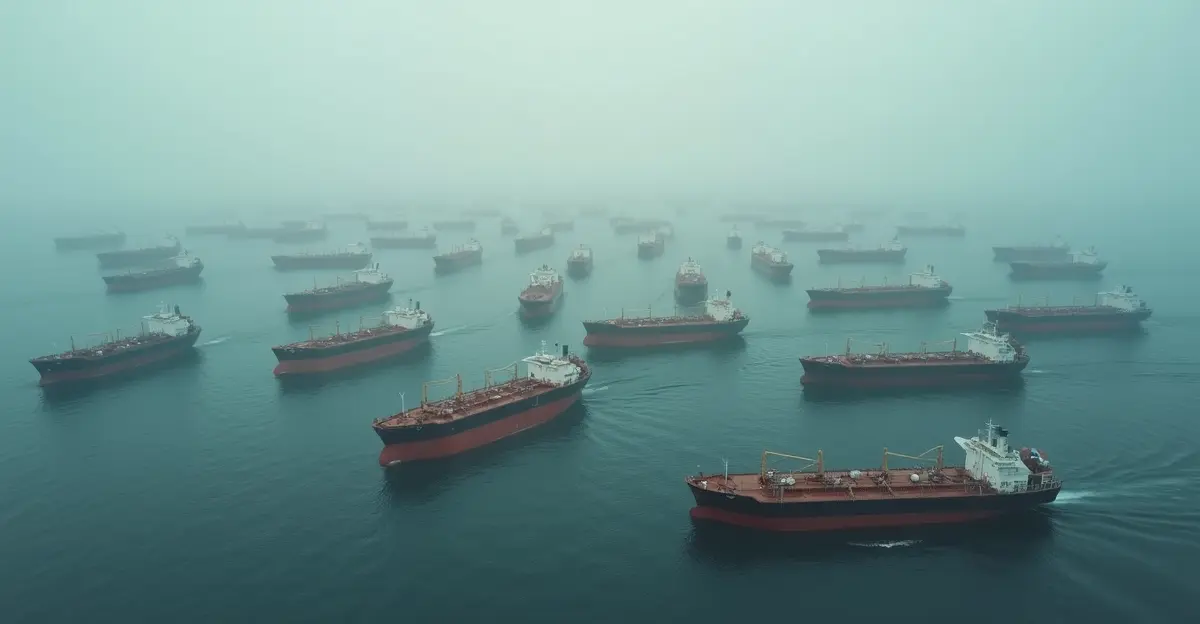
The Strait of Hormuz is a narrow waterway between Iran and Oman, connecting the Persian Gulf to the Gulf of Oman and the open ocean. Before the 2026 crisis, approximately 20% of the world's oil and 25% of seaborne liquefied natural gas (LNG) passed through this 21-mile-wide channel daily. For Gulf states including Saudi Arabia, Iraq, Kuwait, the UAE, and Qatar, the strait is the only maritime route for energy exports. The strategic importance of maritime chokepoints has long been recognized, but the scale of the current disruption is unprecedented. Average daily vessel transits collapsed by 95% between February and March 2026 — from 129 vessels per day to just six, according to UNCTAD data.
Macroeconomic Fallout: Trade, Growth, and Inflation
Trade Collapse and Growth Slowdown
UNCTAD warns that global merchandise trade growth will decelerate sharply in 2026. The 1.5%–2.5% forecast represents a dramatic slowdown from the 4.7% growth recorded in 2025. Global GDP growth is projected at 2.6%, with developing economies growing at 4.1% and developed markets at just 1.5%. The Dallas Federal Reserve estimates that a one-quarter closure of the strait would lower global GDP growth by 2.9 percentage points. The IMF World Economic Outlook April 2026 confirms that the global economy is now operating in the shadow of the Hormuz disruption, with renewed inflationary pressures and slowing growth.
Energy Prices and Inflation
Brent crude oil prices averaged $103 per barrel in March 2026 and are expected to peak in the second quarter at $115/b before easing, according to the U.S. Energy Information Administration (EIA). However, spot prices briefly exceeded $138/b in late March as Iran intensified attacks on Gulf energy infrastructure. Natural gas costs rose 24% in March alone. The shock is three to five times larger than the 1973 oil embargo, removing nearly 20% of global oil supply. Dirty tanker rates reached 188 and clean tanker rates climbed to 215 (indexed to February 27 = 100), according to UNCTAD.
Developing Economies: The Frontline of the Crisis
Developing countries are bearing the brunt of the disruption. Currency depreciation against the U.S. dollar is spreading across Africa, Latin America, the Caribbean, Asia, and Oceania. Higher energy import costs are widening current account deficits and depleting foreign exchange reserves. Around 3.4 billion people live in countries already spending more on debt servicing than on health or education, leaving little fiscal space to absorb these shocks. The World Bank debt sustainability framework shows that 22 low-income Sub-Saharan African countries are already in or at high risk of debt distress. UNCTAD warns that if disruptions persist, the situation could evolve into a cascading sovereign debt crisis.
Food Security at Risk
Beyond energy, 34% of globally traded urea and 23% of ammonia — key fertilizer inputs — also pass through the Strait of Hormuz. The Food and Agriculture Organization (FAO) warns that the closure could trigger a severe agrifood shock within six to 12 months, threatening food security for 1.07 billion people. Countries such as Jordan (projected GDP loss of 6.35%), Lebanon (6.14%), and Singapore (5.44%) face the largest economic contractions under modeled scenarios. The FAO food price index projections indicate that decisions on fertilizer use, imports, and crop choices made now will determine whether food prices spike later in 2026 or early 2027.
Geopolitical and Financial System Implications
The crisis is accelerating the largest European rearmament since the Cold War, with NATO setting a new 3.5% GDP defense spending benchmark. The U.S. temporarily lifted Iranian oil sanctions to ensure market functioning, while maritime routes present greater risks and costs. Alternative supply corridors are being explored, including Saudi Arabia's East-West Pipeline (Petroline, capacity 5 million b/d), the UAE's Habshan-Fujairah Pipeline (ADCOP, 1.8 million b/d), and the Iraq-Turkey (Kirkuk-Ceyhan) Pipeline. However, none fully replace Hormuz's capacity. The India-Middle East-Europe Economic Corridor (IMEC) is still in development. The Cape of Good Hope detour adds 10–14 days to voyages, increasing shipping costs and emissions.
Expert Perspectives
"What began as a disruption in a key energy corridor is now feeding through the entire global economy," said Rebeca Grynspan, Secretary-General of UNCTAD. "Developing countries are most exposed, facing higher import costs, weaker currencies, tighter financial conditions, and increased risks to food security. If disruptions persist, the situation could evolve into a cascading crisis." The IMF's April 2026 World Economic Outlook emphasizes that policies need to be agile, carefully manage trade-offs involved in ramping up defense spending, and lay the foundation for a sustained recovery.
FAQ
What caused the Strait of Hormuz closure in 2026?
The closure resulted from the 2026 Iran war, during which Iran effectively shut the strait to most commercial traffic while allowing selective transits for allied vessels. Military operations and mining of the waterway made passage unsafe.
How much oil passes through the Strait of Hormuz?
Before the crisis, approximately 20% of the world's oil (about 17 million barrels per day) and 25% of global LNG passed through the strait. The disruption has removed over 10 million barrels per day from global supply.
What are the main alternatives to the Strait of Hormuz?
Key alternatives include Saudi Arabia's East-West Pipeline (Petroline), the UAE's Habshan-Fujairah Pipeline (ADCOP), the Iraq-Turkey Pipeline, and the Cape of Good Hope detour. However, none can fully replace the strait's capacity.
How long will the economic impact last?
UNCTAD projects that if the disruption persists through mid-2026, trade growth will remain below 2.5% for the year. The FAO warns of a potential food price crisis within 6–12 months. Recovery depends on the resumption of safe passage and policy responses.
Which countries are most affected?
Developing economies are hardest hit. Jordan, Lebanon, and Singapore face the largest projected GDP losses. Countries heavily reliant on energy imports and those already in debt distress are most vulnerable.
Conclusion: A Turning Point for Global Energy Security
The Strait of Hormuz crisis of 2026 has exposed the profound vulnerability of a global economy built on concentrated energy chokepoints. The disruption is accelerating investments in renewable energy, supply chain diversification, and alternative transport routes. As UNCTAD and the IMF urge coordinated policy responses, the crisis may ultimately serve as a catalyst for a more resilient and decentralized global energy system. However, for the millions facing higher food and fuel prices in 2026, the immediate future remains deeply uncertain.





Follow Discussion