


 Deutsch
 English
 Español
 Français
 Nederlands
 Português


 Share
Share




The India–Middle East–Europe Economic Corridor (IMEC), launched at the 2023 G20 Summit in New Delhi, is emerging in 2026 as the most ambitious geopolitical infrastructure project of the decade. With construction beginning in April 2025, a landmark India-EU free trade agreement signed in January 2026, and Gulf railway networks advancing, the corridor promises 40% faster transit times and 30% lower logistics costs between India and Europe. However, the Jordan-Israel connectivity gap, funding shortfalls exceeding $20 billion, and regional instability from Gaza to Yemen mean full operational maturity remains 15 to 20 years away. This article analyzes whether IMEC can truly decouple global trade from Suez Canal chokepoints or whether it remains a high-risk strategic vision.
What Is IMEC and Why Does It Matter Now?
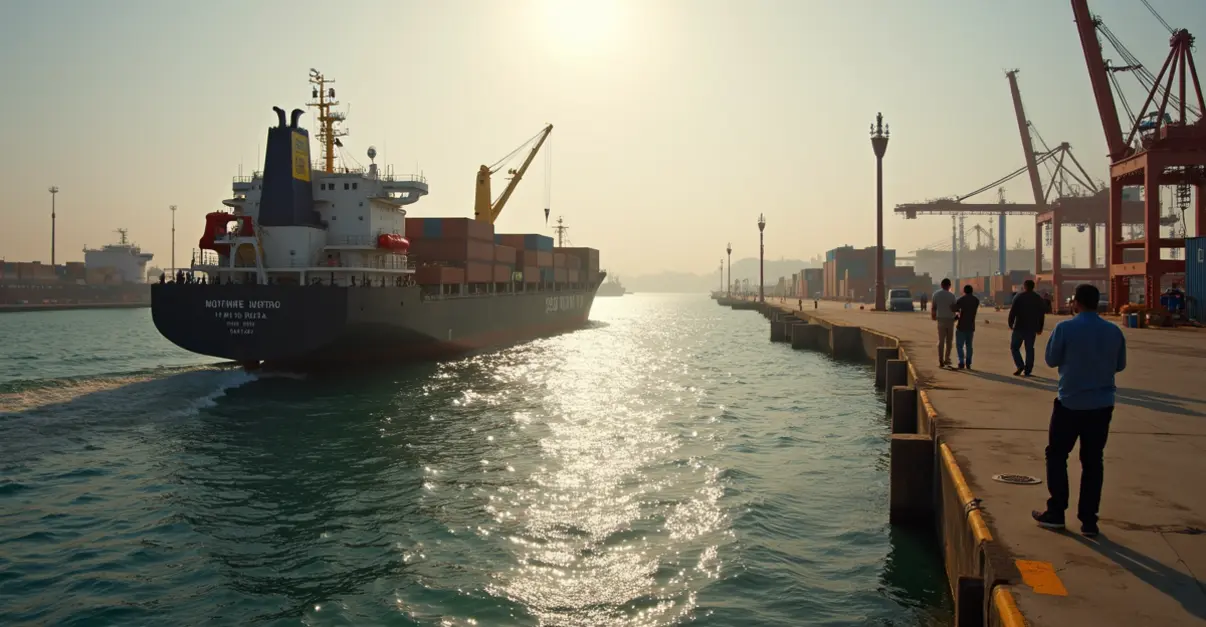
The India–Middle East–Europe Economic Corridor is a planned multimodal trade route connecting India's west coast ports (Mundra, JNPT) via the Arabian Sea to the UAE, then overland by rail through Saudi Arabia, Jordan, and Israel to Mediterranean ports, and onward by sea to European terminals such as Piraeus, Trieste, or Marseille. The corridor includes not only transportation infrastructure but also energy grids for green hydrogen and digital fiber-optic cables. The geopolitical significance of IMEC lies in its positioning as a Western-backed alternative to China's Belt and Road Initiative (BRI), emphasizing transparency, sustainability, and multilateral governance.
As of early 2026, the project has moved from memorandum to active construction. The India-EU Free Trade Agreement, concluded on 27 January 2026 in New Delhi, creates a free trade zone covering 2 billion people and roughly a quarter of global GDP, with phased tariff liberalization covering over 90% of traded goods. This deal provides the commercial underpinning for IMEC's viability. Meanwhile, the GCC Railway — particularly Etihad Rail in the UAE and the Hafeet Rail linking UAE to Oman — is operational for freight since 2023, with passenger services rolling out in 2026.
The Strategic Case: Bypassing Suez Chokepoints
Red Sea Crisis Accelerates Corridor Demand
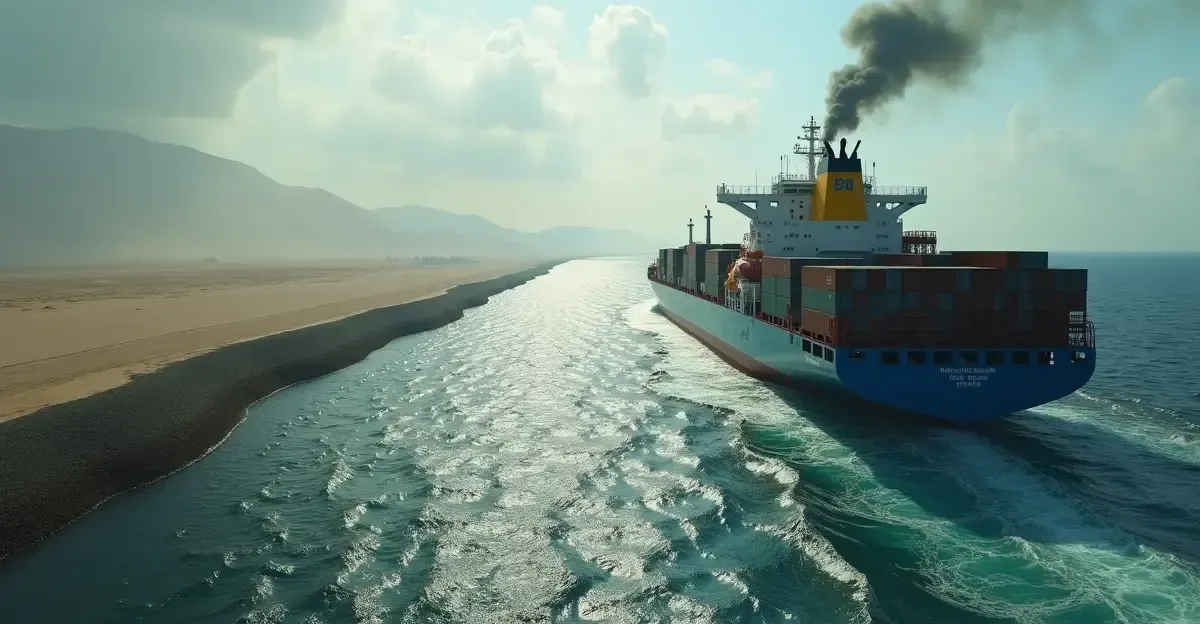
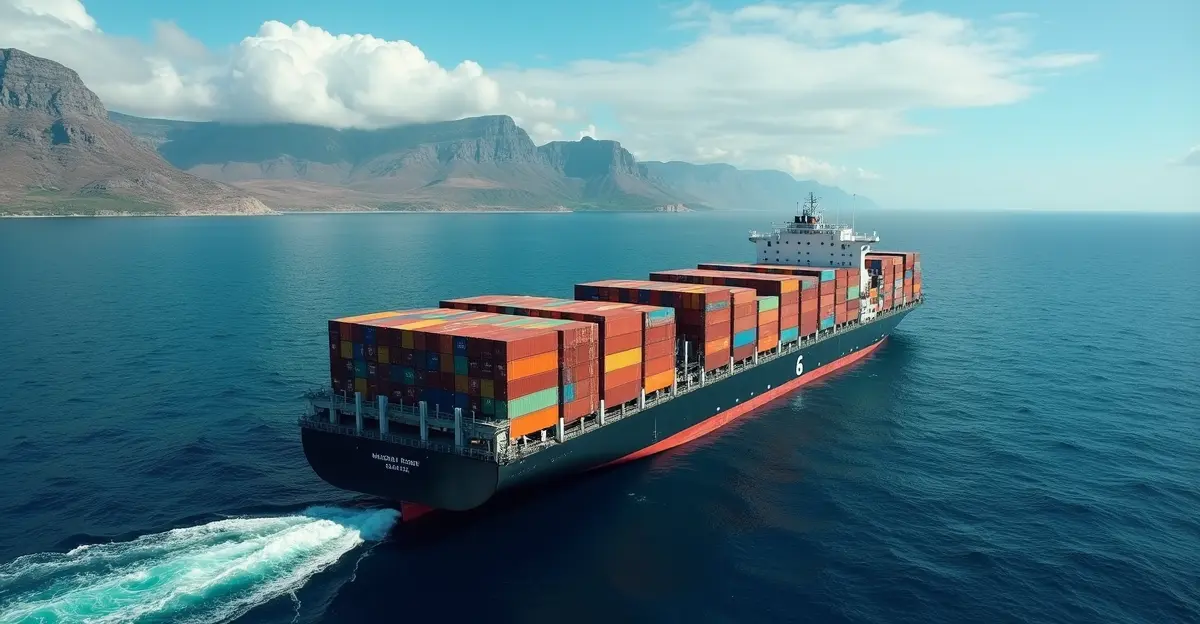
The Houthi attacks on Red Sea shipping that began in late 2023 have fundamentally altered global trade calculus. By early 2024, Suez Canal trade volume dropped approximately 50% year-over-year, with annual canal revenue falling by an estimated two-thirds. Major shipping lines rerouted around Africa's Cape of Good Hope, adding roughly 3,200 nautical miles and about a week of transit time per voyage. As of 2026, many mainline services continue to plan for structural route variability. UNCTAD reports indicate that maritime trade growth stalled in 2025, with the Red Sea disruption cited as a primary factor.
IMEC offers a compelling alternative. According to Indian Commerce Minister Piyush Goyal, the corridor is expected to reduce logistics costs by up to 30% and cut transportation time by 40%. By integrating India's west coast ports with the GCC rail network, IMEC bypasses Suez Canal delays entirely, cutting 7–10 days off transit times between Asia and Europe. The corridor also provides strategic de-risking for global supply chains, reducing single-route vulnerabilities and enabling faster capital cycles.
Tariff Volatility and the Search for Alternatives
The World Economic Forum ranks geoeconomic confrontation as the top global risk for 2026. US tariffs have increased sixfold under the new administration, and an estimated 85% of global trade now bypasses the United States. Supply chains are rewiring via bilateral deals and regional corridors like IMEC. This tariff-driven supply chain transformation is accelerating the search for alternative trade routes, making IMEC's value proposition even more urgent for European and Asian businesses seeking predictability.
The Hard Reality: Funding, Geography, and Politics
The $20 Billion Funding Gap
Despite its strategic appeal, IMEC faces a significant financing shortfall. The Atlantic Council estimates a financing gap of approximately $5 billion concentrated in Jordan, Israel, and Saudi Arabia, while broader infrastructure costs — including the GCC Railway's estimated $250 billion price tag — push the total unfunded requirement well beyond $20 billion. The project currently lacks a detailed overarching funding plan or concrete implementation mechanism. The World Bank has not yet committed major financing, and private sector participation remains contingent on risk mitigation guarantees.
The Jordan-Israel Bottleneck
The most politically sensitive segment of IMEC is the land link between Saudi Arabia and Israel via Jordan. A standard-gauge railway connecting Saudi Arabia's north-south railway at Al-Haditha to the Jezreel Valley tracks at Beit She'an in Israel represents the backbone of IMEC's transportation component. However, as of mid-2026, this segment remains stalled with no progress due to the ongoing Gaza conflict, funding gaps, and the absence of Jordanian rail infrastructure. The N7 Initiative, which facilitates dialogue in support of the project, acknowledges that this link is both the hinge and the bottleneck for the entire corridor.
Regional instability extends beyond Jordan. The Houthi threat in Yemen, tensions between Iran and Gulf states, and the unresolved Israeli-Palestinian conflict create a volatile security environment that complicates construction timelines and insurance costs. The Middle East security dynamics affecting trade corridors remain the single greatest risk factor for IMEC's completion.
IMEC vs. BRI: A Data War for Global Trade
By mid-2026, the competition between IMEC and China's Belt and Road Initiative has evolved from diplomatic friction into a full-scale data war. Every nautical mile, every rail gauge, and every undersea cable is now a battleground for the future of global connectivity. While the BRI benefits from a decade-long head start and Chinese state financing, IMEC emphasizes collaborative funding, financial transparency, and adherence to international norms.
Chinese analysts have criticized IMEC for its organizational fragility, lack of developing country focus, overreliance on maritime transport, and exclusion of Iran and Turkey. Turkish President Recep Tayyip Erdogan has vowed an alternative route — the Iraq-Europe Development Road Project — connecting the Persian Gulf to Europe via Iraq. Nevertheless, IMEC's backers argue that its multilateral governance structure and sustainability focus make it more resilient in the long term.
Expert Perspectives on IMEC's Timeline
Most analysts project full IMEC operational maturity only between 2040 and 2050, implying a 15- to 20-year horizon. The EUISS Brief (2024-10) moves 'from hype to horizon,' examining IMEC's feasibility and recommending that European stakeholders invest in policy coordination now to turn the ambitious vision into a sustainable reality. The Atlantic Council recommends that the US leverage its convening power and establish a central coordinating body with ministerial-level components and technical working groups to overcome regulatory uncertainty and political risks.
"IMEC is not a short-term fix but a generational infrastructure bet," notes a senior analyst at the Middle East Institute. "The corridor's success depends on sustained political will across multiple administrations and the resolution of conflicts that have plagued the Middle East for decades."
FAQ: IMEC Explained
What is IMEC?
IMEC stands for the India–Middle East–Europe Economic Corridor, a planned multimodal trade route connecting India to Europe via the UAE, Saudi Arabia, Jordan, Israel, and Greece, including rail, maritime, energy, and digital infrastructure.
How is IMEC different from China's Belt and Road Initiative?
IMEC emphasizes multilateral governance, transparency, sustainability, and private-sector participation, whereas BRI is primarily Chinese state-financed and bilateral. IMEC also focuses on a rail-maritime hybrid model rather than BRI's overland focus.
When will IMEC be fully operational?
Most experts estimate full operational maturity between 2040 and 2050, though partial segments — such as the UAE-India maritime link and Gulf rail connections — could be operational sooner.
What are the main obstacles to IMEC?
The key obstacles include the Jordan-Israel connectivity gap, funding shortfalls exceeding $20 billion, regional instability (Gaza, Yemen, Iran tensions), and the need for harmonized trade standards across multiple jurisdictions.
How will IMEC affect global shipping costs?
IMEC promises 40% faster transit times and 30% lower logistics costs between India and Europe compared to current Suez Canal routes, potentially saving $5.4 billion annually in transshipment costs.
Conclusion: A Vision Worth the Gamble?
IMEC represents the most ambitious attempt to reshape Eurasian trade since the Suez Canal itself. The future of Eurasian trade corridors will depend on whether the corridor's backers can bridge the gap between geopolitical vision and on-the-ground reality. With construction underway, a new India-EU trade deal in place, and global supply chains desperate for alternatives to chokepoint-dependent routes, the strategic case for IMEC has never been stronger. But the funding gaps, political risks, and 15- to 20-year timeline mean that IMEC remains a high-risk, high-reward gamble — one that could either decouple global trade from Suez Canal vulnerabilities or become a monument to overambitious geopolitical planning.


Follow Discussion