


 Deutsch
 English
 Español
 Français
 Nederlands
 Português


 Share
Share




The near-complete closure of the Strait of Hormuz in early 2026, following the outbreak of military conflict between the United States, Israel, and Iran, has triggered the largest energy market disruption in history. Removing roughly 20% of global oil supply from the market — three to five times larger than any previous geopolitical oil shock — the crisis has sent Brent crude surging 65% in weeks, halved global merchandise trade growth projections, and placed developing economies under cascading currency, food, and debt pressures. As of March 2026, this remains the defining global economic and geopolitical event of the year, with oil prices still volatile amid ongoing negotiations and military tensions.
Context: The World's Most Critical Energy Chokepoint
The Strait of Hormuz is a narrow waterway between Iran and Oman, connecting the Persian Gulf to the Gulf of Oman and the open ocean. At its narrowest point, the strait is just 24 miles wide, yet it carries an extraordinary share of global energy trade. During 2023–2025, approximately 25% of the world's seaborne oil and 20% of its liquefied natural gas (LNG) passed through the strait annually — roughly 20 million barrels of oil per day. The waterway is the only maritime route for major producers including Saudi Arabia, Iraq, Kuwait, Qatar, Bahrain, and the UAE, making it indispensable for global energy supply.
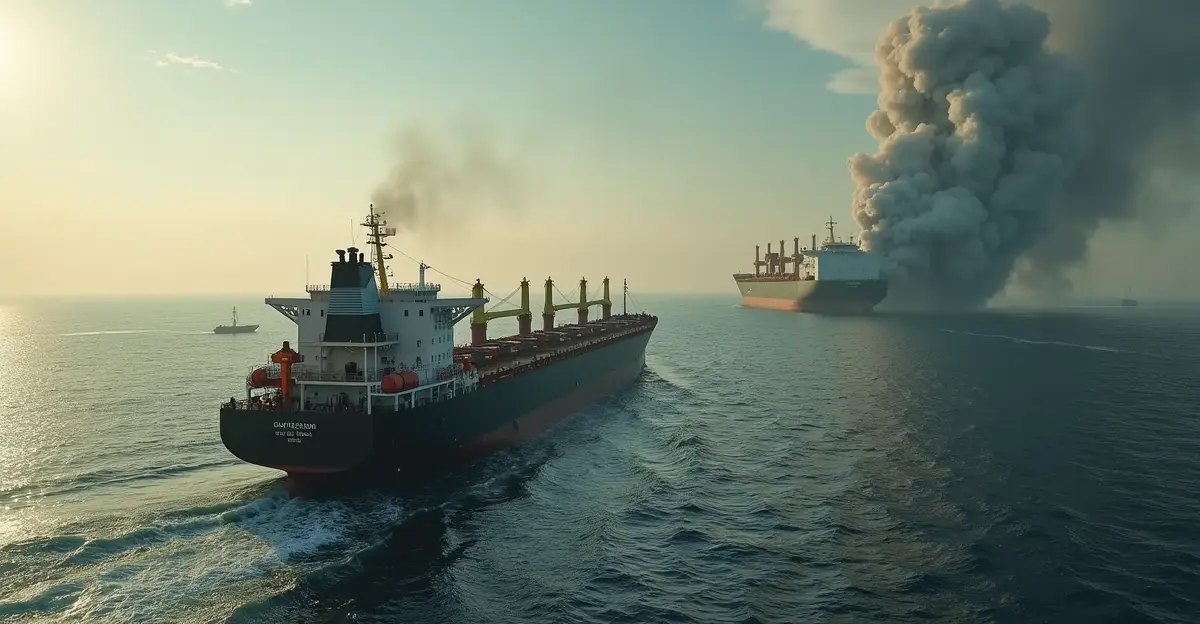
On February 28, 2026, the United States and Israel launched airstrikes against Iranian military targets, including the assassination of Supreme Leader Ali Khamenei. In retaliation, Iran's Islamic Revolutionary Guard Corps (IRGC) effectively closed the Strait of Hormuz, issuing passage warnings, attacking merchant ships, laying sea mines, and blocking vessels. Tanker traffic plummeted from roughly 130 ships per day to near zero. The 2026 Iran war ceasefire negotiations that followed have been fragile, with multiple violations and stop-start talks in Islamabad.
Unprecedented Scale of Disruption
The Dallas Federal Reserve, in a March 2026 analysis, emphasized that this disruption is three to five times larger than any previous geopolitical oil shock. Historical events such as the 1973 Yom Kippur War, the 1979 Iranian Revolution, and the 1990 Gulf War each removed 4–6% of global supply. The Strait closure removes nearly 20% — approximately 10–15 million barrels per day lost from the market. The International Energy Agency (IEA) called it the most severe oil supply shock in history and recommended releasing 400 million barrels of emergency reserves, the largest such move in IEA history.
Oil Price Surge and Volatility
Brent crude, which traded around $61 per barrel before the conflict, surged to a peak of $138 per barrel in early March before settling near $119. The World Bank projects Brent averaging $86 per barrel in 2026 if the conflict resolves by May, but warns prices could reach $95–$115 per barrel if disruptions persist. The Dallas Fed models multiple scenarios: a one-quarter closure would push WTI to $98 per barrel, a two-quarter closure to $115, and a three-quarter closure to $132 per barrel. Even after reopening, GDP levels would remain below pre-closure baselines for years.
Global Trade and Economic Growth at Risk
The economic fallout extends far beyond energy markets. UN Trade and Development (UNCTAD) reports that global merchandise trade growth is projected to decelerate from 4.7% in 2025 to between 1.5% and 2.5% in 2026 — potentially halving. Global GDP growth is expected to slow from 2.9% to 2.6%, with the IMF warning it could fall to 2% under a severe scenario. The Dallas Fed estimates that a one-quarter closure would lower annualized global GDP growth by 2.9 percentage points in Q2 2026.
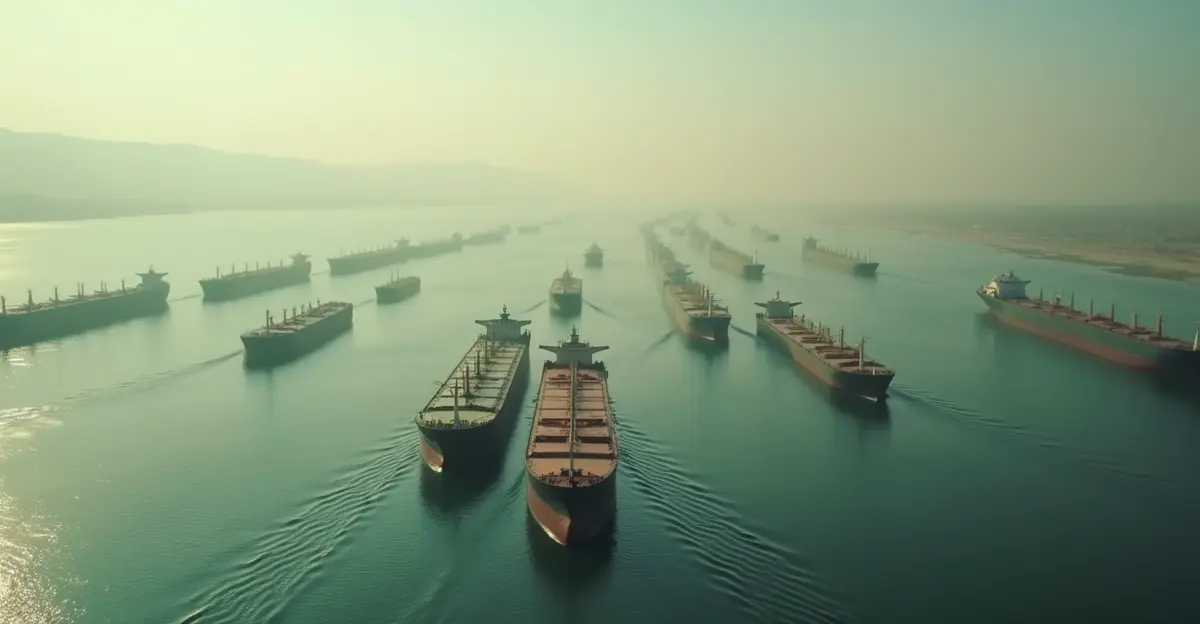
Shipping costs have skyrocketed. War-risk insurance premiums for vessels in the region have surged, and Iran has imposed transit fees of up to $2 million per vessel. Approximately 20,000 mariners and 2,000 ships were stranded in the Persian Gulf at the height of the crisis. The physical backlog of ~172 million barrels of oil stranded on 187 tankers means that even if the strait reopens, full restoration of flows will take 3–4 months.
The global supply chain resilience debate has been reignited, as the crisis exposes the fragility of just-in-time energy logistics and the concentration of production in a single chokepoint.
Disproportionate Impact on Developing Economies
Developing countries are bearing the brunt of the crisis. Asia, which receives about 80% of Gulf oil exports, is the most vulnerable region. China has halted fuel exports, South Korea imposed price caps for the first time in 30 years, and Bangladesh shut universities to conserve power. Inflation has spiked across the region: Laos saw inflation rise from 6.2% to over 10%, and Pakistan from 7.3% to 10.9%. Several currencies have weakened sharply against the US dollar.
Food Security Crisis Looms
The crisis is also threatening global food security. The Strait of Hormuz is a critical route for fertilizer trade — about one-third of global seaborne fertilizer passes through it. Urea prices have surged from $400–$490 per metric ton before the war to around $700, and by April 2026 had reached $850 per metric ton — an 80% increase since February. The World Bank's fertilizer price index rose over 12% in Q1 2026, its highest since October 2022. Unlike potash or phosphates, nitrogen fertilizers like urea are essential annually for crop growth, meaning reduced crop yields from nitrogen deficits could materialize later in 2026, driving up grocery prices globally. Countries including India and East African nations face the highest exposure to shortages and food inflation.
The International Labour Organization (ILO) warns that if oil prices remain 50% above early-2026 averages, up to 38 million full-time jobs could be lost by 2027, with real labor incomes declining by $3 trillion. Remittance flows to labor-sending countries in Asia are weakening as Gulf economies contract.
Alternative Routes and Strategic Reassessment
The crisis has forced a strategic reassessment of energy security and supply chain resilience. Saudi Arabia's East-West Pipeline (Petroline), running 750 miles from Abqaiq to Yanbu on the Red Sea, has a design capacity of 7 million barrels per day and is being pushed to full capacity. The UAE's Abu Dhabi Crude Oil Pipeline (ADCOP/Habshan–Fujairah) has a capacity of 1.5–1.8 million barrels per day. However, their combined capacity of up to 5.5 million barrels per day falls far short of the 20 million barrels that transited the strait daily. Moreover, these pipelines have also come under Iranian attack.
Countries like Iraq, Kuwait, Qatar, and Bahrain remain heavily dependent on the waterway, with no viable pipeline alternatives. The crisis has shifted cost-benefit analyses, accelerating investments in permanent bypass routes and long-term infrastructure diversification, though building such networked alternatives requires massive investment, time, and security guarantees. The energy transition acceleration is also being discussed as a long-term solution to reduce dependence on fossil fuel chokepoints.
Expert Perspectives
"This is the first time the Strait of Hormuz has been closed for an extended period," noted analysts at the Dallas Federal Reserve. "The disruption is three to five times larger than any previous geopolitical oil shock, and the economic consequences will be felt for years."
"The Strait of Hormuz disruption is deepening global economic strain across trade, prices, and finance," warned UNCTAD in a May 2026 report. "Developing countries are most exposed, facing higher energy import costs, weaker currencies, tighter financial conditions, and increased risks to food security."
"If oil prices remain elevated, up to 38 million full-time jobs could be lost by 2027," cautioned the ILO, highlighting the human cost of the crisis.
Frequently Asked Questions
What caused the Strait of Hormuz closure in 2026?
The closure followed US-Israeli airstrikes on Iranian military targets on February 28, 2026, which killed Iran's Supreme Leader. In retaliation, Iran's IRGC blocked the strait by mining the waterway, attacking vessels, and issuing passage warnings, effectively shutting it to commercial traffic.
How much oil passes through the Strait of Hormuz daily?
Before the crisis, approximately 20 million barrels of oil per day — about 25% of global seaborne oil trade — passed through the strait, along with 20% of the world's LNG.
How high did oil prices go?
Brent crude surged from around $61 per barrel before the conflict to a peak of $138 per barrel in early March 2026. Prices have since fluctuated between $90 and $120 depending on ceasefire developments.
What are the alternative routes to bypass the Strait of Hormuz?
Saudi Arabia's East-West Pipeline (Petroline) and the UAE's ADCOP pipeline provide limited bypass capacity of about 5.5 million barrels per day combined, far short of the 20 million barrels that transited the strait. These routes have also faced attack risks.
How long will the economic impact last?
The Dallas Fed estimates that even after reopening, GDP levels will remain below pre-closure baselines for years. A one-quarter closure could lower global GDP growth by 2.9 percentage points, while a prolonged closure could push oil prices above $130 per barrel and cause lasting economic damage.
Conclusion and Future Outlook
The Strait of Hormuz crisis of 2026 represents a watershed moment for global energy security and trade. The unprecedented scale of the disruption — removing 20% of global oil supply — has exposed the vulnerability of the world's energy architecture to a single chokepoint. While fragile ceasefire negotiations continue in Islamabad, the physical backlog of stranded tankers and damaged infrastructure means recovery will take months even under the best-case scenario. The crisis is accelerating the global energy transition, with the US leveraging its energy independence and new security frameworks being created for critical minerals. However, for developing economies already facing currency, food, and debt pressures, the immediate outlook remains dire. The future of global trade governance will likely be shaped by the lessons learned from this crisis, as nations seek to build more resilient and diversified supply chains.
Follow Discussion