


 Deutsch
 English
 Español
 Français
 Nederlands
 Português


 Share
Share




The 2026 Strait of Hormuz disruption has emerged as the defining strategic shock of the year, halting roughly 20% of global oil and LNG supply and sending Brent crude above $115 per barrel. Triggered by the US-Israeli air war against Iran on February 28, 2026, the crisis has forced the largest emergency reserve release in the history of the International Energy Agency (IEA) and is now fundamentally reshaping global trade, financial systems, and energy security policy.
What Is the 2026 Strait of Hormuz Crisis?
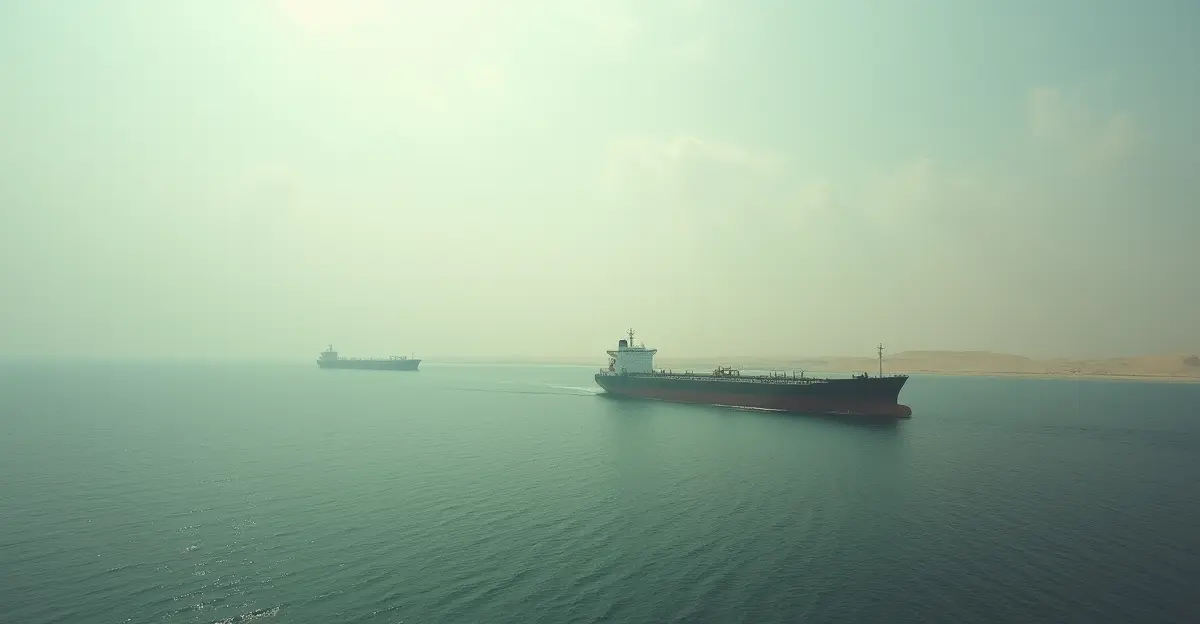
The Strait of Hormuz is a narrow maritime chokepoint connecting the Persian Gulf to the Gulf of Oman, through which approximately 20 million barrels of oil and petroleum products pass daily — roughly 20% of global seaborne petroleum. On February 28, 2026, Iran blocked shipping through the strait in retaliation for a US-Israeli air war and the assassination of Supreme Leader Ali Khamenei. The Islamic Revolutionary Guard Corps (IRGC) attacked merchant ships, laid sea mines, and issued warnings forbidding passage. Tanker traffic initially dropped by 70%, then fell to nearly zero. By March 2026, ship transit through the strait had collapsed by 95%, dropping from an average of 129 ships daily in February to just 6 per day, according to a UNCTAD rapid assessment published on April 1.
Energy Market Fallout: Prices, Reserves, and Supply Chains
Oil Prices Surge Past $115
Brent crude oil prices surged past $100 per barrel within days of the blockade, reaching $126 at their peak — the largest disruption to world energy supply since the 1970s. The U.S. Energy Information Administration (EIA) forecast Brent crude averaging $115 per barrel in Q2 2026, with restricted flows forcing major producers — including Iraq, Saudi Arabia, Kuwait, UAE, Qatar, and Bahrain — to shut in 7.5 million barrels per day (b/d) in March, rising to 9.1 million b/d in April. U.S. gasoline prices averaged above $4.50 per gallon, while diesel exceeded $5.80 per gallon.
Largest IEA Emergency Reserve Release in History
On March 11, 2026, IEA member countries announced a collective action to make 400 million barrels of oil available to global markets — the largest emergency collective action in the agency's history. The regional breakdown shows the Americas contributing 172.2 million barrels (primarily from U.S. strategic petroleum reserves), Asia Oceania 108.6 million barrels, and Europe 107.5 million barrels. However, experts question whether this release will be sufficient. Former IMF economist Olivier Blanchard warned that oil prices could remain very high for an extended period, as the release is distributed over weeks or months and does not address the root cause: the strait's closure.
Supply Chain Disruption and Trade Collapse
UNCTAD's Trade and Development Foresights 2026 report identifies the Strait of Hormuz crisis as the primary risk shifting global growth from 2.9% to 2.6%, with merchandise trade growth collapsing from 4.7% in 2025 to as low as 1.5% in 2026. Developing economies are hit hardest: currencies have weakened across Africa (2.9%), Latin America (2.3%), and Asia (1.0%), while 3.4 billion people in 46 countries already spend more on debt servicing than on health or education. The global trade slowdown is exacerbated by soaring freight costs and fertilizer shortages that threaten food production in vulnerable regions.
Naval Confrontation: Operation Project Freedom
The United States launched Operation Project Freedom on May 4, 2026, to escort merchant ships through the Strait of Hormuz. Prior to the operation, U.S. forces dropped bunker-buster bombs on Iranian anti-ship missile sites, sank 16 Iranian minelayers, and destroyed over 150 Iranian naval vessels. The operation initially saw U.S. destroyers, over 100 aircraft, and 15,000 service members deployed. On the first day, Iran claimed its navy hit a U.S. warship with missiles near Jask, though the U.S. denied this. CENTCOM confirmed that two U.S.-flagged merchant vessels successfully transited the strait under a layered defensive umbrella, with U.S. forces intercepting cruise missiles, drones, and small boat attacks, destroying six Iranian boats. However, Saudi Arabia denied the U.S. access to its airspace and bases, fearing escalation. The naval escalation in the Gulf remains a flashpoint for broader regional conflict.
Impact on Asian Import-Dependent Economies
India's Diversification Strategy
India, which consumes about 5.5 million barrels of crude oil daily, has intensified energy security measures. The government introduced temporary customs duty exemptions on critical petrochemical imports until June 30, 2026, and has diversified imports from approximately 40 countries, with 70% now routed through alternative maritime routes. Domestic LPG production has been increased by 25%, and the government approved INR 300 billion in compensation for LPG under-recoveries. India has 28 vessels and 778 seafarers in the Persian Gulf under 24-hour monitoring. The India energy security response highlights the broader vulnerability of Asian economies to chokepoint disruptions.
China's Strategic Reserves
China holds 1,541 million barrels in strategic oil reserves — 3.7 times the U.S. level of 413 million barrels — positioning it relatively well for supply emergencies. However, China remains heavily dependent on Middle Eastern crude, and the crisis has accelerated its push for alternative supply routes and renewable energy investment.
Strategic Realignment: The Post-2026 Geopolitical Order
The crisis is forcing a structural reconfiguration of global supply chains. Alternative pipeline routes can offset only about 35% of lost volumes through the strait. The 54-country FORGE alliance for critical minerals security has been catalyzed by the crisis, reflecting a broader shift toward resource nationalism and supply chain resilience. The energy security policy realignment is driving accelerated investment in renewable energy, with UNCTAD calling for emergency financing, debt relief, and central bank swaps to prevent a cascading crisis across energy, trade, and finance.
Expert Perspectives
This is a watershed moment for global energy security. The Strait of Hormuz crisis has exposed the fragility of our fossil fuel-dependent system and will accelerate the transition to diversified energy sources and strategic autonomy, said Dr. Fatima Al-Sayed, a geopolitical risk analyst at the Gulf Research Center. The IEA release is a band-aid on a bullet wound. Without reopening the strait, we face sustained high prices and potential economic recession in developing nations, warned Olivier Blanchard, former chief economist of the IMF.
Frequently Asked Questions
What caused the 2026 Strait of Hormuz crisis?
The crisis began on February 28, 2026, when Iran blocked shipping through the Strait of Hormuz in retaliation for a US-Israeli air war and the assassination of Supreme Leader Ali Khamenei. The IRGC attacked merchant ships, laid sea mines, and issued warnings forbidding passage.
How much oil passes through the Strait of Hormuz daily?
Approximately 20 million barrels of oil and petroleum products pass through the strait daily, representing roughly 20% of global seaborne petroleum and about a quarter of the world's seaborne oil trade.
What was the IEA's response to the crisis?
On March 11, 2026, IEA member countries announced a collective action to make 400 million barrels of oil available to global markets — the largest emergency collective action in the agency's history, with the U.S. contributing 172 million barrels.
How has the crisis affected global trade growth?
UNCTAD projects world merchandise trade growth will fall from 4.7% in 2025 to between 1.5% and 2.5% in 2026, with developing economies hit hardest by currency weakening, fertilizer shortages, and debt crises.
What is Operation Project Freedom?
Operation Project Freedom is a U.S. military operation launched on May 4, 2026, to escort merchant ships through the Strait of Hormuz. It involves destroyers, aircraft, and thousands of service members providing a defensive umbrella against Iranian attacks.
Conclusion: A Defining Shock for the Post-2026 Order
The Strait of Hormuz crisis of 2026 is not merely an energy price shock — it is a structural transformation of global trade and security. The future of global trade governance will be shaped by the lessons of this crisis, as nations race to diversify energy sources, build strategic reserves, and forge new alliances to protect critical supply chains. The post-2026 geopolitical order will be defined by the response to this watershed moment.

Follow Discussion