


 Deutsch
 English
 Español
 Français
 Nederlands
 Português


 Share
Share




The Largest Oil Supply Disruption in History
The February 2026 closure of the Strait of Hormuz triggered the largest oil supply disruption in history, with Brent crude spiking to $126 per barrel and LNG exports from Qatar and the UAE collapsing. Global merchandise trade growth is projected to fall to as low as 1.5%, while developing economies face currency weakening, food insecurity for up to 45 million additional people, and a potential loss of $3 trillion in labor income by 2027. This article analyzes the strategic paradox at the heart of the crisis: high fossil fuel prices are accelerating renewable energy investment even as governments turn to short-term coal burning, revealing deep vulnerabilities in global energy architecture and the urgent need for diversified supply chains and accelerated clean energy deployment.
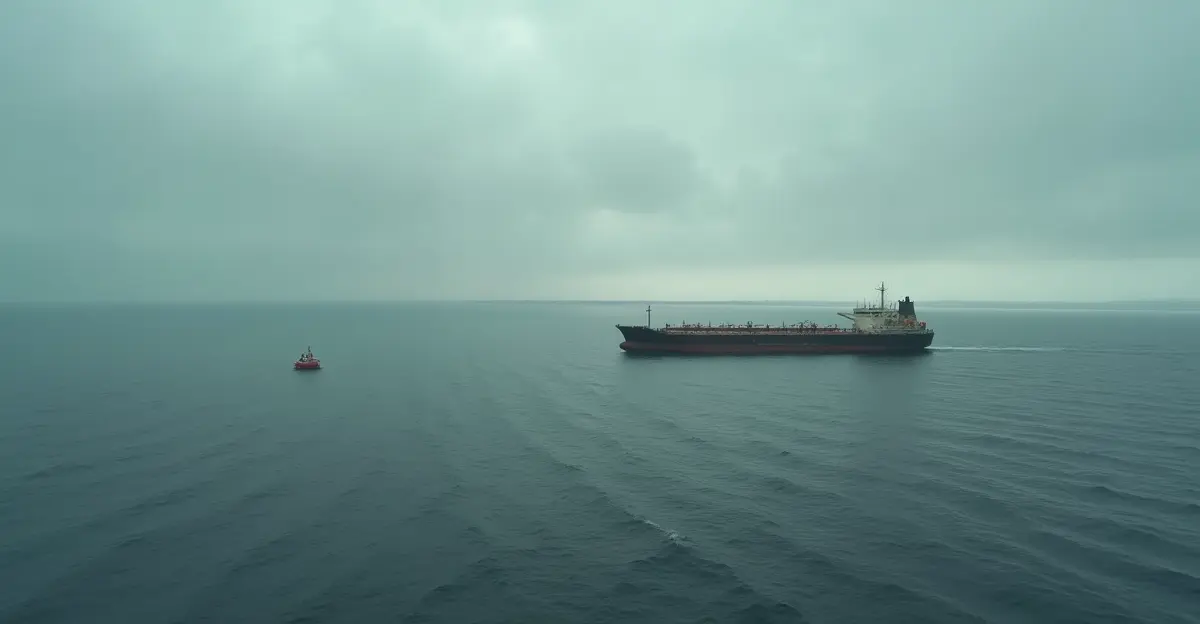
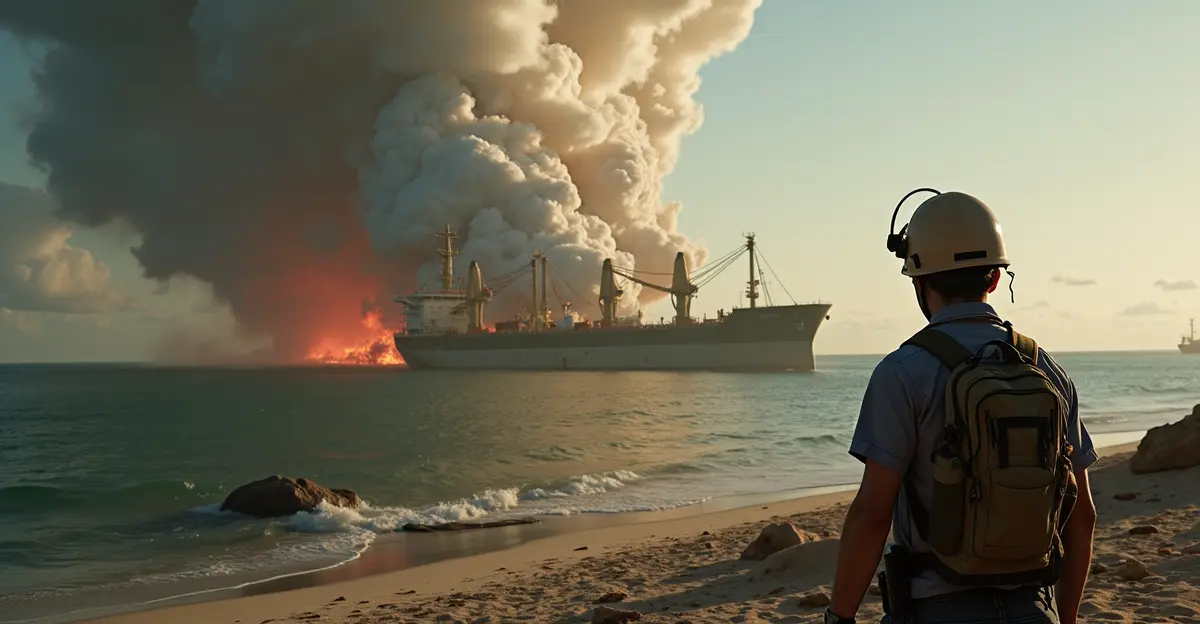
On February 28, 2026, Iran blocked the Strait of Hormuz in retaliation for a US-Israeli air war and the assassination of Supreme Leader Ali Khamenei. The IRGC boarded merchant ships, laid sea mines, and forbade passage. Tanker traffic dropped by about 70% initially and soon fell to near zero. By March, Brent crude oil prices surged 65% — the largest monthly increase ever — reaching $126 per barrel. The World Bank called it the largest oil market shock in history, with global oil supply crashing by 10.1 million barrels per day (mb/d) in March alone.
Context: The Strait of Hormuz as a Global Chokepoint
The Strait of Hormuz is a narrow sea passage between the Arabian Peninsula and Iran, connecting the Persian Gulf with the Gulf of Oman. At just 29 nautical miles wide at its narrowest point, it is one of the world's most critical oil transit chokepoints. In 2025, approximately 20 million barrels per day of crude oil and oil products transited the strait, representing around 25% of global seaborne oil trade. Additionally, nearly 20% of global LNG trade from Qatar and the UAE passed through. The bulk of this energy headed to Asian markets, with China, India, and Japan as the largest importers. Countries including Iran, Iraq, Kuwait, Qatar, and Bahrain relied almost entirely on the strait for their oil exports. Alternative pipeline routes — Saudi Arabia's East-West pipeline (3-5 mb/d spare capacity) and the UAE's ADCOP (~700 kb/d spare) — could offset at most 35% of lost volumes. The 2025 global energy trade was already under strain, but the Hormuz closure pushed it over the edge.
Main Analysis: The Economic Shockwaves
Oil and LNG Markets in Turmoil
By end of March, global oil output was expected to fall 6.6% year-on-year in Q2 2026, the steepest decline since COVID-19. Oil demand fell by 0.8 mb/d in March and was forecast to drop another 1.5 mb/d in Q2. The market faced a projected 3.7 mb/d deficit. Brent was projected to average $86/bbl in 2026, dropping to $70/bbl in 2027 if disruptions eased by year-end. However, if conflict escalated, prices could range from $95-$115/bbl. LNG markets were hit even harder: global LNG imports fell 10% in April 2026 to 31.5 million tons — the lowest since September 2023. Asia was hardest hit, with imports dropping 13% and inventories 24% below the previous year. Spot gas prices surged: TTF in Europe rose 58%, and Northeast Asian LNG prices climbed 94%. North American exports (US and Canada) offset roughly two-thirds of the shortfall, but the global LNG supply chain remained severely disrupted.
Global Trade and Growth Projections
UNCTAD's rapid assessment warned that ship transits collapsed by ~95% — from about 130 per day in February to just 6 in March. Global merchandise trade growth was projected to decelerate from 4.7% in 2025 to 1.5–2.5% in 2026, while global growth slowed from 2.9% to 2.6%. Financial pressures built rapidly: developing countries faced capital outflows, weaker currencies, and higher borrowing costs. Inflation surged across Asia — Lao PDR rose from 6.2% to over 10%, Pakistan from 7.3% to 10.9%. Several regional currencies weakened against the US dollar. The ILO warned that if oil prices remained 50% above early-2026 averages, global working hours could fall by 0.5% in 2026 and 1.1% in 2027 — equivalent to 14 million and 38 million full-time jobs. Real labour incomes could decline by $3 trillion globally by 2027, with Asia-Pacific and Arab states most exposed. In Myanmar, fuel prices tripled and one in four people became acutely food insecure.
Food Security Crisis
The disruption threatened global food security by choking the flow of fuel, natural gas, and fertilizers essential for the upcoming planting season. FAO Chief Economist Máximo Torero warned that 30-35% of crude oil, 20% of natural gas, and 20-30% of fertilizers were not moving through the critical waterway. While global food prices remained stable initially due to existing stocks and good harvests, FAO economists warned this buffer was temporary. Farmers facing higher costs and limited fertilizer access may reduce yields, potentially driving up food prices later in 2026. The UN warned that 45 million additional people could face extreme hunger if disruptions continued through midyear. Fertilizer prices rose 50%, compounding risks for import-dependent Asian economies including Pakistan, Sri Lanka, Bangladesh, Nepal, and the Philippines. The 2026 global food crisis loomed as a direct consequence of the energy shock.
Impact and Implications: The Strategic Paradox
The crisis exposed a critical global vulnerability: dependence on fossil fuels from conflict-prone regions. UN Secretary-General António Guterres warned that addiction to fossil fuels destabilizes both climate and global security, noting that three-fourths of humanity lives in fossil fuel-importing nations dependent on energy they don't control. Yet the immediate response in many countries was to turn to coal. Short-term coal burning increased as governments scrambled to secure baseload power. However, the crisis also accelerated renewable energy investment on an unprecedented scale. IEA Executive Director Fatih Birol said countries would likely direct more investment toward clean energy sources like solar and wind as a homegrown, geopolitically secure alternative to imported fuels. Analysts described this as 'Asia's Ukraine moment,' comparing it to Europe's response to the Russia-Ukraine war. South Korea announced a 100 GW renewable energy target by 2030. Japan reframed its ¥150 trillion Green Transformation plan as a national security imperative. Indonesia declared a 100 GW solar target, calling the crisis a 'blessing in disguise.' Vietnam approved over 80 renewable energy projects, and the Philippines declared a national energy emergency. Spain and Nordic countries, which invested heavily in renewables, registered the lowest gas prices in Europe since the conflict began. The renewable energy investment 2026 surge was a direct response to the fossil fuel supply shock.
Expert Perspectives
"The Strait of Hormuz crisis is the single most consequential global economic event of 2026," said a senior UNCTAD economist. "It has laid bare the fragility of our energy-dependent global economy and the urgent need for diversified supply chains." The World Bank's Commodity Markets Outlook (April 2026) projected energy prices would surge 24% in 2026, the highest since Russia's invasion of Ukraine in 2022. The IEA's factsheet on the Strait of Hormuz emphasized that alternative pipeline routes are limited and that the world must accelerate the energy transition to reduce dependence on such chokepoints.
FAQ
What caused the Strait of Hormuz closure in 2026?
On February 28, 2026, Iran blocked the Strait of Hormuz in retaliation for a US-Israeli air war against Iran and the assassination of Supreme Leader Ali Khamenei. The IRGC boarded ships, laid mines, and forbade passage, reducing traffic by over 90%.
How high did oil prices go?
Brent crude oil prices surged to $126 per barrel at their peak in March 2026, the largest monthly increase in history.
What is the impact on global trade?
Global merchandise trade growth is projected to fall from 4.7% in 2025 to as low as 1.5% in 2026. Ship transits through the strait collapsed by about 95%.
How many people are at risk of food insecurity?
The UN warns that up to 45 million additional people could face extreme hunger if disruptions continue, with fertilizer shortages threatening crop yields across Asia.
Is the crisis accelerating renewable energy?
Yes. High fossil fuel prices are driving record investment in solar, wind, and other renewables as countries seek energy security. However, short-term coal burning has also increased, creating a strategic paradox.
Conclusion and Future Outlook
The Strait of Hormuz crisis of 2026 is a watershed moment for global energy and trade. While a fragile ceasefire and eventual memorandum of understanding (signed June 17, 2026 at the G7 summit) offered hope for reopening, the damage to global supply chains, food security, and economic stability will take years to repair. The crisis has fundamentally reshaped how governments view renewable energy — from an environmental goal to a critical energy security strategy. The world now faces a choice: continue relying on vulnerable fossil fuel chokepoints or accelerate the transition to a diversified, resilient clean energy system. The future of global energy security depends on the decisions made in the coming months.

Follow Discussion