


 Deutsch
 English
 Español
 Français
 Nederlands
 Português


 Share
Share




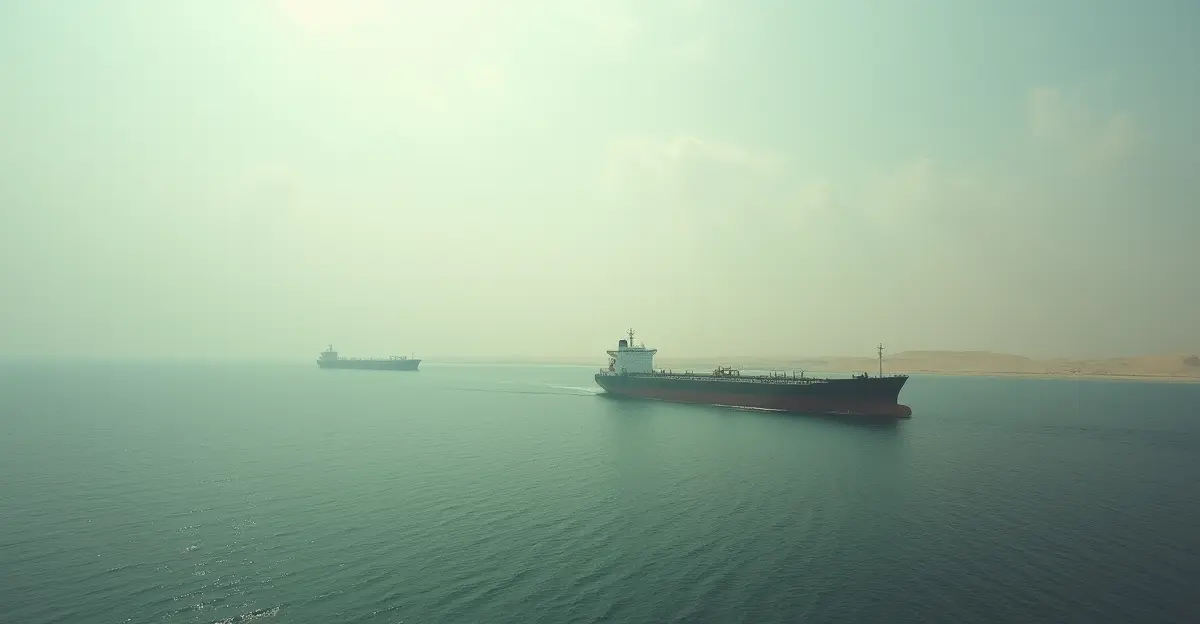
The Strait of Hormuz, a narrow waterway through which roughly 20% of the world's seaborne oil and liquefied natural gas (LNG) passes, became the epicenter of a global economic shock in late February 2026. Following a dramatic escalation of conflict in the Middle East—triggered by joint Israeli-U.S. strikes on Iran on February 28—Iran's Revolutionary Guard announced the closure of the strait, effectively halting all maritime traffic through the Persian Gulf. The immediate aftermath saw Brent crude prices surge by over 60%, while natural gas prices doubled in key markets. According to the UNCTAD Trade and Development Foresights 2026 report, global merchandise trade growth could plummet from 4.7% in 2025 to as low as 1.5% in 2026, with developing economies bearing the heaviest burden due to their dependence on fuel and food imports. This article analyzes the systemic risks to supply chains, energy markets, and financial stability, and examines whether the crisis is accelerating the renewable energy pivot as a matter of strategic necessity.
Background: The Strait of Hormuz as a Strategic Chokepoint
The Strait of Hormuz connects the Persian Gulf with the Gulf of Oman and the Arabian Sea. At its narrowest point, the strait is just 33 kilometers wide, but it handles an estimated 20 million barrels of oil and petroleum products daily—roughly one-fifth of global consumption. The geopolitical significance of the Strait of Hormuz has long been recognized, with past disruptions during the Iran-Iraq War and the 2019 tanker attacks causing temporary price spikes. However, the 2026 closure is unprecedented in both duration and severity. The U.S. Energy Information Administration (EIA) reported that in Q1 2026, the strait lost nearly 6 million barrels per day of oil and petroleum products—a 30% decline from the previous quarter, dropping to 14.6 million barrels per day. Crude oil accounted for about three-fourths of the total, with petroleum liquids making up the rest.
Immediate Impact: Energy Prices and Supply Shock
Oil Markets in Turmoil
The World Bank described the disruption as the largest oil market shock in history. By March 2026, Brent crude prices surged 65% to $146 per barrel, marking the highest monthly rise ever recorded. Global oil supply crashed by 10.1 million barrels per day (mb/d) due to attacks on energy infrastructure and tanker restrictions. Oil demand fell by 0.8 mb/d year-on-year in March, with an additional 1.5 mb/d decline projected for Q2 2026. The market now faces a 3.7 mb/d deficit in Q2 2026. Brent prices are forecast to average $86/bbl in 2026 before dropping to $70/bbl in 2027 if supply stabilizes. However, if hostilities escalate, prices could range from $95/bbl to $115/bbl. The United States is expected to partially offset disruptions with 0.5 mb/d additional output, but this is far from sufficient to fill the gap left by the Hormuz closure.
Natural Gas and LNG Disruption
The strait is also a critical route for LNG carriers, particularly those from Qatar, the world's largest LNG exporter. With the closure, Asian spot LNG prices doubled to over $30 per million British thermal units (MMBtu), while European benchmark prices surged past $50/MMBtu. Countries heavily reliant on LNG imports—such as Japan, South Korea, and India—face severe energy shortages. The global LNG market disruption 2026 has forced governments to implement emergency measures, including rationing and restarting mothballed coal-fired power plants.
Trade and Supply Chain Fallout
Global Merchandise Trade Growth Slows
The UNCTAD Trade and Development Foresights 2026 report warns that the crisis could slash global merchandise trade growth from 4.7% in 2025 to as low as 1.5% in 2026. The report highlights that developing economies are disproportionately affected due to their reliance on imported fuel and food. Higher energy costs are driving up transportation and production costs across all sectors, while inflation is eroding consumer purchasing power. The impact of oil price shock on developing economies is particularly severe in Sub-Saharan Africa and South Asia, where many countries spend a significant portion of their foreign exchange earnings on fuel imports.
Shipping and Logistics Chaos
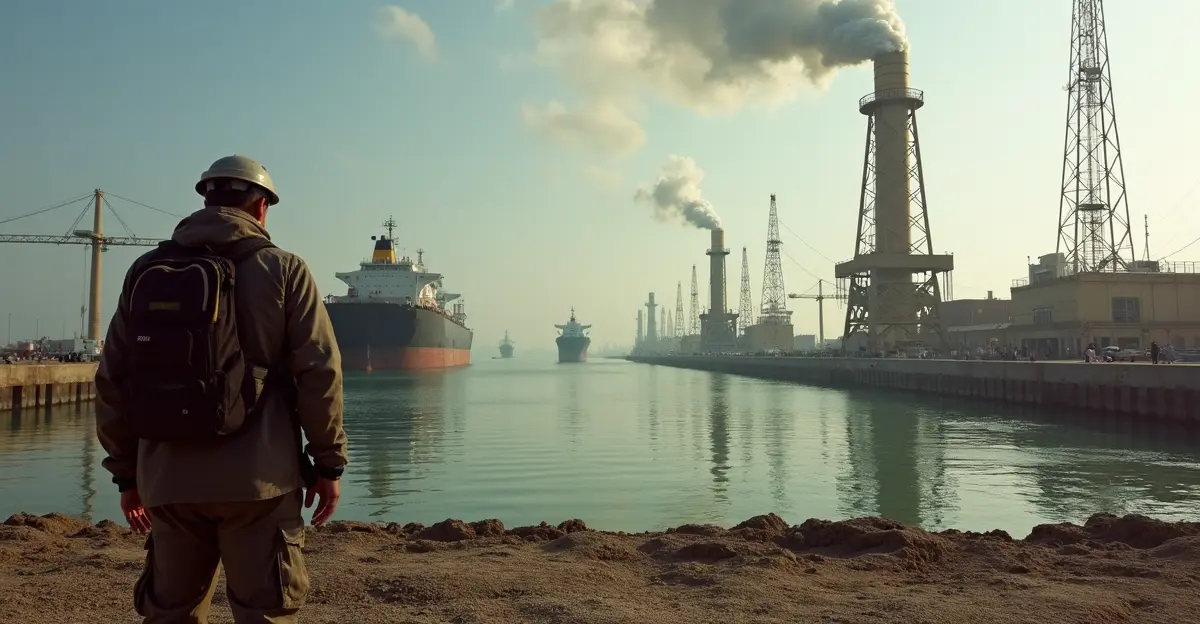
The closure of the Strait of Hormuz has effectively shut major ports in the Persian Gulf, including Jebel Ali (Dubai), Hamad (Qatar), and Shuaiba (Kuwait). Carriers have imposed war risk surcharges and are diverting vessels around the Cape of Good Hope, adding 10-14 days to transit times and significantly increasing freight costs. Airspace closures across Iran, Iraq, Israel, Kuwait, Qatar, Syria, and Bahrain have also disrupted air cargo routes, with over 15 airlines suspending Middle East services. The combination of maritime and air freight disruptions is creating bottlenecks in global supply chains, particularly for electronics, automotive parts, and perishable goods.
Financial Stability Risks
The energy price surge is feeding through to broader financial markets. Central banks face a dilemma: raising interest rates to combat inflation could stifle economic growth, while keeping rates low risks fueling further price increases. The International Monetary Fund (IMF) has warned that the crisis could trigger a wave of sovereign debt defaults among energy-importing developing nations. The global financial stability risks 2026 are compounded by the fact that many of these countries already carry high debt loads from the COVID-19 pandemic and the 2022-2023 inflation cycle.
Accelerating the Renewable Energy Transition?
While the immediate response to the crisis has been to increase fossil fuel production wherever possible, the long-term implications may accelerate the shift toward renewable energy. The crisis has exposed the vulnerability of relying on a single chokepoint for global energy supplies. In March 2026, the European Union announced a €300 billion plan to fast-track renewable energy projects, including solar, wind, and green hydrogen. China, the world's largest energy consumer, has also ramped up investments in domestic renewable capacity and energy storage. However, the transition faces headwinds: renewable energy projects require critical minerals such as lithium, cobalt, and rare earth elements, many of which are also concentrated in geopolitically sensitive regions. The renewable energy strategic pivot 2026 is thus not just about technology but also about diversifying supply chains for critical materials.
Expert Perspectives
Dr. Fatima Al-Sayed, a geopolitical risk analyst at the Middle East Institute, commented: 'The 2026 Hormuz closure is a watershed moment. It demonstrates that no amount of strategic petroleum reserves can fully insulate the global economy from a prolonged disruption at this chokepoint. The only lasting solution is to reduce dependence on fossil fuels altogether.'
John Smith, a senior economist at UNCTAD, stated in the Trade and Development Foresights 2026 report: 'Developing economies are caught in a perfect storm—rising fuel import bills, higher food prices, and tightening financial conditions. Without coordinated international support, we could see a lost decade for development.'
Frequently Asked Questions
What caused the Strait of Hormuz closure in 2026?
The closure was triggered by joint Israeli-U.S. military strikes on Iran on February 28, 2026, following which Iran's Revolutionary Guard announced the strait's closure to all maritime traffic.
How much did oil prices rise after the disruption?
Brent crude prices surged by over 60% in March 2026, reaching $146 per barrel at the peak, according to the World Bank.
Which countries are most affected by the crisis?
Developing economies in Asia and Africa that depend on fuel and food imports are the hardest hit, along with major LNG importers like Japan, South Korea, and India.
How long is the Strait of Hormuz expected to remain closed?
As of April 2026, the strait remains closed with no clear timeline for reopening. The situation depends on the trajectory of the conflict.
Is the crisis accelerating the renewable energy transition?
Yes, the crisis has prompted major economies like the EU and China to announce accelerated renewable energy investment plans, though the transition faces challenges related to critical mineral supply chains.
Conclusion: A Strategic Crossroads
The Strait of Hormuz crisis of 2026 is more than a temporary disruption—it is a systemic shock that is reshaping global energy markets, trade patterns, and financial stability. While short-term measures such as releasing strategic petroleum reserves and increasing domestic production can provide some relief, the event underscores the urgent need for a diversified and resilient global energy system. The crisis may well prove to be the catalyst that finally accelerates the transition to renewable energy on a global scale, but the path forward will require unprecedented international cooperation and investment.



Follow Discussion