


 Deutsch
 English
 Español
 Français
 Nederlands
 Português


 Share
Share




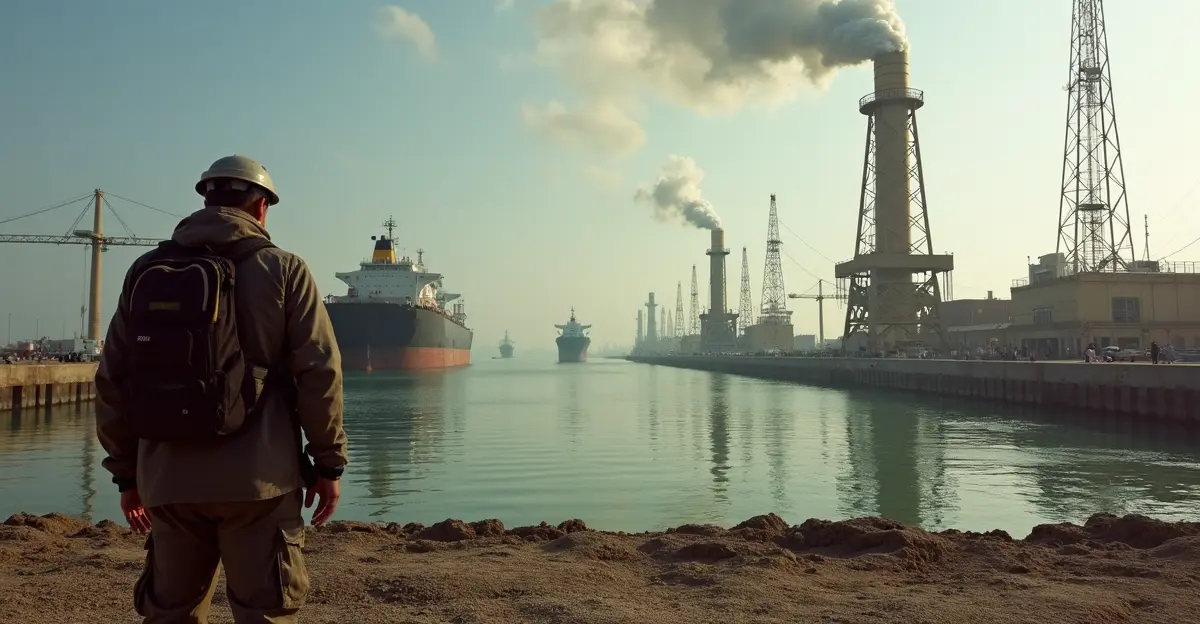
The Strait of Hormuz oil crisis of 2026 has become the most severe geoeconomic shock of the year, unleashing a cascade of disruption that is reshaping global trade, energy markets, and the trajectory of the energy transition. Following the military escalation in late February 2026, the effective closure of this vital maritime chokepoint—through which roughly one-fifth of global oil consumption and a quarter of seaborne oil trade passes—has sent Brent crude surging over 60%, gas prices more than doubling, and world merchandise trade growth projections plummeting from 4.7% to as low as 1.5%.
How the Crisis Unfolded
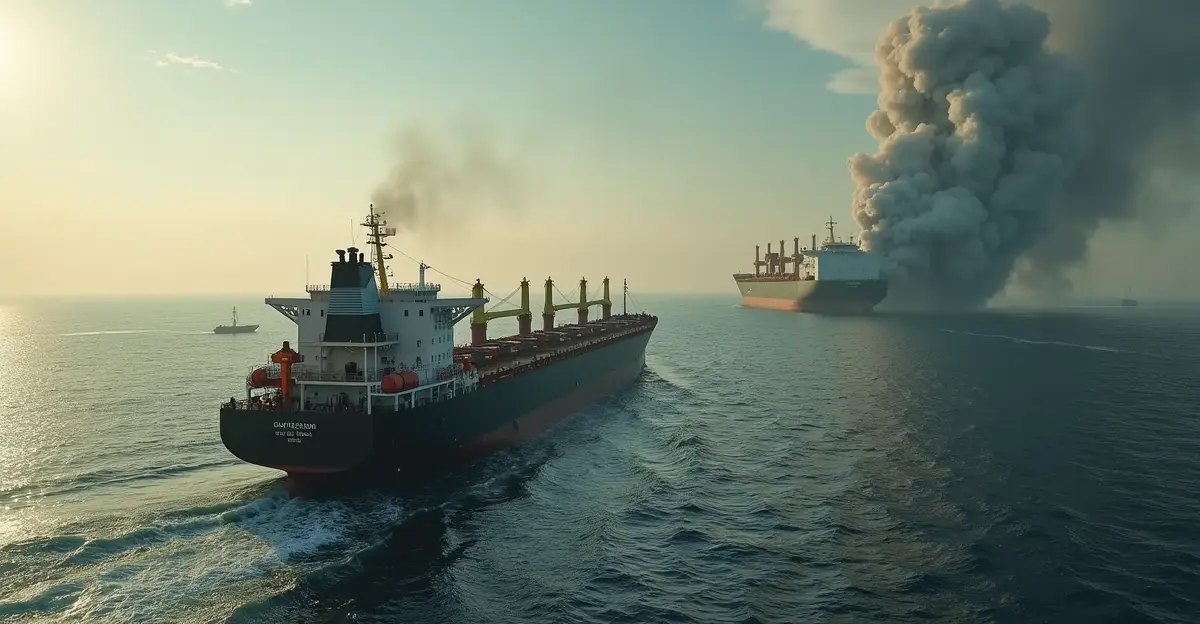
The crisis was triggered on 28 February 2026, when a U.S.–Israeli military operation against Iran escalated into a full-scale conflict. In response, Iran's Islamic Revolutionary Guard Corps mined the Strait of Hormuz on 2 March, effectively shutting down the waterway. According to UNCTAD, daily ship transits collapsed by approximately 95%—from 130 vessels per day to just six—cutting roughly 20% of global oil supply from markets. Brent crude, which had been trading at around $72 per barrel before the crisis, spiked to a peak of $138, with physical cargoes reportedly nearing $150. The International Energy Agency responded by releasing a record 400 million barrels from emergency reserves, though analysts at the Dallas Federal Reserve noted that this covers only 16 days of lost Gulf flow.
Iran further compounded the disruption by imposing unprecedented transit fees of $1.5–2 million per vessel, potentially yielding $7.5 billion annually. The United States responded with a $40 billion government insurance backstop to keep shipping viable. Despite a fragile ceasefire in April, the strait has remained effectively closed for over 120 days as of early July 2026, with only minimal traffic resuming.
The Economic Shockwaves
Oil and Gas Price Spiral
The World Bank Commodity Markets Outlook 2026 has described the disruption as the largest oil market shock in history, surpassing previous supply crises in scale. According to the Dallas Fed, a one-quarter closure would push West Texas Intermediate to $98 per barrel and cut global real GDP growth by an annualized 2.9 percentage points. If the closure extends to two or three quarters, oil could reach $115–$132, keeping growth negative through year-end 2026. Gas prices have more than doubled, with liquefied natural gas exports through the strait plunging by 95%, as reported by the International Trade Centre.
Trade and Supply Chain Disruption
The impact on physical trade has been devastating. UNCTAD data shows that between April 2025 and April 2026, combined export volumes of 12 key products from Hormuz-dependent economies—Bahrain, Iran, Iraq, Kuwait, Qatar, Saudi Arabia, and the UAE—fell by 54%. Urea exports dropped 83%, methanol 80%, and ammonia 75%. Shipping lines have been forced to reroute via the Cape of Good Hope, adding an estimated $40–50 million in additional costs weekly. The global supply chain crisis 2026 has extended far beyond energy, affecting fertilizers and industrial chemicals critical for food production.
Inflation and Monetary Policy Dilemmas
The World Economic Forum's Chief Economists Outlook for May 2026 paints a stark picture: 89% of chief economists now expect global growth to weaken, while 94% anticipate higher inflation driven by energy and food costs. Central banks face an unenviable dilemma—taming inflation without tipping already fragile economies into recession. The shock is widely considered more severe than the 2025 tariff turmoil, with some analysts comparing its disruptive potential to the COVID-19 pandemic.
Emerging Economies Under Siege
Developing nations are bearing the brunt of the crisis. UNCTAD warns that 61 vulnerable economies—home to 3.4 billion people—face simultaneous oil and food shocks. Countries like Japan, which sourced 91% of its crude oil from the region, saw imports drop by 64%. The Japanese energy security policy response included releasing strategic petroleum reserves and reinstating subsidies that had already cost JPY 13.6 trillion (USD 95.2 billion) between FY2022 and FY2025. Across emerging markets, severe currency depreciation and financial volatility are compounding the crisis, with oil-importing nations in South and Southeast Asia particularly exposed.
The Energy Transition Accelerates
One unexpected consequence of the crisis has been a dramatic acceleration in renewable energy investment. With oil at $120 per barrel, electric vehicles, solar installations, and heat pumps have become far more competitive against fossil fuel alternatives. The renewable energy investment boom 2026 is being driven not only by climate considerations but by hard-nosed energy security calculations. Pipeline-based alternatives are also gaining momentum: Saudi Arabia's Petroline, the UAE's Habshan-Fujairah pipeline, and Egypt's SUMED terminal have all seen renewed strategic interest as bypass routes.
The Renewable Energy Institute of Japan argued in a June 2026 report that the crisis exposes the limits of short-term palliatives like subsidies, which blunt price signals and preserve fossil-fuel dependency. Their analysis shows that accelerated renewable expansion and electrification could have significantly reduced Japan's exposure to the crisis—a lesson that is resonating globally.
Frequently Asked Questions
Why is the Strait of Hormuz so important?
The strait is the only sea passage from the Persian Gulf to the open ocean. Before the crisis, approximately 20% of global oil consumption and 25% of seaborne oil trade transited this 21-nautical-mile-wide chokepoint annually. It is also a critical route for liquefied natural gas, urea, and other fertilizers.
How high have oil prices risen in the 2026 crisis?
Brent crude surged from approximately $72 per barrel before the crisis to a peak of $138, with some physical cargoes reaching $150. This represents an increase of over 60%, though prices have since settled around $106 following a fragile April ceasefire.
What are the long-term implications for global trade?
UNCTAD projects that world merchandise trade growth could fall from 4.7% to as low as 1.5% in 2026. The crisis has exposed critical vulnerabilities in maritime chokepoints and is likely to accelerate diversification of energy sources, shipping routes, and supply chain configurations.
Is the Strait of Hormuz still closed?
As of July 2026, the strait remains effectively closed after more than 120 days. Despite an April ceasefire, navigational safety concerns, mining risks, and exorbitant insurance costs have kept traffic at minimal levels.
How does this crisis compare to previous oil shocks?
The Dallas Fed estimates the current disruption is three to five times larger than past shocks—including the 1973 Arab oil embargo, the 1979 Iranian Revolution, and the 1990 Gulf War. The World Bank's Commodity Markets Outlook 2026 has called it the largest oil market shock in history.
Strategic Realignment and Future Outlook
The Strait of Hormuz crisis of 2026 is proving to be a watershed moment for global energy security. As UNCTAD's Trade and Development Foresights 2026 report and the WEF Global Risks Report 2026 both emphasize, the crisis demands urgent strategic analysis and coordinated international action. The future of energy geopolitics will likely be defined by how governments and markets respond to this shock. For now, the world watches the narrow waterway that has held the global economy hostage, knowing that the path to resilience will require not just military deterrence but a fundamental reimagining of how the world powers itself.


Follow Discussion