


 Deutsch
 English
 Español
 Français
 Nederlands
 Português


 Share
Share




Global AI data centers are on a collision course with the world's power grids. According to the International Energy Agency's April 2026 report, global data center electricity consumption surged 15% in 2025 to roughly 500 TWh and is projected to nearly double to 950 TWh by 2030, driven by AI inference, video generation, and agentic workloads. This AI data center energy showdown is reshaping energy policy, utility planning, and climate commitments.
What's Driving the AI Energy Surge?
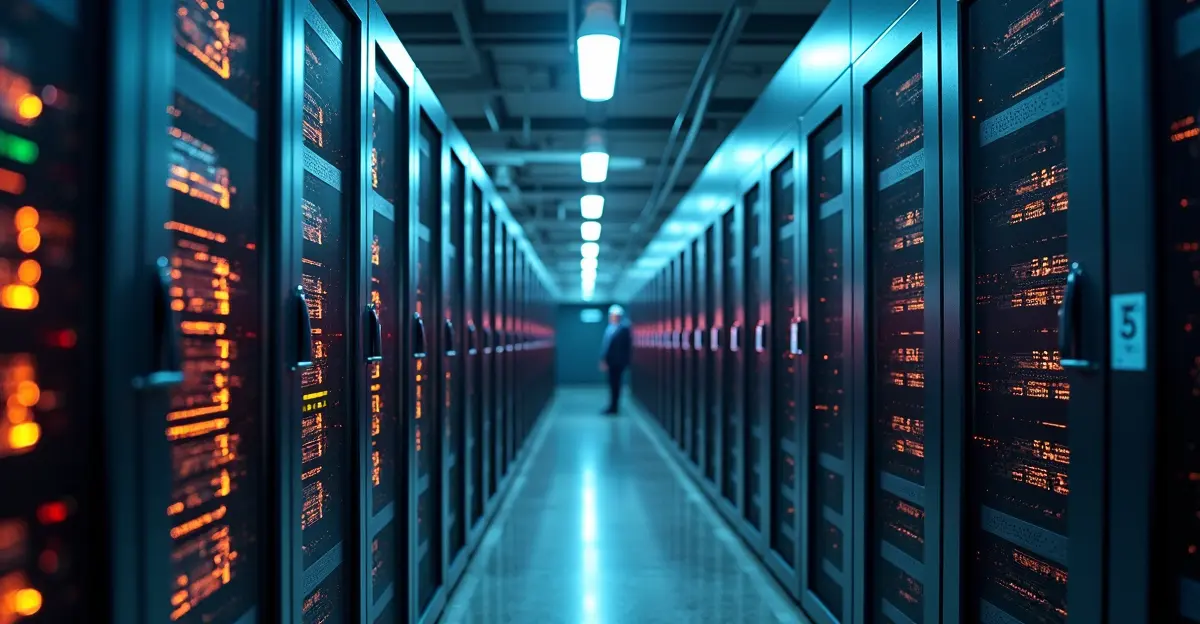
The IEA's Energy and AI analysis finds that while per-query efficiency improved tenfold, video generation, multi-step reasoning, and AI inference workloads consume hundreds to thousands of times more energy than a standard web search. Server rack power density increased elevenfold between 2020 and 2025, and could quadruple again by 2027, making liquid cooling technology a structural necessity rather than an option.
Schneider Electric data shows average rack density climbed from ~16 kW in 2025 to 27 kW in 2026, with AI racks reaching 246 kW. Direct-to-chip liquid cooling cuts power usage effectiveness (PUE) from 1.55–1.67 to 1.10–1.20, delivering 30–60% cooling energy savings.
Power Density: From 16 kW to 246 kW
| Metric | 2025 | 2026 |
|---|---|---|
| Average rack density | 16 kW | 27 kW |
| AI rack density (max) | ~130 kW | 246 kW |
| PUE (air vs liquid) | 1.55–1.67 | 1.10–1.20 |
Gas Turbines: The Controversial Bridge Fuel
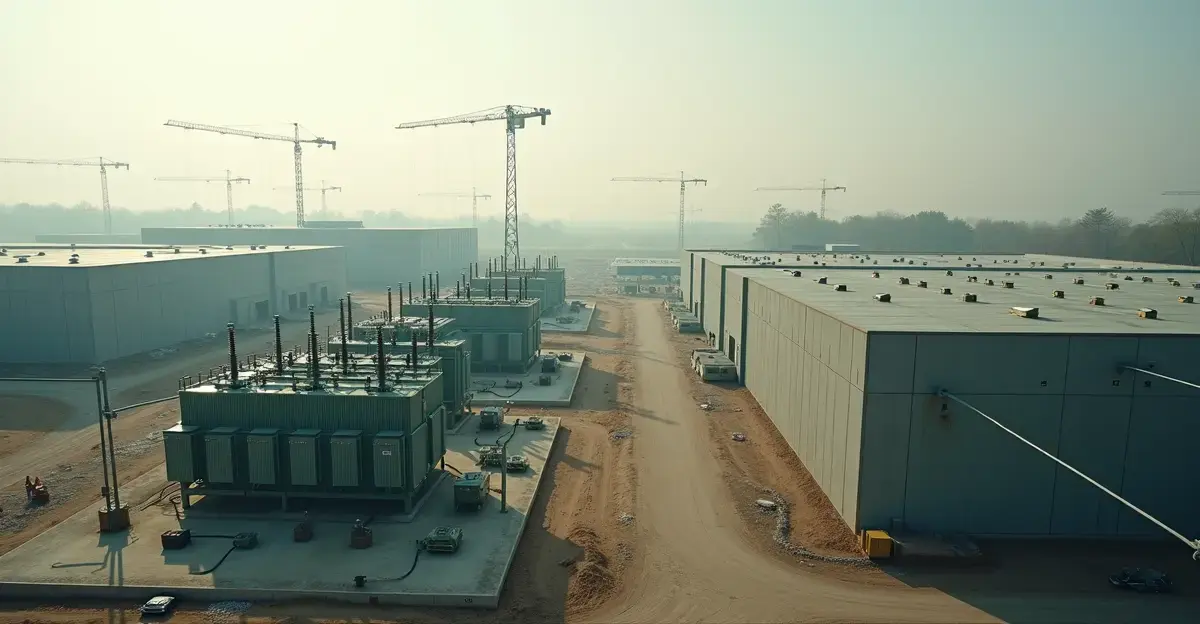
As renewable connections lag and grid interconnection queues stretch 3–7 years in most markets, hyperscalers are turning to natural gas. Global gas turbine orders hit a record 38 GW in Q2 2026, up 71% year-over-year, according to industry data. Siemens Energy, GE Vernova, and Mitsubishi Power accounted for most orders, and JPMorgan estimates full-year 2026 orders could reach 120 GW.
- Q2 2026 gas turbine orders: 38 GW, up 71% YoY
- Projected 2026 full-year orders: 120 GW
- Manufacturing capacity: only 60–70 GW annually
- Price projection: $600/kW by end-2027 (+195% since 2019)
This surge creates a supply crunch. The American Action Forum notes that planned natural gas capacity rose from 11.1% in 2024 to 18.1% in 2026, while renewable growth flattened to 2%. This shift directly conflicts with climate targets, as utilities prioritize 24/7 reliability for AI loads.
Where Grids Are Saying 'No' to Data Centers
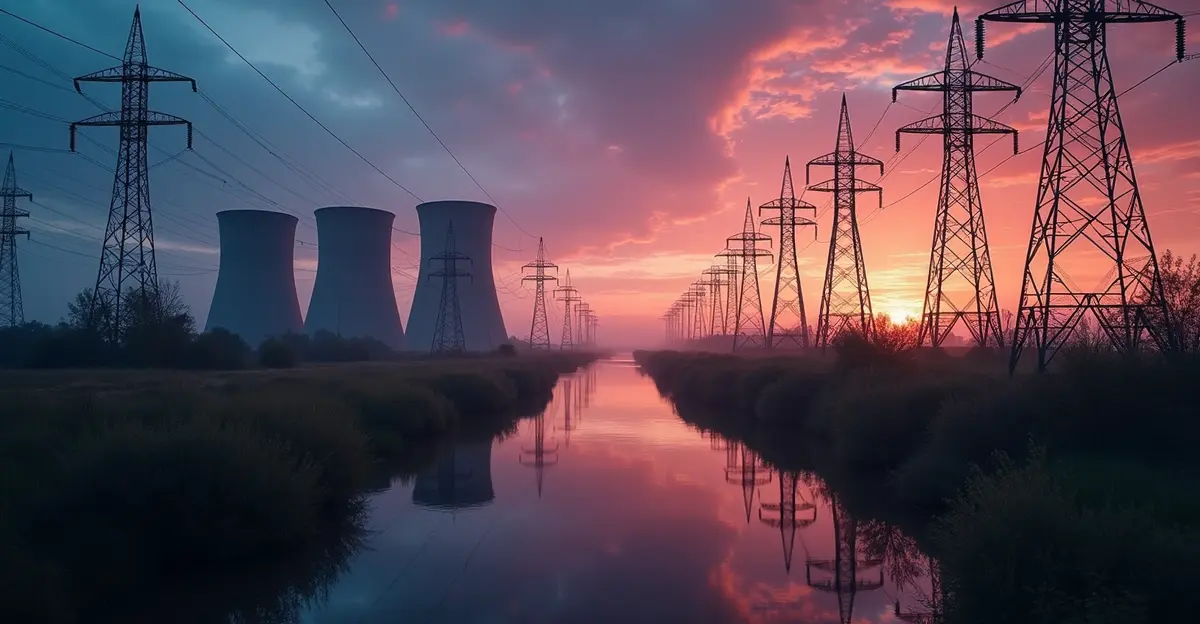
The grid interconnection queues have become the primary bottleneck. In Northern Virginia, Dominion Energy warns of 3–5 year waits; data centers already consume one in five kWh in the state. Ireland's EirGrid projects data centers could use 30% of Ireland's electricity by 2030, and Singapore has paused new builds over capacity concerns.
AEP Ohio halted new connections, mirroring Dublin's moratorium. PJM capacity prices jumped from $28.92 to $269.92 per MW-day between 2024/25 and 2025/26, and residential bills may rise $16–18 monthly. The World Economic Forum's Top 10 Emerging Technologies of 2026 lists the AI-energy collision among systemic risks, highlighting that grid capacity, not generation, is the hard constraint.
Climate Commitments vs. AI Expansion
Every major hyperscaler has announced nuclear or small modular reactors deals, but SMRs are at least five years out. Renewables cannot match the constant high draw of AI facilities. The result is a near-term fossil fuel bridge: natural gas now, hydrogen blending by 2028–2030, and 100% green hydrogen later. However, analysts warn that overbuilding gas capacity by 30–70% to handle AI peaks locks in emissions for decades. The IEA report and WEF both spotlight this as a systemic risk, and experts in renewable energy integration caution that grid flexibility, not just generation, is the missing piece.
As one utility engineer told the report: 'The grid was never designed for loads that ramp from zero to hundreds of megawatts in months.'
Frequently Asked Questions
What is the AI data center energy crisis?
It's the mismatch between surging AI-driven electricity demand (500 TWh in 2025, heading to 950 TWh by 2030) and limited grid capacity, forcing utilities to delay or reject data center connections and pushing developers toward fossil fuels.
Why are gas turbines surging for AI data centers?
Because grid interconnection queues take 3–7 years, while modular gas turbines can be deployed in 12–30 months. Orders rose 71% year-over-year in Q2 2026, creating a supply crunch.
How much electricity do AI data centers use?
Global data center consumption reached ~500 TWh in 2025, up 15% from 2024, and the IEA projects ~950 TWh by 2030—roughly Japan's total electricity use.
Which regions are rejecting data center connections?
Virginia, Ireland (Dublin), Singapore, Ohio, and parts of the Netherlands and London have imposed moratoriums or multi-year waits due to grid capacity constraints.
Can renewables solve the AI energy problem?
Not in the near term. Renewables provide variable power, while AI loads require 24/7 high-density supply. Nuclear SMRs are years away, so natural gas is currently the bridge, complicating climate goals.
The 2026 Energy Policy Crossroads
The AI data center energy showdown is no longer a future scenario—it is the defining energy policy challenge of 2026. Utilities, regulators, and tech giants must align on grid investments, cooling innovation, and realistic carbon accounting. Without rapid action, the promise of AI could be throttled not by compute, but by copper, transformers, and turbines.

Follow Discussion