


 Deutsch
 English
 Español
 Français
 Nederlands
 Português


 Share
Share




The Power Bottleneck: How AI Data Centers Are Reshaping Global Energy Markets in 2026
The artificial intelligence boom is driving an unprecedented surge in electricity demand, with global data-center power consumption projected to double by 2030. In 2026, this demand spike is colliding with energy-transition timelines, grid-capacity limits, and geopolitical competition for clean energy resources. According to the International Energy Agency (IEA), data centers consumed approximately 415 TWh of electricity in 2024 — about 1.5% of global demand — and that figure is on track to reach 945 TWh by 2030, equivalent to Japan's entire annual consumption. The World Economic Forum has identified the AI data-center power crunch as a critical 2026 bottleneck, making cheap, reliable, clean electricity a new form of strategic competitive advantage.
The Scale of the Challenge
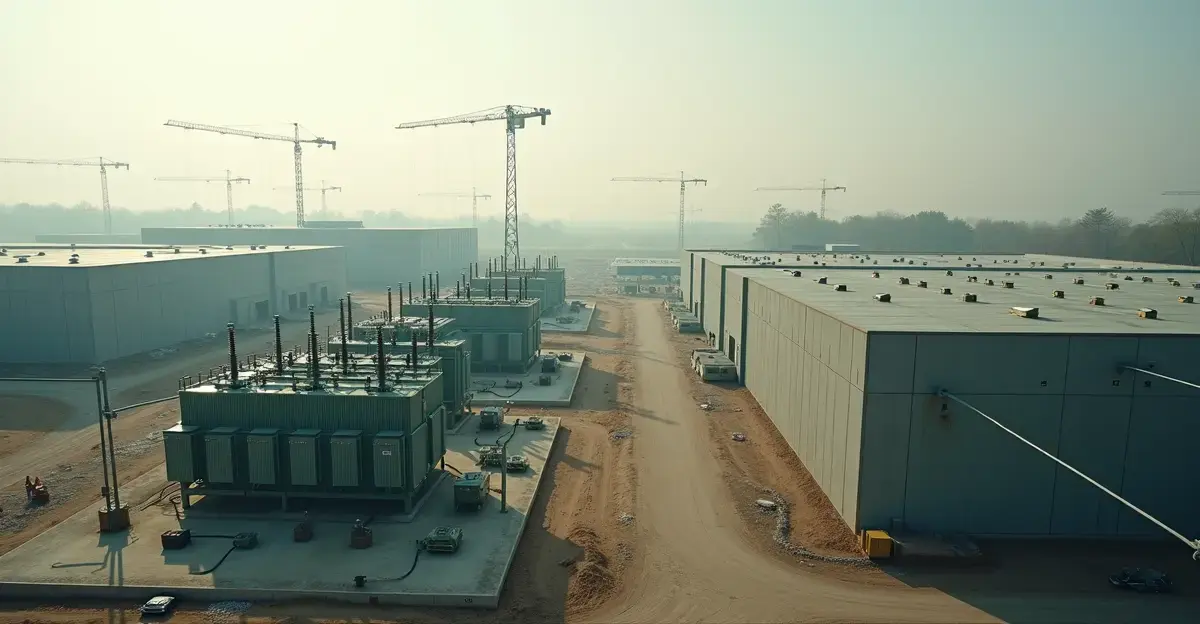
Global energy investment reached a record $3.3 trillion in 2025, with $2.2 trillion directed toward clean technologies, according to the IEA. Yet the rapid expansion of AI computing is straining power grids worldwide. The IEA energy outlook 2025 highlights that data centers are adding 5-7 GW of new load annually while only 2-3 GW of new generation comes online each year. Grid interconnection queues now average five-year waits, and delivery lead times for critical electrical equipment like transformers have stretched from 24-30 months to as long as five years.
In the United States, data center electricity consumption reached 183 TWh in 2024 — about 4% of national usage — and is projected to hit 426 TWh by 2030. The PJM Interconnection failed to meet reliability targets for the first time in its history during its December 2025 capacity auction, with capacity prices surging ninefold. Residential electricity prices rose 7.4% in 2025, with further hikes expected as utilities pass infrastructure costs to consumers.
US Strategy: Gas Plants and Nuclear SMRs
The United States is pursuing a dual strategy of natural gas expansion and next-generation nuclear to power its AI ambitions. Tech giants are rushing to build massive gas-fired power plants: Microsoft is partnering with Chevron and Engine No. 1 on a 5 GW plant in West Texas, Google is working with Crusoe on a 933 MW plant in North Texas, and Meta is adding seven gas plants to its Louisiana data center, reaching 7.46 GW capacity. According to Global Energy Monitor, data centers have helped nearly triple gas-fired power demand over the past two years, with more than 97 GW now explicitly earmarked for powering data centers — 25 times higher than in 2024.
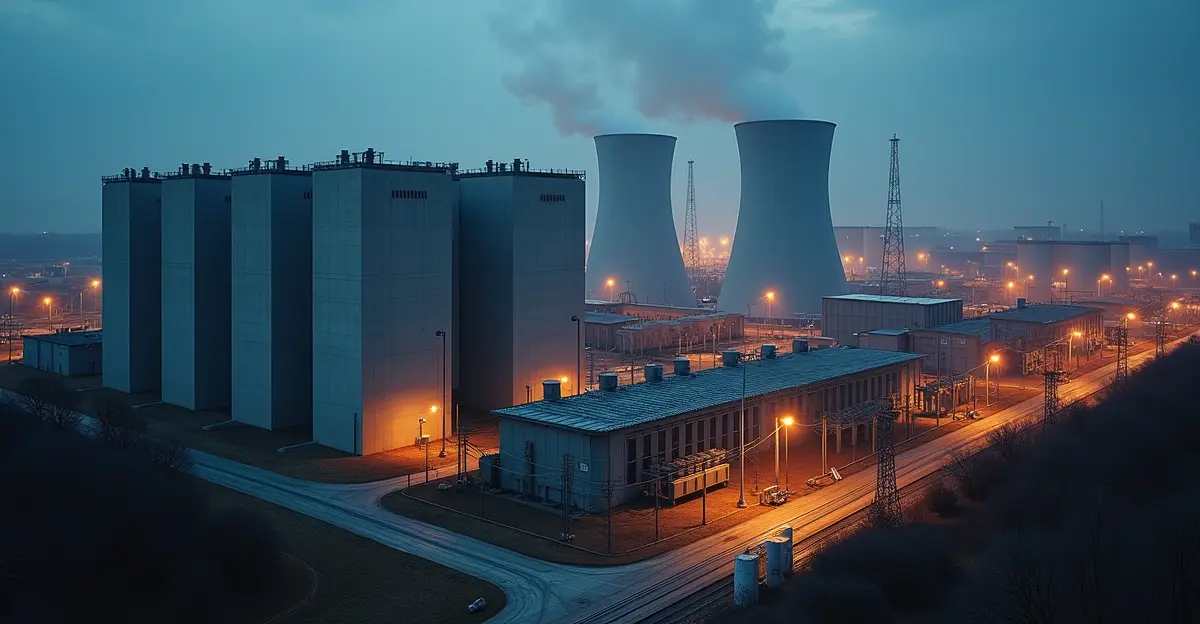
At the same time, the nuclear renaissance is accelerating. Microsoft signed a $1.6 billion deal to restart Three Mile Island, Google partnered with Kairos Power on small modular reactors (SMRs), and Amazon led $500 million in financing for X-energy. The Nuclear Regulatory Commission is expected to issue the first commercial SMR construction permits in 2026. The advanced nuclear energy 2026 landscape is shifting from policy-driven decarbonization to commercially driven AI infrastructure power.
Turbine Shortages and Supply Chain Risks
The scramble for gas turbines has caused severe shortages, with prices expected to rise 195% by the end of 2026 and delivery times stretching to six years. Nearly half of all US AI data centers planned for 2026 have been canceled or delayed, creating a 7 GW capacity crisis. Of roughly 12 GW of announced capacity, only about 5 GW is under active construction. The bottleneck has shifted from GPU shortages to physical power infrastructure constraints.
Europe's Grid Reliability Crisis
Europe faces its own energy crunch as AI data center demand collides with aging infrastructure and decarbonization commitments. A 2026 study by ENTSO-E, the European Network of Transmission System Operators, warns that data centers are becoming systemically relevant electricity users whose behavior increasingly impacts grid operation. From decade-long grid connection queues to facilities running at half capacity, Europe's push to boost AI capabilities is hampered by energy constraints.
The upcoming EU Cloud and AI Development Act aims to address these challenges, but the European energy security 2026 situation remains precarious. Data centers are being encouraged to provide grid flexibility services, transforming from pure consumers to active contributors to grid stability. However, without massive investment in transmission infrastructure, up to 20% of planned data center projects could face delays, according to the IEA.
China's Coal-Backup Strategy
China, the world's largest energy investor, is taking a different approach. While leading in renewable energy deployment, the country is relying on coal as a backup for AI data centers. Over 70% of China's data center power still comes from coal-dependent eastern regions. A May 2026 action plan from Beijing aims to promote mutual empowerment of AI and energy, codifying private workarounds — off-grid data centers, direct power connections, and dedicated stability assets — into a coordinated state-level system.
China's East-West Computing Project seeks to shift data centers to western renewable-rich areas, but projections indicate fossil fuels will dominate data center energy until at least 2030. The country's AI-driven data center boom creates a sharp contradiction with climate goals, as generative AI queries use 30 times more energy than standard web searches. The China energy transition 2026 path remains heavily coal-dependent for AI infrastructure.
Geopolitical Implications and Strategic Competition
The AI energy crunch is reshaping global power dynamics. Cheap, reliable, clean electricity has become a new form of strategic competitive advantage. The US and China drive approximately 80% of global data center growth, with US per-capita consumption projected to reach 1,200 kWh by 2030. Supply chain vulnerabilities are emerging, particularly around gallium — a crucial metal for chips where China controls 99% of global supply.
Community opposition is also mounting, with over $64 billion in data center projects blocked by local resistance in the US alone. The AI geopolitics 2026 landscape is increasingly defined by energy access rather than just computational capacity.
Expert Perspectives
"Power grid connectivity has become the strategic bottleneck for AI development," says Ditlev Engel, CEO of Energy at DNV, writing for the World Economic Forum. "Connecting a new facility to the grid can take 4-10 years, while AI data centers are typically built within 2-3 years." DNV estimates that by 2060, approximately 80% of data center electricity demand will come from AI, reaching 11% of global final electricity demand (6,400 TWh).
The IEA warns that data center emissions could rise from 180 million tons today to up to 500 Mt by 2035, though AI applications could also enable broad emissions reductions across other sectors. The tension between AI leadership, energy security, and climate commitments remains the defining challenge of the decade.
FAQ
How much electricity do AI data centers consume in 2026?
Global data center electricity consumption is projected to reach approximately 1,000 TWh in 2026, nearly double the 415 TWh consumed in 2024, according to the IEA and industry estimates.
Why are AI data centers causing an energy crisis?
AI data centers require massive, continuous power with high density and low tolerance for interruptions. The rapid growth of AI computing — with generative AI queries using 30 times more energy than standard web searches — is outpacing grid infrastructure expansion, causing interconnection delays, equipment shortages, and rising costs.
What are the main solutions being pursued?
Solutions include building new natural gas plants, investing in small modular nuclear reactors (SMRs), expanding renewable energy and battery storage, developing behind-the-meter generation, and improving grid flexibility through demand response programs.
How is China handling AI data center energy demand?
China is relying heavily on coal to power its AI data centers, with over 70% of power coming from coal-dependent eastern regions. The government is also pursuing an East-West Computing Project to shift data centers to western renewable-rich areas, but fossil fuels are expected to dominate until 2030.
What are the geopolitical implications of the AI energy crunch?
Access to cheap, reliable, clean electricity has become a strategic competitive advantage. The US and China drive 80% of global data center growth, and supply chain vulnerabilities — such as China's control of 99% of gallium supply — are creating new dependencies and tensions.
Conclusion
The AI data center power crunch represents a critical inflection point for global energy markets. With global energy investment at record levels and clean technology deployment accelerating, the bottleneck is no longer about capital availability but about infrastructure speed and grid readiness. Nations and corporations that can navigate the tension between AI leadership, energy security, and climate commitments will define the competitive landscape of the next decade. As the WEF notes, electricity availability is becoming the new bottleneck for AI expansion — and cheap, reliable, clean power is the ultimate strategic asset.


Follow Discussion