


 Deutsch
 English
 Español
 Français
 Nederlands
 Português


 Share
Share




AI Data Center Surge: The Geopolitical and Energy Security Implications of Unprecedented Electricity Demand
The explosive growth of artificial intelligence data centers is fundamentally reshaping global energy markets and creating new geopolitical dependencies, with projections showing these facilities will consume 945 terawatt-hours (TWh) of electricity globally by 2030—more than double current levels and equivalent to Japan's entire national power consumption. Recent reports from the International Energy Agency (IEA) and S&P Global reveal that AI data centers are projected to consume 6.7-12% of U.S. electricity by 2028, creating immediate pressure on energy markets and grid infrastructure worldwide. This unprecedented demand surge is forcing strategic recalibrations in national energy policies and creating new energy security vulnerabilities that will define the next decade of global competition.
What is the AI Data Center Energy Crisis?
AI data centers represent a fundamentally different class of energy consumer compared to traditional computing infrastructure. While conventional data centers consumed approximately 415 TWh globally in 2024 (about 1.5% of world electricity), AI-optimized facilities feature power densities of 30-100+ kilowatts per rack—three to ten times higher than traditional setups. The IEA projects that global electricity demand from data centers will more than double to 945 TWh by 2030, with AI accounting for nearly half of this increase. In the United States alone, data centers currently use 176 TWh annually (4.4% of national power), with projections reaching 9-17% by 2030. This rapid growth has already driven retail electricity prices up 42% since 2019 and contributed to inflationary pressures, creating what experts call the AI infrastructure energy paradox.
Geopolitical Realignment: The New Energy Superpowers
The voracious electricity demands of AI infrastructure are creating new geopolitical leverage points, fundamentally altering global power dynamics. Countries with abundant, low-cost electricity are emerging as strategic hubs in the AI race, while energy-constrained regions face competitive disadvantages.
Nordic Advantage: Renewable Energy Abundance
The Nordic region has become Europe's premier AI data center destination, with Norway, Sweden, and Finland offering 40-60% lower power costs compared to Western Europe. With over 90% renewable electricity generation—primarily hydroelectric—these countries provide the clean, reliable power essential for AI operations. Major 2025 investments include Microsoft's $3.2 billion Swedish expansion and OpenAI's Stargate Norway project deploying 100,000 GPUs powered entirely by renewable hydroelectricity. The region's cool climate also provides exceptional cooling efficiency, with power usage effectiveness (PUE) ratings of 1.1-1.2 compared to the global average of 1.55.
Canada's Hydroelectric Edge
Canada is rapidly emerging as a global data center powerhouse, with its market expanding at unprecedented speed and total IT capacity now exceeding 10 gigawatts across operational and pipeline projects. The country's competitive advantage stems from abundant clean hydroelectric power, which provides 60% of its electricity, combined with natural cooling from its climate. Key regional hubs in Toronto, Montreal, and Alberta collectively account for 93% of the nation's IT load, with major projects like Alberta's 5.6-GW Wonder Valley initiative positioning Canada as a top-tier destination for global AI infrastructure investment.
Middle Eastern Strategic Positioning
Middle Eastern nations with abundant natural gas resources and ambitious renewable energy programs are leveraging their energy advantages to attract AI investments. These countries are combining fossil fuel wealth with solar energy potential to create hybrid power solutions that can meet the 24/7 demands of AI operations while maintaining cost competitiveness. This strategic positioning creates new dependencies and alliances in the global energy trade network as tech giants seek reliable power sources.
Nuclear Power Resurgence: The AI-Driven Renaissance
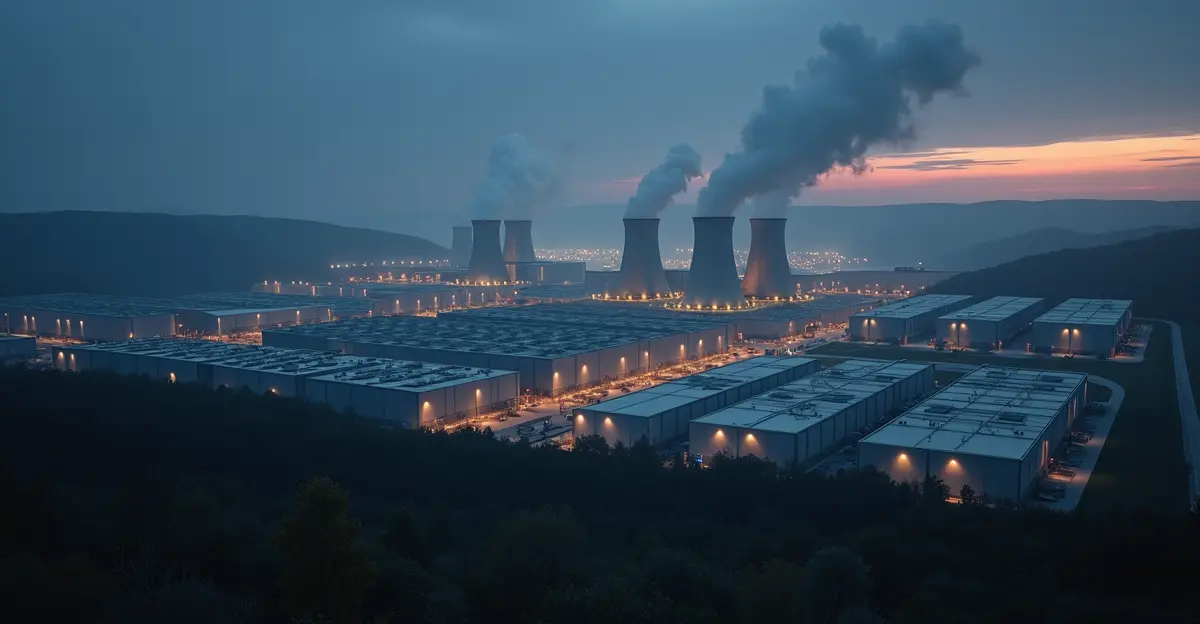
The AI data center surge is driving a nuclear power renaissance, with major tech companies turning to atomic energy to meet their massive power requirements while fulfilling climate commitments. Microsoft has signed a groundbreaking 20-year power purchase agreement to restart the Three Mile Island nuclear plant (renamed Crane Clean Energy Center) by 2028, investing $1.6 billion to bring the facility back online. This represents the second nuclear reactor worldwide to be resurrected, following the Palisades Nuclear Plant in Michigan.
According to industry analysis, the AI industry faces a critical 9-18 gigawatt power shortage by 2027, as current US data center capacity of 35 GW cannot meet the 40-50% annual growth in AI power demand. Nuclear energy provides the perfect match for AI's 24/7 power needs, unlike intermittent renewables. Tech companies are also investing in next-generation nuclear technology, including small modular reactors (SMRs) and X-energy's modular pebble-bed reactors that promise enhanced safety and scalability. This partnership represents a significant shift where tech companies provide the financial certainty needed to revive the struggling nuclear industry.
Grid Strain and Strategic Vulnerabilities
The concentrated nature of AI data center development is creating unprecedented strain on regional power grids, with specific areas bearing disproportionate burdens. Virginia alone accounts for 24 TWh of data center consumption, representing a significant portion of the state's electricity demand. This concentration has led to grid strain, interconnection pauses, and community pushback across multiple regions.
Four major tech companies—Amazon, Google, Meta, and Microsoft—control 42% of US data center capacity and are investing hundreds of billions in AI infrastructure expansion. Amazon plans to quadruple its US capacity to 12 GW, while Microsoft is building massive projects including a rumored $100 billion+ supercomputer with OpenAI. This consolidation of power infrastructure creates strategic vulnerabilities, as disruptions to these concentrated energy hubs could have cascading effects on global AI capabilities and digital economies.
Global Policy Responses and Strategic Implications
Governments worldwide are scrambling to develop policy responses to the AI energy challenge. The G7 Energy and AI Work Plan, endorsed by G7 Energy Ministers on October 30, 2025, establishes a comprehensive framework to address the energy challenges of artificial intelligence while harnessing AI's potential for energy innovation. The plan recognizes that meeting AI and data center energy demands requires additional capacity, grid optimization, and investments in transmission technologies and energy storage.
Southeast Asian countries are increasingly turning to nuclear power to meet the massive energy demands of AI data centers, representing a significant energy policy transformation in the region. This shift reflects how nations are balancing technological advancement with sustainable power generation, creating new patterns in international energy diplomacy.
Expert Perspectives on the Energy-AI Nexus
Industry analysts warn that the current trajectory is unsustainable without significant infrastructure investment. 'The AI industry faces a critical 9-18 gigawatt power shortage by 2027,' notes a recent industry report, highlighting the immediate challenges. Energy experts emphasize that 'nuclear energy provides a perfect match for AI's 24/7 power needs, unlike intermittent renewables,' explaining the tech industry's renewed interest in atomic power.
The World Economic Forum describes this as the 'triple transition' challenge where AI advancement, global energy system restructuring, and geopolitical realignment are converging simultaneously. Organizations must navigate these interconnected challenges by treating AI as part of a broader strategic transformation rather than just a technology upgrade.
FAQ: AI Data Centers and Energy Security
How much electricity will AI data centers consume by 2030?
Global electricity demand from data centers is projected to more than double to 945 TWh by 2030, equivalent to Japan's current total power consumption, with AI accounting for nearly half of this increase.
Which countries benefit most from the AI data center boom?
Countries with abundant, low-cost electricity like Canada (hydroelectric), Norway (hydroelectric), and certain Middle Eastern nations (natural gas and solar) gain strategic importance, while energy-constrained regions face competitive disadvantages.
Why are tech companies investing in nuclear power?
Nuclear energy provides reliable, carbon-free baseload power that matches AI's 24/7 operational requirements, unlike intermittent renewables. Companies like Microsoft are restarting nuclear plants and investing in next-generation reactor technology.
How is the AI data center surge affecting electricity prices?
The rapid growth has already driven retail electricity prices up 42% since 2019 in affected regions and contributed to inflationary pressures, with further increases expected as demand continues to accelerate.
What are the geopolitical implications of AI energy demands?
The surge creates new dependencies on energy-rich nations, reshapes global energy trade patterns, and makes data center infrastructure a strategic national asset in the digital sovereignty competition.
Conclusion: Navigating the New Energy Reality
The AI data center surge represents one of the most significant energy market transformations in decades, with profound implications for global geopolitics, energy security, and economic competitiveness. As projections show electricity demand more than doubling to 945 TWh by 2030, nations and corporations must develop comprehensive strategies that balance technological advancement with sustainable energy systems. The emerging competition for reliable baseload power sources is creating new winners and losers in the global economy, while the nuclear power resurgence demonstrates how technological demands can reshape entire industries. The coming years will test whether global energy infrastructure can adapt to support the AI revolution while maintaining stability, affordability, and security for all nations.

Follow Discussion